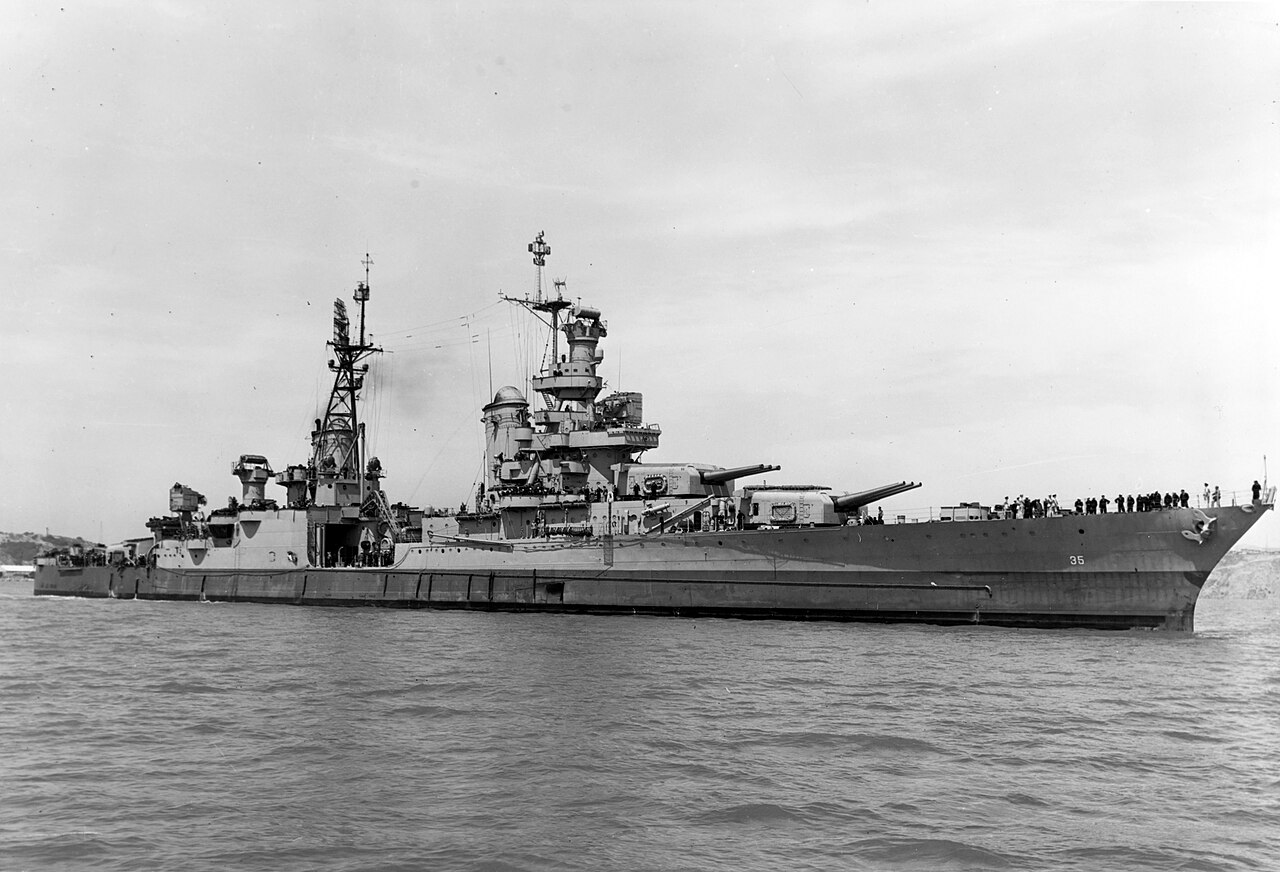
USS Indianapolis (CA-35) was a Portland-class heavy cruiser, one of two, armed with 8-inch guns and built with the rooms and the bridge for an admiral's flag. She was not Minneapolis. New York Shipbuilding, at Camden, laid her down on 31 March 1930, launched her on 7 November 1931, and commissioned her on 15 November 1932. For much of the Central Pacific campaign Admiral Raymond A. Spruance flew his flag in her. The landings were run from her bridge.
On 31 March 1945, off Okinawa, a kamikaze came out of the early light and dived on the ship. The guns hit the plane. From masthead height the pilot let the bomb go, and the airplane itself did little harm. The bomb passed through the mess deck, a berthing space, and the fuel tanks, and exploded in the water under the hull. Nine men were killed. She settled slightly by the stern and steamed to Mare Island under her own power. Spruance shifted his flag.
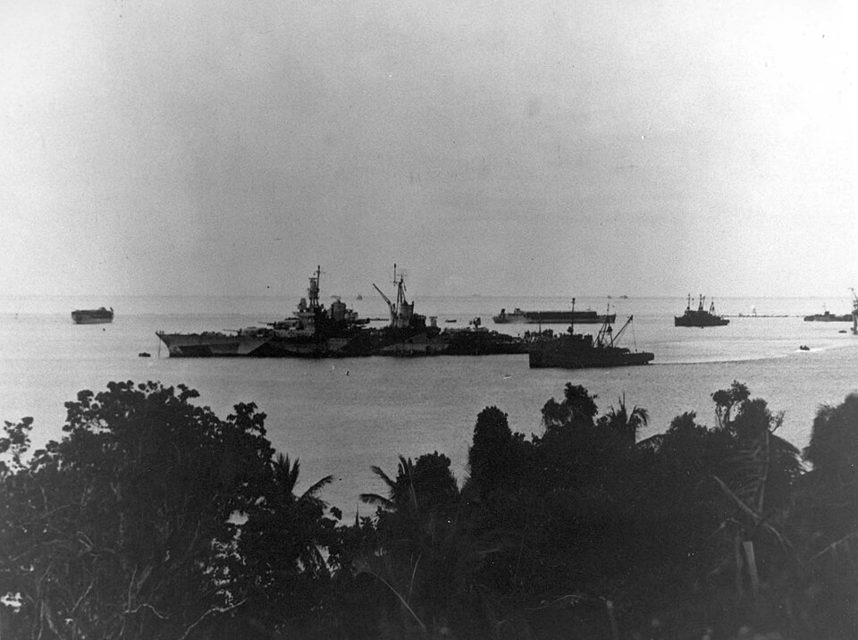
The repair left her on the West Coast in July. Many of the men were new. The training cruise her captain had wanted was set aside for a faster job. On 16 July 1945 she left San Francisco with components of Little Boy, the uranium bomb later used on Hiroshima. She was not carrying the finished bomb. She was not carrying Fat Man, the bomb later used on Nagasaki. A crate and a canister came aboard. She unloaded them at Tinian on 26 July. The bomb was still in pieces when it left the ship.
She stopped at Guam. On 28 July she sailed for Leyte, alone. Captain Charles B. McVay III was in command.
Just after midnight on 30 July the submarine I-58, under Mochitsura Hashimoto, hit her with two torpedoes. No other ship was in the action. She sank in about twelve minutes. Hundreds of men got into the water. She had gone down so fast that no rescue was set in motion, and for days no one came looking. Of 1,199 men, 316 were rescued.
McVay survived. He was court-martialed for not zigzagging. Hashimoto said the torpedoes would still have hit. In 2000 Congress asked that McVay be cleared.
She was the last major American warship sunk in the war. The parts of Little Boy were already on Tinian. The cruiser was not.