Ships
- USS San Francisco (CA-38) Captain, 17 November 1942 – 26 December 1943
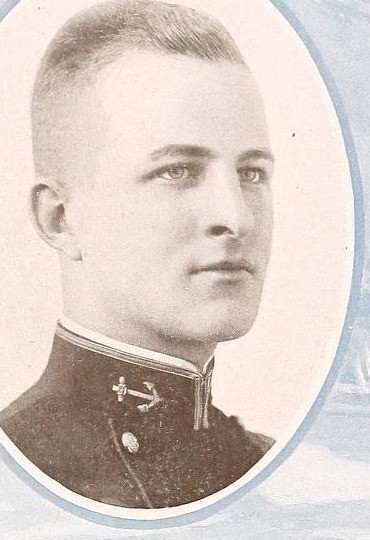
Albert Finley France, Jr., was born in New York City on 26 January 1895 and grew up in New Rochelle, New York. He was a member of the United States Naval Academy class of 1918. He was promoted to commander on 1 February 1938, advanced to temporary captain on 1 January 1942, and made captain on 30 June 1942.
His wartime command was the heavy cruiser San Francisco (CA-38). He took her on 17 November 1942 at Espiritu Santo, in the New Hebrides, while the ship was still torn up from the Naval Battle of Guadalcanal. On the night of 12–13 November, Daniel Judson Callaghan had been killed while flying his flag in her. Cassin Young, captain only since 9 November, had been killed on the bridge. Herbert Emery Schonland had assumed command on 13 November, held the damaged cruiser together, and turned her over to France four days later. The dead from that night, Callaghan and Young among them, had been buried at sea off San Cristobal. A shipmate who had come through the battle later described France as a fortunate choice, and as a captain with the patience that crew required.
San Francisco was patched enough to start for home. She called at Pearl Harbor on 4 December 1942, the crew manning the rail in whites, and continued to the California coast. She was in the city of San Francisco by 12 December. That day Admiral Ernest J. King came aboard and presented the Medal of Honor to Lieutenant Commander Bruce McCandless, the communications officer who had taken the conn after the bridge was shot away and had brought the cruiser out of the fight. Yard work followed at Mare Island. Through the winter France’s work was the repair of the ship and the recovery of her company.
By late March 1943 San Francisco was back in the Pacific, and France kept her in the northern campaign. She took part in the capture of Attu in May and in the occupation of Kiska later that summer. On the night of 25–26 July 1943, south of Kiska, she was with a cruiser and destroyer force that opened fire on radar contacts. The contacts were false. The guns fired into empty water, and that night produced no sinking that can be credited to San Francisco or to the force with her. When American troops went ashore on Kiska in August, the Japanese garrison had already left.
In the autumn he took the cruiser south for the Gilberts. San Francisco joined the assault and capture of Makin in November 1943. From 27 November to 10 December she operated with a carrier task group in the raids on Kwajalein and Wotje, screening the carriers while they struck those atolls in the Marshalls. For his conduct in that operation he received the Silver Star. For his command from 26 March through 26 December 1943, covering Attu, Kiska, the July night action, Makin, and the Marshalls raid, he received the Legion of Merit.
France was relieved on 26 December 1943 by Harvey Edward Overesch. He had had San Francisco for a little more than thirteen months, from the aftermath of Guadalcanal through the Aleutians and the opening landings of the Central Pacific drive. He retired as a rear admiral. He died on 9 June 1968, at the age of 73, at the United States Naval Hospital in Annapolis after a short illness. His funeral was held at the Naval Academy Chapel.