Ships
- USS Saratoga (CV-3) Captain from 1 June 1932 · Temporary command, as commander, until 11 July 1932
- USS Saratoga (CV-3) Captain from 6 June 1940 · Relieved on 12 April 1942
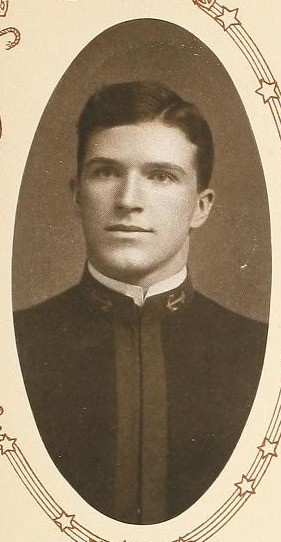
Captain Archibald Hugh Douglas (8 February 1885 – 12 December 1972) was a United States Navy officer and an early naval aviator. He is not an officer of the Royal Australian Navy. The naval record that matches this name is the United States Navy captain who commanded Saratoga in the first months of the Pacific war. Some indexes give his birth year as 1895. That year does not fit a Naval Academy class of 1908. The career dates below follow the 1885 birth year.
He was born in Bennettsville, Marlboro County, South Carolina, the son of Archibald Jennings Douglas and Nannie Harlan Douglas. He entered the University of Tennessee at 16, won national football notice there, and was credited with a kick that appeared in a Ripley's "Believe It or Not" cartoon. Washington and Philadelphia showed interest in him as a baseball pitcher, and he served briefly as an assistant football coach at Tennessee before entering the Naval Academy.
He graduated from Annapolis in 1908. He was class president, captain of the football team, a baseball pitcher and halfback, and set strength-test records at the Academy. He was Navy's first All-American football player, named in 1906 and 1907, scored all but one of Navy's touchdowns against Army in his career, and never lost to Army in either sport.
After graduation he joined the new battleship New Hampshire for nearly four years, with a season as Naval Academy football coach. In 1912 and 1913 he served in the presidential yacht Mayflower under Presidents Taft and Wilson, then went to the Pacific as chief engineer of the cruiser Buffalo and took part in expeditions that established or refitted radio stations in Alaska. He served in the cruiser Cleveland from 1914 to 1916. That was an older ship, not the light cruiser of the Second World War. He was then aide to the commandant of the New Orleans Navy Yard.
When the United States entered the First World War he transferred to naval aviation, trained at Hampton Roads, and was designated Naval Aviator No. 753 in June 1918. He flew in combat in France with the Northern Bombing Group and, after the Armistice, demobilised that unit. He then took advanced training at Pensacola, served as aviation aide to the commandant of the Third Naval District, and in November 1919 took command of Naval Air Station Rockaway. In 1920 he joined the seaplane tender Aroostook as executive officer and became her commanding officer in 1922. From her he oversaw the 1921 flight of 18 Navy aircraft from San Diego to Panama and back, then the longest overseas flight the Navy had made. He was executive officer of Naval Air Station Pensacola from 1923 to 1926, then joined the staff of the Atlantic Fleet Scouting Force in the tender Wright.
He first spent a long period in Rhode Island as a student on the senior course at the Naval War College in 1929. He commanded Naval Air Station Anacostia for two years, then was executive officer of Saratoga in 1931 and 1932. The ship's list of commanding officers also gives him a temporary command of her, as a commander, from 1 June to 11 July 1932. After a short tour as an aircraft inspector at the Douglas plant in Santa Monica, he instructed at the War College from 1933 to 1936. In 1936 he took command of Langley, the Navy's first aircraft carrier, for two years. In 1938 he returned to Newport for the advanced course and stayed on as an instructor.
In May 1940 he was ordered to command Enterprise and held that command for about four hours. He did not keep her. Captain Robert Molten of Saratoga died aboard on 28 May 1940, and Douglas was sent to replace him. The ship's list dates Douglas from 6 June 1940 until 12 April 1942. He commanded Saratoga through the attack on Pearl Harbor, the aborted attempt to reinforce Midway, and the carrier's torpedoing by the Japanese submarine I-6 on 11 January 1942. He brought her back to Bremerton for repair. On 12 April 1942 he returned to the Naval War College as adviser for air operations, head of the Department of Intelligence, and acting chief of staff. By 1945 he was said to have had a longer connection with the college than any other serving officer.
In April 1945 he took command of the Naval Air Technical Training Center at Norman, Oklahoma, and retired from there in March 1946. He settled in Newport, Rhode Island, and died on 12 December 1972. He is buried in St Mary's Episcopal Churchyard, Portsmouth, Rhode Island. His awards included the World War I Victory Medal, the American Defense Service Medal, the American Campaign Medal, the Asiatic-Pacific Campaign Medal and the World War II Victory Medal.
The two Saratoga dates, 1 June to 11 July 1932 and 6 June 1940 to 12 April 1942, are the ship's list of commanding officers. Molten's death on 28 May 1940 is the same list.