Ships
- USS Helena (CL-50) Captain, 23 November 1942 – 6 July 1943
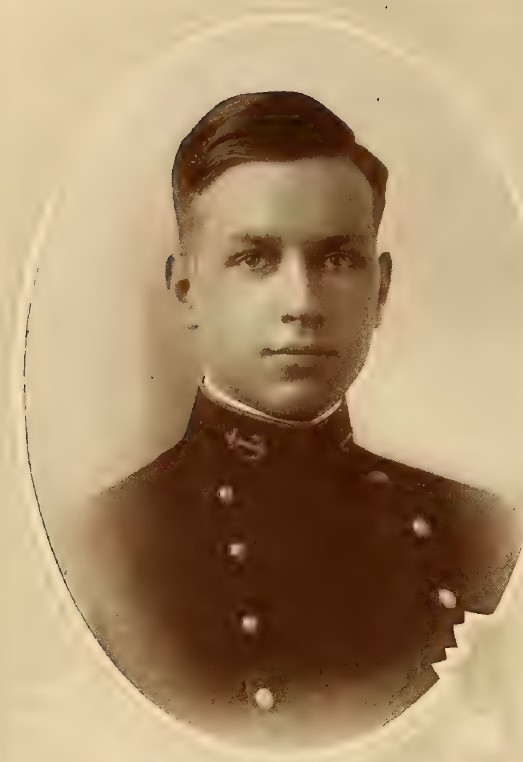
Charles Purcell Cecil was born in Louisville, Kentucky, on 4 September 1893. Kentucky appointed him to the Naval Academy, and he graduated with the class of 1916, receiving his commission as an ensign that June. Early sea duty included the battleship Arizona. During the First World War he served in the converted yacht Yankton on convoy escort.
In the years between the wars he alternated sea duty with staff work. He was aide to the commandant of the Sixth Naval District in the early 1920s and later aide with the battleship divisions. In the mid-1930s he commanded the destroyers Greer and Cummings, the small-ship commands that set the pattern for his wartime leadership.
At the opening of the Pacific war he led destroyers, first as commander of Destroyer Division Eleven and then of Destroyer Squadron Five. On 26 October 1942, north of the Santa Cruz Islands, he took the squadron into action against a stronger Japanese force. The destroyer Porter, his flagship, was lost in that battle. His conduct of the squadron earned him the Navy Cross.
On 23 November 1942 he became captain of the light cruiser Helena, relieving Gilbert Corwin Hoover. The ship he joined had already fought at Pearl Harbor and in the night actions off Guadalcanal. Through the first half of 1943 he kept her in the Solomons as American forces worked north toward New Georgia. In May Helena laid mines and bombarded shore positions off Kolombangara, in restricted water and poor visibility, under the chance of return fire.
The command ended in Kula Gulf on the night of 5–6 July 1943. Helena was covering landings on New Georgia and had fired on Japanese shore batteries while under gun and torpedo fire. In the surface action that followed she engaged a larger Japanese force and shared in the damage inflicted on it. Japanese torpedoes then broke her open. Captain Cecil ordered the crew off and continued to direct the rescue from a small raft after the cruiser went down. His tour in Helena closed with the ship on 6 July 1943. For those Solomon Islands operations, the mining and bombardment as well as Kula Gulf, he received the Bronze Star and a Gold Star in lieu of a second Navy Cross.
He lived through the sinking and went on to further duty in the Pacific. By the summer of 1944 he was a rear admiral. On 31 July 1944, while he was traveling between assignments, the plane carrying him crashed near Funafuti. He was fifty. He is buried at Arlington National Cemetery. The destroyer Charles P. Cecil, launched at Bath, Maine, on 22 April 1945, was named for him, and his widow sponsored the ship at the launching.