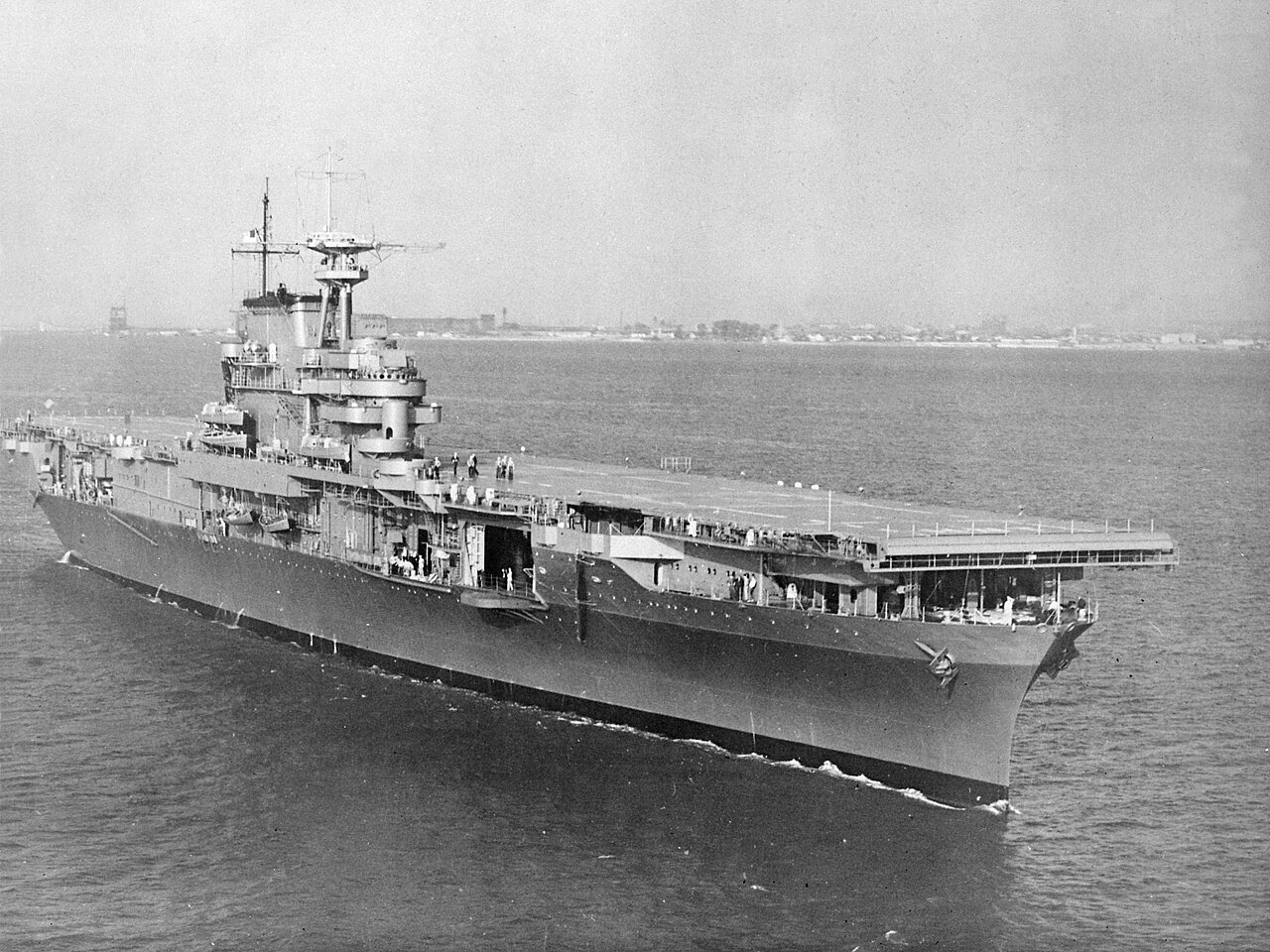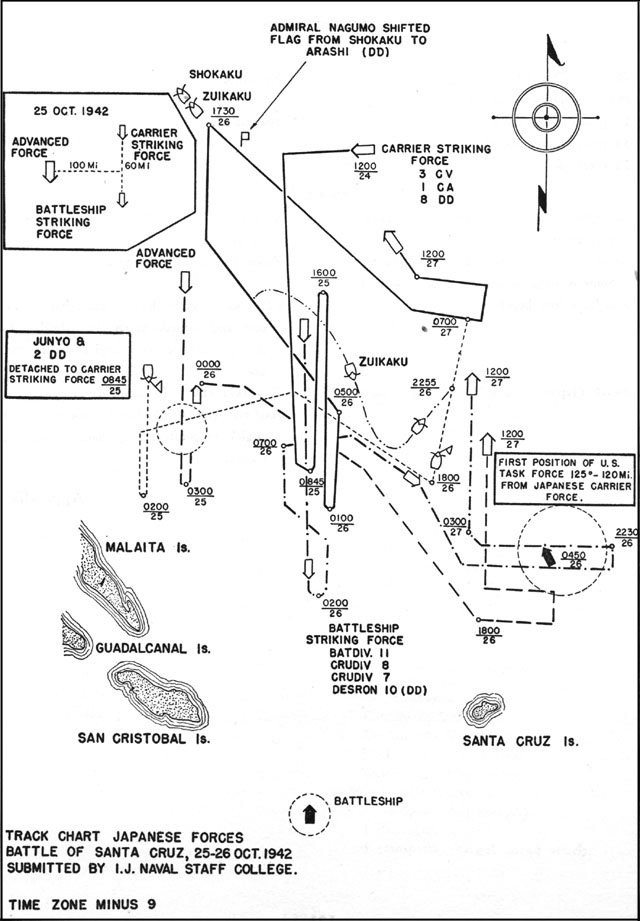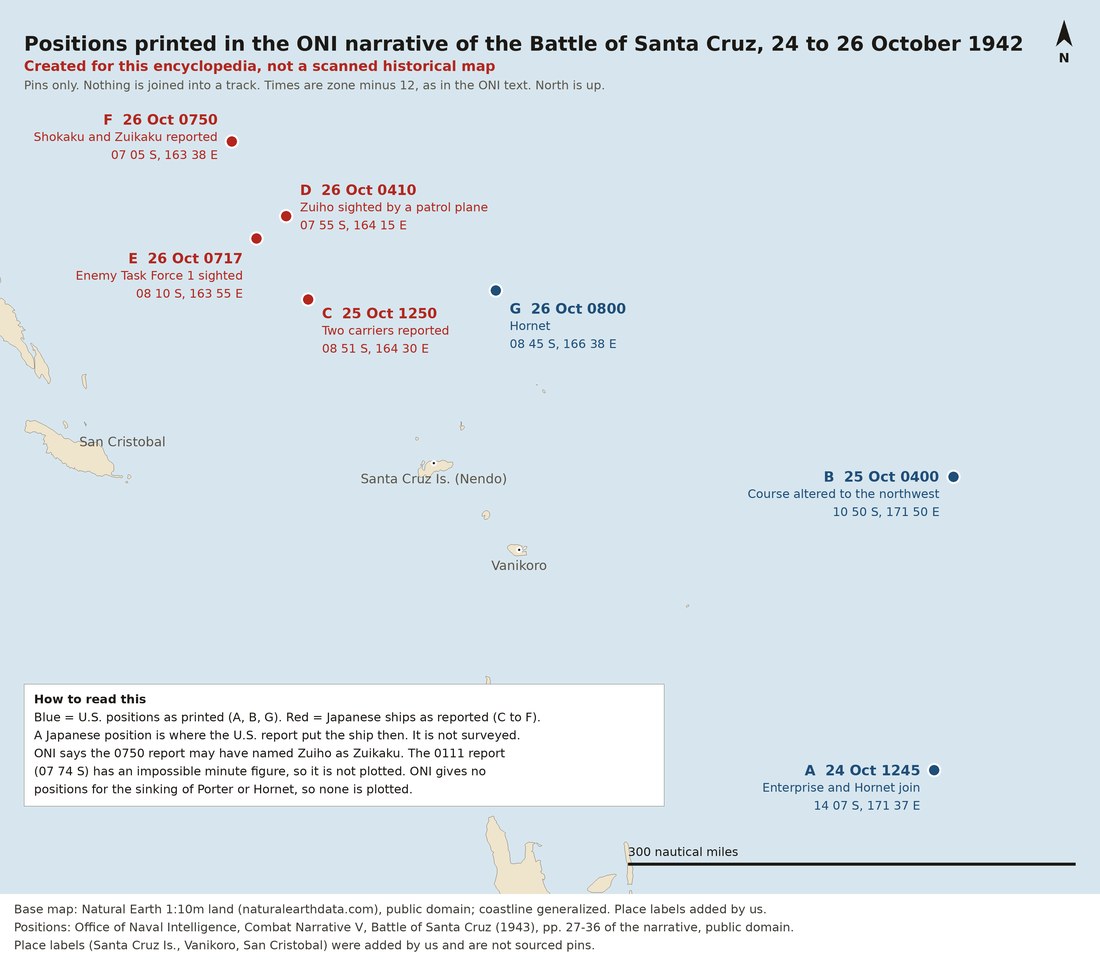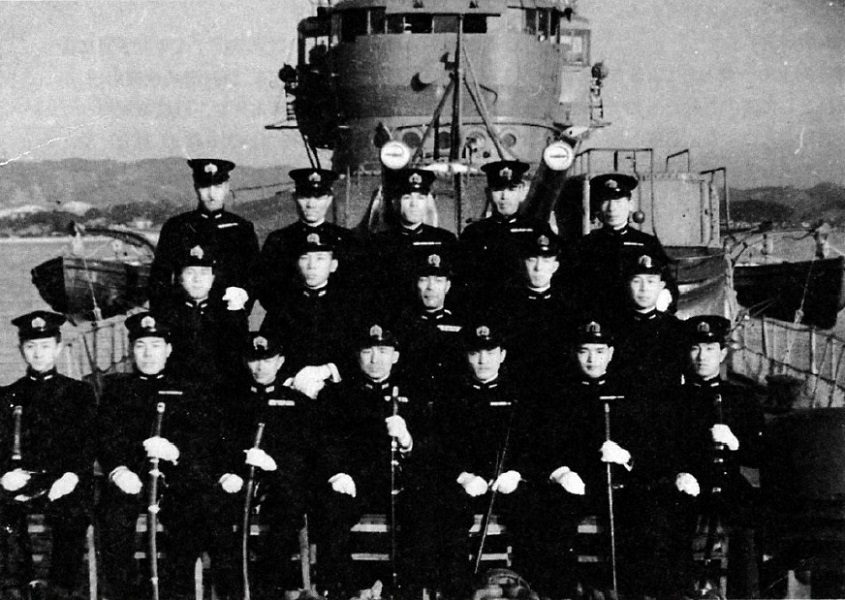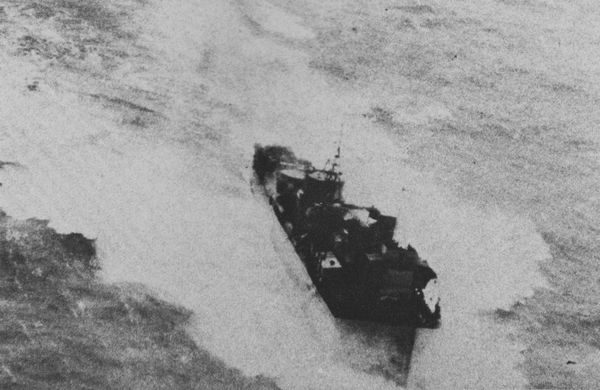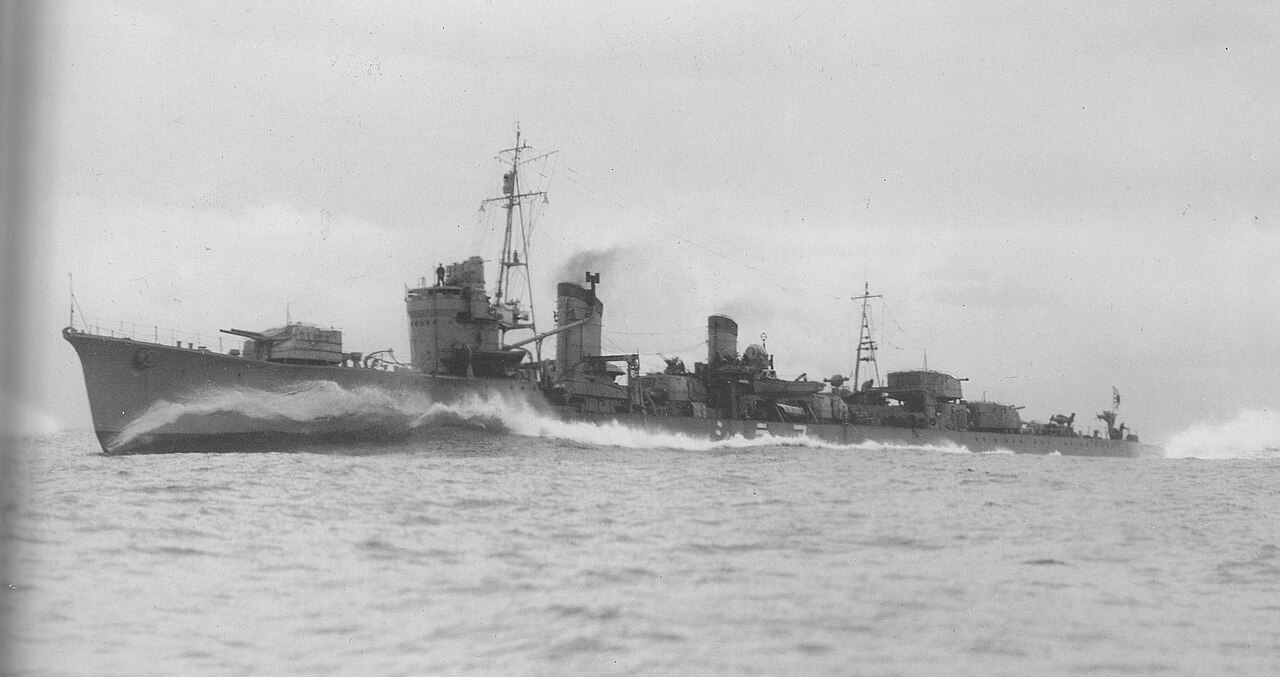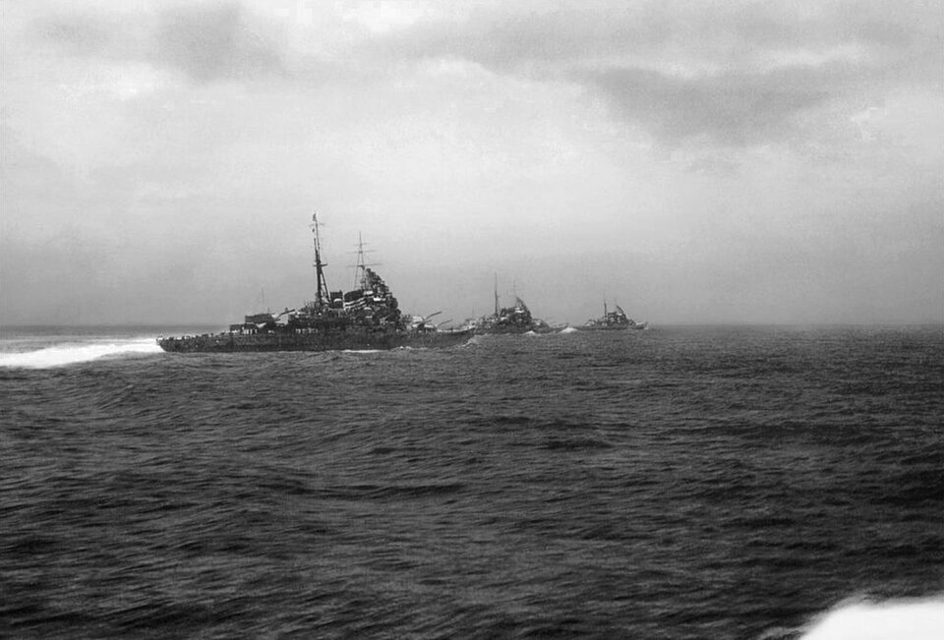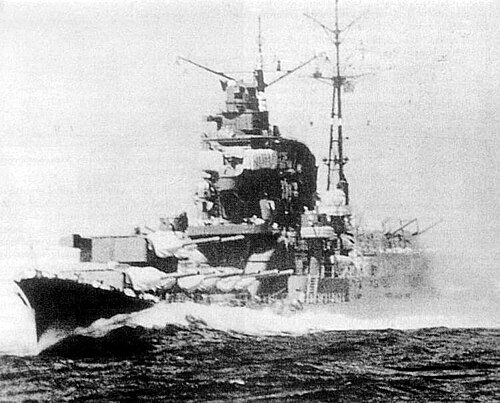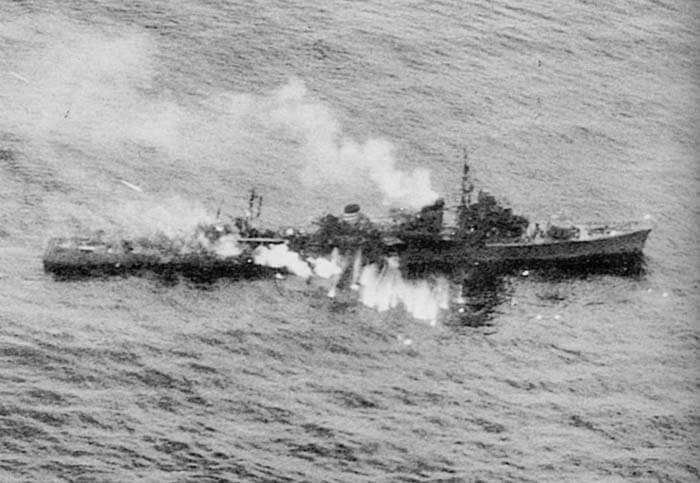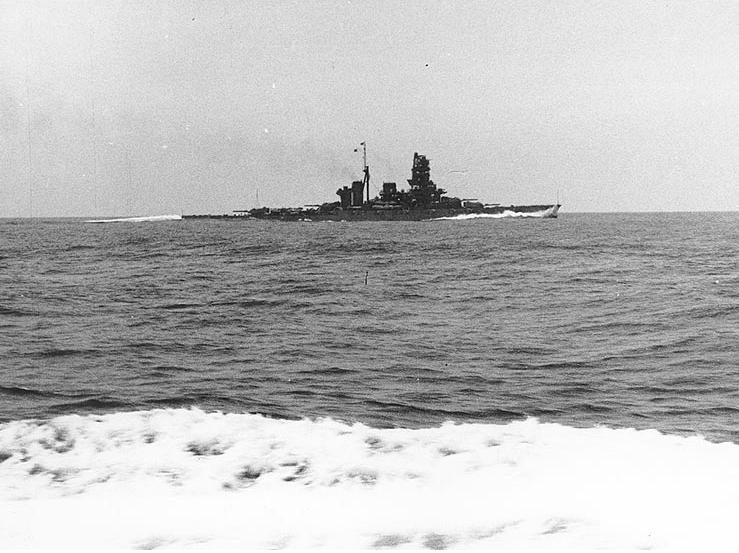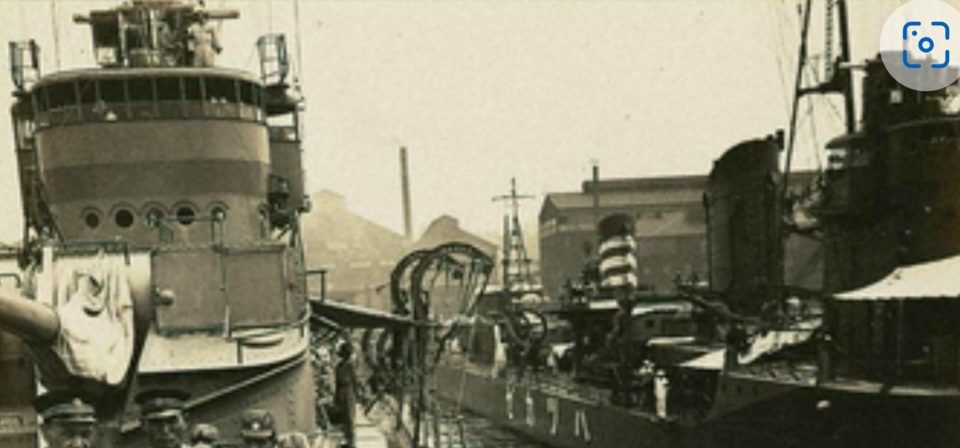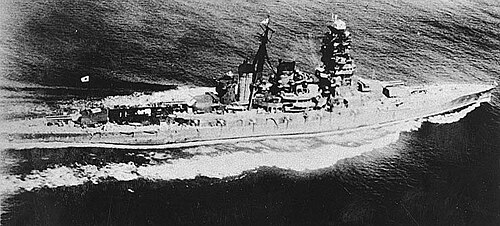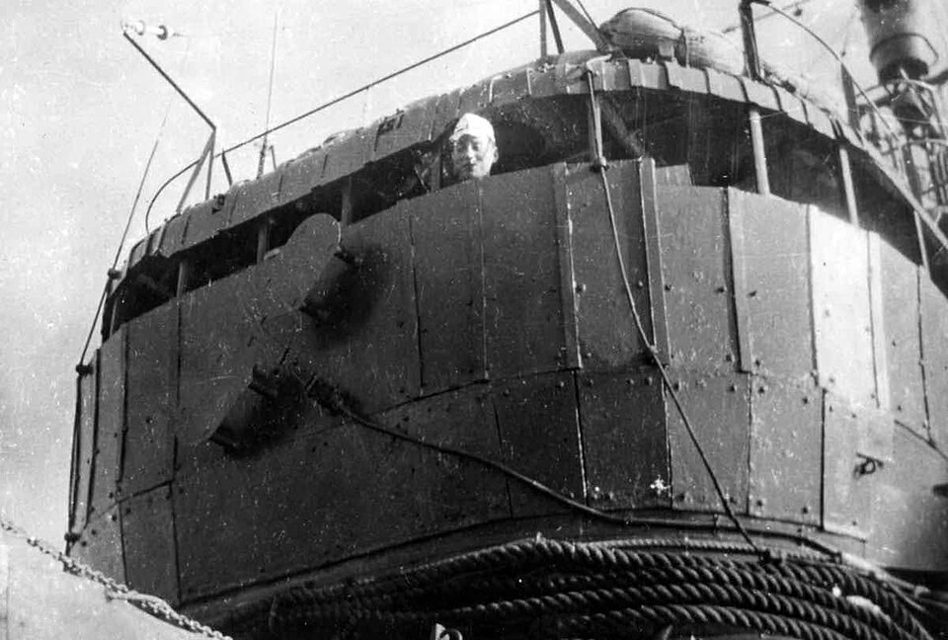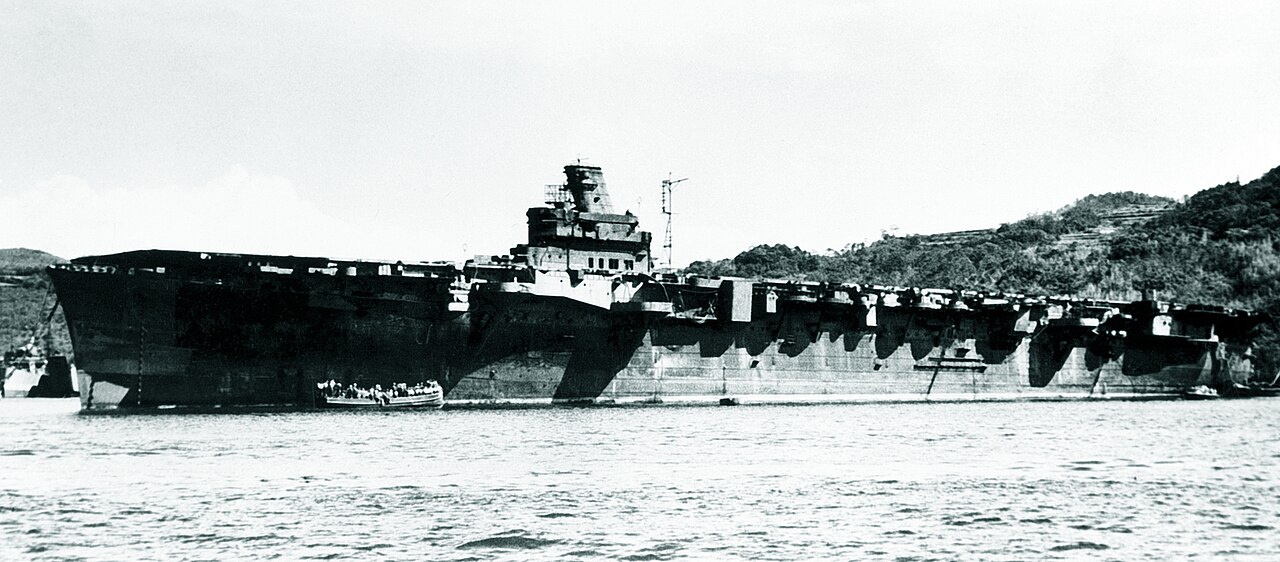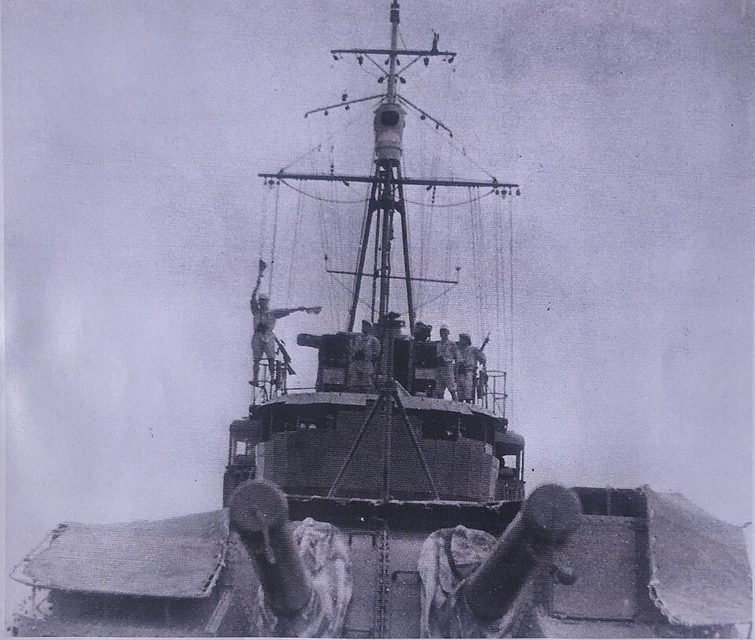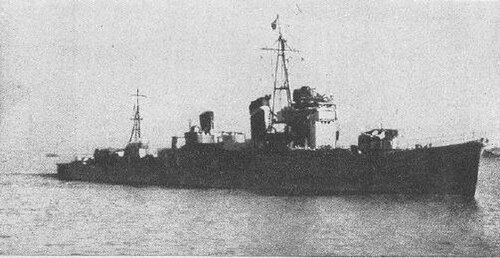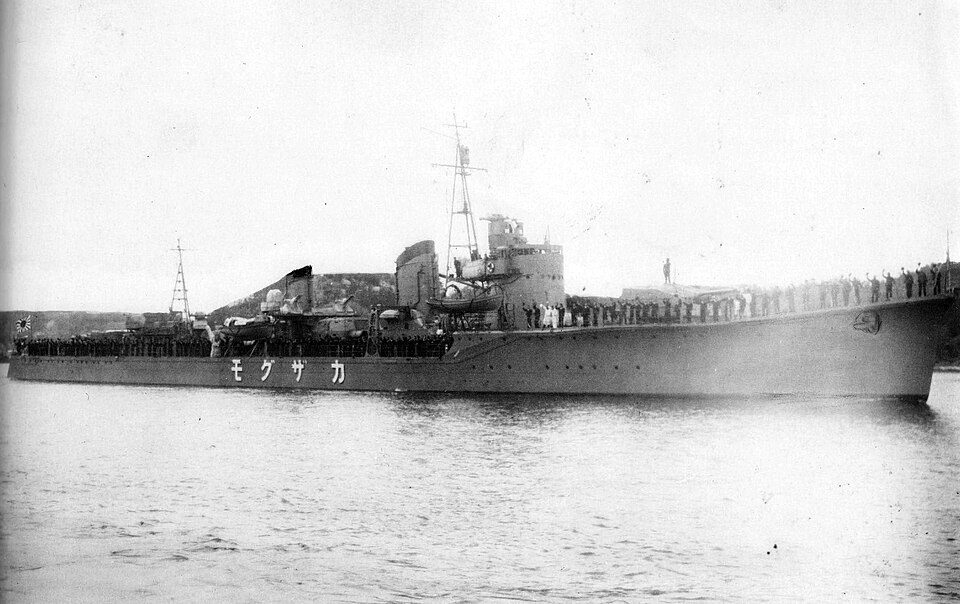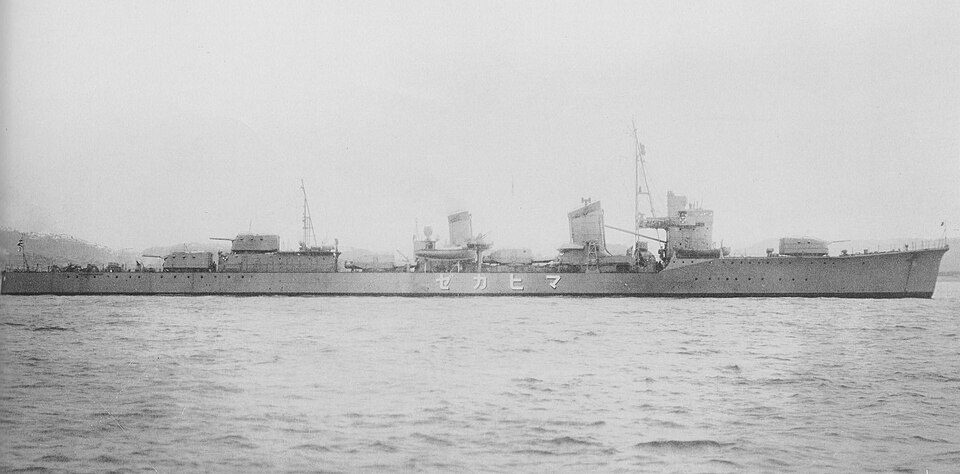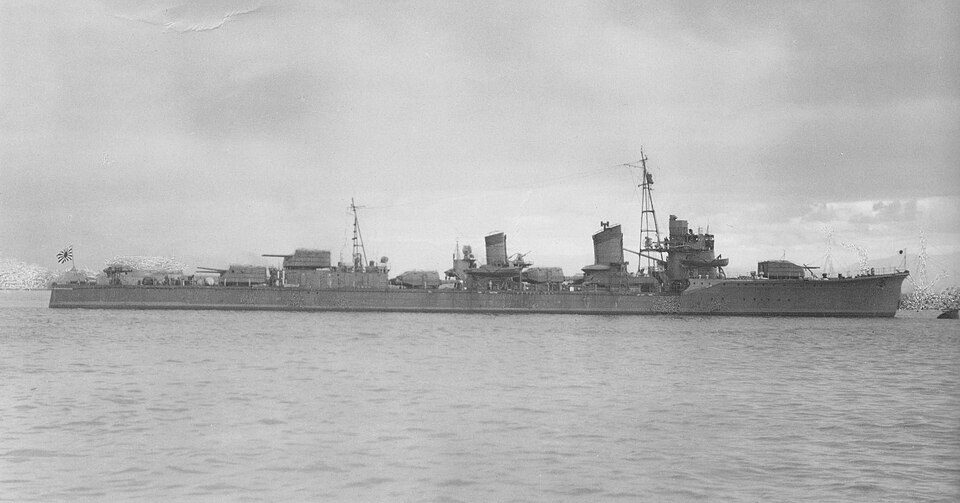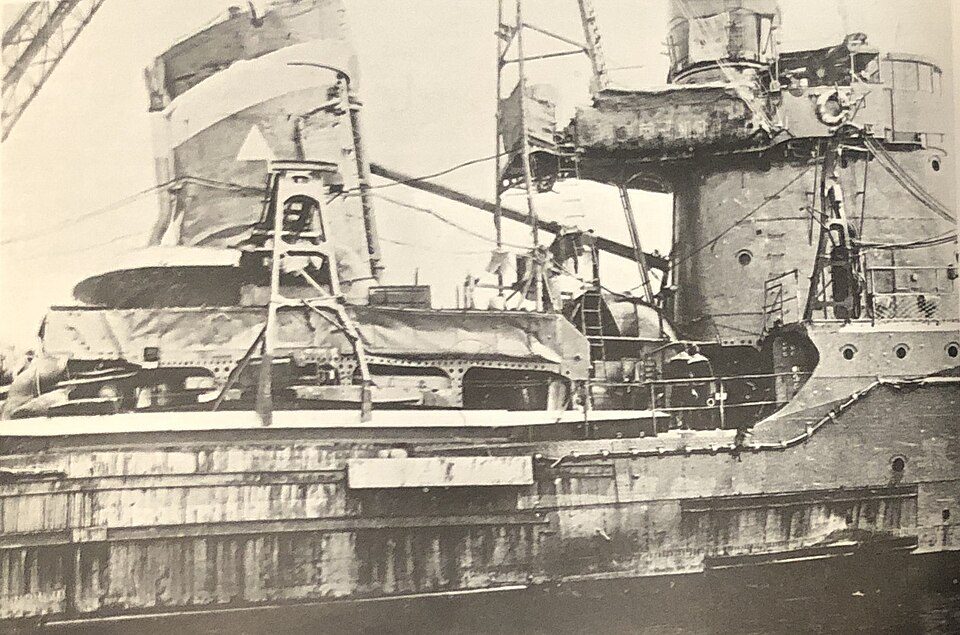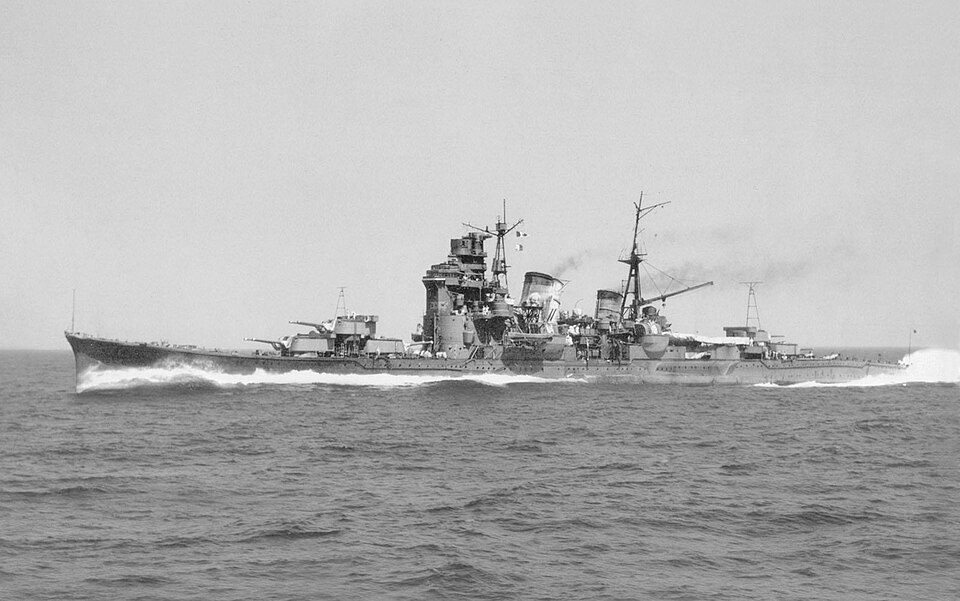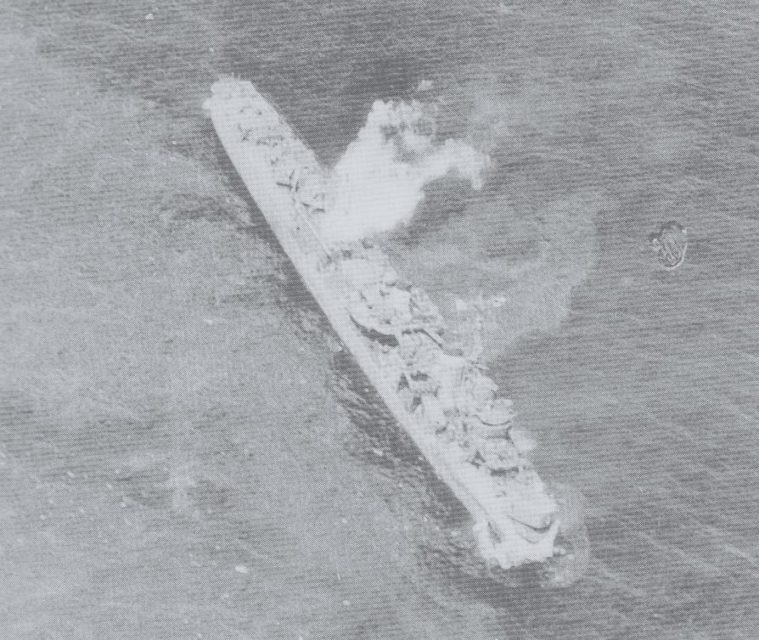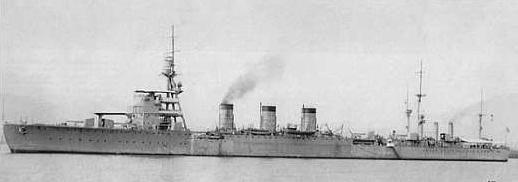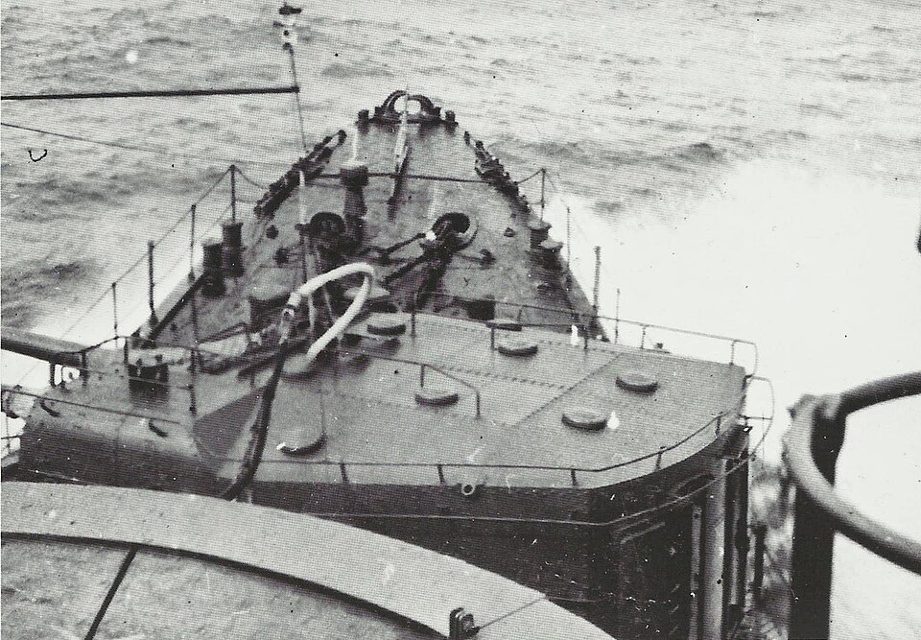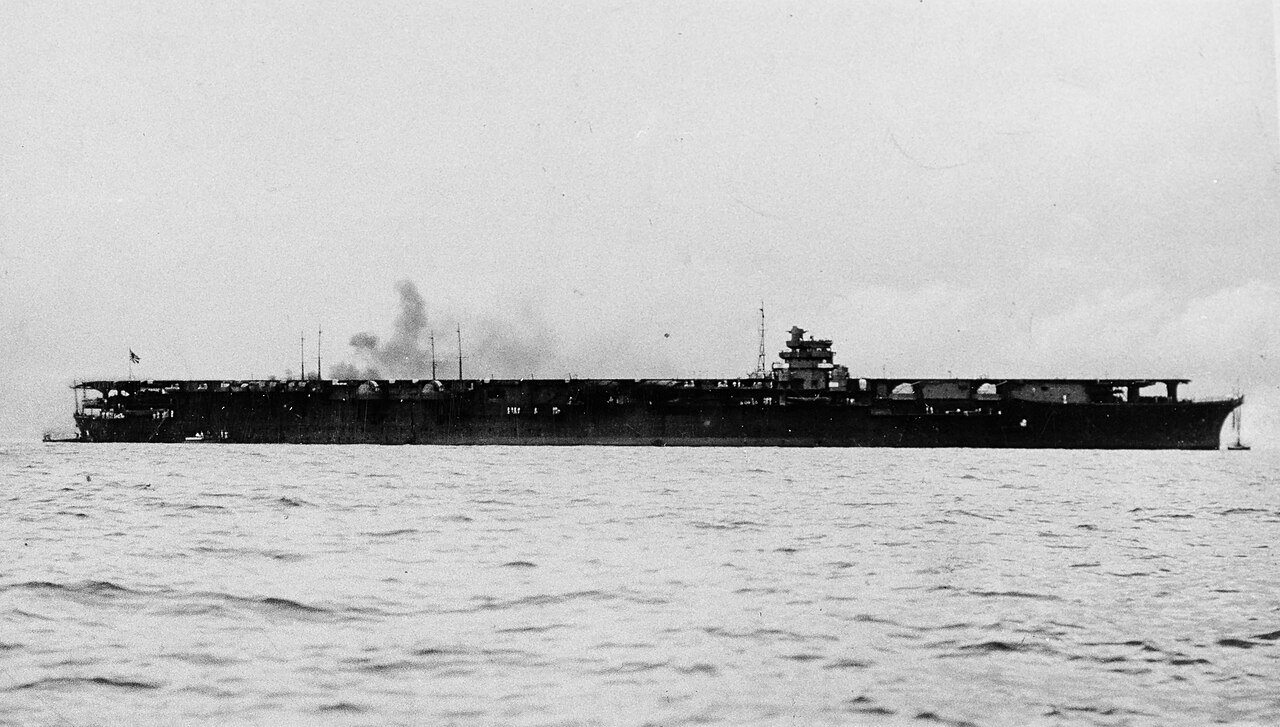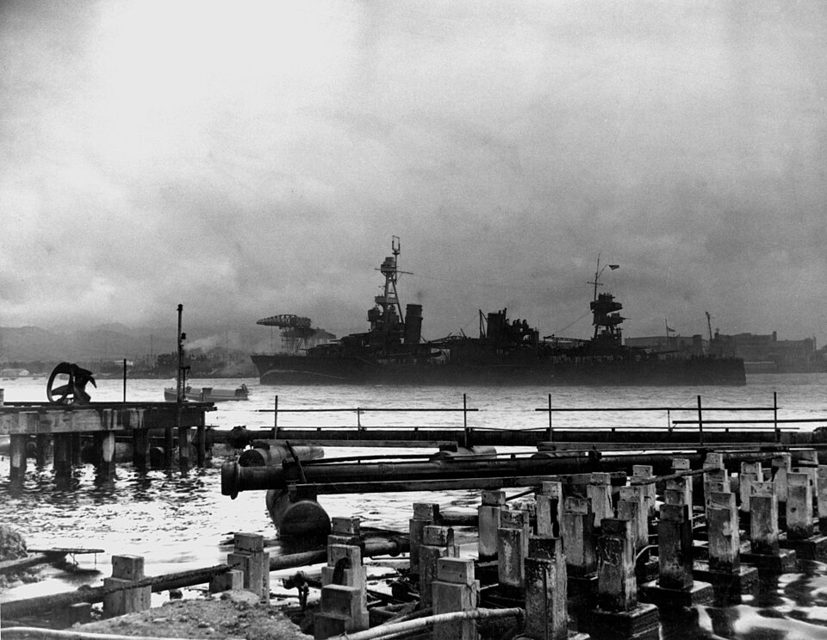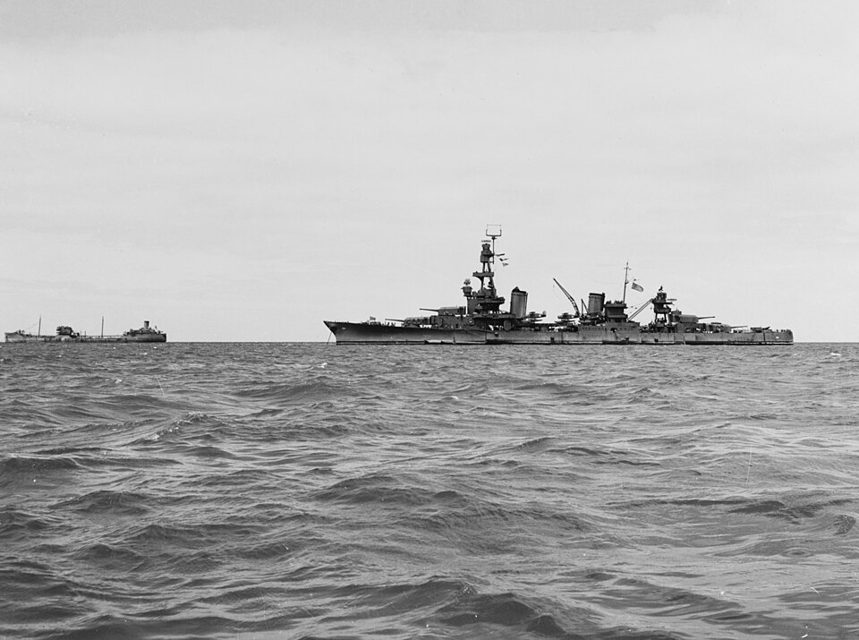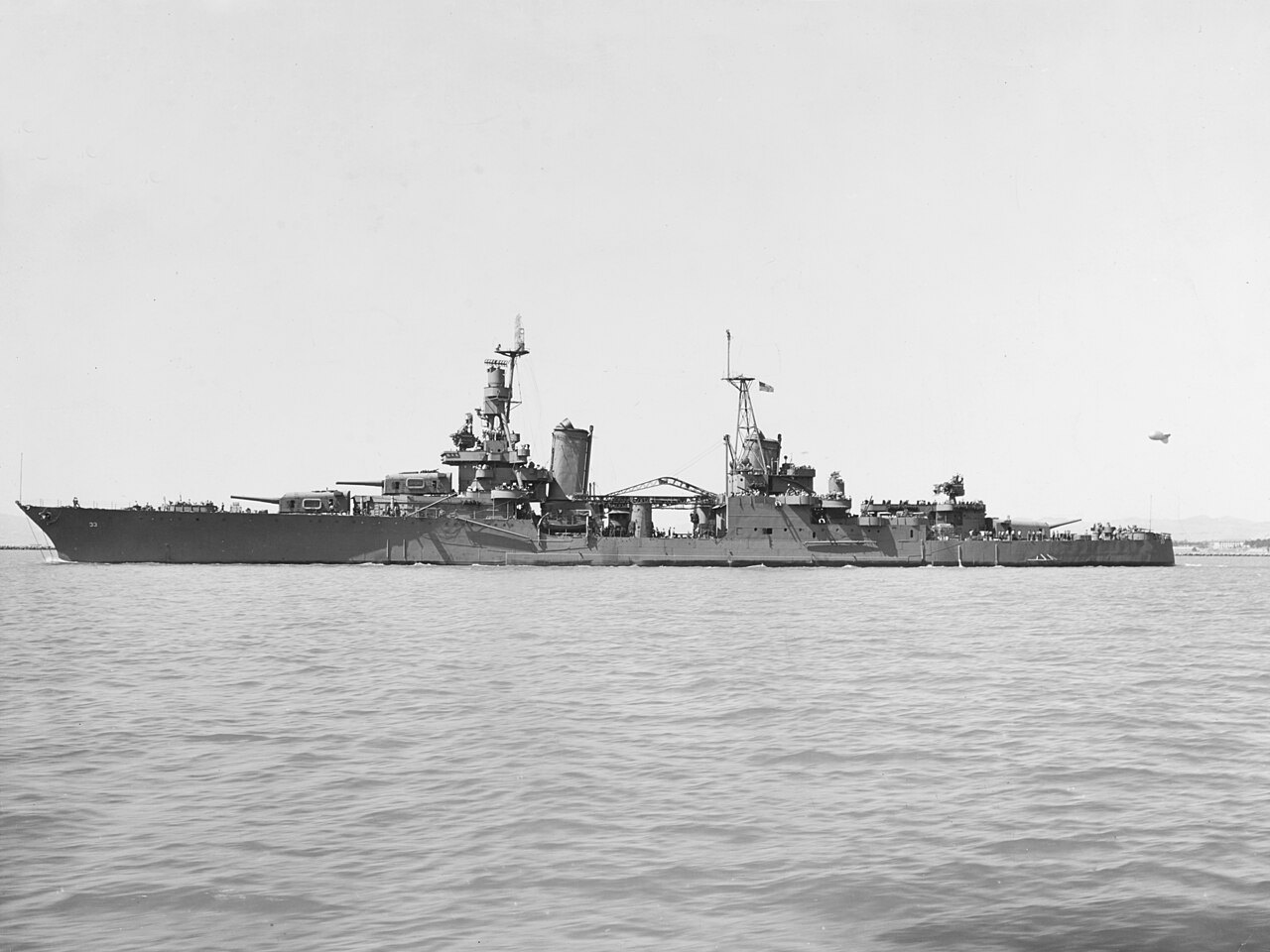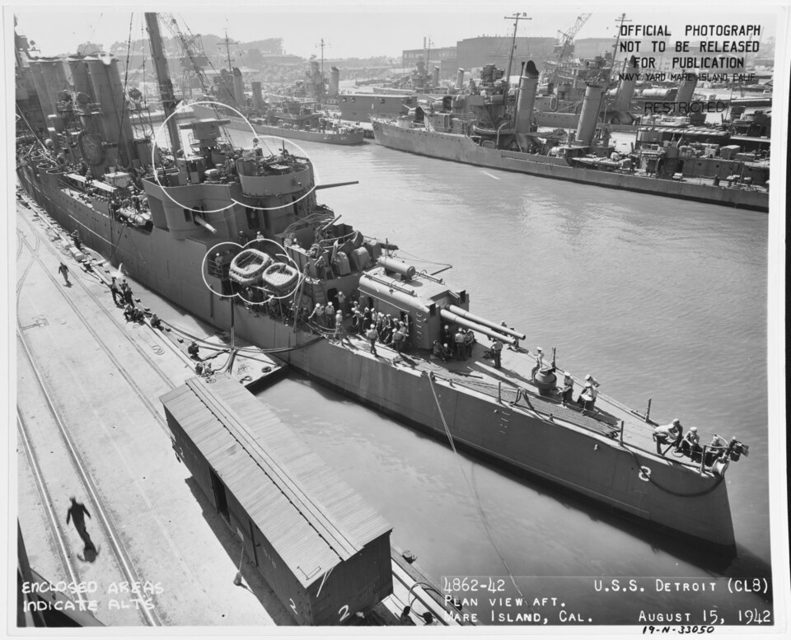
The Battle of the Santa Cruz Islands was fought on 26 October 1942 north of the Santa Cruz Islands, east of the Solomons. It was a carrier battle, and the opposing surface ships never came within gun range of each other. American Task Force KING, under Rear Admiral Thomas Kinkaid, had two carriers, Enterprise and Hornet, with a battleship, cruisers, and destroyers. The Japanese had four carriers within reach, four battleships, and a large screen. The Americans lost Hornet and the destroyer Porter (DD-356). Enterprise, South Dakota, San Juan, and the destroyer Smith were damaged. The Japanese carriers Shokaku and Zuiho and the heavy cruiser Chikuma were damaged. No Japanese ship was sunk in the carrier action.
The Japanese plan was tied to the fight on Guadalcanal. The Office of Naval Intelligence narrative says their army was expected to capture Henderson Field, so that carrier planes could use it. The land attack failed, and ONI argues that the Japanese ships would have turned back whether or not the carriers had met. That is the ONI reading. The times below are zone minus 12, as in the ONI narrative and on its chart. Other sources use other clocks, and the last section sets out the differences.
The forces
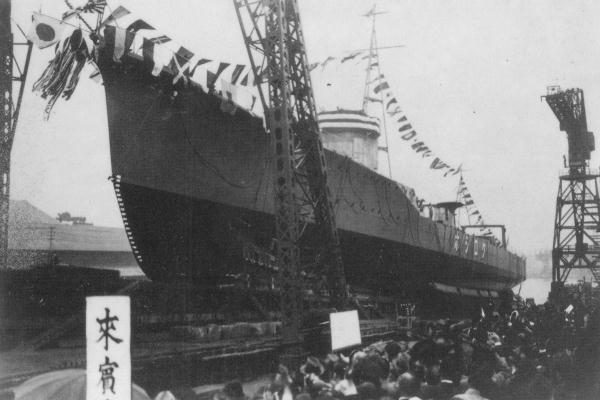
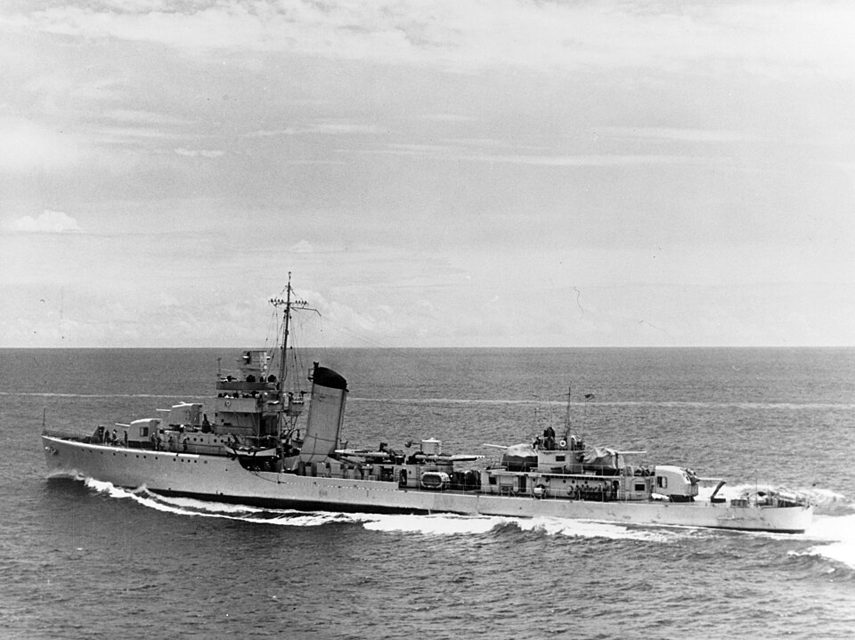
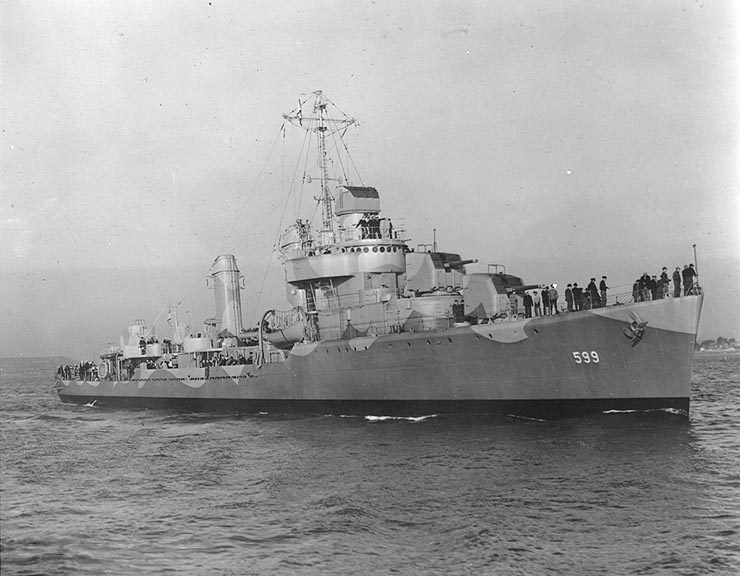
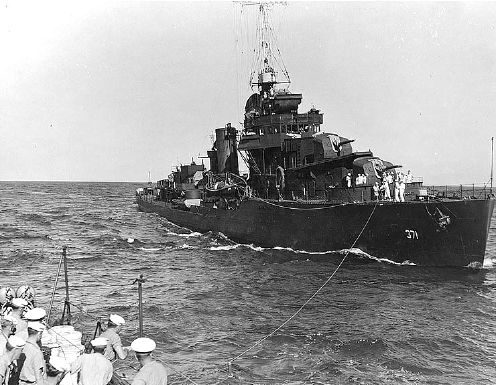
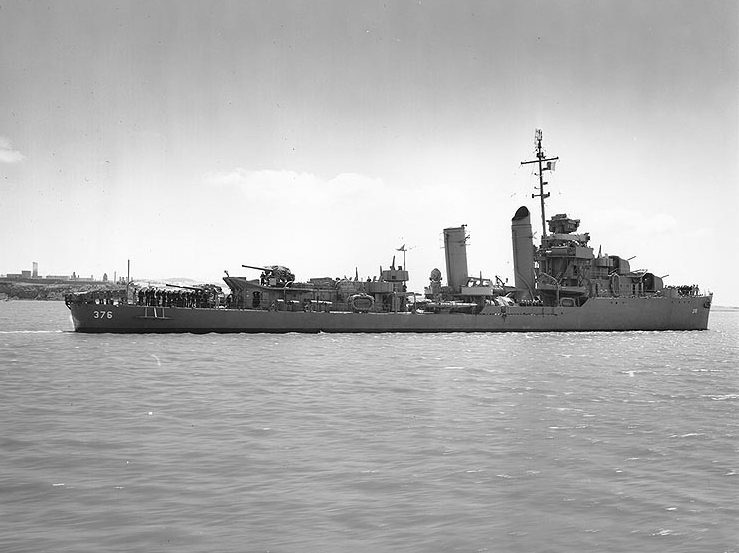
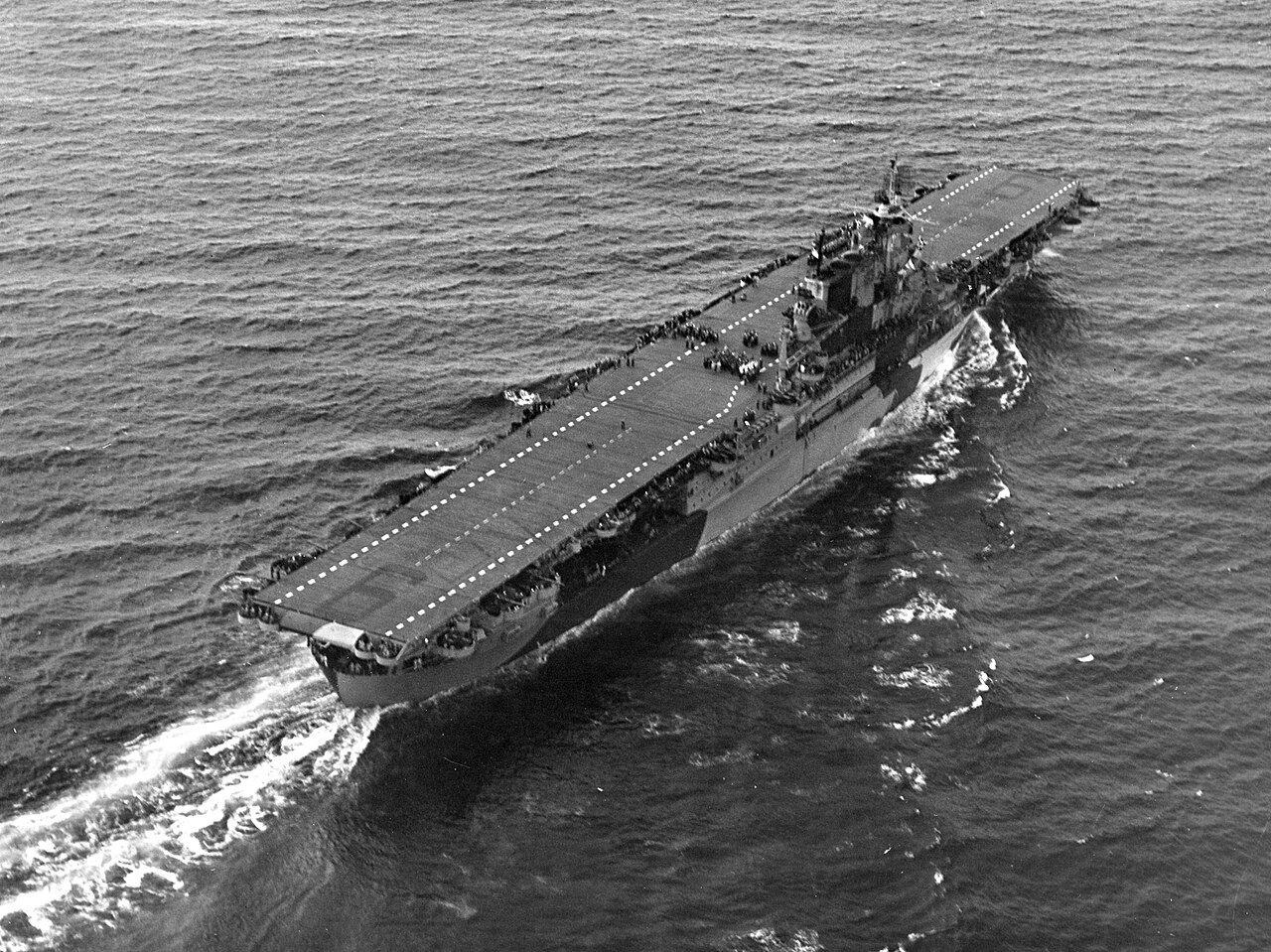
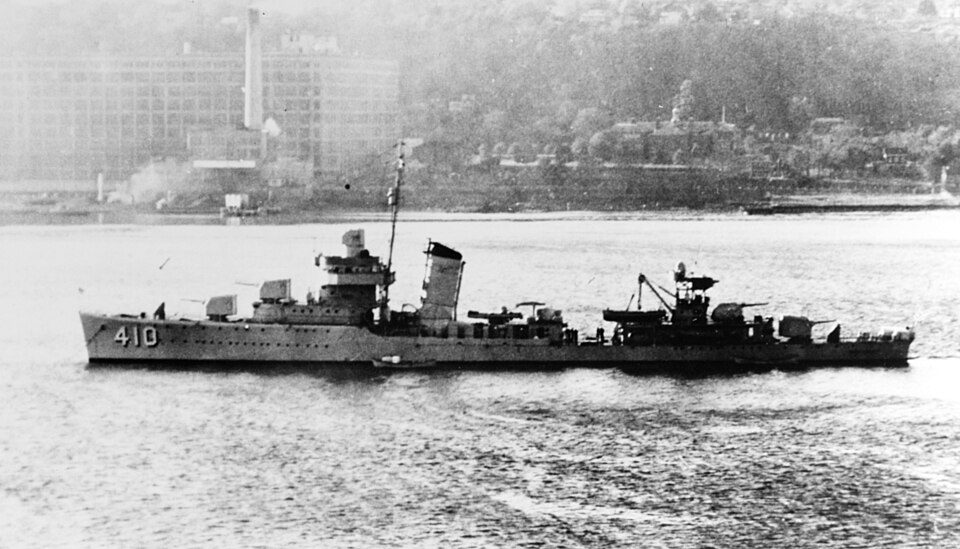
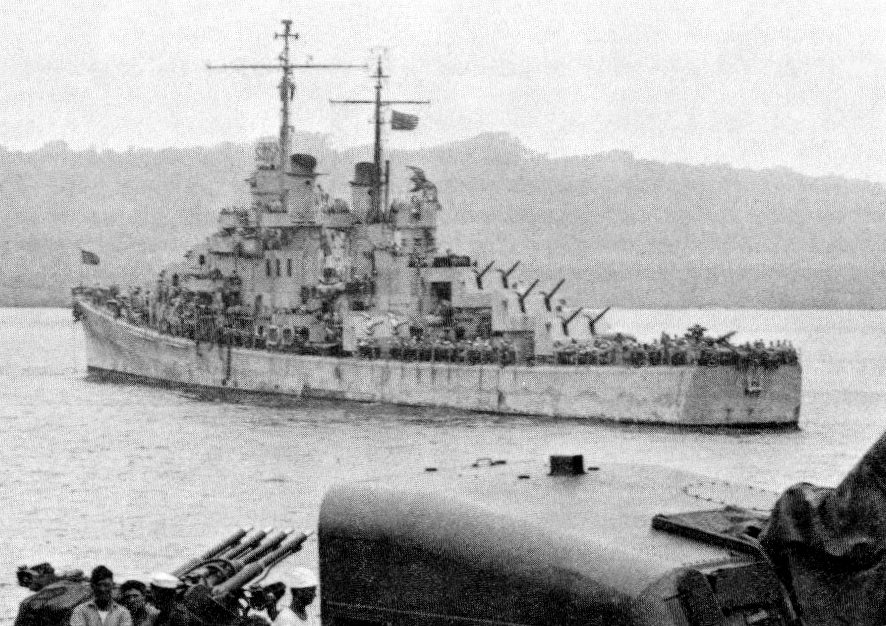
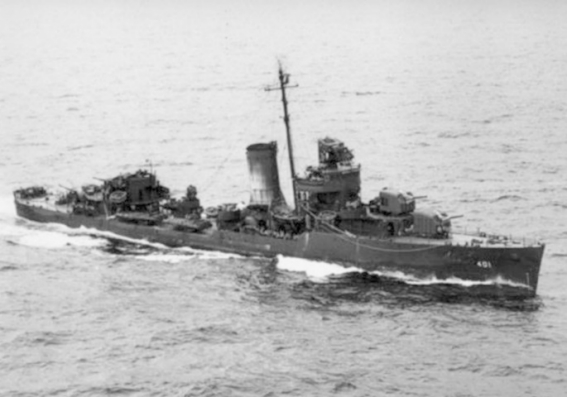
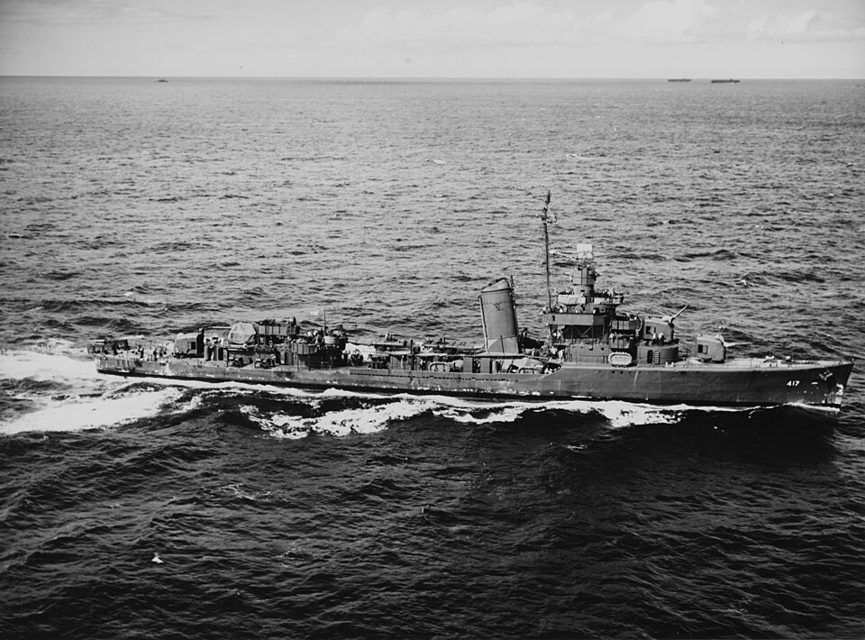
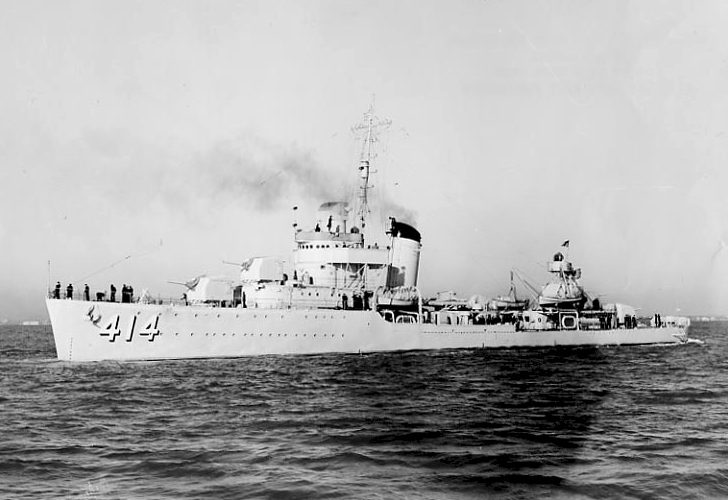
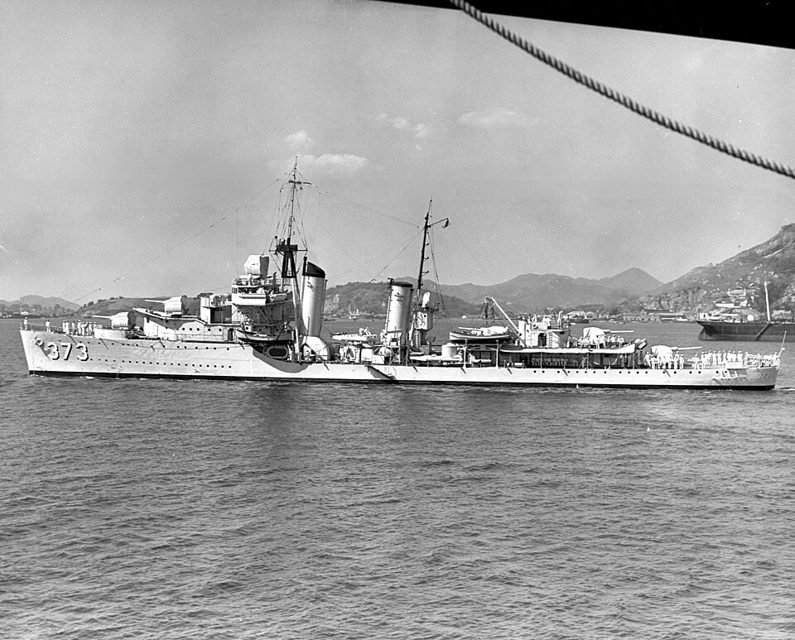
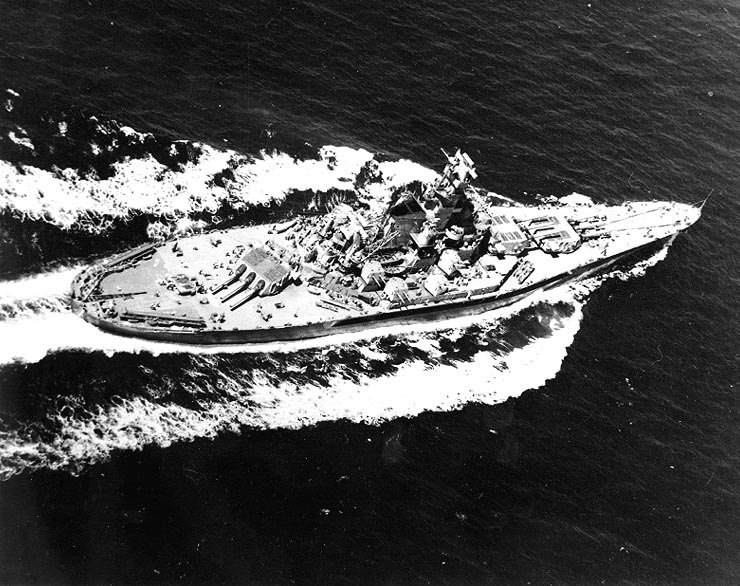
The ONI narrative lists the American ships present on 24 October. The Enterprise group had the carrier Enterprise, Captain Osborne Hardison, with Kinkaid aboard; the battleship South Dakota, Captain Thomas Gatch; the heavy cruiser Portland, Captain Laurance DuBose, with Captain Mahlon Tisdale aboard as commander of cruisers; the antiaircraft cruiser San Juan, Captain James Maher; and eight destroyers. They were Porter (DD-356), flagship of the squadron commander, Captain Charles Cecil, under Lieutenant Commander David Roberts; Mahan; Cushing (DD-376); Preston (DD-379); Smith, Lieutenant Commander Hunter Wood, Jr.; Maury; Conyngham; and Shaw.
The Hornet group had the carrier Hornet, Captain Charles Mason, with Rear Admiral George Murray aboard; the heavy cruisers Northampton, Captain Willard Kitts, carrying Rear Admiral Howard Good, and Pensacola; the antiaircraft cruisers San Diego and Juneau; and six destroyers, Morris, Anderson, Hughes, Mustin, Russell, and Barton, under Commander Arnold True. The two groups joined at 1245 on 24 October at 14 07 S, 171 37 E, northeast of the New Hebrides, and Kinkaid took command of both. The DANFS entries call the combined force Task Force 61.
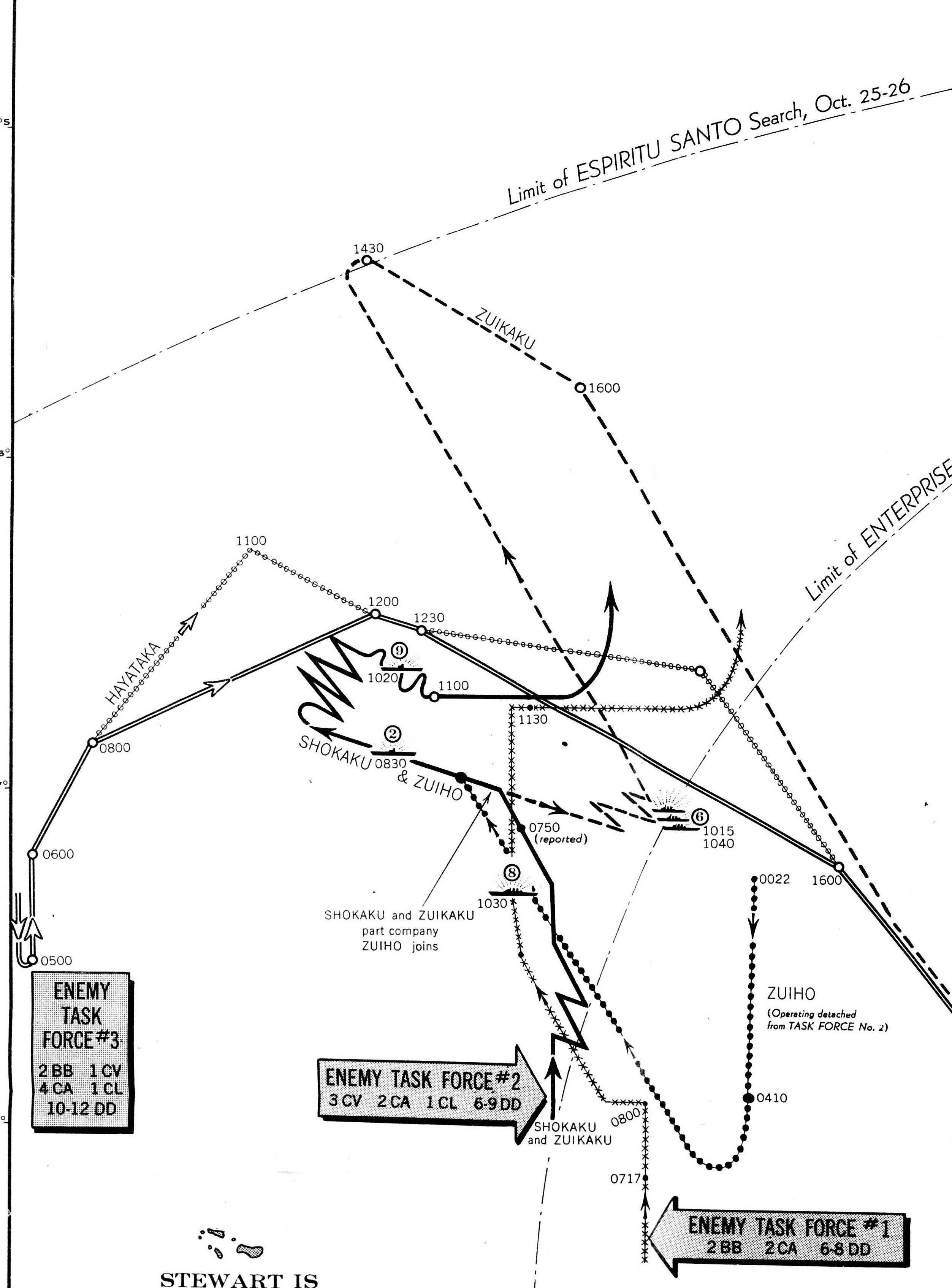
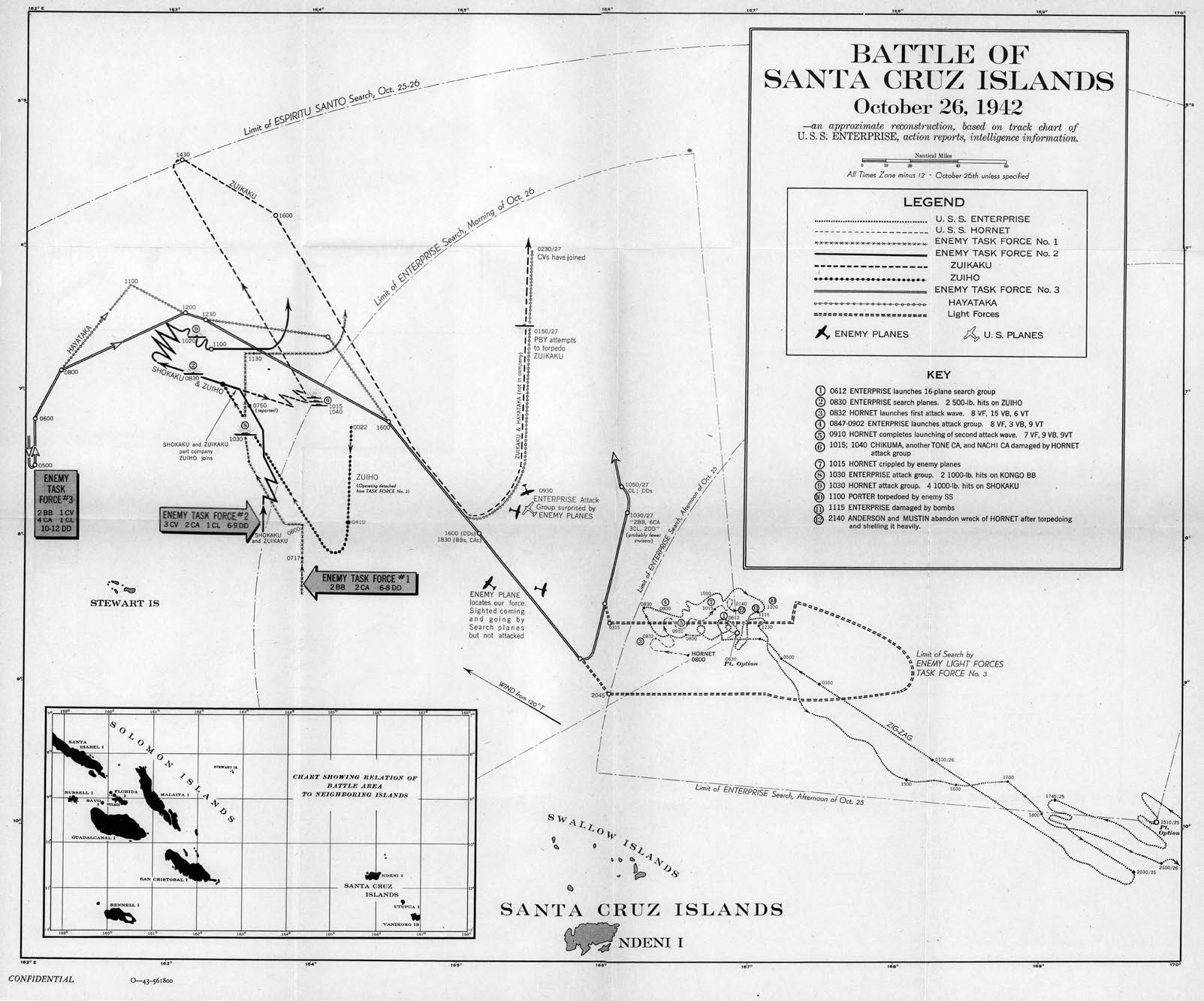
ONI sorts the Japanese into three groups, because the sightings were incomplete. Enemy Task Force No. 1 was an advance force of two battleships, heavy cruisers, and destroyers. No. 2 was the carrier force, Shokaku, Zuikaku, and Zuiho. No. 3 was a support force of two more battleships, heavy cruisers, and destroyers, at times with the converted carrier that ONI calls Hayataka and other sources call Junyo. ONI says the groups were fluid and that all three carriers were never seen together.
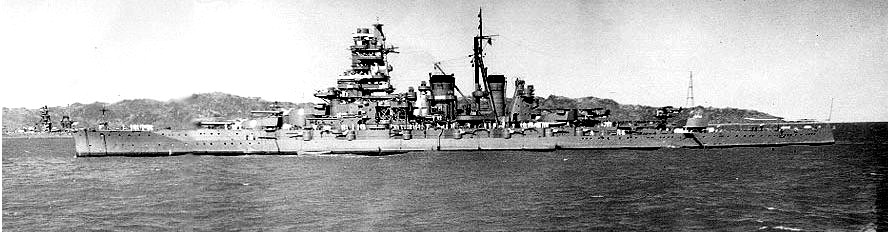
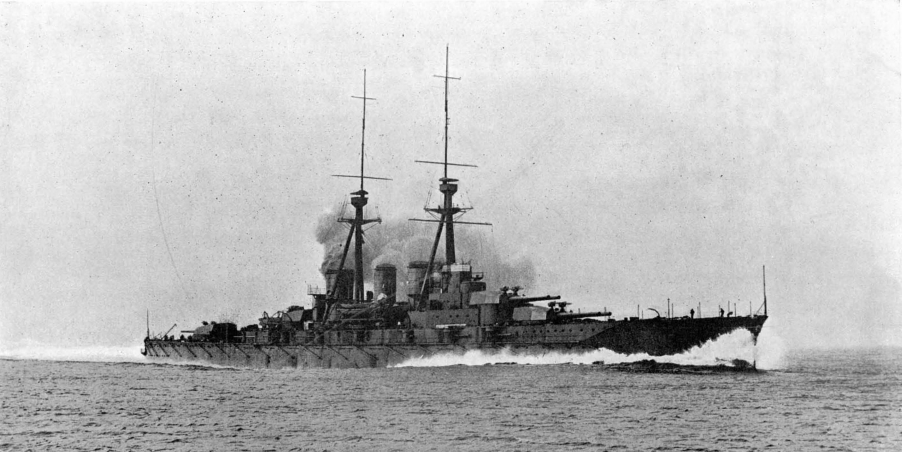
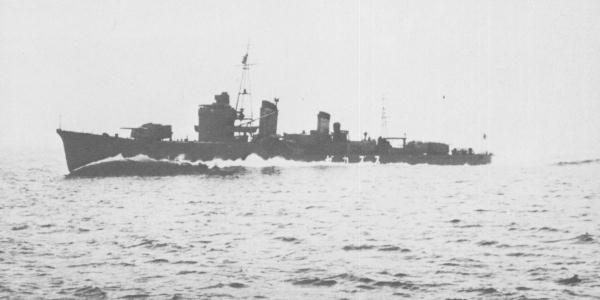
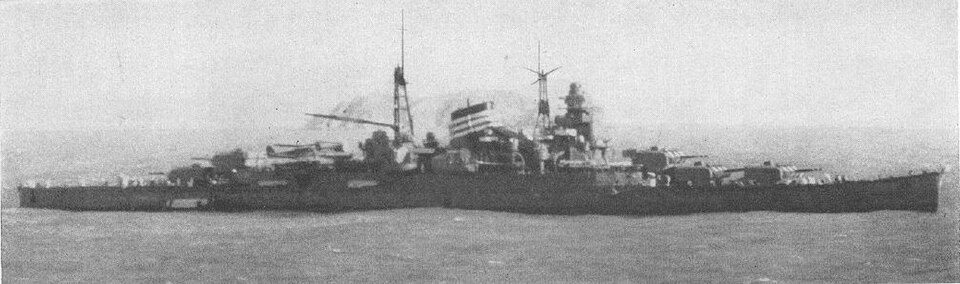
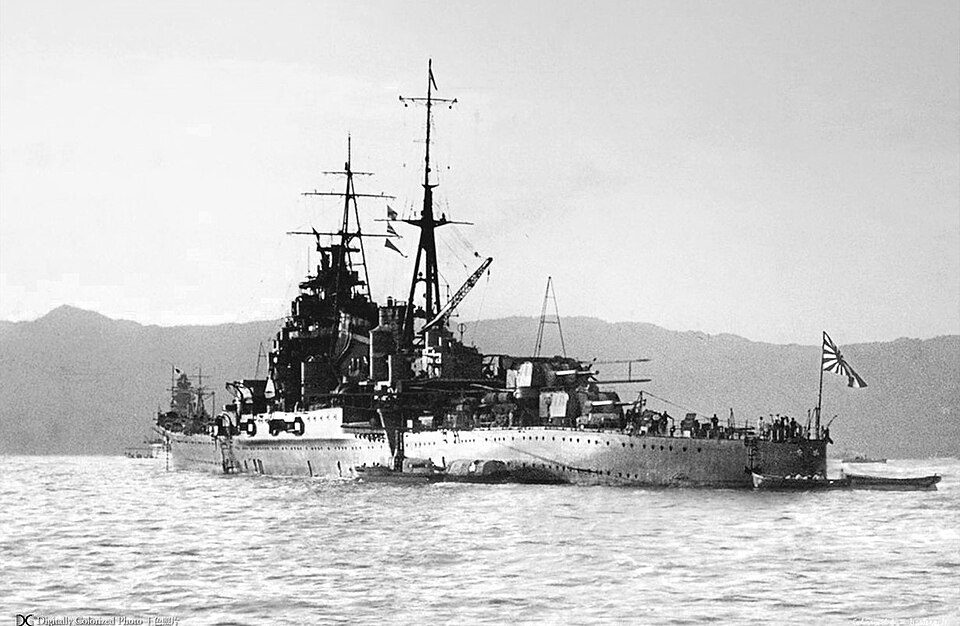
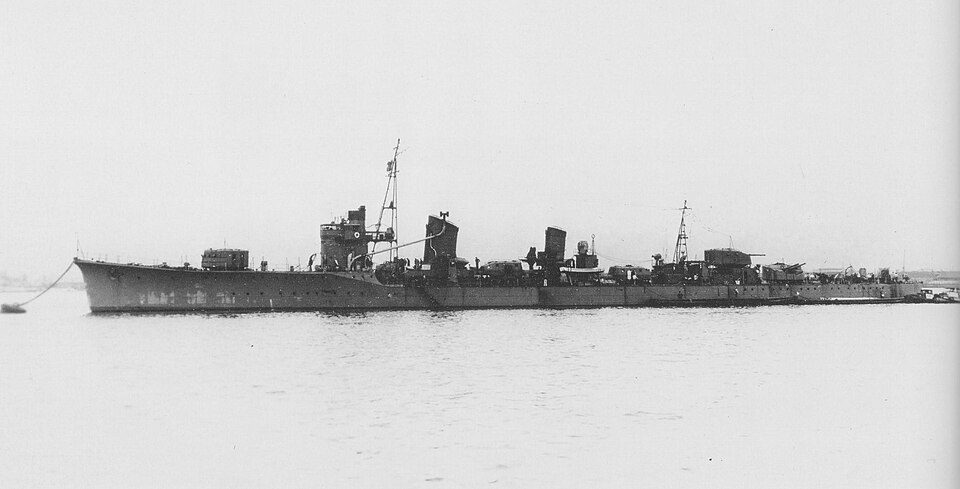
The ship names below come from secondary lists, which agree on most points. Vice Admiral Nobutake Kondo had the advance force, with Atago, Takao, Myoko, Maya, the light cruiser Isuzu, destroyers, and Junyo, and Vice Admiral Takeo Kurita's Kongo and Haruna as a support group. Vice Admiral Chuichi Nagumo had Shokaku, Zuikaku, and Zuiho, the heavy cruiser Kumano, and eight destroyers. Captain Masafumi Arima commanded Shokaku. Rear Admiral Hiroaki Abe had the vanguard, with Hiei, Kirishima, Tone, Chikuma, Suzuya, and Nagara, and destroyers. The destroyer lists vary.
The approach
Admiral Halsey, commanding the South Pacific, ordered Task Force KING north of the Santa Cruz Islands and then southwest, to a point east of San Cristobal, to meet the Japanese if they came toward Guadalcanal. At 0400 on 25 October, at 10 50 S, 171 50 E, the force turned northwest. The morning search found nothing. About 1120 a patrol plane found two battleships, four heavy cruisers, and seven destroyers. At 1250 the tender Curtiss relayed a report of two carriers at 08 51 S, 164 30 E, about 360 miles away, steaming southeast at 25 knots. Kinkaid sent out 12 scouts at 1430, and about an hour later an attack group of 11 fighters, 12 scouts, and 6 torpedo planes. Then came word that the carriers had turned north. He did not break radio silence to recall the planes. The group went out 200 miles, found nothing, and landed after dark short of fuel. Six aircraft were lost in water landings and deck crashes, on top of five lost earlier. ONI counts eleven aircraft gone before the morning.
Dawn on 26 October
At 0111 a patrol plane reported the enemy but gave only a position, with no course, speed, or composition. Kinkaid did not launch a strike without more. At about 0600 the Enterprise sent 16 SBDs to search sectors 235 to 345 degrees, to 200 miles. At 0410 an Espiritu Santo patrol plane had sighted Zuiho at 07 55 S, 164 15 E, steaming south at 10 knots. The report was delayed, and Kinkaid had it at 0612.
At 0717 Lieutenant Vivien Welch and Lieutenant (jg) Bruce McGraw sighted Enemy Task Force No. 1 at 08 10 S, 163 55 E, two battleships, a heavy cruiser, and seven destroyers on a northerly course. At 0750 Lieutenant Commander James Lee and Lieutenant (jg) William Johnson sighted Shokaku and Zuikaku at 07 05 S, 163 38 E, with empty flight decks. Zeros attacked at 0805, and the two pilots claimed three. At 0830 Lieutenant Stockton Strong and Ensign Charles Irvine each put a 500-pound bomb on the stern of a carrier they took for Shokaku. ONI now believes it was Zuiho, and gives its reasons in a footnote.
The American strikes
The Hornet launched her first wave at 0830: 15 SBDs, 6 TBFs, and 8 fighters. The Enterprise launched 3 SBDs, 8 TBFs, and 8 fighters at 0900. The Hornet second wave, 9 SBDs, 9 TBFs, and 7 fighters, began at 0915. At about 0920 about 12 Zeros hit the Enterprise group out of the sun. Of its four right-hand fighters only Ensign Willis Reding got back. Lieutenant Commander John Collett, the torpedo squadron commander, was shot down in flames. Eight American planes were lost, and about two dozen Japanese bombers and torpedo planes were seen flying the other way.
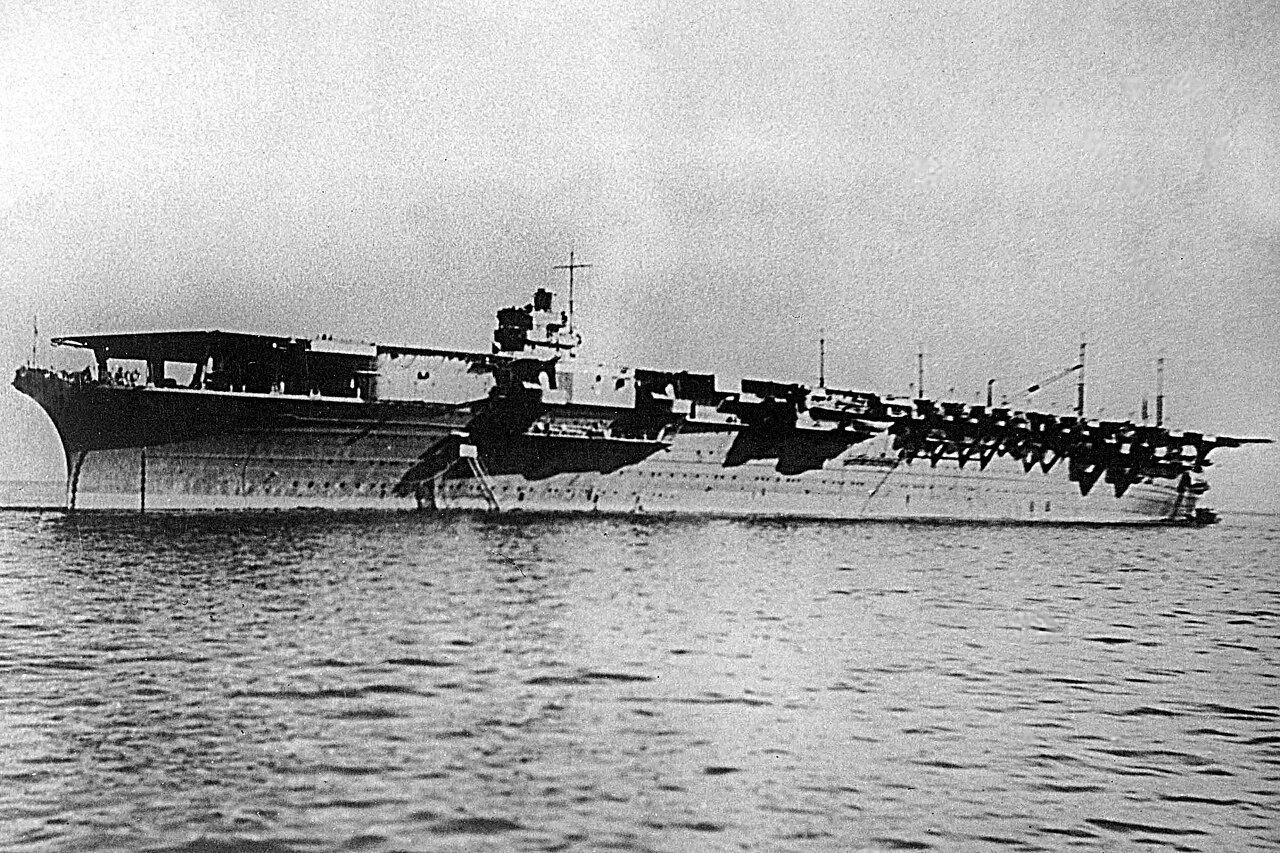
The first Hornet dive bombers sighted a large carrier, a smaller carrier already smoking, a light cruiser, and four destroyers at 1030. The smoking ship was probably Zuiho. Their leader, Lieutenant Commander William Widhelm, was shot down near the carriers and later rescued from his raft by a PBY. The other 11 SBDs dived on Shokaku through Zeros and antiaircraft fire. ONI credits at least four 1,000-pound hits, and Widhelm reported six. The six Hornet torpedo planes found no carrier and attacked a Nachi-class cruiser, with three probable hits. ONI did not think she was badly hurt.
The three Enterprise SBDs found a Japanese battleship force, and ONI credits two direct hits on a Kongo-class battleship. The Enterprise torpedo planes reached it about 1040 and attacked a heavy cruiser of the Atago class without a hit. The second Hornet wave found no carriers either. Its nine SBDs, under Lieutenant John Lynch, dived on a Tone-class cruiser at 1040, which ONI identifies as Chikuma, and counts four certain and one probable 1,000-pound hits. Its torpedo planes bombed a sister cruiser and scored five hits.
The attack on Hornet
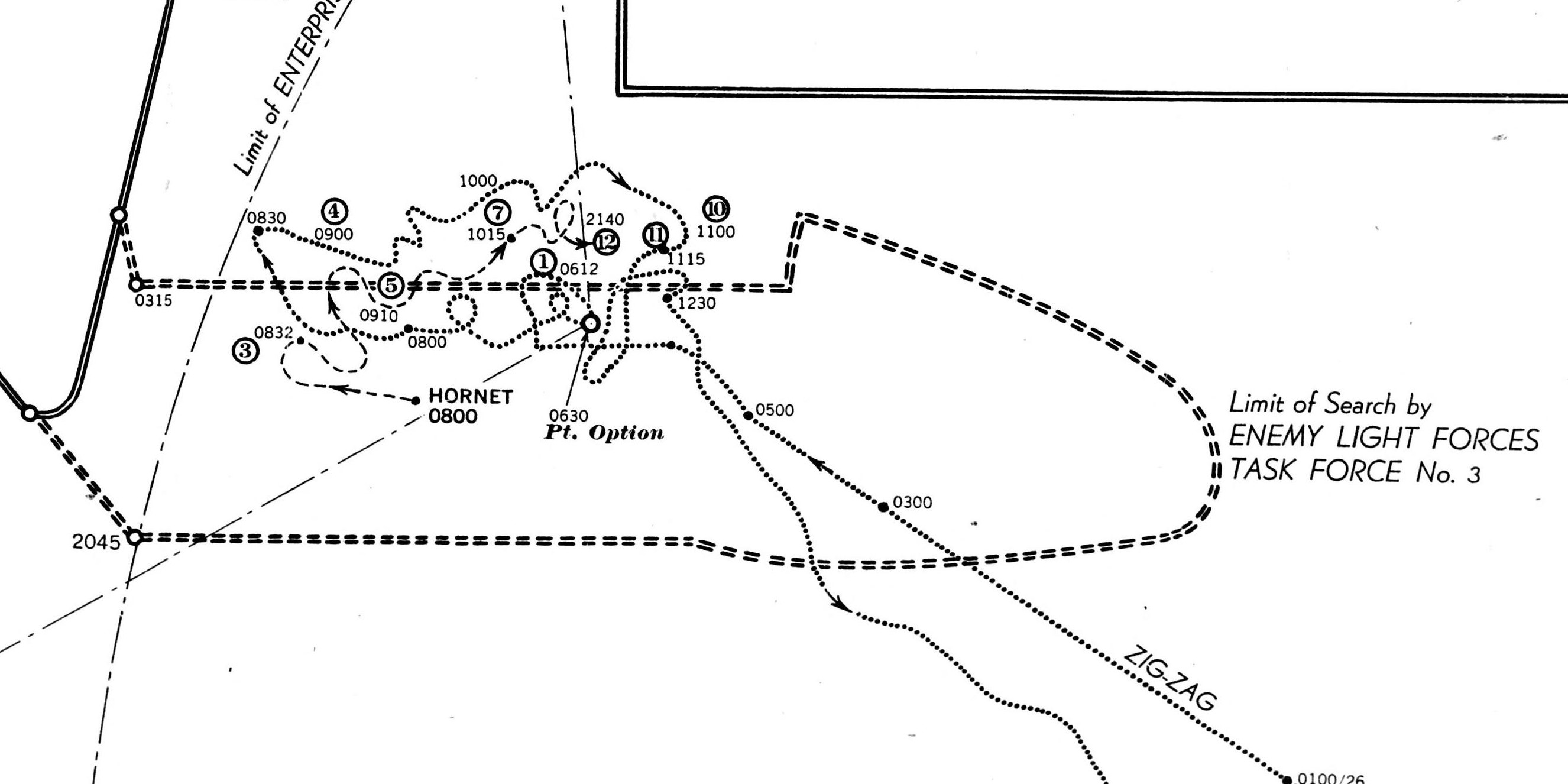
At 0800 the Hornet was at 08 45 S, 166 38 E, about 80 miles northeast of the Santa Cruz Islands and about 10 miles southeast of the Enterprise group, making 23 knots in a circular screen with Northampton and Pensacola on her quarters. At 0930 her outgoing planes reported two large groups of Japanese aircraft about 60 miles away. The Enterprise fighter director controlled the fighters of both groups, and ONI says the American strikes confused the radar picture. Most Japanese planes were met only after they began their attack. At about 1005 the Hornet group turned to close the Enterprise.
At 1010 a close dive-bomber and torpedo attack came in from several directions. Captain Mason estimated 15 dive bombers and 12 torpedo planes. A bomb hit the flight deck aft. A dive bomber with its guns firing crashed into the stack and part-way through the flight deck. Its 500-pound bomb was a dud. At 1015 two torpedoes hit the engineering spaces, and all power and communications failed. Two 500-pound bombs hit aft, and a flaming torpedo plane crashed into the port forward gun gallery. By 1021 the Hornet was dead in the water, burning, and listing to starboard. ONI estimates that about 20 of the 27 planes in the first group were shot down.
Morris, Russell, and Mustin came alongside with hoses, and about a thousand men fought the fires. By 1100 they seemed under control. Northampton took a light strain on a tow at 1223, and the 1¾-inch line parted at 1240. A 2-inch line was in place at 1430. Juneau, which had read a message meant for planes as an order, left for the Enterprise just before noon, and ONI says that thinned the Hornet's protection at a bad time. At 1257 Russell took off Admiral Murray, who shifted to Pensacola, then about 500 men. By 1540 the seriously wounded were off, and the tow had reached 3 knots.
At 1620 four to six torpedo planes came in from starboard. Northampton cast off the tow. One torpedo hit the Hornet, and the list grew to 14½ degrees. At 1640 five dive bombers scored near-misses. At 1650 the list reached 20 degrees and the order was given to abandon ship. At 1655 six high-level bombers put one bomb on the flight deck corner. Captain Mason left at 1727. At 1802 four dive bombers hit the forward hangar.
Porter and Smith
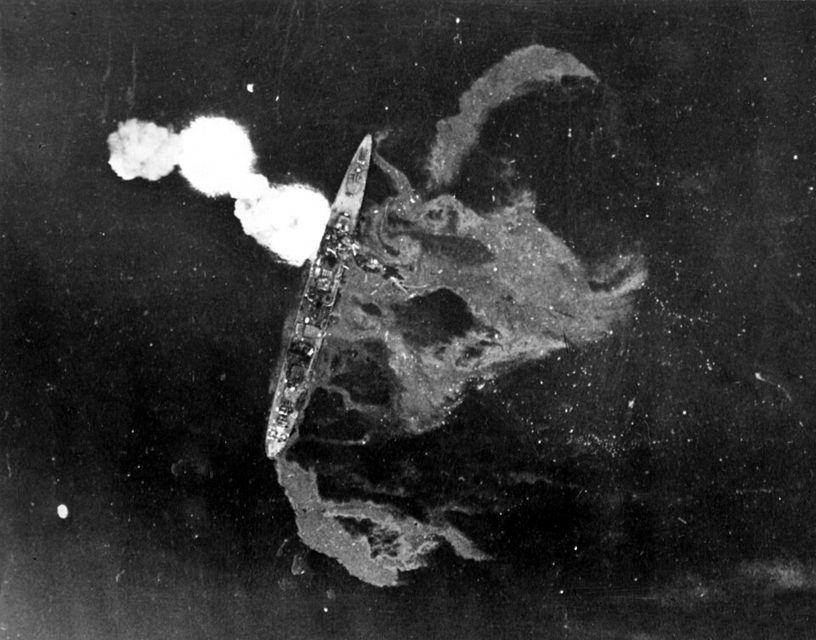
The Enterprise group had its own fight. Shortly before 1100 a damaged American torpedo plane crash-landed about 1,500 yards from the destroyer Porter (DD-356). Lieutenant Commander Roberts turned toward it with the engines going back full. Shaw also turned to pick up the crew, and Captain Cecil told her Porter would do it. Porter lost way faster than expected. Her bridge reported a torpedo wake on the port bow, which crossed 50 yards ahead. A second torpedo, from the port beam, hit at 1101. ONI says it shook her violently, sent a column of water 100 feet up, and left her dead in the water. Roberts judged that she was not sinking.
About 50 minutes later a message from Kinkaid told Shaw to take off Porter's people and sink her. Shaw sighted a periscope 500 yards off her port bow and dropped depth charges, with no result ONI could see. By 1209 she had taken everyone off. Two torpedoes missed or failed, and fourteen four-gun salvos were needed before Porter sank at 1308. The ONI summary says a submarine torpedoed her, and DANFS agrees. The last section explains why that is not the whole story.
In the same minutes about 24 Japanese dive bombers attacked the Enterprise for four minutes, and seven were shot down. ONI describes three bombs. One pierced the flight deck near the bow and exploded in the water. One hit the flight deck abaft the forward elevator, with casualties and fires that were controlled quickly. The third burst close aboard to starboard and opened a seam in the side plating. The ONI summary counts two bomb hits. About 1120 South Dakota, Conyngham, and Smith fired on what they took for a surfacing submarine, and it was a friendly plane. Preston (DD-379), going for its crew, had to turn hard to avoid the battleship's 5-inch fire.
At about 1135 torpedo planes came in, 14 by the count of Enterprise and South Dakota and 30 by Portland's. About nine torpedoes were dropped, and Enterprise avoided all of them. One plane, diving on Smith from abaft the starboard beam, hit the shield of her gun No. 2 and crashed on the forecastle. The forward part of the ship was in flames, and the bridge was abandoned at 1149. The warhead of the plane's torpedo exploded a few minutes later. Smith ran close under the stern of South Dakota and used the spray of her wake to cut down the fire. DANFS says 57 of her men were killed or missing and 12 wounded, and that she kept her place in the screen with every serviceable gun firing.
Enterprise and South Dakota
At about 1220 about 20 torpedo planes and dive bombers came out of a low cloud over South Dakota's port bow. The attack lasted two minutes, and eight planes crashed. A near-miss damaged the Enterprise about 15 feet below the waterline. At 1230 four bombs fell on South Dakota. One hit turret No. 1, injuring Captain Gatch and wounding gun crews. About then six bombs fell around San Juan, which was turning at full speed. Five were near-misses and one glanced off her side and exploded in the water. Her rudder jammed until 1241, and thirteen men were hurt. A last attack at 1245 by 15 dive bombers scored no hits.
In the morning Lieutenant Stanley Vejtasa, flying from the Enterprise, shot down seven aircraft plus one probable, and ONI prints his account as an appendix. ONI says the new battleship's antiaircraft guns, in action for the first time, did much to save the Enterprise. Kinkaid estimated that 170 to 180 Japanese planes took part and that the Hornet was attacked by 49, of which 23 were shot down by antiaircraft fire, and the Enterprise by 84, of which 33 were.
The end of Hornet
At 1840 Commander True, in Mustin, was ordered to sink the Hornet. At about 1900 the rest of the force turned east at 27 knots. Mustin fired all eight torpedoes at 1903. Her report called the results most discouraging. One came back out of the water and exploded near her, and one broached and ran off at right angles. The fifth, sixth, and seventh apparently hit and worked as designed. Anderson fired eight more at 1940. Six exploded, one blew up early, and one missed. Neither the list nor the trim changed, and no fire was visible. The two destroyers then used guns. Anderson fired 130 rounds, and each fired 150 more at 2130. They stopped at 2146 and left at high speed, with the hulk burning from end to end. They did not know that light Japanese units about 40 miles away were looking for them. Those turned back at midnight.
DANFS says the Hornet took nine American torpedoes and more than 400 rounds of 5-inch fire, and that Japanese destroyers fired four torpedoes into her. She sank at 0135 on 27 October. ONI does not carry the story that far. It says only that the Japanese may have tried to destroy her, and that a patrol plane reported her island still visible the next day. The combinedfleet.com history of Makigumo, in Japanese time, says Akigumo and Makigumo were sent to see whether she could be captured, found her ablaze and listing about 45 degrees, fired two torpedoes each at 2205, and claimed three hits. It puts her sinking at 2234 their time, which is 0134 on the ONI clock.
The losses
ONI gives the American loss as 74 carrier aircraft, with 23 officers and 16 enlisted men, and says about 20 were shot down in combat. It gives the loss of men in the surface ships as 29 officers and 254 men. Wikipedia counts 81 aircraft and 266 killed in all, with Hornet 118, Enterprise 44, Smith 57, Porter 15, Pensacola 3, South Dakota 2, Morris 1, and 22 aircrew. DANFS agrees on 44 and 57.
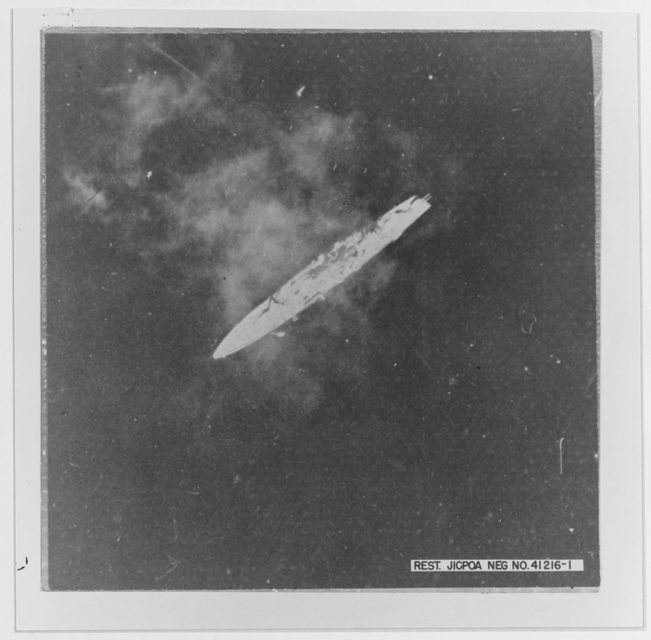
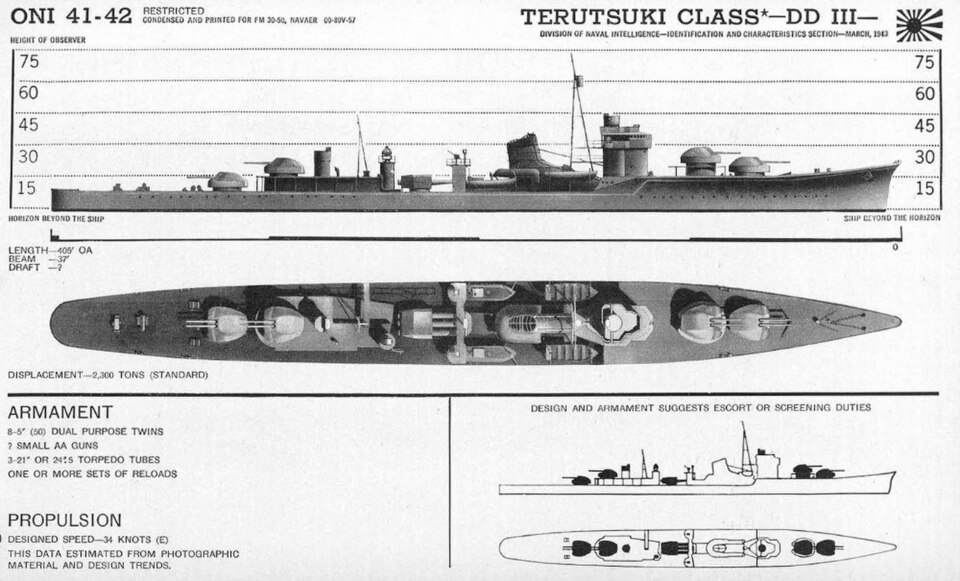
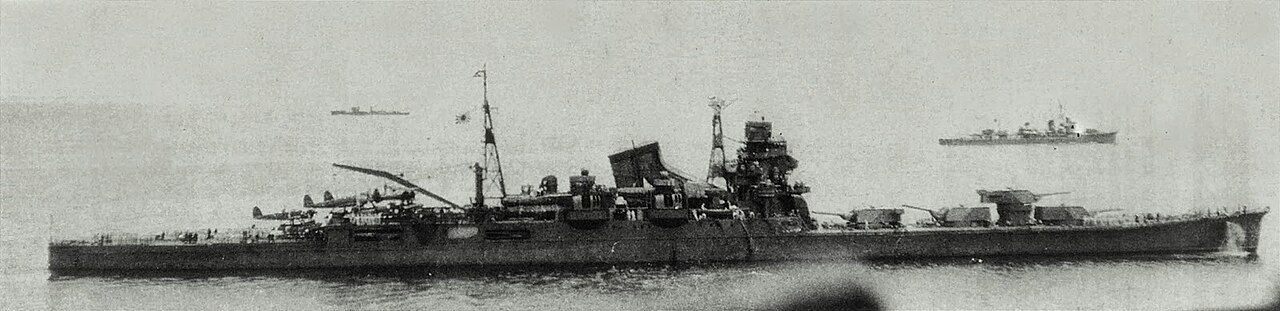
The USSBS table of Japanese damage lists Shokaku, flight deck damaged and her maximum speed 21 knots; Zuiho, flight deck damaged; Chikuma, three bomb hits on the main battery control post and the torpedo tubes, heavy damage forward, and a port engine out; the destroyer Teruzuki, medium damage; and the destroyer Akikaze, with a bomb that flooded a boiler room. The combinedfleet.com history says four and possibly six bombs hit Shokaku's flight deck and the fires took nearly five hours to put out. It says more than fifty gunners and about 80 aircraft handlers were killed. USSBS puts Japanese plane losses at about 100. Wikipedia gives 99 aircraft, 148 aircrew, and about 60 dead in Shokaku, 190 in Chikuma, and 7 in Teruzuki.
After
Nagumo had shifted to the destroyer Arashi and did not rejoin a carrier until the next day. Shokaku and Zuiho, escorted by Hatsukaze and Maikaze, reached Truk on 28 October. They sailed for Japan on 2 November with Chikuma. Shokaku reached Yokosuka on 6 November and Zuiho Sasebo on 7 November. The USSBS campaign history says that because of the damage to the carriers and the loss of planes and pilots, the Japanese had no fleet air support three weeks later at the naval battle of Guadalcanal.
Enterprise and San Juan reached Noumea on 30 October. Smith was patched there and left for Pearl Harbor on 5 November. On 30 October South Dakota and Mahan collided while avoiding a submarine contact, and both went on to Noumea. Enterprise sailed again on 11 November with repair crews still aboard. ONI calls the battle of dubious value to the American cause, because it cut South Pacific carrier strength to one damaged ship. It allows only that the Japanese losses in planes and carrier damage kept them from giving their invasion fleet a better air umbrella three weeks later.
Where the accounts differ
The accounts differ on time. ONI and its chart use zone minus 12. The USSBS track chart is marked zone minus 9. The combinedfleet.com histories use Japanese time, three hours earlier than ONI, and put the bomb hits on Shokaku at 0727, which is 1027 on the ONI clock. Wikipedia gives 0927 for the same hit, one hour earlier than ONI, and apparently uses zone minus 11. ONI is not consistent with itself. Its table gives 0730 for the battleship sighting and its text 0717. The Zuiho history says she was hit at 0830, which is an American time, and the Shokaku history puts the same hit at 0540 Japanese time, 0840 on the ONI clock.
The accounts differ on what was hit. ONI says the planes that hit a carrier at 0830 believed it was Shokaku, and decided afterward it was Zuiho. The Japanese histories agree on Zuiho. ONI credits two 1,000-pound hits on a Kongo-class battleship and three torpedo hits on a Nachi-class cruiser. No Japanese list read here shows either, and Wikipedia says the Enterprise planes attacked Suzuya and did no damage. ONI counts four 1,000-pound hits on Chikuma, the USSBS table three, and Wikipedia two. The USSBS table puts Shokaku's speed at 21 knots after the battle, and the combinedfleet.com history says she kept 30. DANFS for Enterprise says the Japanese lost a light cruiser. No ONI or USSBS list shows that. ONI notes that Henderson Field planes hit a light cruiser on 25 October, and her name was not checked in a source read here.
The accounts differ on how Porter was lost. ONI, DANFS, and the USSBS table say a submarine. A secondary list of Japanese submarine movements credits I-21. Wikipedia says the torpedo was possibly one from the ditched American aircraft she was rescuing. ONI puts Shaw's periscope sighting after the hit, and her depth charges produced nothing. The question is not settled here. The figure 15 for Porter's dead comes from Wikipedia alone.
The accounts differ on the end of the Hornet. DANFS says nine American torpedoes. ONI counts eight fired by Mustin and eight by Anderson, with several exploding. DANFS says Japanese destroyers fired four torpedoes, and the Makigumo history agrees. Wikipedia credits one hit on the towed Hornet at 1620 to a Junyo torpedo plane, and ONI names no carrier. The existing site page for the Hornet gives nine torpedoes and more than 360 rounds, and ONI's rounds add to 430.
The accounts differ on numbers. ONI counts American aircraft lost at 74 and Wikipedia at 81. ONI counts 283 dead in the ships and Wikipedia 266 in all. Japanese plane losses are about 100 in the USSBS table and 99 in Wikipedia. The USSBS table gives Atago to Nagumo and Shokaku to Kondo, which is reversed, since the other lists give Kondo the advance force and Nagumo the carriers. The ONI chart calls itself an approximate reconstruction from Enterprise's track chart, action reports, and intelligence. No track here is drawn by us. Only the printed charts are shown.