1944-06-19
Battle of the Philippine Sea
The Philippine Sea
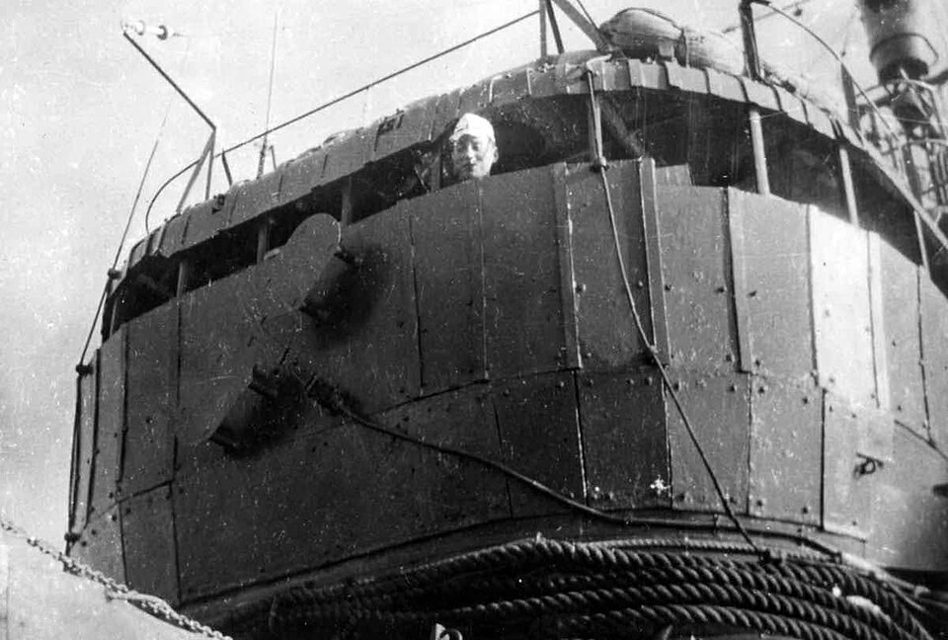
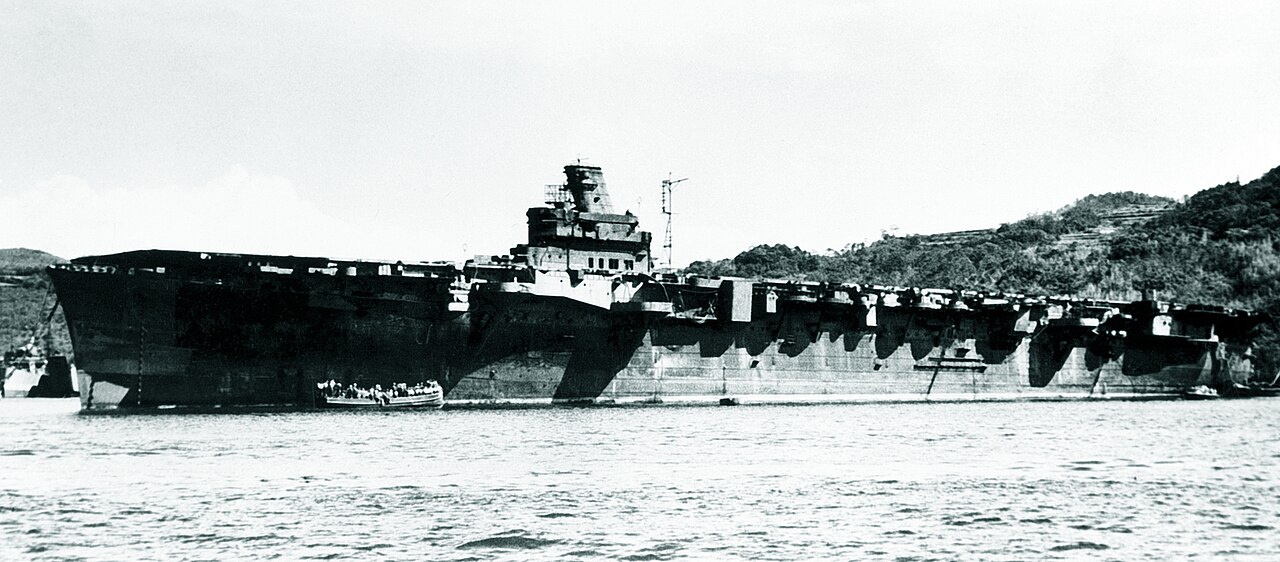
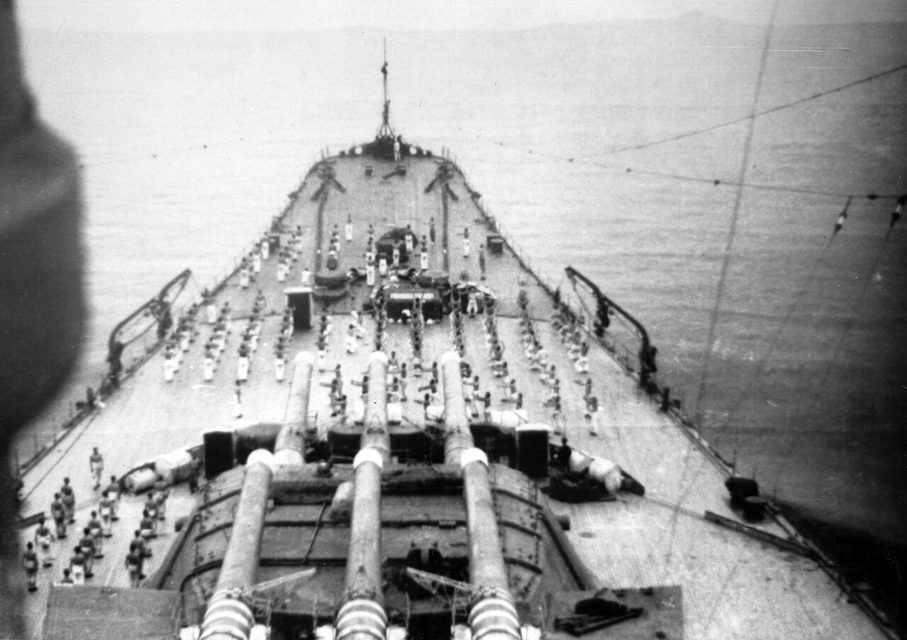
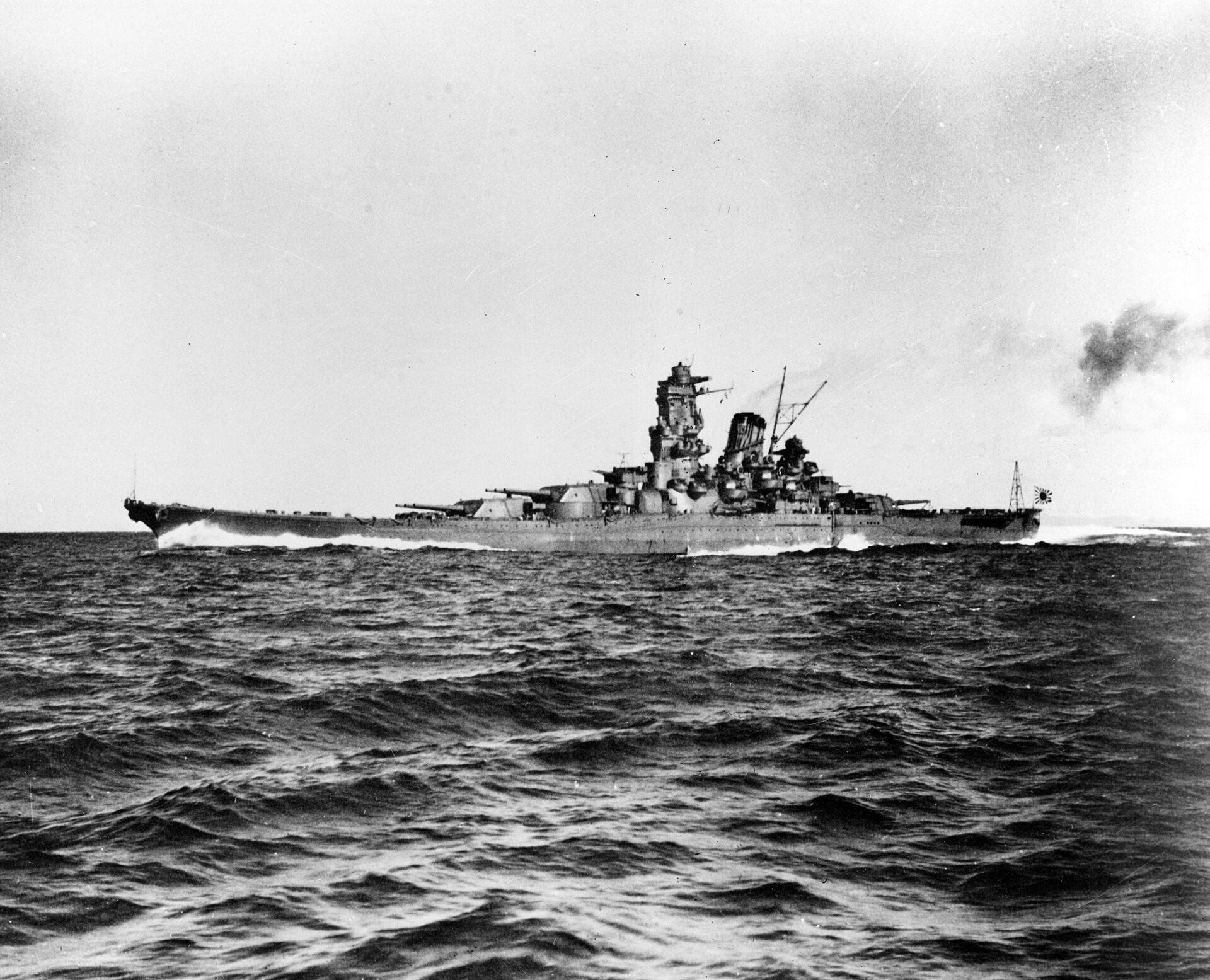
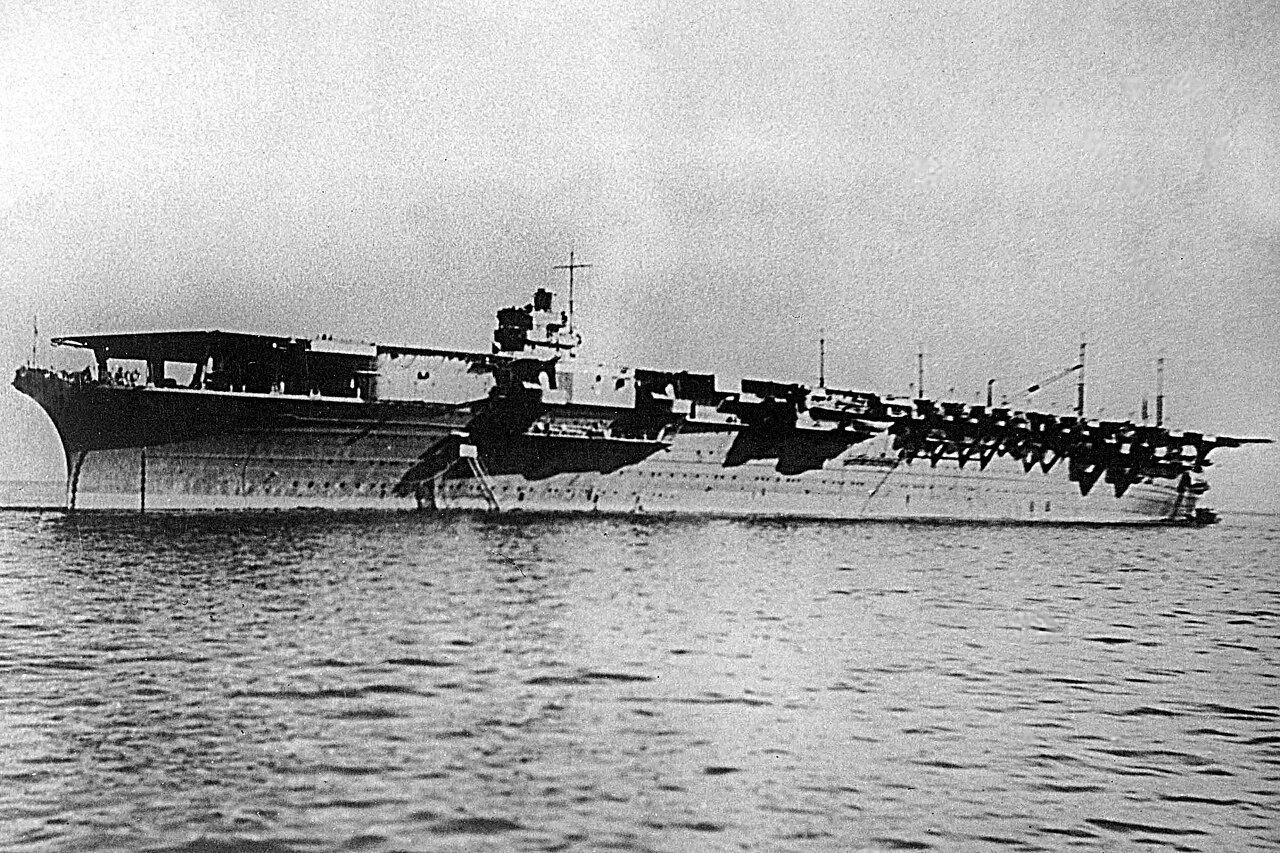
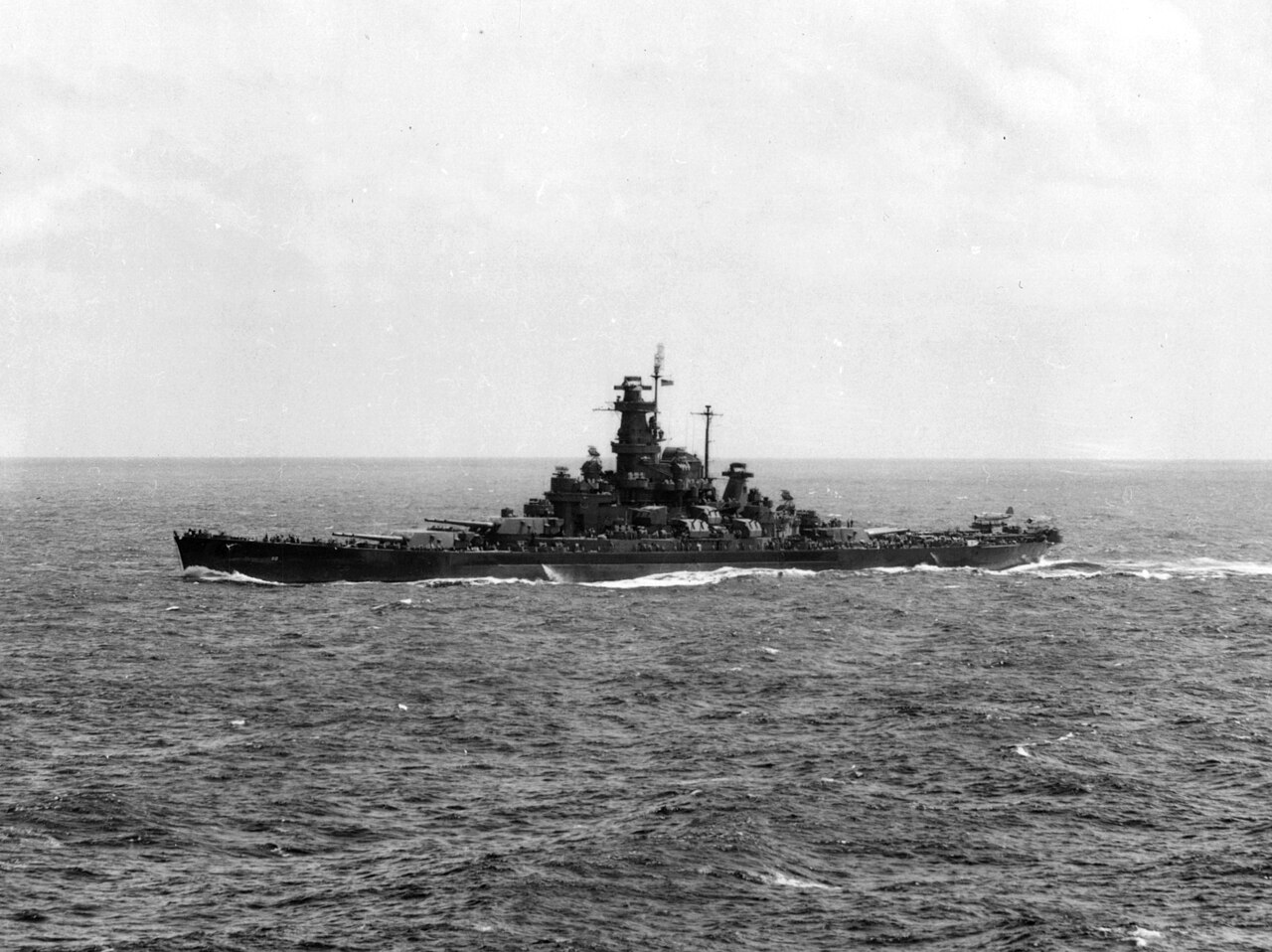
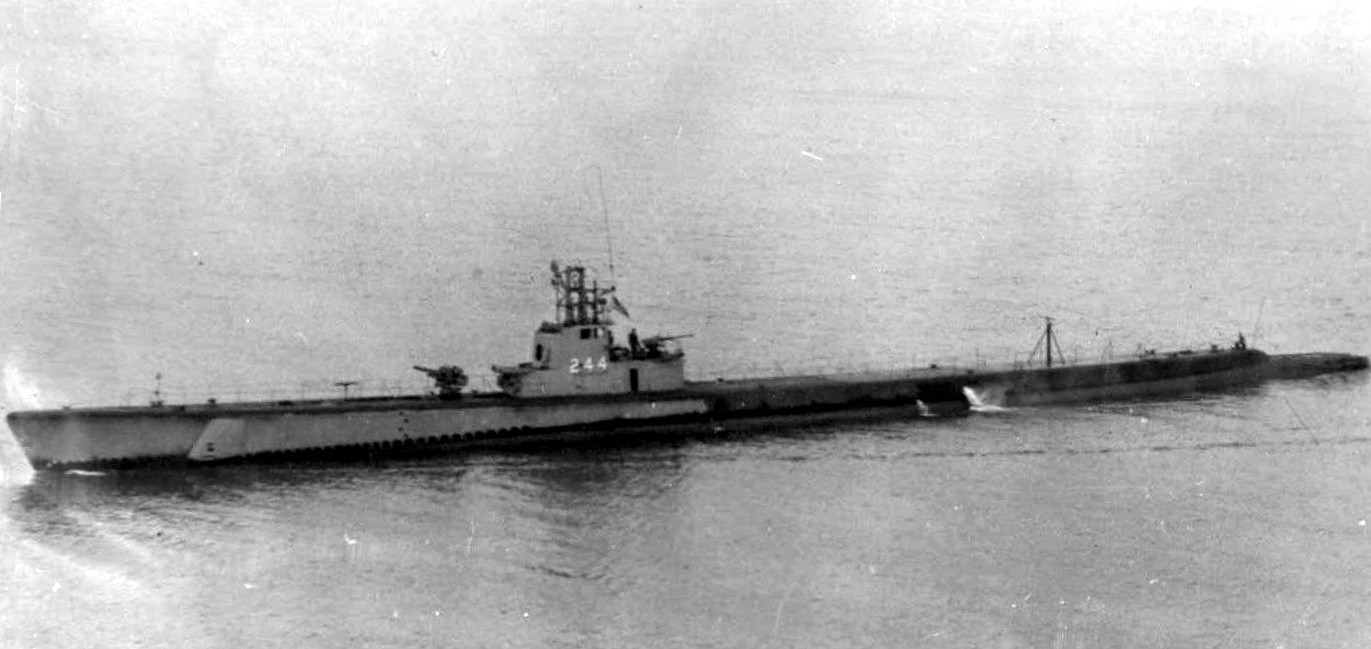
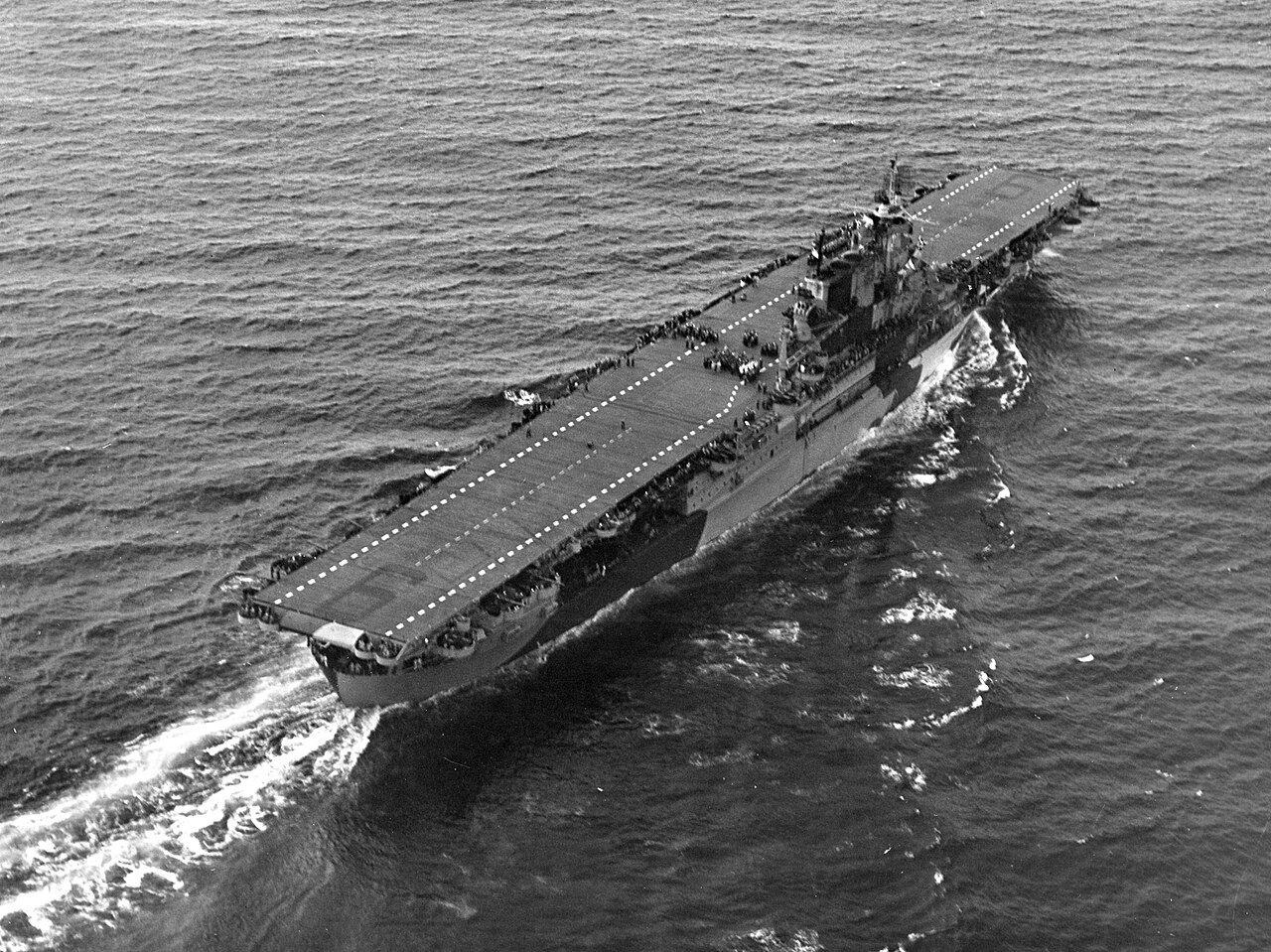
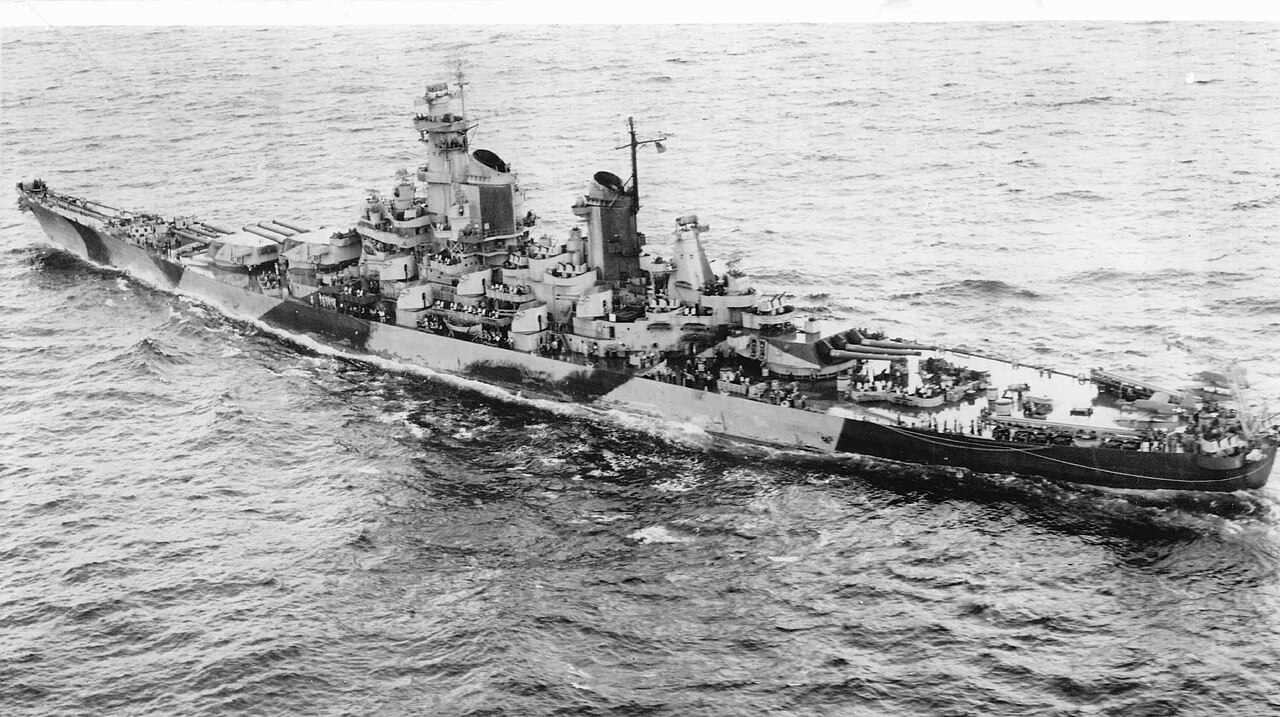
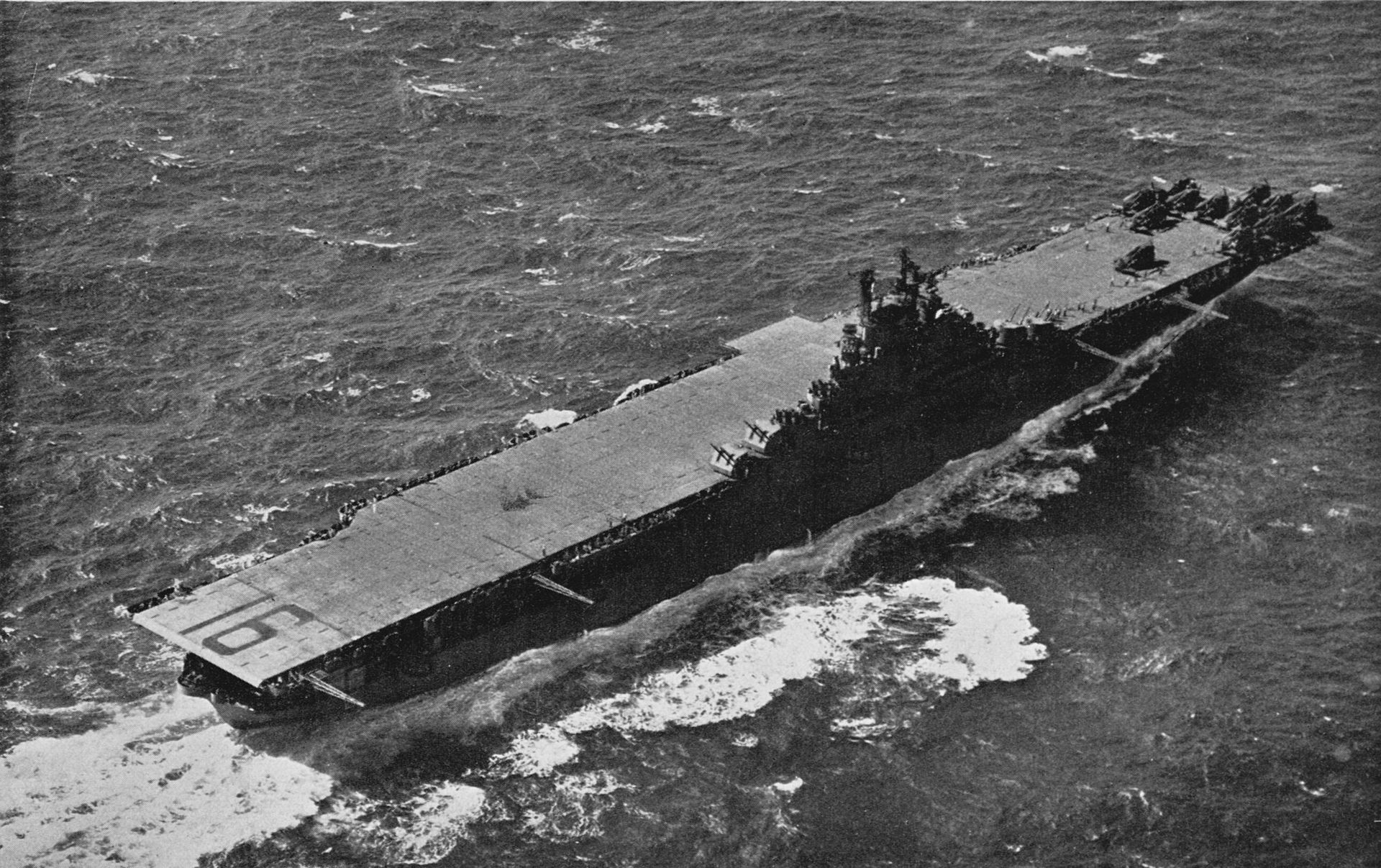
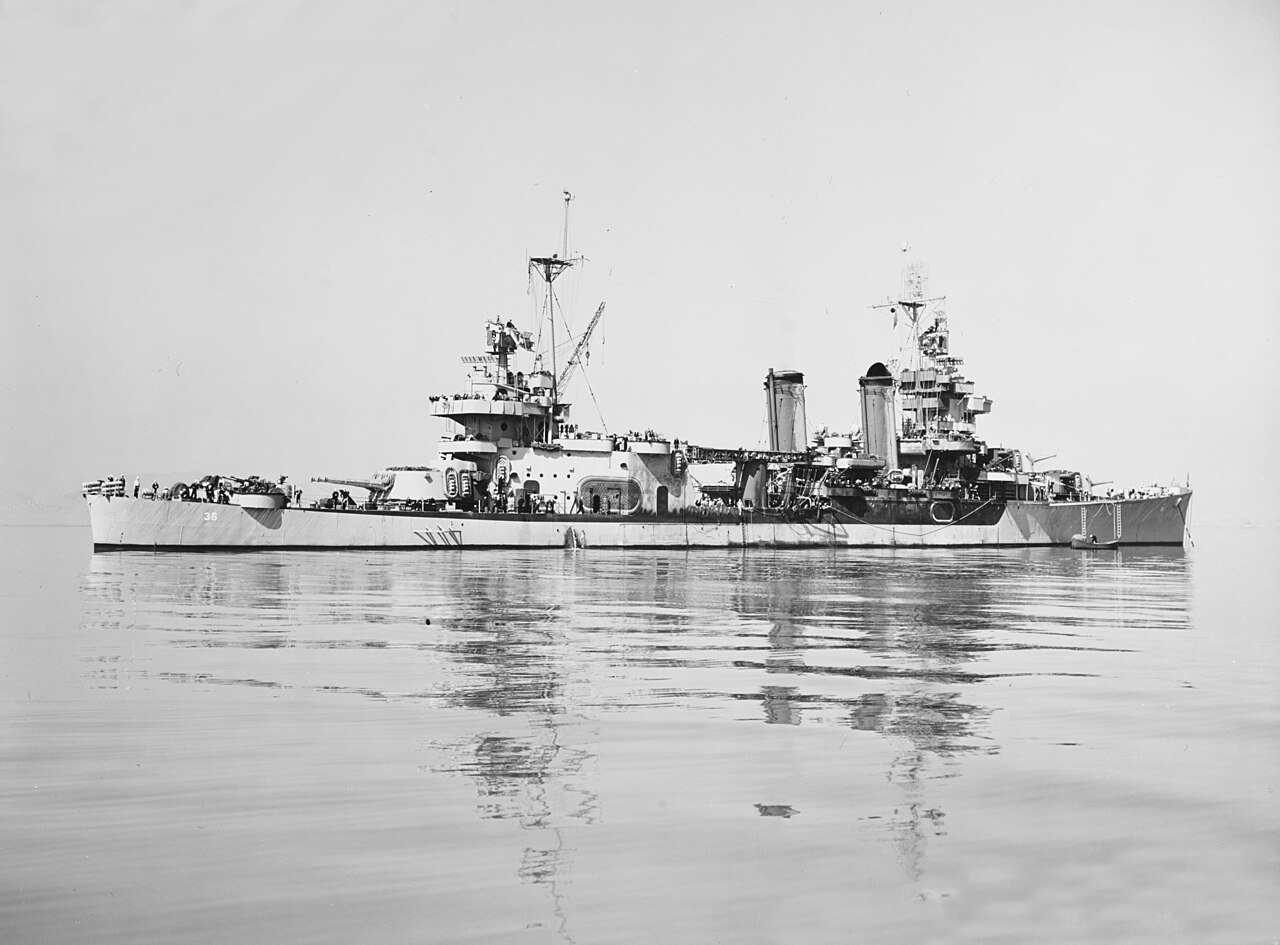
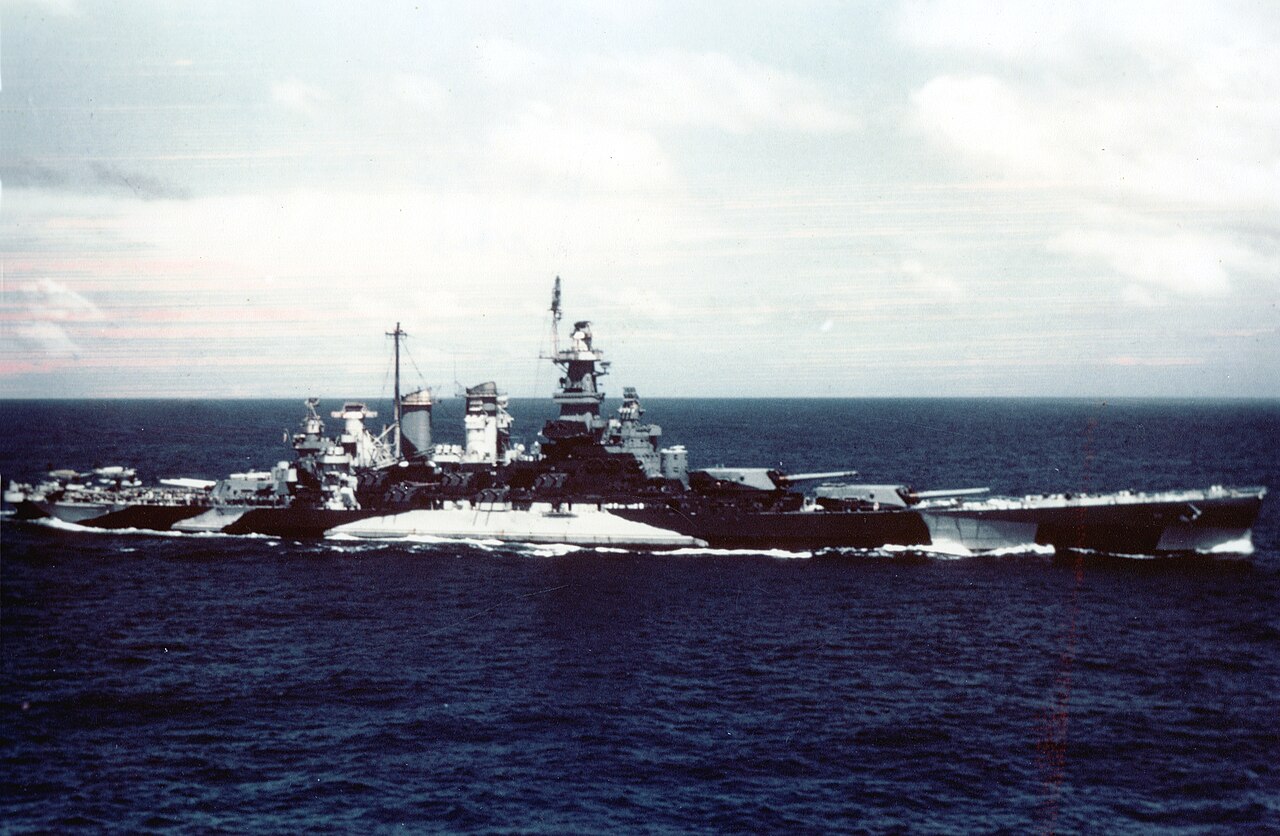
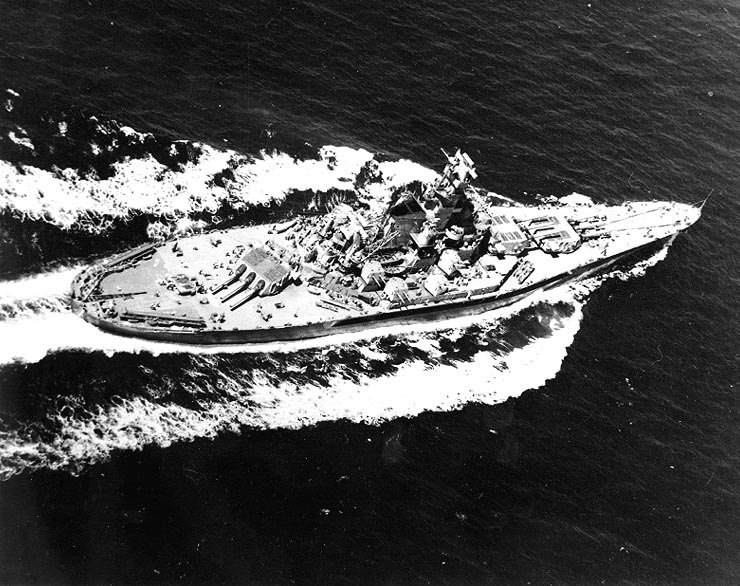
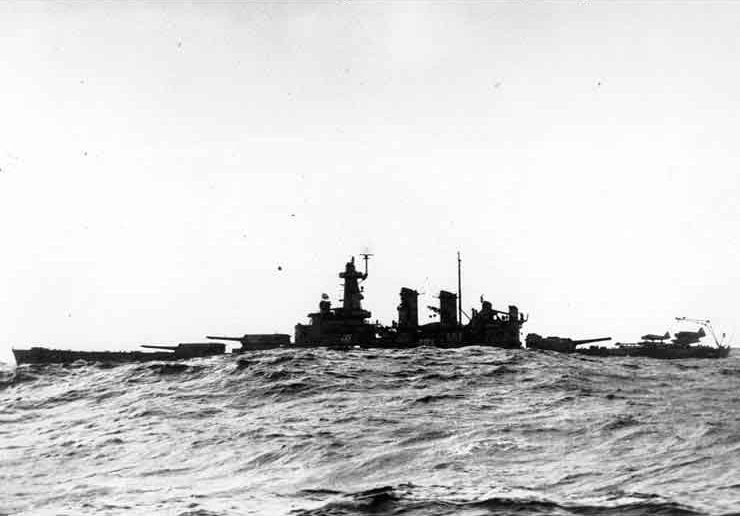
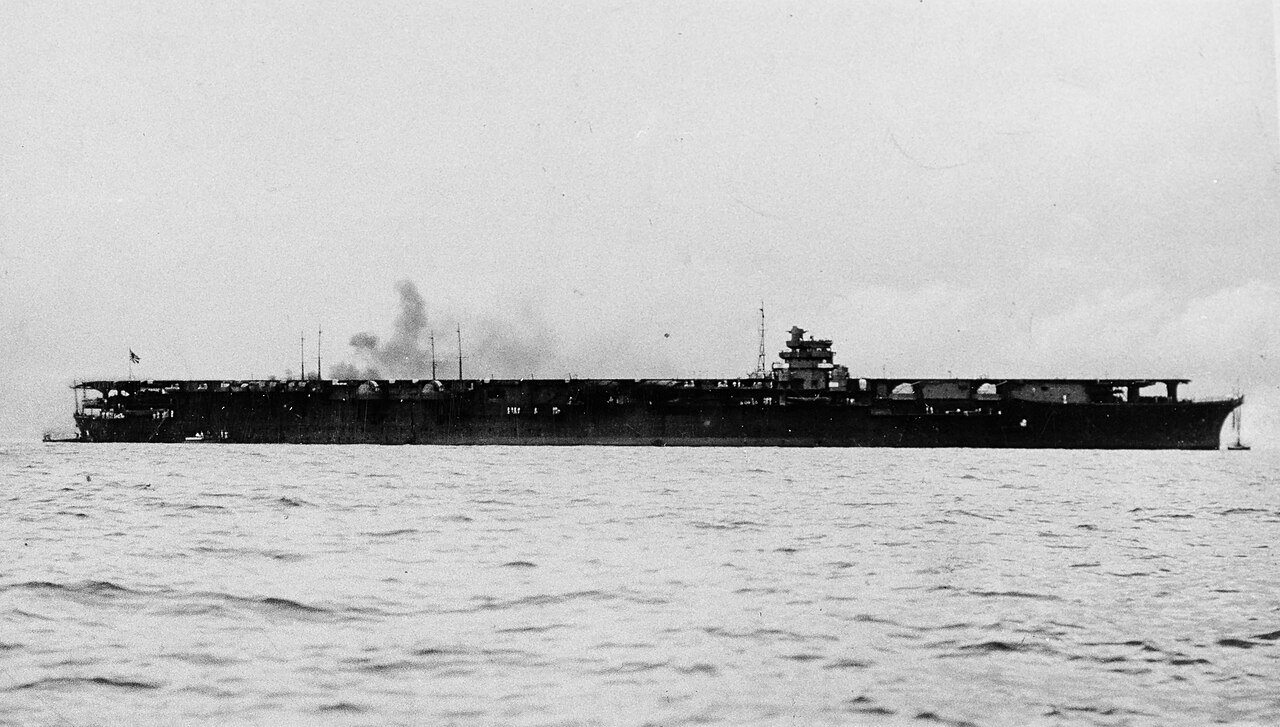
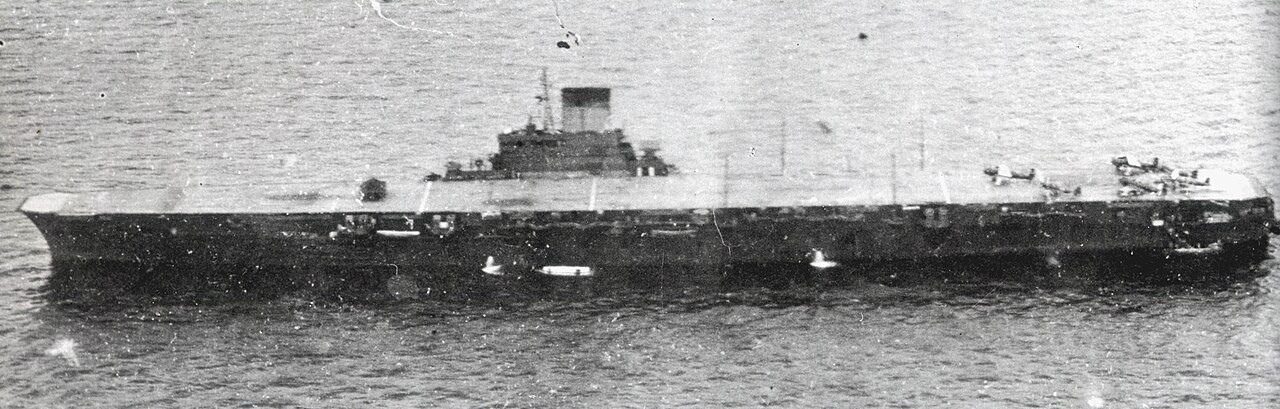
North Carolina, Washington, South Dakota, Enterprise, and Minneapolis were with the fast carriers on 19 and 20 June 1944. The battle was in the air. The submarine Cavalla sank Shokaku on 19 June. The submarine Albacore put one torpedo into Taiho the same morning. Taiho sank that afternoon. Zuikaku was not sunk in this battle. Junyo took two bomb hits on 20 June and was not sunk. A bomb missed Minneapolis close aboard. Iowa stood in Admiral Lee's battle line. Yamato and Musashi were in Kurita's force ahead of the carriers. They were not sunk.
Sunk in this fight
2 ships.
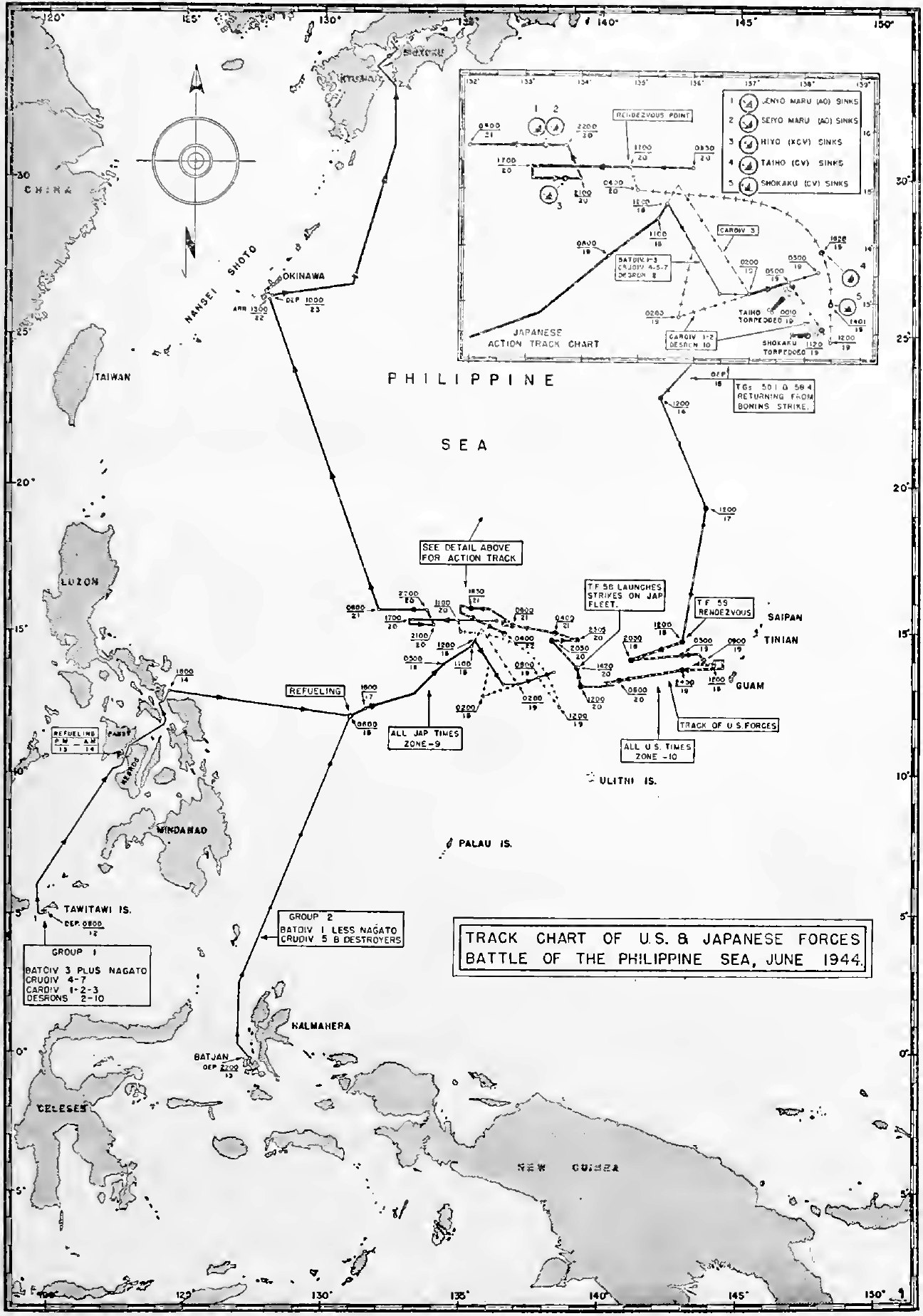
Track chart of United States and Japanese forces, Battle of the Philippine Sea, June 1944. United States Strategic Bombing Survey, The Campaigns of the Pacific War, Naval Analysis Division, 1946, Appendix 83. Public domain. North is up. The Japanese track leaves Tawi Tawi and comes east. Task Force 58 is west of Saipan, Tinian, and Guam. The inset is the Japanese action track. It marks Shokaku and Taiho torpedoed on 19 June, and it marks Shokaku, Taiho, Hiyo, and two oilers sunk. Shokaku's record credits the submarine Cavalla. Taiho's record credits the submarine Albacore. The air attack on the 20th is not credited to one carrier. The small plans under the tracks are the other two charts.
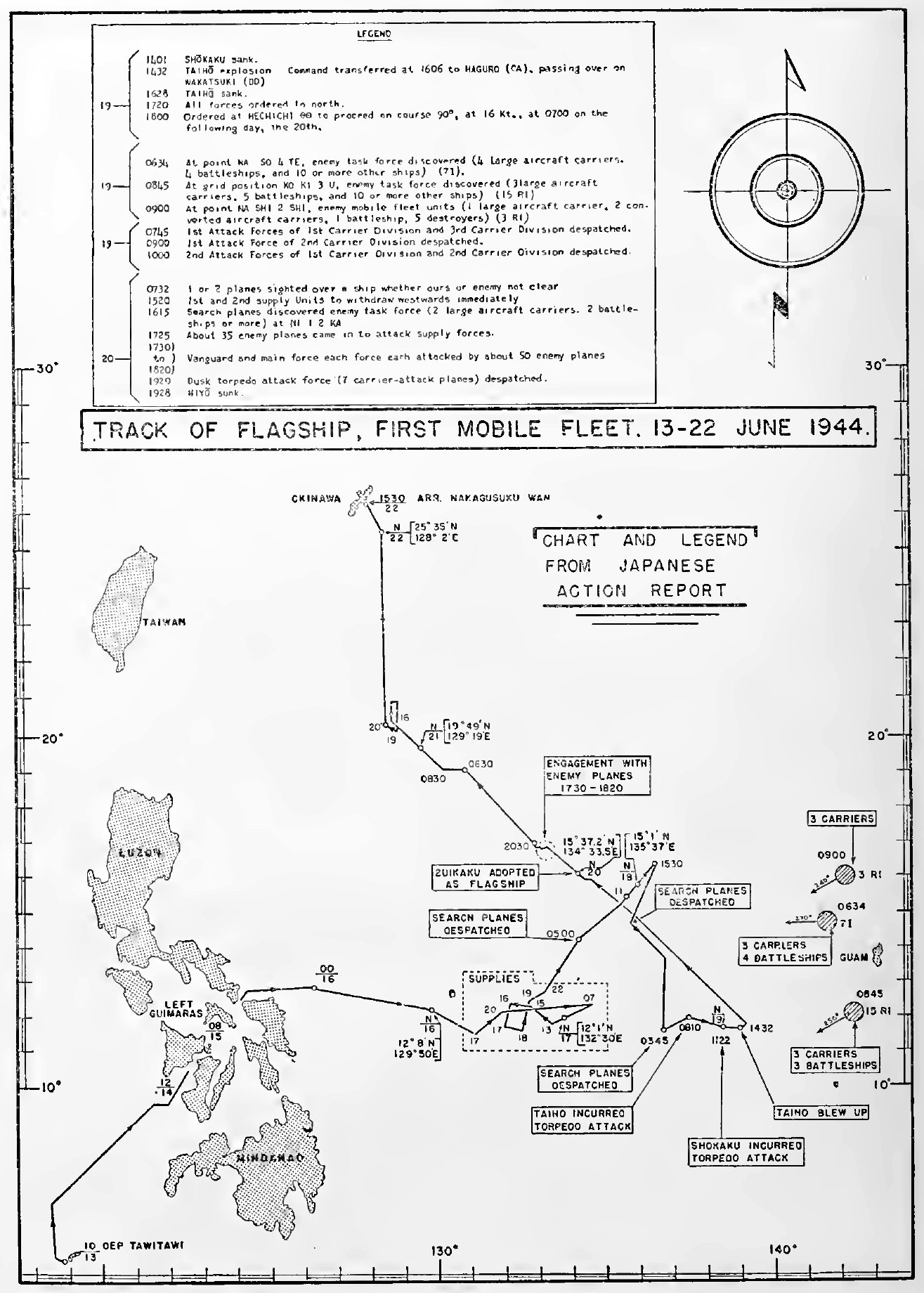
Track of the flagship of the First Mobile Fleet, 13 to 22 June 1944. United States Strategic Bombing Survey, The Campaigns of the Pacific War, 1946, Appendix 84. Public domain. The sheet says the chart and the legend are from the Japanese action report. North is up. The track leaves Tawi Tawi on 13 June, fuels, and runs east toward the Marianas. The legend records Shokaku sunk at 1101 on 19 June, Taiho's explosion, the flag passed to Haguro by way of the destroyer Wakatsuki, and Taiho sunk at 1628. The track marks Zuikaku adopted as flagship, a torpedo attack on Taiho, Taiho blowing up, and a torpedo attack on Shokaku. On 20 June the ships are under air attack west of Guam. The legend records Hiyo sunk at 1928. That air attack is not credited to one carrier.
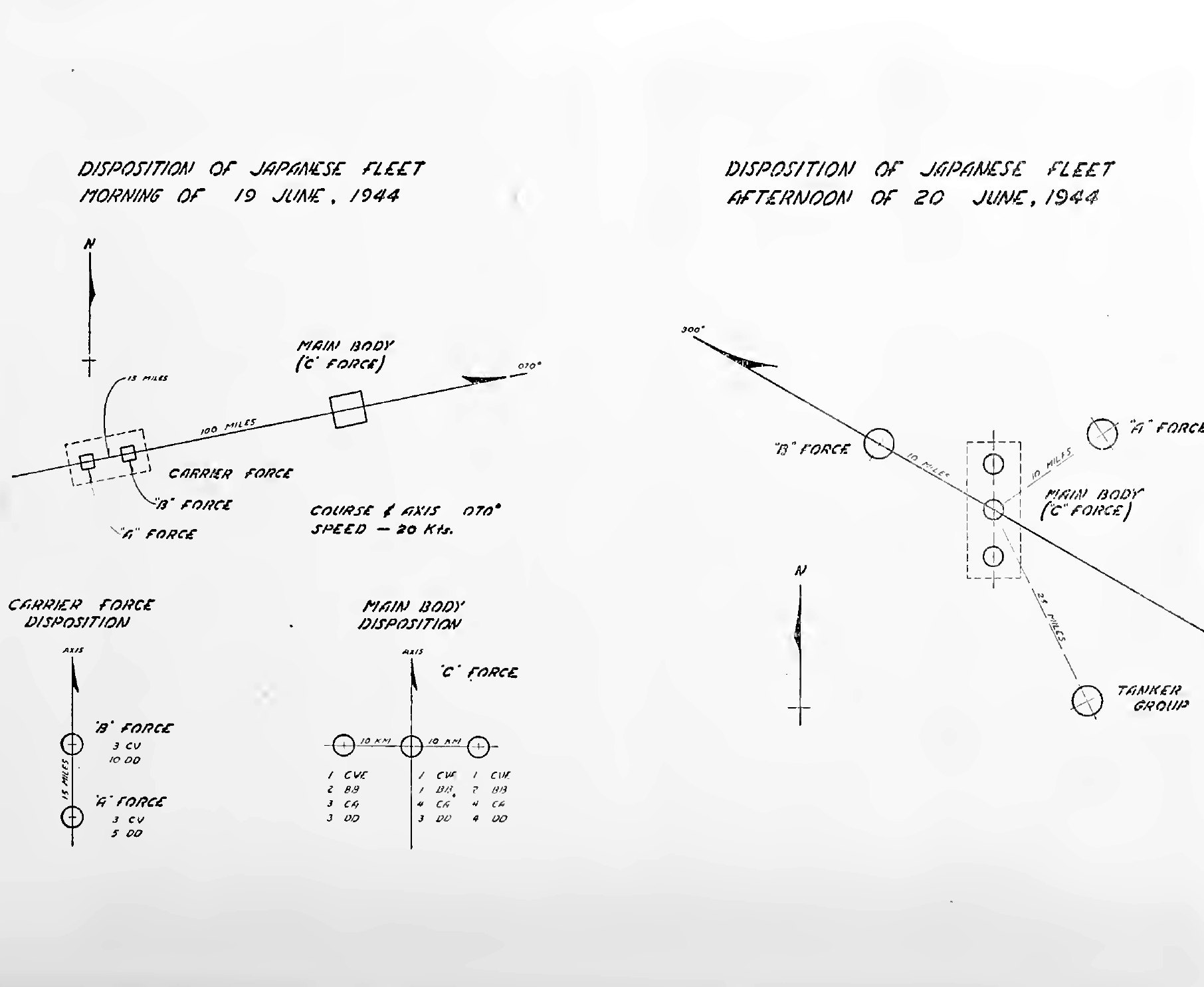
Disposition of the Japanese fleet, morning of 19 June and afternoon of 20 June 1944. United States Strategic Bombing Survey, The Campaigns of the Pacific War, 1946, Appendix 82. Public domain. The sheet was turned so the titles read across. North is up on both diagrams. On the morning of the 19th the main body, C Force, is ahead of the carrier force, on course 070 at 20 knots. A Force and B Force are the carriers. The small plans count the carriers, battleships, cruisers, and destroyers. On the afternoon of the 20th, B Force, the main body, and A Force are along one line, and the tanker group is to the south.