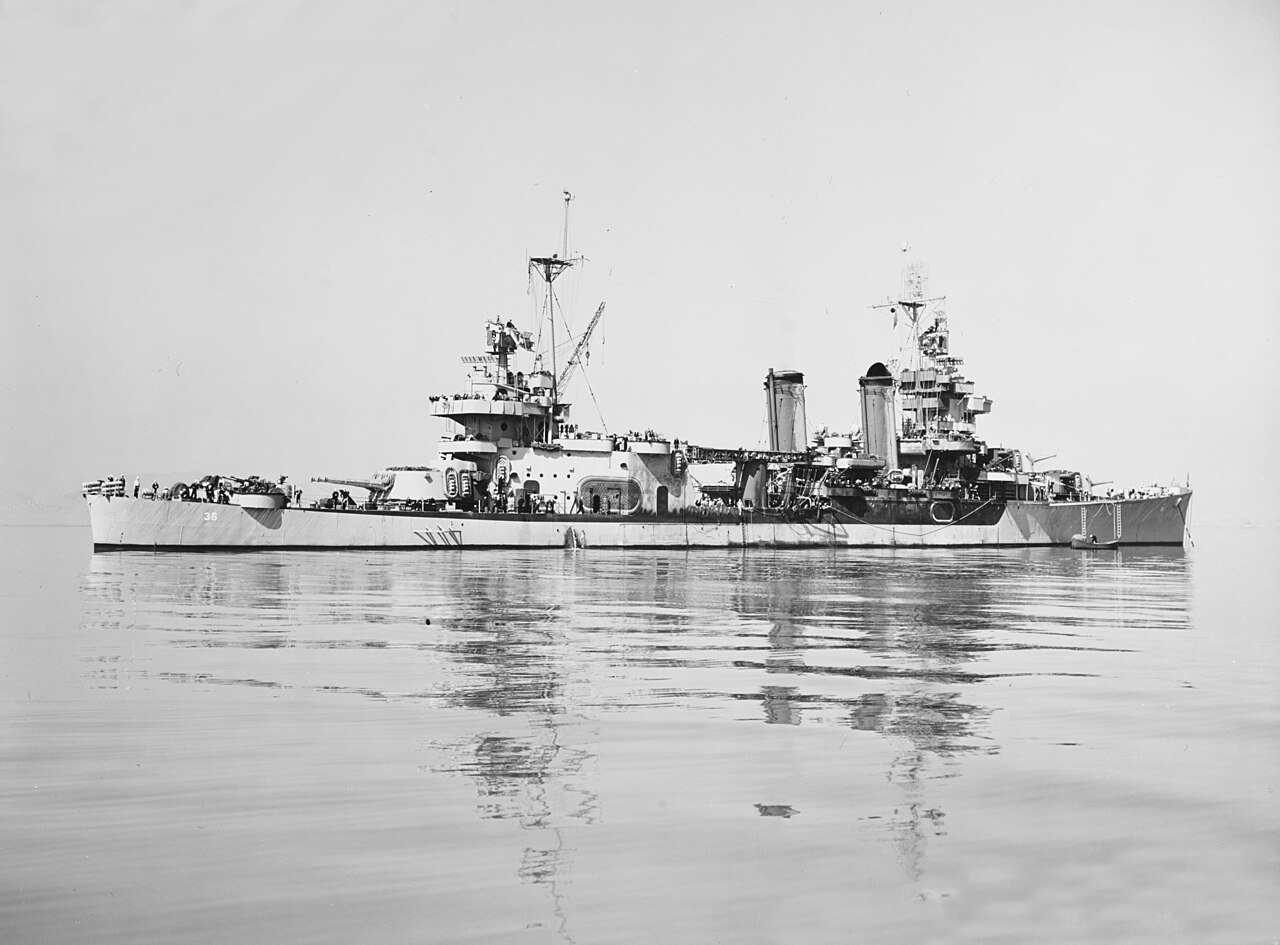
USS Minneapolis (CA-36) was a New Orleans-class heavy cruiser, named for the city, and she was not the cruiser that carried the atomic bomb. That was Indianapolis, CA-35. Indianapolis took parts of Little Boy to Tinian and was sunk by I-58 on the way to Leyte. Minneapolis never had the bomb aboard.
The Philadelphia Navy Yard laid her down on 27 June 1931. She was launched on 6 September 1933 and commissioned on 19 May 1934, Captain Gordon W. Haines in command. On paper she was a treaty cruiser, held near 10,000 tons, with nine 8-inch guns in three triple turrets. In the metal she carried thicker armor over her vitals than the Northampton and Pensacola cruisers that came before her. Seven ships were built to the design. New Orleans was the name ship. Minneapolis was one of the seven.
In May 1942 she was in the cruiser screen at the Coral Sea, with New Orleans, Astoria, Portland, and Chester. The carriers fought that battle. She was not sunk.
At Midway she screened Enterprise and Hornet. New Orleans was in that same screen. Portland was with Yorktown, not with these two. Aircraft wrecked Yorktown on 4 June. I-168 sank the abandoned carrier on 7 June. Minneapolis was not hit.
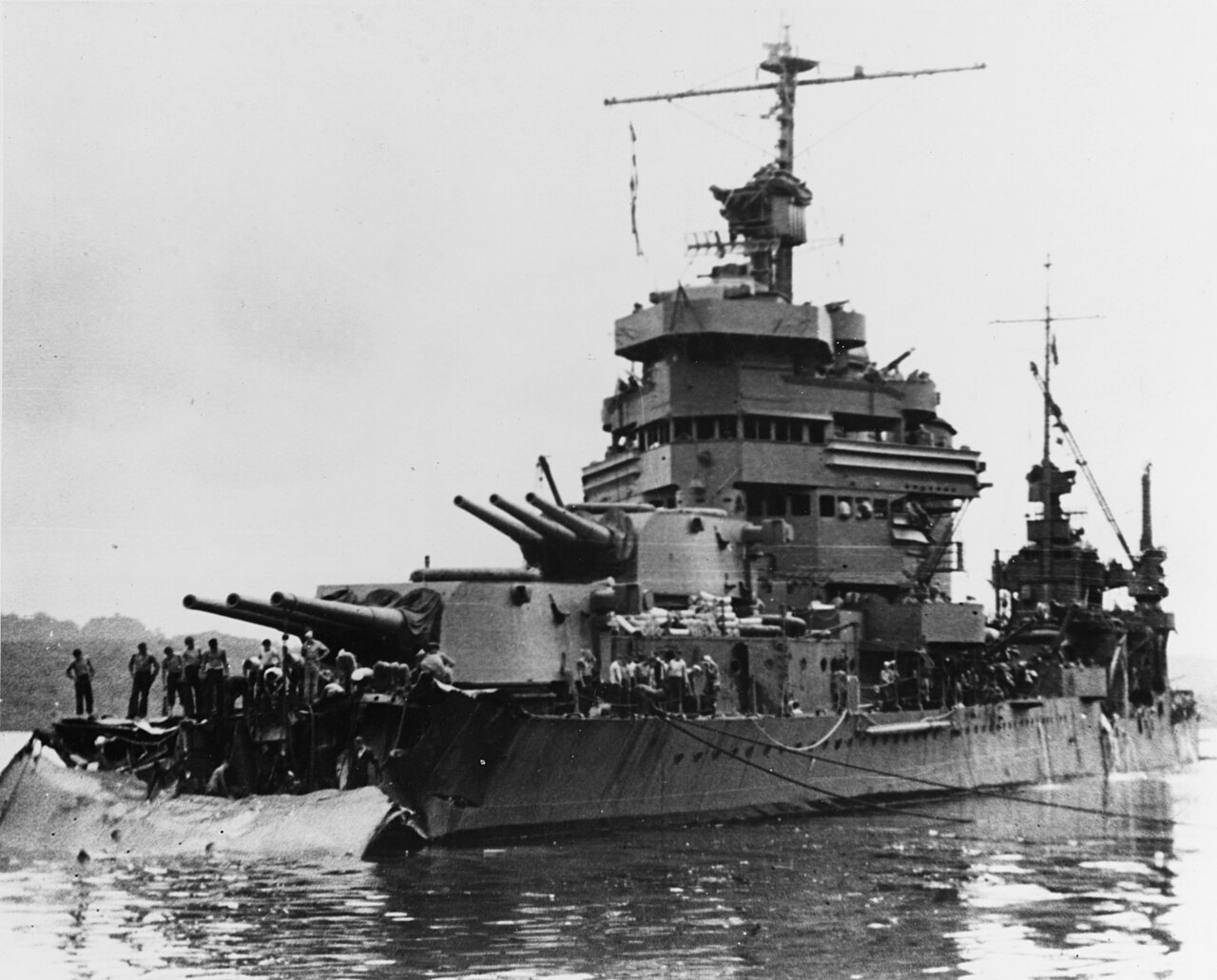
Tassafaronga was the night the bow came off.
On 30 November 1942 she was Rear Admiral Carleton H. Wright's flagship, off Tassafaronga on Guadalcanal. She led the cruisers. New Orleans, Pensacola, Honolulu, and Northampton followed. Ahead of them were Fletcher, Perkins, Maury, and Drayton. Lamson and Lardner had come up late and stayed at the rear. Rear Admiral Raizo Tanaka was on a supply run with eight destroyers. Takanami was out in front. Then Oyashio, Kuroshio, Kagero, Makinami, Naganami with Tanaka's flag, Kawakaze, and Suzukaze.
American gunfire sank Takanami. That sinking is not credited to one cruiser. Japanese torpedoes then hit the cruiser line. They are not pinned to one destroyer. Two of them blew Minneapolis's bow in. The ship that fired is not known. The bow was blown in as far back as the chain pipes. Two firerooms were open to the sea, and she lost power. Honolulu was not hit. Pensacola was. Northampton, last in the line, went down.
She was still afloat the next morning at Tulagi. Her own men, with a Seabee unit on the island, hid the hull under foliage and built a temporary bow. Mare Island later gave her a real one. She went back to sea with that new bow, and she was still in commission when the war ended.
She was decommissioned on 10 February 1947 and sold for scrap on 14 August 1959.