
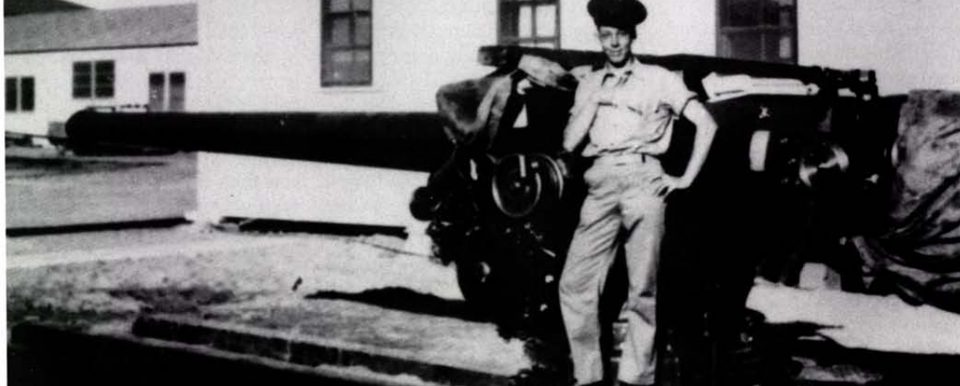
Battery A’s gun at San Diego, 21 October 1940, before these guns went to Wake. Private Edward F. Eaton beside it. Batteries A, B, and L had this gun on the island. U.S. Marine Corps.
1941-12-11
Wake Island
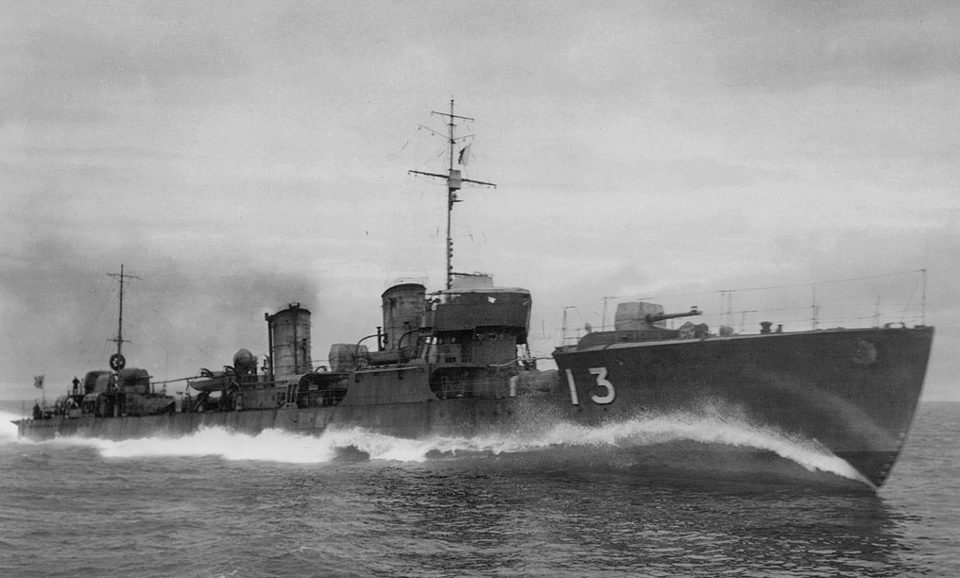
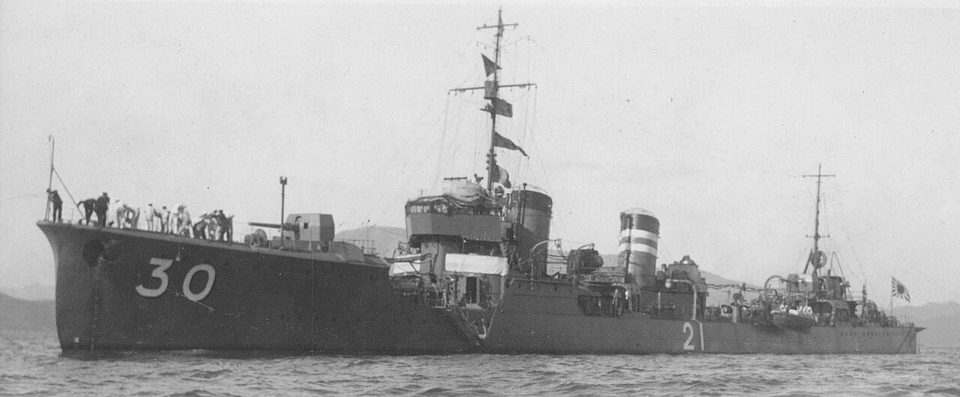
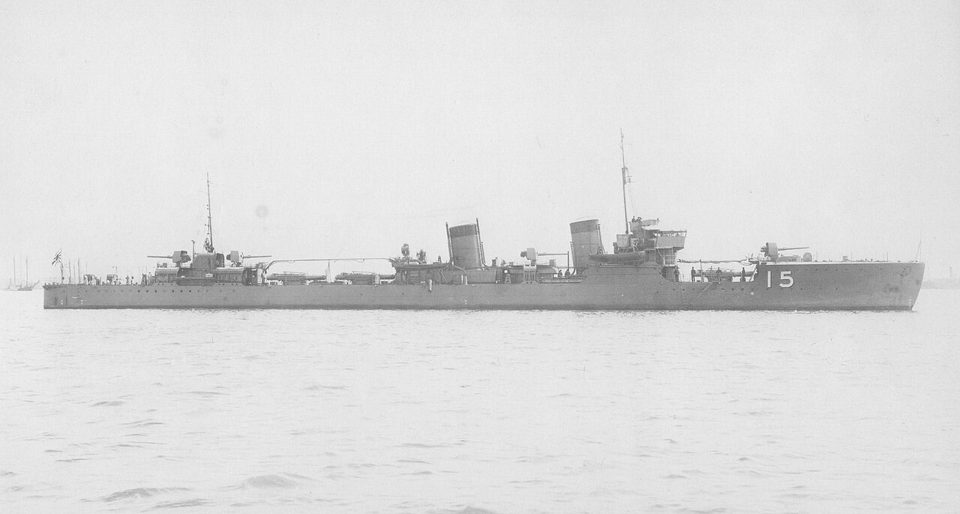
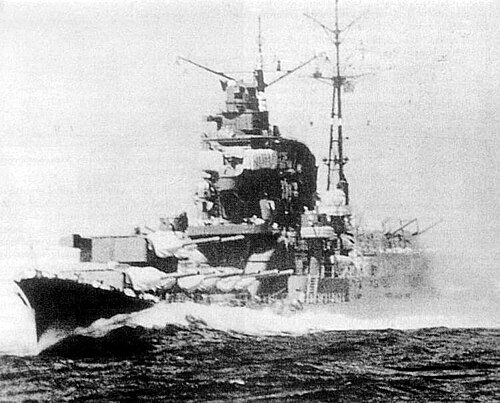
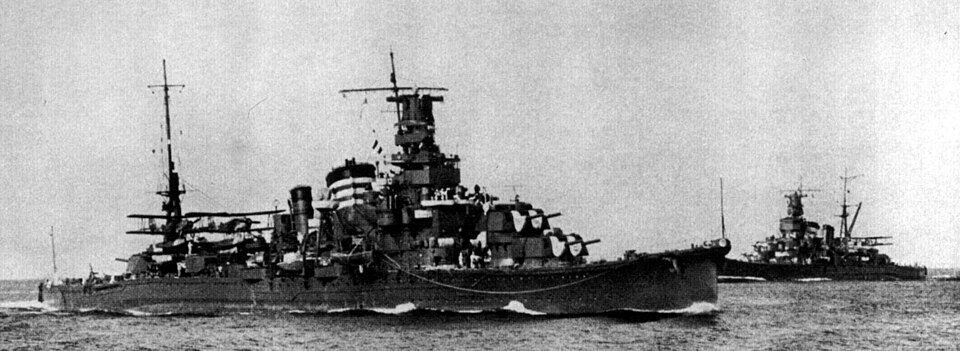
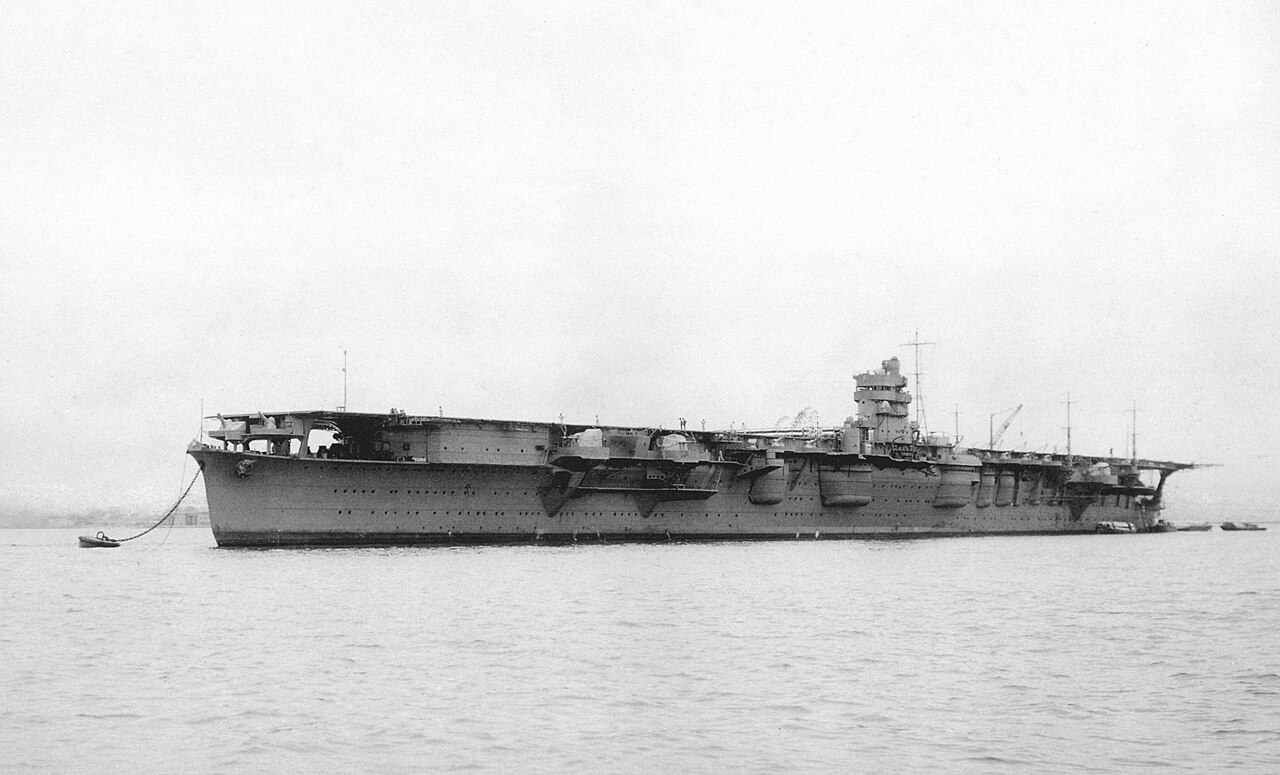
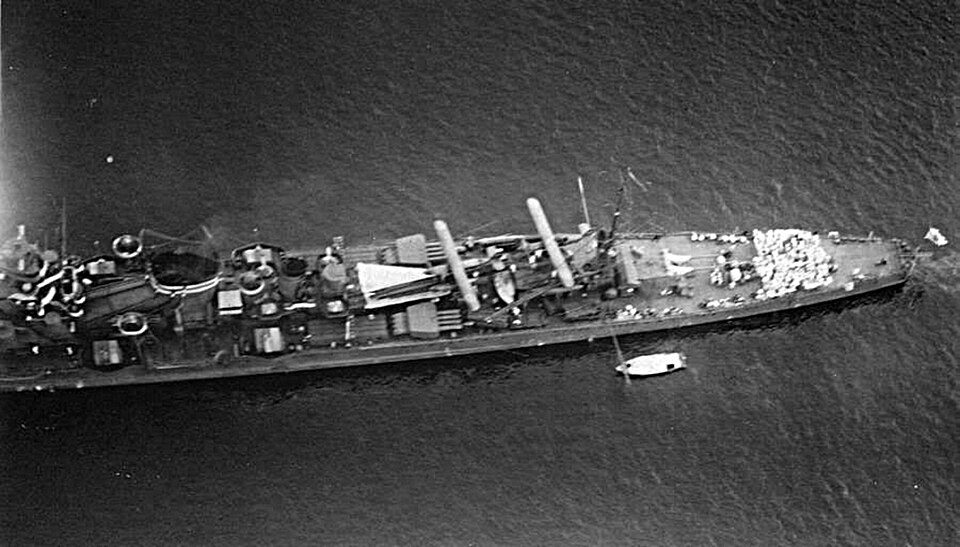
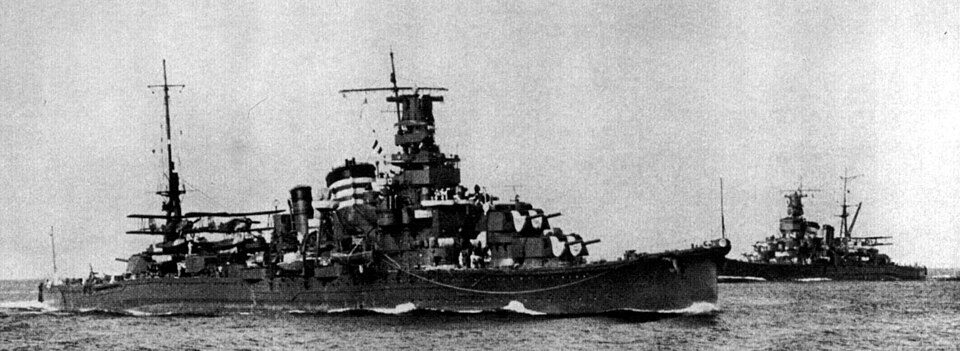
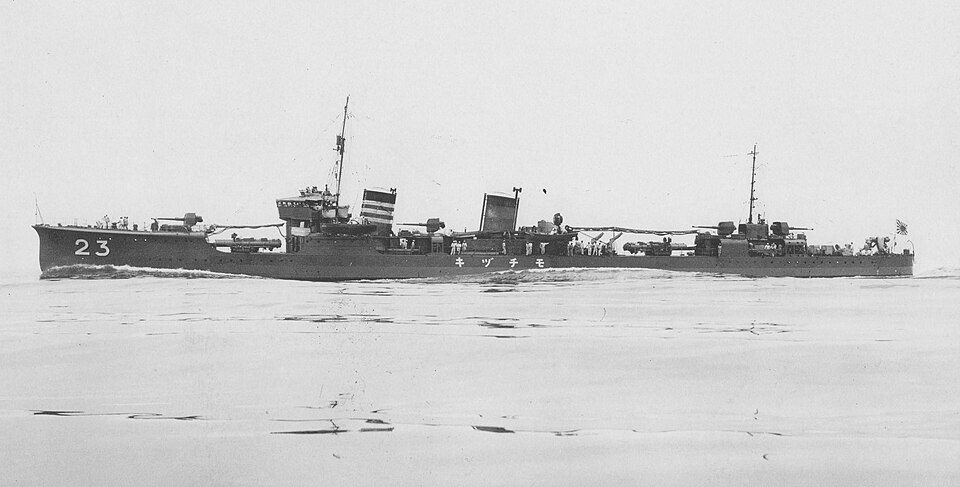
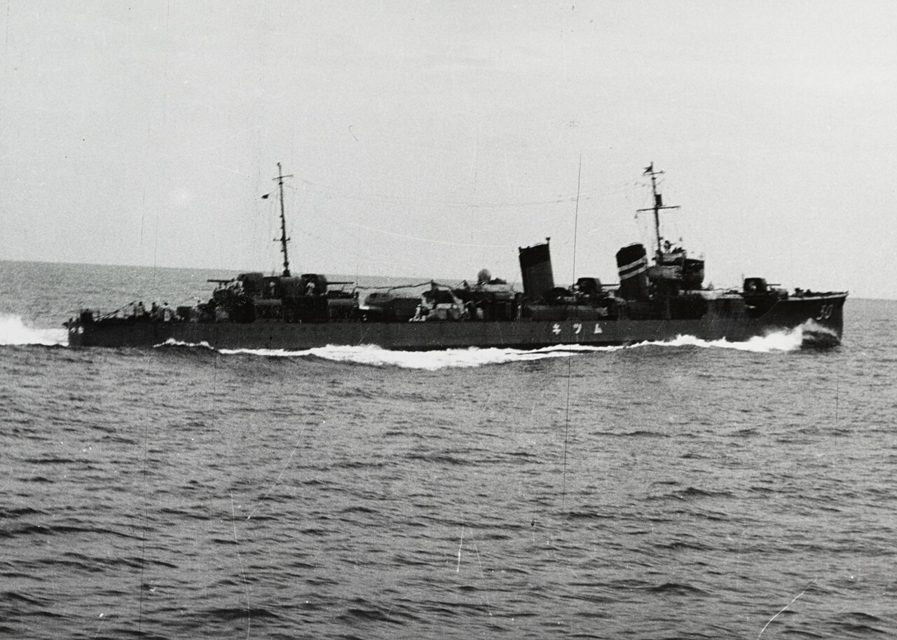
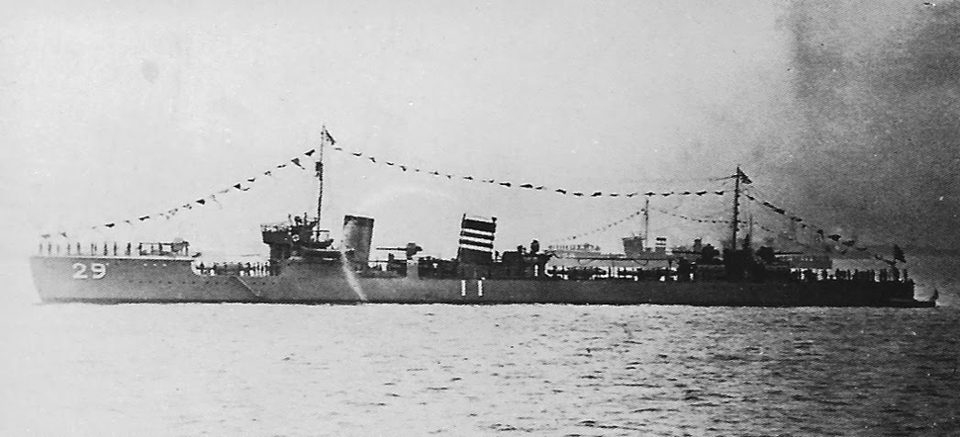
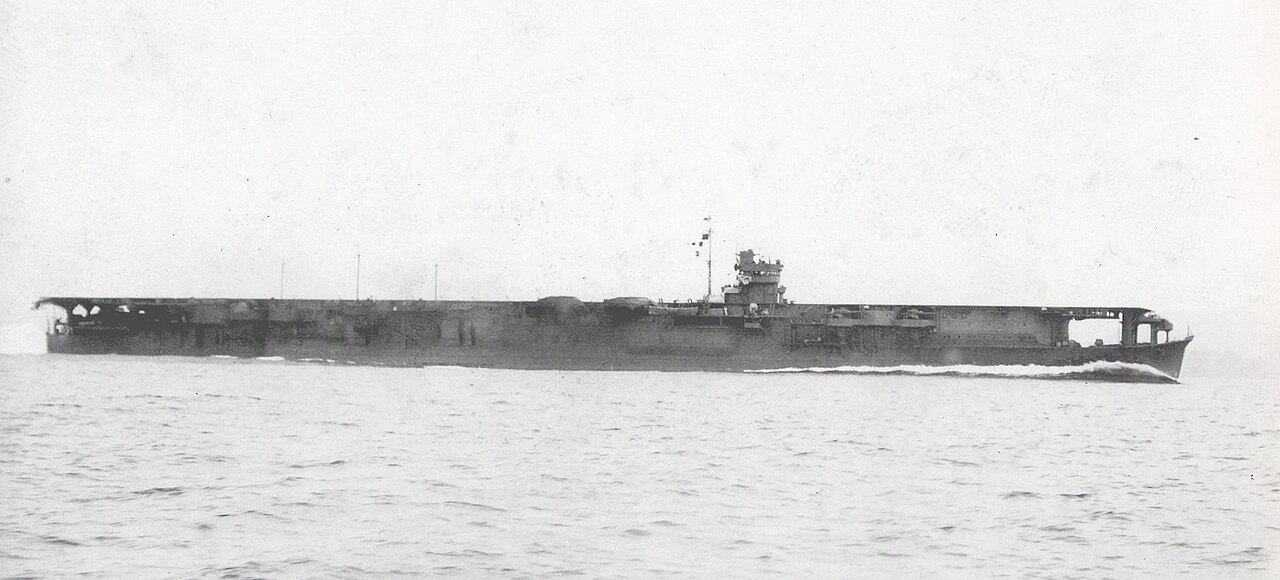
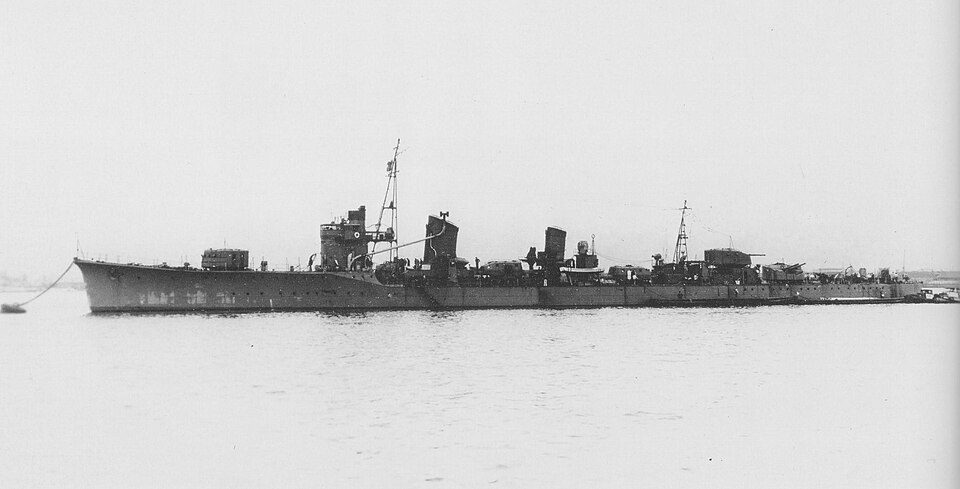
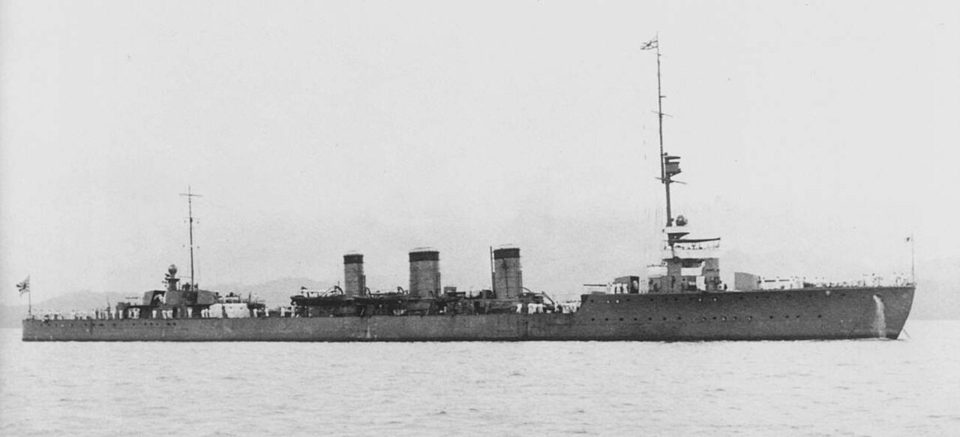
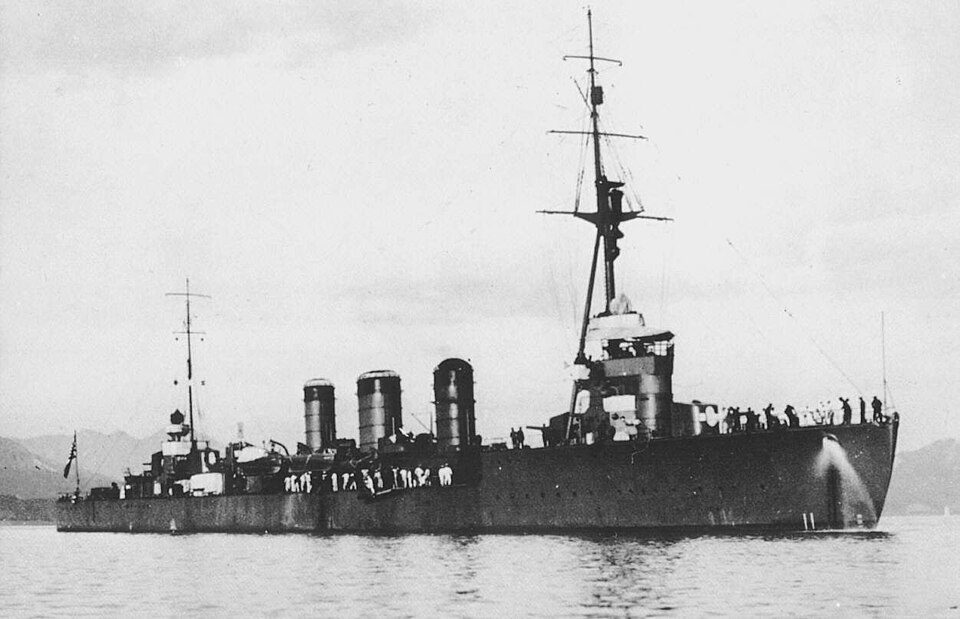
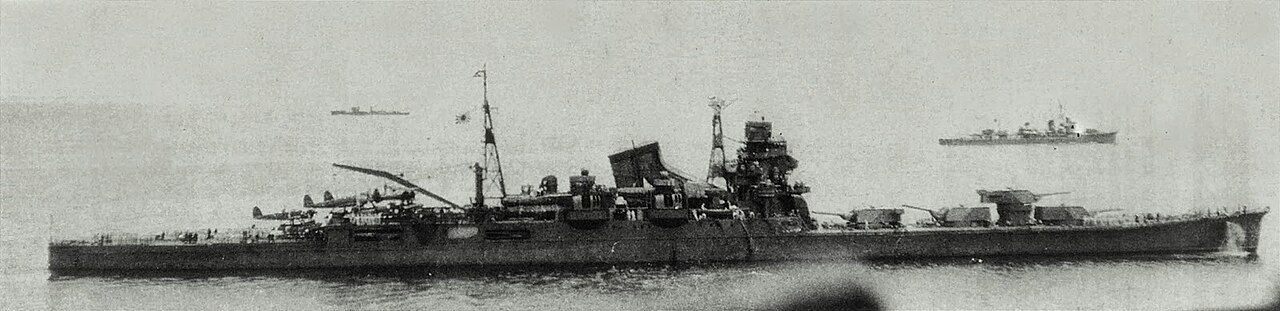
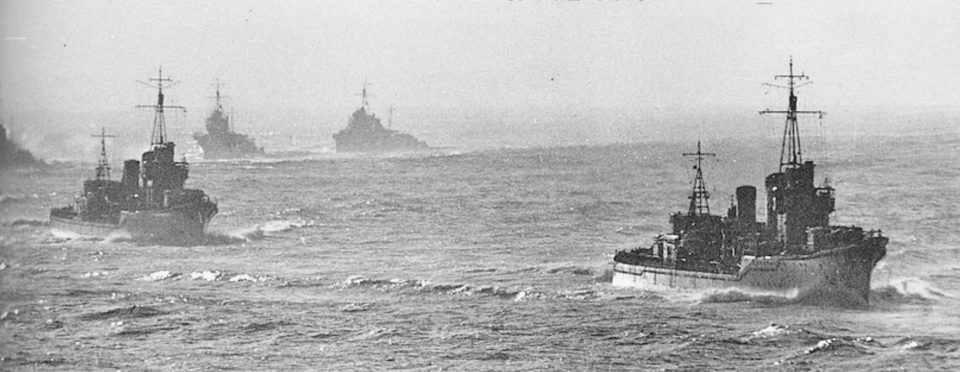
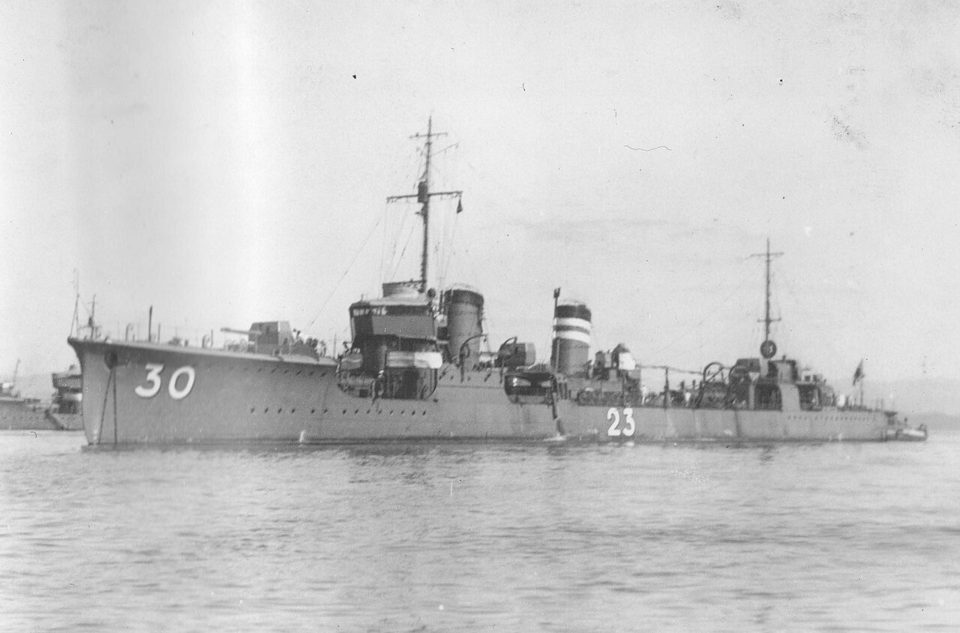
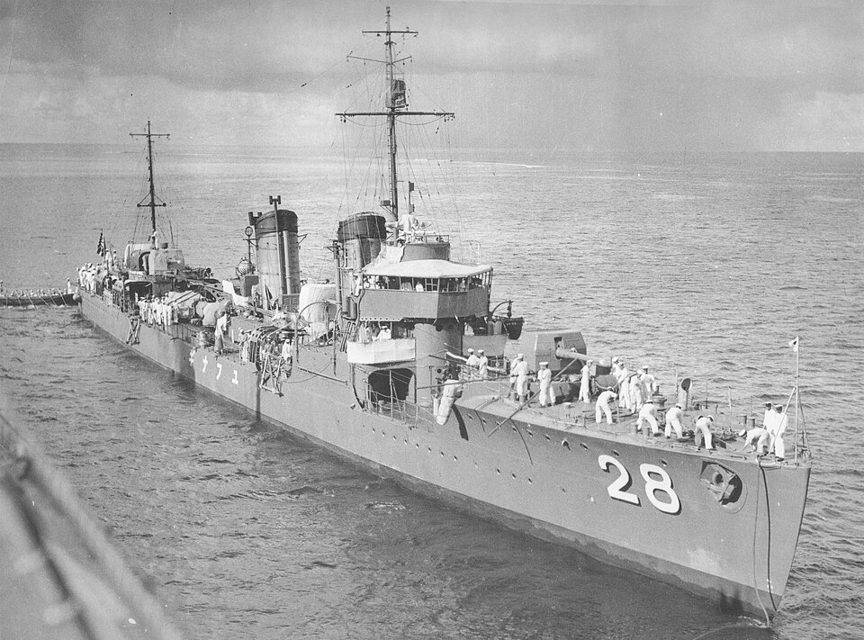
On 8 December 1941, Japan time, Rear Admiral Sadamichi Kajioka left Roi in Yubari to take Wake. With him were the light cruisers Tenryu and Tatsuta, under Rear Admiral Kuninori Marumo, and the destroyers Oite, Hayate, Mutsuki, Kisaragi, Yayoi, and Mochizuki. Two old destroyers converted to land troops, the depot ship Jingei, the armed merchant cruiser Kongo Maru, and the transport Kinryu Maru sailed with them. No American warship was there. The defense was the 5-inch batteries of the 1st Defense Battalion and four Grumman F4F-3 Wildcats of Marine fighter squadron VMF-211. On 11 December Battery L, under Second Lieutenant John A. McAlister, hit Hayate. She broke in two and sank in about two minutes, two miles southwest of the island. Lieutenant Commander Minoru Takatsuka and 167 men were lost. One man was saved. She was the first Japanese surface warship sunk in the war. Battery A, under First Lieutenant Clarence A. Barninger, straddled Yubari and did not hit her. Battery B, under First Lieutenant Woodrow W. Kessler, put one shell into Yayoi. One man was killed and 17 wounded. Near misses wounded 14 men on Oite. The Wildcats damaged three torpedoes on Tenryu's deck and raked Tatsuta's radio shack. Captain Henry T. Elrod's 100-pound bomb is the hit the cruiser records credit with Kisaragi. She sank with all hands, including Lieutenant Commander Yoichiro Ogawa and 156 men. Her own record does not name the pilot, and the accounts do not agree on the time or on whether the bomb or her depth charges finished her. His Medal of Honor citation is for one ship. He did not sink the others. Kajioka turned back. Asanagi and Yunagi were at the Gilberts that morning. Their own records put them with the second landing, on 23 December, not in the bombardment. A cruiser record names Asanagi in that bombardment. For the second landing the force came back with the carriers Hiryu and Soryu, the heavy cruisers Tone, Chikuma, Aoba, Kinugasa, Kako, and Furutaka, and the destroyers Urakaze and Tanikaze. The island surrendered on 23 December. Elrod was killed on the ground that day. The maps are the Marine Corps charts of the 11 December surface action, the batteries on the atoll, the second landing's approach, and the island at 0400 on 23 December.
2 ships.
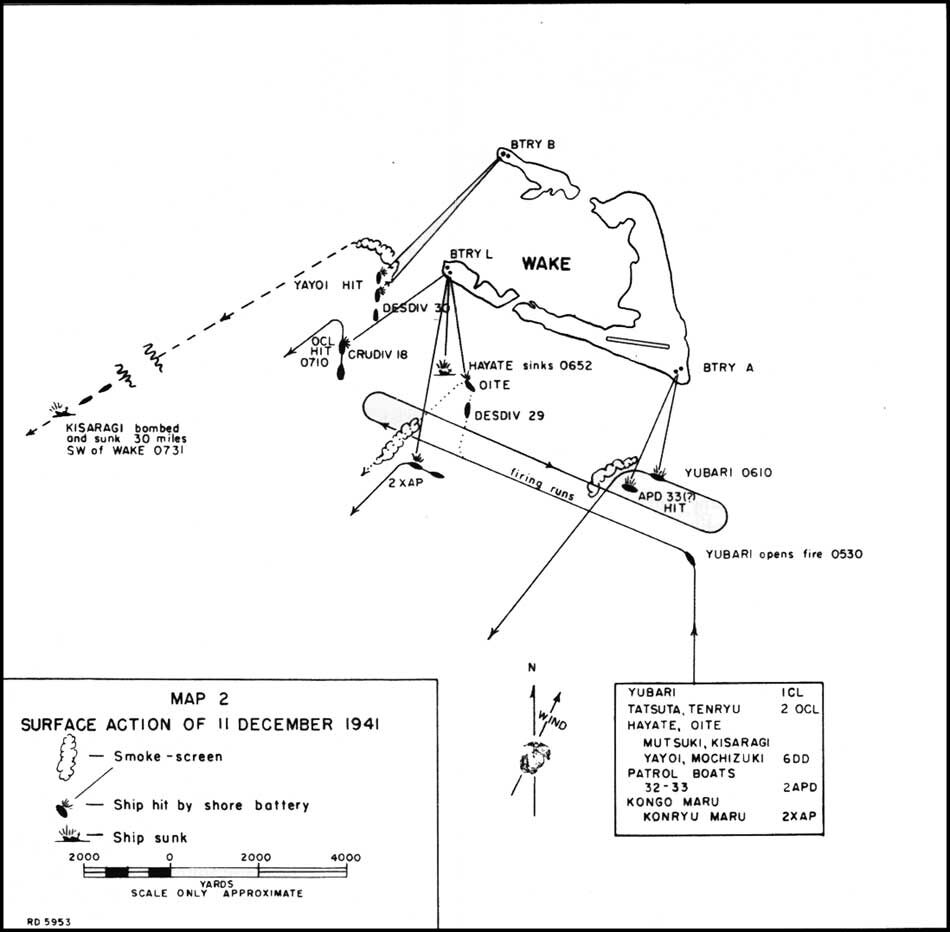
Surface action of 11 December 1941. United States Marine Corps chart in The Defense of Wake. North is up. The sheet says the scale is only approximate. Yubari is drawn opening fire at 0530, and the hit symbol on her is marked 0610. Battery A straddled her and did not hit. Hayate is marked sunk at 0652, southwest of the island. Yayoi is marked hit. Oite is marked hit. The cruiser record calls the Oite damage near misses, fourteen men wounded. A light cruiser is marked hit at 0710, and the sheet does not name her. Tenryu and Tatsuta were strafed and were not sunk. Kisaragi is on a dashed track, marked bombed and sunk 30 miles southwest at 0731. That clock time is the cruiser record. Her own record says a bomb blew off most of the bridge at 0537 and she sank at 0542, and it does not name the pilot. The box lists Yubari, Tatsuta, Tenryu, Hayate, Oite, Mutsuki, Kisaragi, Yayoi, and Mochizuki. Asanagi and Yunagi are not in it. Patrol boats 32 and 33 are in the box. The sheet marks Patrol Craft 33 hit and puts a question mark on that label. Kongo Maru is named. The transport is spelled Konryu Maru on the sheet. This page names her Kinryu Maru. Those ships have no pages. Cruiser Division 18 and Destroyer Divisions 29 and 30 are labels on the tracks.
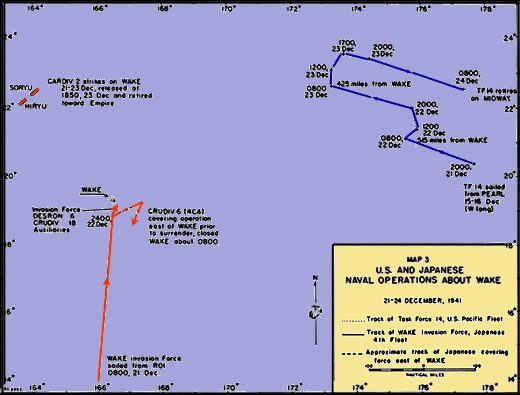
U.S. and Japanese naval operations about Wake, 21-24 December 1941. United States Marine Corps chart in The Defense of Wake. North is up. This sheet is the second landing. It does not draw the 8 December sortie from Roi. The invasion force, Destroyer Squadron 6, Cruiser Division 18, and the auxiliaries, is tracked from Roi at 0800 on 21 December to Wake at 2400 on 22 December. Carrier Division 2, Soryu and Hiryu, is marked striking Wake on 21-23 December, released at 1850 on 23 December, and retiring toward Japan. Cruiser Division 6 is marked as four heavy cruisers on an approximate track east of Wake, closing about 0800. Tone and Chikuma are with the covering force on this page and are not named on the sheet. The blue track is Task Force 14. The sheet has it sailing from Pearl Harbor on 15-16 December, in west-longitude dates, still well offshore on 22 and 23 December, 425 miles from Wake on the 23rd, and retiring on Midway at 0800 on 24 December. It did not reach the island. Those American ships are not on this page.
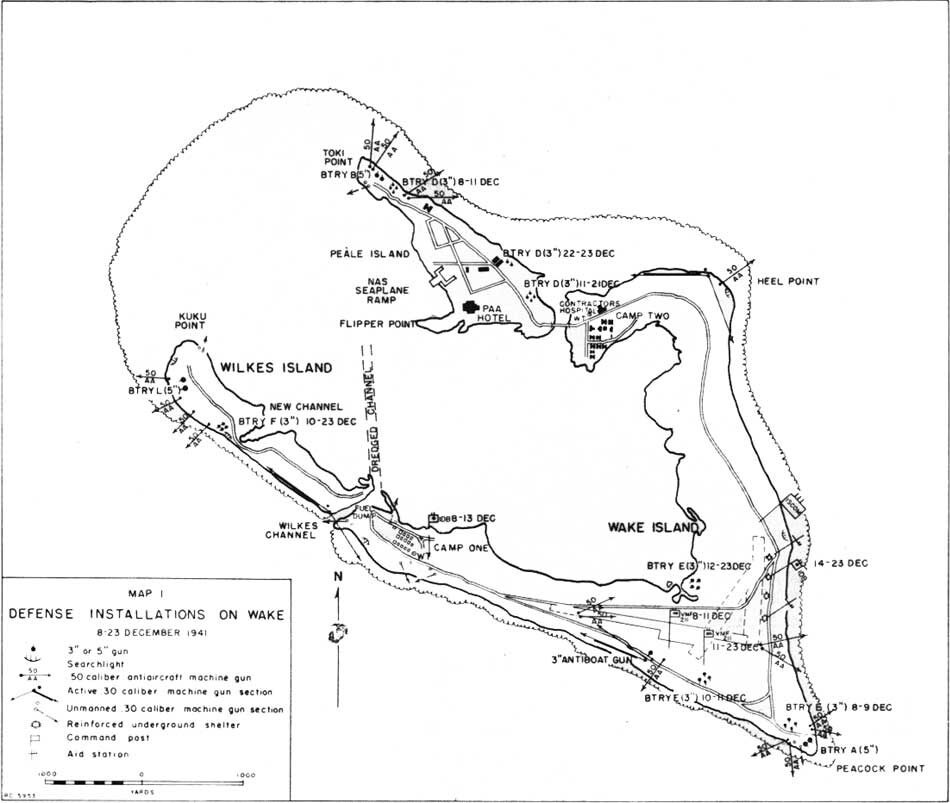
Defense installations on Wake, 8-23 December 1941. United States Marine Corps chart. North is up. Battery A, the 5-inch gun, is at Peacock Point. Battery L is on Wilkes. Battery B is on Peale, at Toki Point. Batteries D, E, and F are the 3-inch guns. The 5-inch photograph on this page was taken at San Diego on 21 October 1940, before these guns went to Wake.
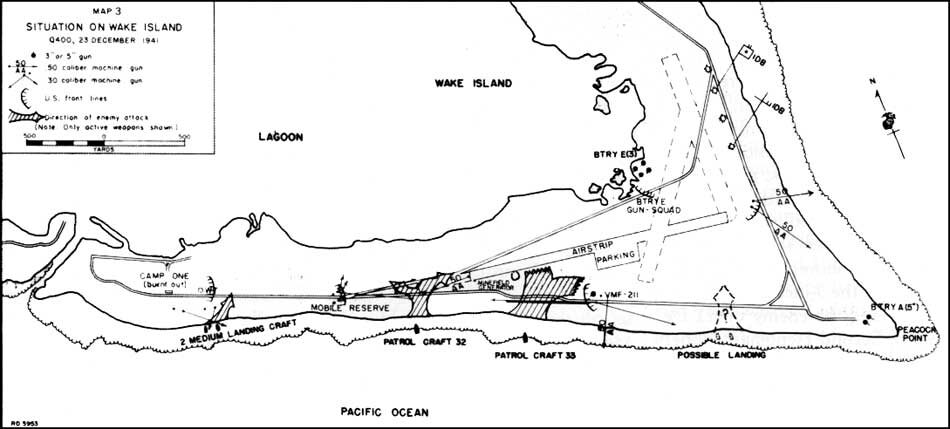
Situation on Wake Island at 0400, 23 December 1941. United States Marine Corps chart. North is up. The note says only active weapons are shown. Patrol Craft 32 and Patrol Craft 33, and two medium landing craft, are on the south shore. A possible landing is marked farther east, toward Peacock Point. The arrows are the direction of the attack from the sea. VMF-211 is marked ashore by the airstrip. Battery A is at Peacock Point. This is the landing, not the 11 December bombardment. The patrol craft are the converted destroyers named in the summary. They have no pages.
Battery A’s gun at San Diego, 21 October 1940, before these guns went to Wake. Private Edward F. Eaton beside it. Batteries A, B, and L had this gun on the island. U.S. Marine Corps.
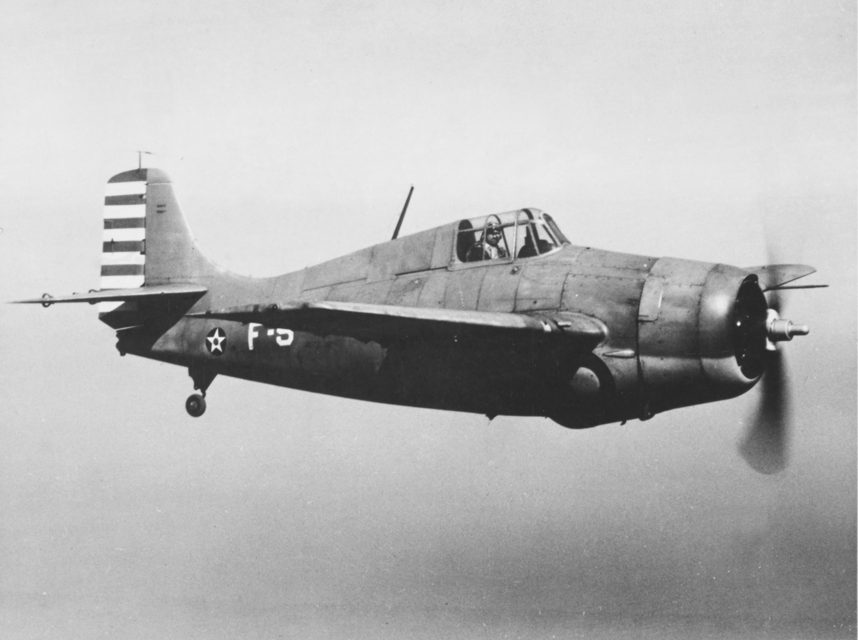
An F4F-3 in February 1942. Four of this type were still flyable at Wake on 11 December. This airplane was not one of them. U.S. Navy NH 97493.