Ships
- IJN Atago Flag, not her captain, 15 November 1942
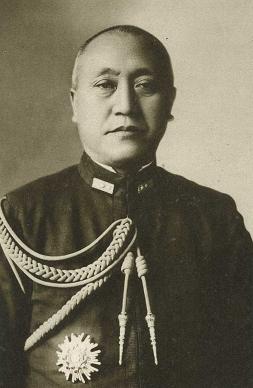
Nobutake Kondo was born in Osaka Prefecture on 25 September 1886. He graduated at the head of the Imperial Japanese Naval Academy class of 1907, qualified as a gunnery officer, and completed the Naval Staff College. In the years between the world wars he moved between sea duty and the Navy General Staff. He commanded the heavy cruiser Kako from late 1929 and the battleship Kongo from December 1932. Promoted to rear admiral in November 1933, he served at the Naval Staff College, became chief of staff of the Combined Fleet in 1935, and then headed the operations section of the Navy General Staff.
He was promoted to vice admiral in December 1937. From December 1938 he commanded the Fifth Fleet in the war in China, and early in 1939 he covered the capture of Hainan with naval landing forces and the carrier Akagi. In October 1939 he returned to Tokyo as vice chief of the Navy General Staff. On 1 September 1941 he went back to sea as commander of the Second Fleet, the force of heavy cruisers and fast battleships held for independent operations. His flagship for the coming war was the heavy cruiser Atago. A captain commanded that ship. Kondo commanded the fleet from her.
When the Pacific War began in December 1941, Kondo was the senior afloat commander of the Combined Fleet under Admiral Isoroku Yamamoto. From Atago he directed the Southern Force covering the landings in Malaya, the Philippines, and the Netherlands East Indies. On 10 December 1941, during the Malaya landings, Japanese naval aircraft sank the British battleship Prince of Wales and the battlecruiser Repulse. His cruisers and battleships remained the distant cover as those conquests were completed. In April 1942 he took the Second Fleet into the Indian Ocean with the carrier striking force for the raid on Ceylon and on British shipping there.
At Midway in June 1942 he commanded the occupation force and the covering group built around the Second Fleet. Those ships were to protect a landing once carrier aircraft had cleared the island. Before the operation he had argued that the transports should assemble at Truk, where Allied intelligence would have a harder time tracking them, rather than at Saipan. On 4 June the four Japanese carriers were lost. The landing was cancelled, and Kondo's battleships and cruisers retired without meeting the American fleet.
He next led the Advance Force in the Solomons. The Second Fleet was at sea for the carrier battle of the Eastern Solomons, from 23 to 25 August 1942, and for the Battle of the Santa Cruz Islands on 26 and 27 October. The American hold on Guadalcanal remained. In November the Japanese army on the island still needed Henderson Field silenced. A night attack on 12-13 November cost the navy the battleship Hiei, and Kondo was ordered to try the bombardment again with the fast battleship that remained.
Kondo led that bombardment group in person on the night of 14-15 November 1942. His flag stayed in the heavy cruiser Atago, and he was not her captain. Kirishima sailed with him, together with the heavy cruiser Takao, light cruisers, and destroyers. Off Savo Island the group met the American battleships Washington and South Dakota. Atago fired on South Dakota and was not sunk. South Dakota was damaged and remained afloat. Kirishima was wrecked by Washington and was lost before the night was over. Kondo was not lost with her. He was still in Atago when the surviving ships withdrew, while American destroyers were also sunk in the same fight and the airfield was never silenced.
He kept command of the Second Fleet after Guadalcanal. On 29 April 1943 he was promoted to admiral, and on 9 August 1943 he left the fleet for the Supreme War Council. He later commanded the China Area Fleet, then sat again as a naval councillor, and he was still in that service when Japan surrendered in August 1945. Kondo died in Tokyo on 19 February 1953.