Ships
- USS Saratoga (CV-3) Captain from 12 May 1942 · Relieved on 27 September 1942
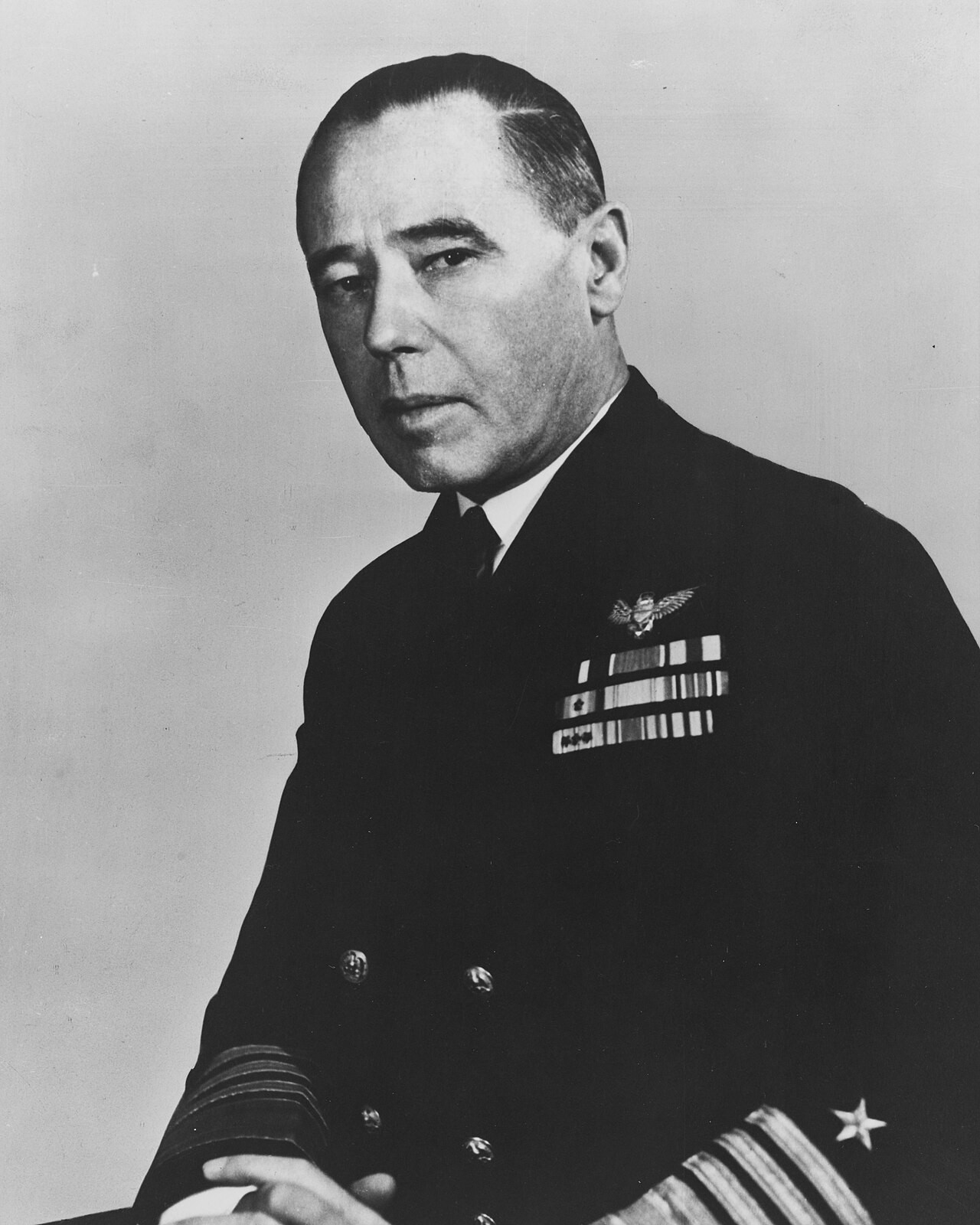
DeWitt Clinton Ramsey was born on 2 October 1888 at Whipple Barracks, Arizona. He graduated from the United States Naval Academy and was commissioned an ensign in June 1912. In 1917 he qualified as a naval aviator, the forty-fifth officer to complete flight training, and became known as Duke. In the First World War he served in France as inspection officer for United States naval air stations and as a member of the Inter-Allied Armistice Commission.
He spent the years between the wars in naval aviation, on shipboard duty and on staffs. In 1937, while a commander, he was fleet aviation officer for the United States Fleet. He reported to the carrier Saratoga in 1938 and was her executive officer into 1939, under Captain Albert Cushing Read. John Henry Towers, then the Navy’s senior aviator, later placed him among a handful of flyers recommended for early promotion to flag rank. Ramsey was promoted to captain in 1939. That October he took over the Plans Division of the Bureau of Aeronautics, and in July 1941 he became assistant chief of the bureau.
Ramsey assumed command of Saratoga (CV-3) on 12 May 1942. The ship was at Puget Sound, finishing repairs for a submarine torpedo hit taken in January. She sailed late in May and reached Hawaiian waters in early June, and Ramsey used the early summer to bring the carrier and her air group back to a combat pitch.
In August he took Saratoga south for the landings in the southern Solomons. On 7 August her aircraft covered the assault on Guadalcanal and Tulagi. On 24 August, in the Battle of the Eastern Solomons, the air groups under his control struck ships of two Japanese task forces and damaged several of them. He received the Navy Cross for the way he directed that air attack. On 31 August a Japanese submarine torpedoed Saratoga. After temporary repairs she withdrew toward Pearl Harbor. Ramsey was relieved as commanding officer on 27 September 1942 and promoted to rear admiral.
That autumn he was assigned to command Carrier Division 1. With his flag in Saratoga, he led a task force that included the British carrier Victorious during Solomons operations in 1943. On 6 August 1943 he returned to Washington as Chief of the Bureau of Aeronautics and held that post until 1 June 1945, the years in which carrier aviation became the main striking arm of the Pacific offensive. He received the Navy Distinguished Service Medal for that work, and the Legion of Merit as well.
On 1 June 1945 he became chief of staff of the Fifth Fleet. In November 1945 he was promoted to vice admiral and named deputy commander of Pacific Ocean Areas. From 15 January 1946 to 3 January 1948 he was Vice Chief of Naval Operations and received a Gold Star in lieu of a second Distinguished Service Medal.
He was promoted to admiral and commanded the Pacific Fleet, and he served as High Commissioner of the Trust Territory of the Pacific Islands. Ramsey retired on 1 May 1949. He died in Philadelphia on 7 September 1961 and was buried in the Naval Academy Cemetery. The guided-missile escort ship Ramsey (DEG-2) was named for him.