Ships
- USS Saratoga (CV-3) Captain from 9 June 1937 · Relieved on 16 June 1938
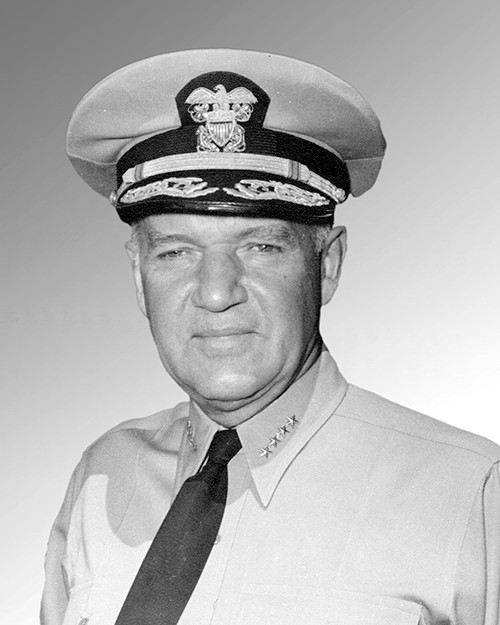
John Henry Towers was a United States Navy officer whose career tracked the rise of naval aviation from its first years through the Second World War. The command record places him as captain of Saratoga from 9 June 1937 until he was relieved on 16 June 1938.
He entered the Navy through the Naval Academy and received his commission in the first years of the twentieth century. Early sea duty in surface ships gave way to aviation. In 1911 he qualified as Naval Aviator No. 3, one of the small group of officers who learned to fly while the service was still deciding what airplanes could do at sea. That qualification shaped the rest of his career.
During the First World War he held aviation staff and command billets concerned with training and with the Navy’s growing air arm. After the war he stayed with flying, including a period in charge of the naval air station at Pensacola, where new pilots were trained. He also served in Washington on aviation planning and policy, arguing for carriers and for a permanent place for aircraft in the fleet.
By the 1930s he was a senior aviation officer. He took command of the carrier Saratoga on 9 June 1937. Saratoga, converted from a battle-cruiser hull and commissioned in the late 1920s, was one of the Navy’s two large fleet carriers and a principal school for carrier tactics in the years before the war. Under Towers the ship continued fleet exercises, air-group training, and the routine of a big carrier in commission. He was relieved on 16 June 1938. Other officers associated with Saratoga across her career included William Frederick Halsey, Jr., Frederick Joseph Horne, Kenneth Whiting, and Harry Ervin Yarnell.
After leaving Saratoga he returned to high aviation posts ashore. In the years immediately before Pearl Harbor he was among the officers responsible for the Navy’s air organization and for building up carrier aviation. During the war he served in senior aviation commands in the Pacific, concerned with the employment, supply, and expansion of naval air forces rather than with a single ship’s deck. He finished the war as a senior flag officer and later held high posts in the postwar Navy before he retired.
Towers is remembered as one of the early naval aviators who stayed with the arm long enough to see it become the Navy’s main striking force. His year in command of Saratoga sat in the middle of that arc, between the experimental flying of 1911 and the carrier war of the 1940s.