Ships
- USS Macdonough (DD-351) Captain, 27 May 1942 – 23 September 1943
- USS Benham (DD-796) Captain, 20 December 1943 – 12 May 1944
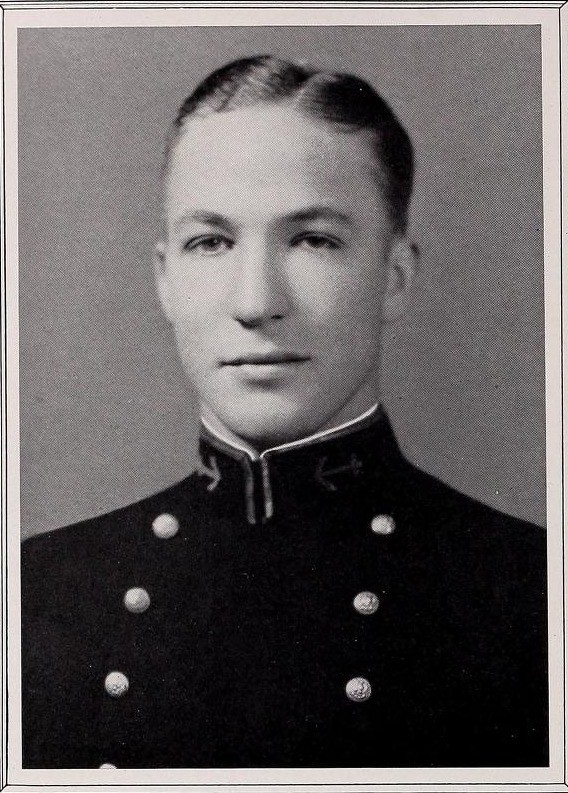
Erle Van Emburgh Dennett (13 June 1908 – 18 August 1962) was a United States Navy officer from Ridgewood, New Jersey. He graduated from the Naval Academy in 1929. In the first two years of the Pacific war he commanded the destroyer MacDonough, which screened the carrier Saratoga during the landings on Guadalcanal and Tulagi in August 1942. Later that month his ship found the Japanese submarine that torpedoed the Saratoga, too late to stop the attack. In May 1943 she was put out of the Attu landing by a collision in fog off the Aleutians. He received the Bronze Star Medal with Combat "V" for his time in command. He was the first commanding officer of the destroyer Benham, from her commissioning in December 1943 to May 1944, and in that time she collided with another destroyer during a night exercise off Hawaii. He spent the last year of the war at a gunnery post ashore in New York and ended it as executive officer of the heavy cruiser San Francisco. In the Korean War he commanded the attack cargo ship Thuban. He spent the rest of his career in reserve, district and administrative posts, planned to retire in 1959, and died in 1962 at the age of fifty-four. The registers and his Navy biography spell his name Erle. Optical-character-recognition copies of the registers often read it as "Erie," and it is also printed as "Earl," as "Eric" in one official history, and with the surname as "Dennet" in some ship histories.
He was born in Ridgewood, New Jersey, a commuter town in Bergen County, on 13 June 1908. His Navy biography records that he was appointed to the Naval Academy from New Jersey. His Academy yearbook adds that he came to Annapolis from Peddie, the boarding school at Hightstown in the middle of the state. The sources examined here do not name his parents or say what they did, and they do not say whether he had brothers or sisters. His middle name, Van Emburgh, is an old Dutch family name in Bergen County, but no source examined connects him to any particular family of that name.
Several other Dennetts served as naval officers in the same years, and their records are easy to mix up with his. Ralph Earle Dennett was an older line officer, a lieutenant commander through the 1920s and 1930s, whose middle name is close to Erle Dennett's first name. Richard Rodney Dennett, of Washington, D.C., graduated from the Academy in 1920. Mark Edwin Dennett, born in Los Angeles in September 1908, only three months after Erle, graduated in 1932 and commanded the destroyer escorts Brennan and Steele during the war. In the directories of the 1930s these men sometimes appear on the same page. Armistead Dennett was a still later officer, and Ernest William Dennett served in the Royal Navy. None of them is Erle Van Emburgh Dennett, and no source examined here establishes a family connection between him and any of them.
He entered the Naval Academy on 22 June 1925, nine days after his seventeenth birthday. The 1929 Lucky Bag, the Academy yearbook, describes him under three nicknames, "Kid," "Red" and "Whitey," and its entry follows him from his arrival to his graduation:
"Enter the kid — one hundred and fifteen pounds of flaxen hair and irrepressible energy; just a midget of a youth from Peddie."
His small size did not keep him out of sports. He played on the plebe and varsity baseball and basketball squads in all four years, and his classmates credited that work with "developing his diminutive frame into larger proportions." They singled out one game: "there was once an Army-Navy basketball game which we all remember well, as did the choosers of the All-Eastern quintet of that year." Then, the entry goes on, "one afternoon Dame Fortune ceased to smile on the Kid and an injured knee seriously hampered the gaining of further athletic laurels."
The yearbook then describes a side of him that a sports writer would not have mentioned. "An overflow of vim now gave him no rest, and he bent his mind to the promotion of various schemes and enterprises. On one occasion we found him busily engaged in furthering a football pool; on another, it was a roulette wheel which took his fancy. Whatever the proposition, headlong went this dynamic lad in seeing it through." His classmates added, with the yearbook's usual teasing, that "his perpetual need for movement left him no time to worry over the vicissitudes of Academic and Executive fortune." The joke suggests that grades and discipline were not his first concern. The entry closes: "Exit the Kid — one hundred and seventy pounds of brawn and ability; who goes forth to seek the rainbow that merges with salty horizons and to promote further schemes beyond these grey-walled confines." The yearbook lists four years of baseball and basketball and three of the gymkhana, the midshipmen's variety show.
He was commissioned an ensign on 6 June 1929. In the late autumn of that year he was back at Annapolis. The Washington Evening Star of 28 November 1929 reported that "Ensigns Ken Craig, Bill Walsh and Erle Dennett, former Navy players," would be among the assistant coaches of the Academy basketball team that season, and the Navy Directory of 1930 lists him at the Naval Academy. After that his career followed the usual pattern for a junior line officer. His Navy biography summarizes the years to 1936 as service "in battleships, submarines and cruisers," and the directories give the details. He was in the battleship Arkansas in 1930 and 1931. In 1932 and 1933 he served in the old submarine S-17. He then went to the new heavy cruiser Chester, where he served in 1934 and 1935. The registers credit him with three courses: submarine instruction, chemical warfare, and a short course in optics. He took the submarine course, which went with his tour in S-17, but the registers never record him as qualified in submarines. His career would be in surface ships.
In 1936 he was ordered to the Navy Department in Washington. His biography calls it "Communications duty," and the directories of 1937 and 1938 list him in the Office of the Chief of Naval Operations. He appears on the 1936 promotion list for lieutenant, and he held that rank by 1938. That year, in the words of his biography, he "returned to sea duty in destroyers." The Register of July 1938 places him in the destroyer Perkins, and the directories from 1939 to 1941 list him there as gunnery officer. The Perkins was based at San Diego and operated in the eastern Pacific. A destroyer's gunnery officer ran her five-inch battery and its fire control. A commendation in 1945 would praise his "mastery of the problems of gunnery and ordnance."
By the time the war began he had moved to the destroyer MacDonough as executive officer, the captain's second in command. On 7 December 1941 the MacDonough lay at Pearl Harbor in a nest of destroyers alongside the tender Dobbin, under overhaul, with her machinery disabled and her power supplied by the tender. The engagement report written afterward by her ensign on watch, R. W. Clark, says that he was "the only officer on board ship" when the Japanese attacked. Her captain, Lieutenant Commander J. M. McIsaac, wrote that he came aboard at 0912, after the attack was over. If Dennett was already her executive officer that morning, as his biography indicates, he too was ashore. The crew fought the ship anyway. When the Dobbin's power failed, they loaded, trained and elevated the guns by hand, and Clark believed they had brought down two aircraft.
Dennett took command of the MacDonough in May 1942. His Bronze Star citation dates the command from 27 May. Ship-listing compilations give 1 June, or simply "mid 1942." His promotion to lieutenant commander was dated 30 June 1942, about a month after he took command. The ship was a Farragut-class destroyer of 1935, armed with five-inch guns and torpedoes. He had been her executive officer, so he took command of a crew he already knew.
The MacDonough went south for the first American offensive of the Pacific war. For the landings on Guadalcanal and Tulagi on 7 August 1942, she was one of the destroyers screening the carrier Saratoga in the air support force under Rear Admiral Leigh Noyes. The Office of Naval Intelligence's wartime narrative of the landing lists her under "Lt. Comdr. Erle V. Dennett." The carriers stayed at sea south of the islands while their aircraft covered the Marines going ashore. The screening destroyers listened for submarines, kept station on the carrier through high-speed turns into the wind, and stood ready to pick up airmen who came down in the sea. The MacDonough was still with the Saratoga in Vice Admiral Frank Jack Fletcher's Task Force 11 for the carrier battle of the Eastern Solomons on 24 August. Samuel Eliot Morison's official history lists her in the destroyer screen there, printing her captain's name as "Eric V. Dennett."
Dennett's best-documented hour as a captain came a week later. In the early morning of 31 August 1942 the Saratoga's task force was zigzagging at 13 knots in the waters between the Solomons and Espiritu Santo, with seven destroyers about 3,500 yards out from the carrier, listening for submarines. Morison describes what followed. As the Saratoga's crew lined up for breakfast, the Japanese submarine I-26 fired a spread of six torpedoes at the carrier from a position off her bow. "At that moment destroyer MacDonough made a hot sound-contact dead ahead and close aboard, quickly followed by a sighting of the periscope barely 30 feet from her bow. She hoisted the submarine warning signal at 0746 and dropped two depth charges, unfortunately with no depth setting. Simultaneously a torpedo porpoised astern and harsh grating noises were heard against the ship's hull as I-26 scraped it." Morison does not say why the charges went over without a depth setting.
The Saratoga's captain, DeWitt C. Ramsey, saw the MacDonough's warning flag, put his rudder hard over and rang up full speed. The old carrier turned slowly. About two minutes later a torpedo hit her on the starboard side. Twelve men were wounded, Admiral Fletcher among them. One fireroom flooded. An electrical arc in her turbo-electric drive stopped two main generators, and it was late afternoon before her engineers could give her 12 knots. The cruiser Minneapolis took her in tow so that she could launch her aircraft for Espiritu Santo. She survived, but she had to go back to Pearl Harbor for repairs, and the American carriers in the South Pacific were reduced at a critical point in the Guadalcanal campaign. The MacDonough and the Phelps gained sound contact and dropped depth charges without result. Another destroyer later claimed a kill, but I-26 escaped, and in November she sank the cruiser Juneau. Japanese records, as compiled since the war, agree that the submarine surfaced to periscope depth right beside the MacDonough at 0746. No report by Dennett on the episode has been found. Morison records only the facts: the destroyer saw the periscope, gave the warning, and tried to attack. Her warning gave the Saratoga her two minutes to turn, but the torpedo still hit.
In mid-September the destroyer screened the reinforcement convoy that landed the 7th Marines on Guadalcanal. Morison describes the landing of 18 September as the most orderly American debarkation to date. Nearly 4,000 men and their equipment came ashore in twelve hours, while "destroyers Monssen and MacDonough paraded up and down the enemy-held sections of the beach, throwing 5-inch shells ashore — to the vast delight of the Marines and distress of the enemy, as he himself reported." This is almost certainly the "one occasion" of "effective shore bombardment" that his Bronze Star citation mentions. From the end of September the ship escorted convoys between New Guinea, Espiritu Santo and Pearl Harbor, and on 22 December 1942 she reached the Mare Island Navy Yard in California for overhaul. His citation also names the Battle of the Santa Cruz Islands of 26 October among his services. The ship's official history and Morison's order of battle for Santa Cruz do not place her there, and the sources examined here do not explain the difference. He was promoted to temporary commander with rank from 1 October 1942.
In the spring of 1943 the MacDonough went north to the Aleutians, where Japanese troops had held the islands of Attu and Kiska since June 1942. She reached Adak on 16 April and patrolled northeast of Attu before the landing. For the assault she was one of the destroyers of the support group in Rear Admiral Francis W. Rockwell's assault force, with what Morison calls "a special fire control mission." The weather in those waters was a danger in itself. Morison writes that on 8 May the seas broke over the forward gun mounts of the battleships. On the night of 10 May, the eve of the landing, the battleship group rejoined the transports "in a pea-soup fog," and the ships had to shift from cruising formation to approach formation with only early radar to keep them apart. "For hours the ships groped carefully and fearfully." The destroyer-minelayer Sicard did not trust her radar and was following the wake of the ship ahead, and when the fog hid even that she held station by stopwatch and maneuvering board. Morison continues: "Destroyer MacDonough, when changing course to conform to the movements of the transports, got between Sicard and the ship ahead and was rammed by the minelayer. Nobody in either ship was hurt and both made port safely, but their absence was keenly felt, since Sicard was to have been control vessel for the landing and MacDonough had a special fire control mission."
After the long passage north, the ship was out of the operation in the last hours before it began, damaged by a friendly ship in fog. The MacDonough was towed away and was in dock at Mare Island until 23 September 1943. Morison's account does not assign blame, and no record of any inquiry into the collision has been found. His Bronze Star citation, which covers his whole command through 23 September 1943, credits him with patrolling Aleutian waters and contributing "materially to our success in this area." The citation also records his work in the South Pacific: "Performing anti-submarine screening duties with a Carrier Task Force in the Guadalcanal-Tulagi landings and the Battle of Santa Cruz Islands, (he) rendered invaluable assistance by escorting troop transports and supply ships, thus aiding in the capture and defense of Guadalcanal." The award carried the Combat "V," which marked it as earned in action. He gave up command when the repairs were finished, and the MacDonough went on to the Gilberts in November under another captain.
He was given a new ship. The Benham was a Fletcher-class destroyer, larger and more heavily armed than the MacDonough, built at Staten Island. She was commissioned in New York on 20 December 1943, "Comdr. Erle V. Dennet in command," as her official history spells it. A commissioning captain had to turn a new hull and a largely new crew into a fighting ship in a few months. He took her through shakedown in Long Island Sound and then to Bermuda and the Caribbean for four weeks of shore bombardment, antisubmarine and carrier-escort exercises. She returned to New York on 13 February 1944. At the end of the month she sailed from Norfolk, escorting the destroyer tender Piedmont through the Panama Canal, and reached Pearl Harbor on 27 March.
There she trained for carrier screening, antiaircraft gunnery and antisubmarine work in preparation for the invasion of the Marianas. On the night of 24 April 1944, two hours after sunset, during an antisubmarine screening exercise for the carriers of Task Group 19.2 in Hawaiian waters, the Benham collided with the destroyer Uhlmann. The Uhlmann's official history says she was "struck amidships by destroyer Benham." The impact tore an eight-by-ten-foot hole in her hull below the waterline and flooded her firerooms and forward engine room. She had to be towed into Pearl Harbor and was under repair at San Francisco into the summer. The Benham's bow was badly damaged, and because the Marianas preparations had priority, her repairs went slowly. She returned to duty on 14 May. Two days before that, on 12 May 1944, ship-listing compilations record that Dennett was relieved by Commander Frederic S. Keeler, who took her to Saipan.
Within eleven months, two ships under his command had been in collisions in darkness or fog during close-formation work. No source examined here says whether the second collision led to his relief, and none reports a court of inquiry. The record does show that he did not command a ship at sea again during the war. His career went on, and he was later given command at sea in another war.
His next assignment used his gunnery experience. From July 1944 to June 1945 he was gunnery officer of the Fleet Administration Office in New York. In that job he supervised the fitting of new ordnance equipment to Atlantic Fleet ships coming out of building and overhaul. The Commander in Chief, Atlantic Fleet, gave him a Letter of Commendation with Ribbon "for outstanding performance of duty." It praised "his exceptional administrative talents, his mastery of the problems of gunnery and ordnance, his sound judgment and foresight." For the last months of the war he went back to the Pacific as executive officer of the heavy cruiser San Francisco. The sources examined here do not give the date he reported aboard or describe his service in her.
He stayed in the Navy after the war. He served on Guam from 1946 to 1948. He then went to Bridgeport, Connecticut, as inspector-instructor of the Naval Reserve, training the reservists who would be called up if the Navy expanded again. The Register of January 1950 still lists him as a commander, with rank from 1 October 1942. A later register dates his promotion to captain from 1950.
The Navy expanded again that summer, when North Korea invaded the South. In October 1950, according to his biography, he took command of the attack cargo ship Thuban at Pusan. An attack cargo ship carried the heavy equipment, vehicles and supplies of an assault force and landed them in her own landing craft. The Thuban had already landed troops at Inchon in September. According to her official history, which does not name her captains, she staged at Pusan that October for the landing at Iwon on the northeast coast of Korea. She sailed on 28 October, arrived on the 29th, and left on 6 November. Later that month she carried elements of the Army's 3rd Infantry Division from Japan to Wonsan. On 23 November she sailed for home, and she reached San Francisco on 7 December, just as Chinese armies were driving the United Nations forces back from the Yalu. If he took command at Pusan before she sailed for Iwon, as his biography indicates, he was her captain for both of those landings. His biography says the ship reported to the Atlantic Fleet in January 1951. Her official history places her return to the East Coast early in 1952. A ship-listing compilation gives the end of his command as December 1951. He received the Korean Service Medal and the United Nations Service Medal.
The rest of his career was spent ashore, in administrative posts. From 1952 to 1954 he was with the Reserve Fleet at Charleston, South Carolina, where ships laid up after the Second World War were kept ready for recall. From 1954 to 1957 he was assistant chief of staff for administration at the headquarters of the First Naval District in Boston. In September 1957 he went to the Fifth Naval District at Norfolk as president of the general court-martial board. In April 1958 he was given the additional duty of special program officer for the Military Sea Transportation Service, advanced bases and harbor defense. His biography, issued by the Navy's Office of Information in February 1959, said that he planned to retire on 30 June 1959 "after thirty years of continuous service." That would have been almost exactly thirty years from his commissioning. The Register of January 1959 still carries him on the active list among line captains.
He died on 18 August 1962, three years after his planned retirement, at the age of fifty-four. The sources examined here do not say where he died, what he died of, or where he is buried. They also do not say whether he married or had children. No obituary was found.
His decorations were the Bronze Star Medal with Combat "V" and the Commendation Ribbon. He also held the American Defense Service Medal with Fleet Clasp, the American Campaign and Asiatic-Pacific Campaign Medals, the World War II Victory Medal, the National Defense Service Medal, the Korean Service Medal and the United Nations Service Medal. Beyond those, what survives of him in public sources is limited. There is a yearbook portrait of a small, fair-haired boy who built himself into a varsity athlete and ran a football pool and a roulette wheel at Annapolis. There is the record of a captain who kept his destroyer in the carrier screen through the opening weeks of the Guadalcanal campaign and whose crew saw a periscope thirty feet off the bow at the moment it fired on the Saratoga. There are two collisions in a year. And there is a long, plain second half of a career in reserve and district posts. His classmates in 1929 had sent him off "to seek the rainbow that merges with salty horizons," and over the thirty years that followed, through two wars, the record places him at sea for about half of them.