Ships
- USS Yorktown (CV-5) In command, 30 September 1937
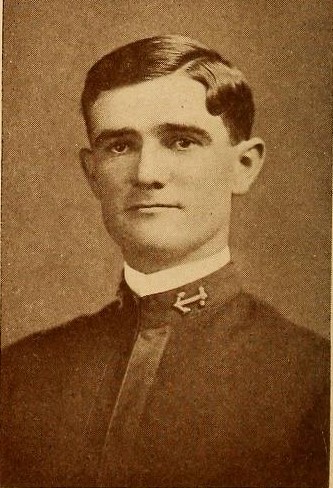
Ernest Doyle McWhorter was born on 23 September 1884 in Blue Springs, in Union County, Mississippi. He graduated from the United States Naval Academy with the Class of 1907 and spent his early career in submarines, when that arm of the Navy was still small and its long voyages were a test of both boats and crews.
By the opening of 1911 he commanded the submarine Moccasin. Through 1911 and 1912 he led the First Submarine Division of the Asiatic Torpedo Fleet. On 22 January 1914 he took command of G-4 and kept her into 1916. In the First World War he commanded the submarine K-5 and Submarine Division 4. The Navy Cross recognized a winter crossing to Ponta Delgada in the Azores in severe weather, and a wider record of moving small submarines across oceans. As division commander he brought five boats from the Pacific coast to the Atlantic. He then took the tender Alert and three submarines out to Ponta Delgada, returned with them to Bermuda, added a fourth submarine, and continued to San Pedro.
He was promoted to captain on 1 September 1933. In 1937 the Navy gave him the first command of a new fleet carrier. Yorktown (CV-5), lead ship of her class, had been laid down at Newport News on 21 May 1934 and launched on 4 April 1936, with Eleanor Roosevelt as sponsor. McWhorter assumed command when she was commissioned at the Naval Operating Base, Norfolk, on 30 September 1937.
After fitting out, Yorktown trained in Hampton Roads and on the southern drill grounds off the Virginia Capes, qualifying the pilots of the air group just embarked. She sailed for the Caribbean on 8 January 1938 and reached Culebra, Puerto Rico, on the 13th. The shakedown that followed called at Charlotte Amalie on St. Thomas, Gonaives in Haiti, Guantanamo Bay, and Cristobal in the Canal Zone. She left Colon on 1 March, entered Hampton Roads on the 6th, and shifted to the Norfolk Navy Yard the next day. Post-shakedown repairs held her there into the early autumn.
On 17 October 1938 Yorktown moved back to the operating base and returned to sea for training. Into 1939 she worked the coast from Chesapeake Bay to Guantanamo Bay. That February, as flagship of Carrier Division 2, she joined her sister ship Enterprise in Fleet Problem XX. The scheme asked one fleet to hold the Caribbean sea lanes against a European intrusion and still keep enough strength to cover American interests in the Pacific. President Franklin D. Roosevelt watched the maneuvers. Carrier aircraft practiced convoy escort, antisubmarine search, and attacks on ships and shore targets in a single large exercise. McWhorter was relieved of command on 16 June 1939.
In the Second World War he served as a rear admiral in command of the air group of the Western Naval Task Force for the landings in French Morocco in November 1942. His squadrons gained control of the air, struck shore batteries, flew antisubmarine and combat patrols, and covered troops landing at three widely separated points. The air group shot down 26 aircraft and destroyed more than 100 on the ground. For that duty he received the Navy Distinguished Service Medal. He retired as a rear admiral, died in Portsmouth, Virginia, on 31 January 1950, and was buried at Arlington National Cemetery.