Ships
- USS Hall (DD-583) Captain, 6 July 1943 – 19 May 1944
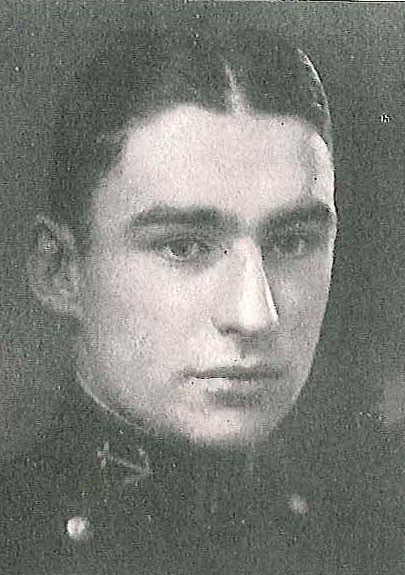
John Francis Delaney, Jr. (1904–1968) was a regular officer of the United States Navy, a Boston man of the Naval Academy class of 1925, who spent most of his career in the engine rooms and on the engineering side of the service. He was the engineer officer of the aircraft carrier Yorktown in the Battle of the Coral Sea in May 1942, when a bomb burst in the compartment over his head and killed most of his engineering repair party, and in the Battle of Midway a month later, when he brought her from dead in the water back to 23 knots in about an hour before Japanese torpedoes took all of her power away for good. His captain recommended him for the Navy Cross after Coral Sea; he received the Silver Star for Midway. In July 1943 he put the new destroyer Hall (DD-583) into commission at the Boston Navy Yard and commanded her for ten months: in Atlantic escort work, in the screen of the battleship Iowa when she carried President Roosevelt toward the Teheran conference, and in the Marshall Islands campaign of early 1944. He retired in 1956, was carried on the retired list as a rear admiral, and died in August 1968. He is buried, according to compiled sources, in the Naval Academy Cemetery at Annapolis. The "Jr." that the Navy printed after his name for thirty years separates him from several men of the same or similar name: from a John Francis Delaney who was a well-known racing handicapper in Brooklyn and New York in the decades around 1900; from the Marine Corps officer John Francis Delaney who was commissioned in the late 1950s and was a major by 1968; and from the other Delaneys of the Second World War Navy, among them Lieutenant Commander J. J. Delaney of the Marshalls campaign and Lieutenant (jg) W. E. Delaney, a naval aviator of 1945.
The Navy's registers give his birth date as 7 September 1904. His Naval Academy yearbook, the Lucky Bag of 1925, gives his home as Boston, Massachusetts, and lists him among the midshipmen from that state. A local history project in Charlestown, the old Navy Yard neighborhood across the harbor from downtown Boston, has identified him as a Charlestown native and a graduate of the Boston Latin School; one compiled biography gives his birthplace instead as Bradford, Massachusetts. The Boston record is the one in his own day's documents, and the Charlestown account is consistent with it, since Charlestown had been part of the city of Boston since 1874. His father, from whom he took the "Jr.," was also named John Francis Delaney, but no source consulted for this article names his mother, describes his father's work, or says whether he had brothers or sisters.
He entered the Naval Academy in the summer of 1921, in the class that would graduate in 1925. The academic register of 1922–23 lists him in that class, and the Navy registers of the war years carry an entry date in June 1921. He was sixteen.
The yearbook sketch is short and almost entirely a joke, which is the usual form, but the jokes are about something real. They are about Boston. "How's that, gents? Did I hear somebody say that the Braves were a bunch of sandlotters? Just capsize both league standings and watch the Bawston clubs lead the procession." The Red Sox and the Braves, the writer says, "are Jack's one weak point, just as they are baseball's ditto," a fair judgment on two clubs that spent most of the early 1920s near the bottom of their leagues. "Yes; Jack hails from the town that is famous for its patriots, Pat-riots and total absence of Ku Klux Klan P-rades." The pun on "Pat," the old nickname for an Irishman, and the jab at the Klan, then near the height of its national strength and openly hostile to Catholics and immigrants, seem meant to place him in the Irish Boston of his day without saying so outright.
His classmates called him "Jack." He "came to us a Red Mike and still is," the sketch goes on, using the Academy's word for a midshipman who kept away from girls and dances, and it adds a teasing line about his views on women's suffrage in the same spirit. The one story it tells is about the plebe-year Army–Navy game in New York, where he "sent a taxi-driver after change for twenty kopeks," the writer's fanciful word for whatever he handed over; the driver, it is implied, did not come back. "Experientia docet," the sketch concludes, "and so do Army games." Under the text the yearbook lists class boxing in his last three years, class baseball and class numerals. There is nothing about stars, honors or striped sleeves, and the sketch makes no claim that he was a scholar. What it describes is a sociable, rather shy, sports-mad city boy who could take a joke at his own expense.
He was commissioned an ensign with his class. The later registers date his commission to 4 June 1925, though the register of 1927 prints 5 September 1925, a difference that was not explained in the sources read. He was twenty. His first ships were the old battleships. The Navy Directory of 1 October 1925 lists Ensign John F. Delaney in Utah, and that of 1 October 1926 in Florida. By April 1928 he was in the flush-deck destroyer Reuben James, whose captain was Lieutenant Commander S. R. Canine, and from January 1930 through at least April 1931 the directories list him as a lieutenant (junior grade) in the destroyer Barry, under Commander R. C. Williams. In January 1933 the directory placed a Lieutenant (jg) "John P." Delaney on the instruction staff at the Naval Academy; no officer of that name appears in the register of the same year, which lists only one John Delaney among the Navy's commissioned officers, and the entry is almost certainly a misprint for him. If so, he spent a tour teaching midshipmen at Annapolis eight years after leaving it. In October 1934 he was back in a destroyer, Lea.
Then came the Asiatic years. The directory of 1 January 1935 lists him at the Sixteenth Naval District, Cavite, in the Philippines, the base of the Asiatic Fleet. By October 1935 he was one of the handful of officers of the river gunboat Oahu, under Lieutenant Commander J. W. Rogers, and in 1936 a directory lists him in the gunboat Guam. Both were shallow-draft gunboats of the Yangtze Patrol, built at the Kiangnan yard in Shanghai in the late 1920s to steam hundreds of miles up China's great river, protect American lives and commerce, and convoy merchant ships through country contested by warlords, bandits, Nationalist and Communist armies, and, increasingly, the Japanese. A gunboat's handful of officers did everything, and a junior lieutenant in a ship that size, whose plant was his own to keep running against the current of the Yangtze, learned engineering in the most practical way there is. The directories do not say what his duties were in either ship. Guam would be renamed Wake in 1941 and captured at Shanghai on the first day of the Pacific war; Oahu was sunk off Corregidor in May 1942.
From July 1936 through April 1937 the directories place Lieutenant J. F. Delaney in the heavy cruiser Augusta, flagship of the Asiatic Fleet. Her captain in early 1937 was F. X. Gygax, and her engineer officer was Lieutenant Commander C. B. Momsen, the submarine-escape pioneer whose breathing apparatus was already known throughout the Navy as the "Momsen lung." The flagship's year was a round of ports with the Commander in Chief, Asiatic Fleet, on board: Tsingtao and Chefoo in the summer of 1936, Shanghai in the autumn, when Admiral Harry E. Yarnell took command, then Hong Kong, Singapore, Batavia, Bali and the southern Philippines, a refit at Cavite in the early months of 1937, and in the spring a cruise up the China coast to Shanghai and up the Yangtze to Nanking. On 14 August 1937, as fighting between Chinese and Japanese forces broke out around Shanghai, Augusta steamed up the Whangpoo River to make the city her admiral's base, and she stayed there through the battle. Whether he was still aboard by then is not known. The next directory read for this article, that of 1 January 1938, lists him at the Boston Navy Yard.
He had come home, in fact, to the yard on the Charlestown waterfront. The directories of 1938 and 1939 place Lieutenant J. F. Delaney in the planning division of the yard's industrial department, the office that laid out the overhaul and building work on the ships that came to the yard. It was a shore billet for an engineer. It also put him, for the first time in more than a decade, back in the city he came from.
By June 1940 he was in the aircraft carrier Yorktown, then three years in commission and operating with the fleet in Hawaiian and West Coast waters. The directories list him in her that summer and again in November 1940 and April 1941, without a stated duty; in those lists the ship's engineer officer was Lieutenant Commander E. D. Poole. The ship went to the Atlantic in the spring of 1941 for the undeclared war of the Neutrality Patrol and came back to the Pacific after Pearl Harbor. At some point in that year or the first months of 1942 Delaney became her chief engineer. By May 1942 he was Lieutenant Commander John F. Delaney, engineer officer of the Yorktown, with responsibility for her nine boilers, her geared turbines, her generators, and the hundreds of firemen, watertenders, machinist's mates and electricians who kept them working.
The carrier's own reports, signed by her captain, Elliott Buckmaster, are the best record of what that meant. On 8 May 1942, in the Coral Sea, Japanese carrier aircraft attacked her with torpedoes and bombs. At 1122 the engine rooms answered emergency full speed and put the ship over 30 knots within two minutes, and for the next minutes she swung under hard rudder at an average 285 turns on every shaft while torpedoes ran past her. At 1127 or 1128 a single bomb came down through the flight deck near the island, angled through the hangar deck and the second deck, and exploded at the level of the fourth deck, over the forward engine room. The explosion killed thirty-seven men of Repair V, the engineering repair party, in the compartment it passed through, and wounded or stunned the rest. Their officer, Lieutenant Milton E. Ricketts, turned on a fire plug, dragged out part of a hose, and directed water into the fire burning below before he died. The concussion put out the fires in two of the three superheater boilers and filled their firerooms with smoke and gas; the crews secured the oil and the feed water and climbed out, half overcome. Delaney ordered the third superheater boiler secured as well, since in that condition its superheat could not be used. Two condensers were reported salted.
Buckmaster recorded the exchange that followed. He asked Main Control, the engineer's station, what speed was available. The answer was 24 knots. He asked whether the ship should slow. "Hell no! We'll make it!" came the reply, and, the captain wrote, "at no time did the speed drop below 24 knots until signalled from the bridge." The report does not say who spoke, but it was the engineer officer's station, and the attack was still going on. An hour and forty-five minutes after the bomb hit, the engineering plant was reported back in full commission and ready to make full power.
Seventeen days later, in his list of officers and men recommended for awards, Buckmaster wrote of him: "Lieutenant Commander John F. Delaney, U.S. Navy, Engineer Officer of this vessel, by his thorough knowledge of engineering and his sound and thorough training of the Engineer's Force brought his plant and force into battle in a high state of readiness; by his calm judgement and superb leadership in action, when the explosion of an aerial bomb in the compartment directly over his head had killed the majority of his Engineer's Repair Party, put three boilers out of commission, and salted two condensers, he was able to keep the ship's speed sufficiently high (never less than twenty-four knots) to enable the Captain successfully to maneuver to avoid continued aerial bombing and torpedo attacks." He recommended Delaney for the Navy Cross. No record was found that the Navy Cross was given. The engineering recommendations in the same report drew the lesson of those deaths in plain terms: the destruction of the whole repair party, the report said, "demonstrated conclusively" that no one left alive in a bombed engineering space could be relied on to control the damage there, and that machinery must be made to be secured by remote control from intact spaces nearby. A bomb hit in the fourth fireroom, it warned, would disable all the engine-room auxiliaries "and thus 'Kill' the ship."
There was no time to make those changes. Yorktown reached Pearl Harbor on 27 May and was sent back to sea within days for Midway, patched by yard workers laboring around the clock in a rush that left some of her damage unrepaired; a member of her crew later wrote that three of her boilers were still out of service when she sailed. On the afternoon of 4 June, steaming at 30.5 knots with the plant at battle stations, she was attacked by dive bombers from the carrier Hiryu. The engineering log in the captain's report tells the next two hours in the flat language of the trade. At about 1420 a bomb exploded in the uptakes, the great ducts that carried the smoke and gas from the forward group of firerooms up to the funnel. Steam pressure dropped. The fires in five of her six saturated-steam boilers went out from the shock. Two boilers were wrecked, their casings and tubes ruptured and their brickwork fallen into the fireboxes. The one boiler still burning had red-hot casings and broken brick, but its crew stayed with it on two burners and kept up enough steam for the auxiliaries, while its own flue gases, escaping through the bomb hole, poured into the intakes of the next group of boilers and drove those crews out half-overcome. At 1440 the engines stopped. The ship lay dead in the water with fires burning on deck.
The way back is recorded in a few lines. The engineers sent men with gas masks, which proved better than the rescue breathing apparatus, into the fourth fireroom to light off its boiler; they speeded up a blower to clear some of the smoke; the boiler was cut in at about 1520. Crews in gas masks lit the fifth and sixth at about 1540, and the damaged first boiler was secured so that its gases would stop poisoning the others. Repair parties were working all the while to blank off the bomb holes in the uptakes. At 1540 the engines went ahead. At 1550 the engine room reported ready to make 20 knots or better. At 1600, with Japanese torpedo planes inbound, the ship rang up emergency full speed and the plant gave her 23 knots; she had already been able to launch eight more fighters to meet the attack. To the Japanese aviators of the second strike, who had been told to look for an undamaged carrier, she looked like one.
At about 1620 a torpedo struck her port side, and about thirty seconds later a second. The lights went out, the emergency diesel generators started but their circuit breakers would not hold, main and auxiliary steam were lost, and the rudder jammed. The ship heeled over to port toward thirty degrees. Commander C. E. Aldrich, the damage control officer, reported from Central Station that without power nothing could be done to correct the list. "The Engineering Officer, Lieutenant Commander J.F. Delaney, USN," Buckmaster's report continues, "reported that all fires were out, all power was lost and it was impossible to correct the steadily increasing list." The after diesel was running, but the switchboards had been destroyed. Buckmaster ordered the engineer and the damage control officer to secure below and send their men up on deck in life preservers. With the list at twenty-six degrees and the ship expected to capsize within minutes, he ordered her abandoned. The men below came up through a darkened, tilted ship, many of them through the small scuttles in jammed watertight hatches. Yorktown did not capsize. A salvage party went back aboard on 6 June and was making progress when the Japanese submarine I-168 torpedoed her and the destroyer Hammann alongside; the carrier sank on the morning of 7 June. Whether Delaney was in the salvage party is not recorded in the sources read.
The Bureau of Naval Personnel's Information Bulletin of March 1943 printed his Silver Star citation. It credits him, "while serving as Engineering Officer," with the work of that afternoon: "After an enemy bomb exploded and extinguished the fires in all but one of the U.S.S. YORKTOWN's boilers during the Battle of Midway, through the efficient organization of his department and his competent direction of repair and engineering damage control Lieutenant Commander Delaney accelerated the speed of his engineering plant from 6 knots, the maximum speed of the damaged plant, to 23 knots in approximately an hour's time." The citation, as reproduced, dates the action to 6 June 1942, the day of the salvage attempt and the submarine attack; the events it describes are those of the afternoon of 4 June.
He had been at sea in the carrier for two years, through two battles in which she was struck, and he had seen most of his engineering repair party killed at Coral Sea and then lost the ship herself at Midway. The records say nothing about what that cost him. What they show is what the Navy did next: it gave him a ship of his own. He was promoted to commander, a temporary rank, in the summer of 1942, and the register of 1943 lists him in that grade.
The ship was built in his home yard. The destroyer Hall (DD-583), one of the large and heavily armed Fletcher class, was laid down at the Boston Navy Yard on 16 April 1942 and launched on 18 July 1942, and on 6 July 1943 she was commissioned there, according to the Navy's official ship history, "Comdr. J. F. Delaney in command." He was thirty-eight. A wartime commissioning captain usually took over a crew that was largely young and new to the sea, and his first months went into making them a ship's company. Hall left Boston on 11 August for shakedown training on the East Coast and reported at Norfolk on 28 September. On 2 October she sailed from Norfolk for Boston as escort to the French Richelieu, returning three days later, and through October she did escort work in the Norfolk and Boston areas.
On 5 November 1943 she sailed with the destroyers Halligan and Macomb on what the official history calls "special duty." The three ships met the new battleship Iowa at sea and screened her eastward across the Atlantic. Iowa was carrying President Roosevelt and, in the words of the ship history, "other dignitaries" toward the Teheran conference. The destroyers were relieved near Gibraltar on 17 November, worked as escorts and on antisubmarine searches off West Africa until early December, and then rejoined Iowa for the President's voyage home. A compiled record of the escort, drawn from the ships' movements, has Hall, "Cdr. J.F. Delaney, Jr., USN," joining the battleship's screen on 3 December and again in the evening of 11 December, and being relieved by three other destroyers on the 13th.
Then the war took him back to the Pacific. Hall sailed from Charleston on 21 December 1943 and reached Pearl Harbor on 11 January 1944, and on 22 January she sailed with Rear Admiral Turner's expeditionary force for the Marshall Islands. Samuel Eliot Morison's history of the Navy's war lists her in the fire support group of the force that took Kwajalein Island, in a unit with the battleships Idaho and Pennsylvania and the heavy cruisers Minneapolis and New Orleans, under Rear Admiral Robert C. Giffen. Through the night of 31 January, with the first troops ashore on the islets beside Kwajalein, Hall lay off and harassed Ebeye, an islet known to hold several hundred Japanese troops, with intermittent fire. On 4 February, while Minneapolis fired on Gugegwe to cover landings on the islets north of Ebeye, Hall, three gunboat landing craft and the artillery on Enubuj stood by to support the troops, though no fire was needed. The official ship history adds that on 30 January she had been detached with three cruisers and three destroyers to bombard the airfield on Taroa, in Maloelap Atoll, where her guns blew up a gasoline dump and hit gun emplacements; Morison does not mention her at Taroa, and the two accounts were not reconciled. The same history credits her with covering the landings on Engebi on 18 February and firing starshell for the landings on Parry Island on the nights of 22 and 23 February, in the capture of Eniwetok.
After an escort voyage to Pearl Harbor and back between late February and 26 March, Hall was given patrol and lifeguard duty among the bypassed Japanese atolls, where garrisons that could not be supplied still had their coast defense guns. On 4 April 1944 she went close in to Wotje to find a Marine pilot who had been shot down in a raid the day before. The shore batteries opened on her. The official ship history says that two 6-inch shells landed "close aboard" and killed one of her sailors, and that she returned the fire, kept searching, and rescued the airman; Morison says that the batteries "scored three hits, one a dud," on her while she was picking up the flier. The two accounts agree on the essentials: that she was under fire from heavy guns, that a man was killed, and that she did not leave without the pilot. It is the one moment of the command, in the surviving record, in which the captain had to weigh his ship against a single man in the water, and she stayed until the man was aboard.
Hall left Majuro on 12 May and reached Pearl Harbor on 18 May 1944. The compiled command lists give his relief, Lieutenant Commander Laurence C. Baldauf, as taking command the next day, 19 May. The official history does not record the change of command, and the date has not been checked against the ship's log. No action report in his hand was found, and no award for the Hall command.
The remaining twelve years of his service are almost blank in the sources available for this article. The Navy Directory, which had placed him ship by ship and office by office through the 1920s and 1930s, was not available for the war years, and the postwar registers give rank and dates but not duty. They show that he held the temporary rank of captain by July 1947, when his permanent rank was still lieutenant commander, and that the Navy later dated his captaincy from 29 March 1948. The register of January 1956 still lists him as an active captain. The register of the next year carries him on the retired list, and from then on the registers list him as a rear admiral, retired. Officers who had been decorated for combat were commonly advanced one grade on retirement under the law of the time, but the registers read do not say on what basis his promotion was made.
He died in August 1968, at the age of sixty-three. Compiled sources disagree by two days on the date, giving 13 August or 15 August, and none of them gives the place or cause of death. He is buried, according to those sources and to the Charlestown history project, in the Naval Academy Cemetery at Annapolis, on the grounds where he had arrived as a sixteen-year-old from Boston in 1921. No obituary was found, and nothing was learned about a wife or children.
He had one curious afterlife. In the 1976 film Midway, the part of "Lt. Commander John F. Delaney, Yorktown Engineering Officer" was played by the professional football star Larry Csonka. The film did not set out to portray the man himself, and the Charlestown researchers who later identified him as one of their own made the connection only in 2018. The fuller record of what he did is in a captain's report written in the weeks after Coral Sea: a bomb through the deck above him, most of his repair party dead, three boilers down and two condensers salted, and the ship never slower than 24 knots until the bridge asked for less.