Ships
- USS Tambor (SS-198) Captain from 3 June 1940
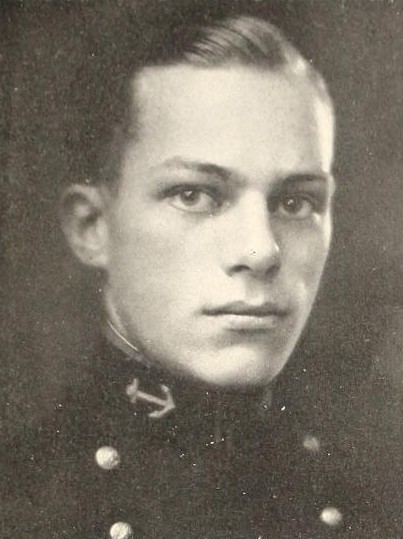
John M. Murphy, carried on the Navy's rolls as John Williams Murphy, Jr., was born in Huntingdon, Tennessee, on 17 December 1903. His father practiced law in that small town and his mother taught school. She secured Naval Academy appointments for him and for his older brother, Marion, and the family knew him as Jay Will. He graduated in 1925, twenty-third in a class of 470, with particular strength in navigation and marine engineering. Three years in the battleship Mississippi followed, and in 1928 he moved into submarines. Before the war his record includes staff duty under the Chief of Naval Operations, a tour as executive officer of Snapper, and command of Stingray. Officers who served with him remembered a quiet, even-tempered man with a taste for a joke.
On 3 June 1940, as a lieutenant commander, he placed Tambor in commission at Groton, Connecticut. Electric Boat had laid her keel in January 1939 and launched her that December, with Lucia Ellis as sponsor. She was the name ship of a new class of fleet submarines, about 1,475 tons on the surface, armed with six bow torpedo tubes and four stern tubes. Murphy was her first commanding officer and stayed with her into the first summer of the Pacific war.
After fitting out at New London, Tambor left on 5 August 1940 for a shakedown that took her to New York, Washington, Morehead City, and Houston. She trained off the Canal Zone, returned north for acceptance trials, and completed a post-shakedown overhaul at the Portsmouth Navy Yard in New Hampshire. The crew also ran trials that measured the effect of depth charges. In May 1941 Murphy reported with the submarine to the Pacific Fleet.
Late in November 1941 Tambor was making a routine patrol in the waters off Wake Island. She was still at sea when the war opened, and that cruise became her first war patrol. An engine failure cut it short, and Murphy took her to the Mare Island Navy Yard for repairs.
Her second war patrol began from Pearl Harbor on 15 March 1942, with orders to look over the approaches to Wake, Truk, New Ireland, New Britain, and Rabaul. On 16 April, about fifty miles southeast of Kavieng, she torpedoed and sank the Japanese stores ship Kitami Maru, a vessel of 394 gross tons. Tambor ended the patrol at Pearl Harbor on 12 May.
On 21 May 1942 she sailed again to patrol off Midway while the Japanese fleet closed on the atoll. Murphy was then 38, among the older submarine captains in the force. In the early hours of 5 June, roughly ninety miles east of Midway, he sighted a column of Japanese cruisers under Vice Admiral Takeo Kurita, moving fast in the moonlight. Identification was uncertain in the dark, and the boats on that station had been warned that friendly ships might be in the area, so he held the contact while he tried to fix who they were. Before dawn he challenged the column by signal light. The reply could not be made out, and he took Tambor down. While the cruisers maneuvered to get clear of the submarine, Mogami and Mikuma collided, and from periscope depth the smashed bow of Mogami was plain to see. Carrier aircraft afterward sank Mikuma. Tambor returned to Pearl Harbor on 16 June, and Murphy was relieved of command. The criticism was that the cruiser column should have been attacked, or shadowed closely enough for aircraft to be sent in on it.
He stayed in the wartime Navy. He became a temporary commander on 1 August 1942 and a temporary captain on 20 July 1943. The next assignments took him onto submarine staff duty in Australia, including the staff of Task Force 42, and then into the amphibious forces. In the Mediterranean he commanded a group of tank landing ships and later a landing-ship flotilla. His record also lists command of the oiler Cimarron and staff duty with Submarine Squadron 8 and with Amphibious Forces, Atlantic. He reached the rank of captain and died on 23 May 1995.