Ships
- USS Juneau (CL-52) Captain from 14 February 1942
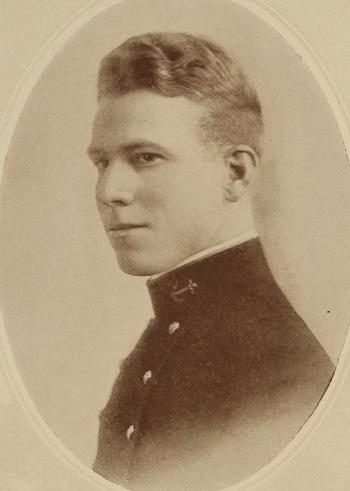
Lyman Knute Swenson was born in Pleasant Grove, Utah, on 23 October 1892. He graduated from the United States Naval Academy on 2 June 1916, with a class that went to sea as the country moved toward war. At Annapolis he played lacrosse. His first ships were the battleship Vermont and the cruiser Denver.
He then qualified for submarines. In the First World War he served in the submarine D-1, and on 26 May 1919 he was given command of the small submarine H-6. In 1921 he returned to large surface ships, with duty in the battleships Arkansas and New Mexico. He later commanded the patrol yacht Isabel and Destroyer Division 64. From September 1939 to October 1940 he commanded the destroyer Twiggs. He was a commander by 1937 and advanced to captain in 1942.
On 14 February 1942, at the New York Navy Yard, Swenson placed the new Atlanta-class light cruiser Juneau (CL-52) in commission and became her commanding officer. Rear Admiral Adolphus Andrews, commander of the Third Naval District, attended the ceremony. The cruiser had been built for antiaircraft work and was rushed into service. Swenson took her through a short shakedown along the Atlantic coast. In May 1942 Juneau patrolled off Martinique and Guadeloupe, watching for any attempt by Vichy French warships to leave those islands. In June he was with the ship in Newfoundland waters.
Juneau then went to the Pacific. On 15 September 1942 she was screening the carrier Wasp southeast of Guadalcanal when torpedoes from the submarine I-19 sank Wasp and damaged ships nearby. Swenson’s cruiser took aboard men from the carrier. In late October Juneau screened the carriers at the Battle of the Santa Cruz Islands, and on 26 October her guns joined the defense against Japanese aircraft.
Her last battle was the Naval Battle of Guadalcanal. On the night of 12–13 November 1942, Juneau sailed with the cruiser and destroyer force under Rear Admiral Daniel J. Callaghan and met a Japanese bombardment group near Savo Island. The ships fought at very close range. American gunfire and torpedoes broke up the Japanese formation and kept it from shelling the airfield on Guadalcanal. The cost was severe. Callaghan and Rear Admiral Norman Scott were killed, and several American ships were left crippled. A torpedo struck Juneau during the action, weakening her hull and cutting her speed and steering. Swenson brought the damaged cruiser out with the retiring force.
On the morning of 13 November 1942, as those ships withdrew, the Japanese submarine I-26 hit Juneau with a torpedo near the earlier wound. The cruiser broke apart and sank in moments. Swenson was killed with his ship. He was fifty. Nearly all of the crew died in the explosion or in the sea afterward, including the five Sullivan brothers of Waterloo, Iowa — George, Francis, Joseph, Madison, and Albert — who were serving together on board. Ten men were rescued after days adrift.
For his command of Juneau in the night action off Savo Island, Swenson was awarded the Navy Cross after his death. The citation honored the close fight in which the American force defeated a stronger Japanese group and stopped its mission. In 1944 the Navy named a destroyer for him. His daughter, Cecelia A. Swenson, sponsored Lyman K. Swenson at the launch. His name is among the missing at the Manila American Cemetery.