Ships
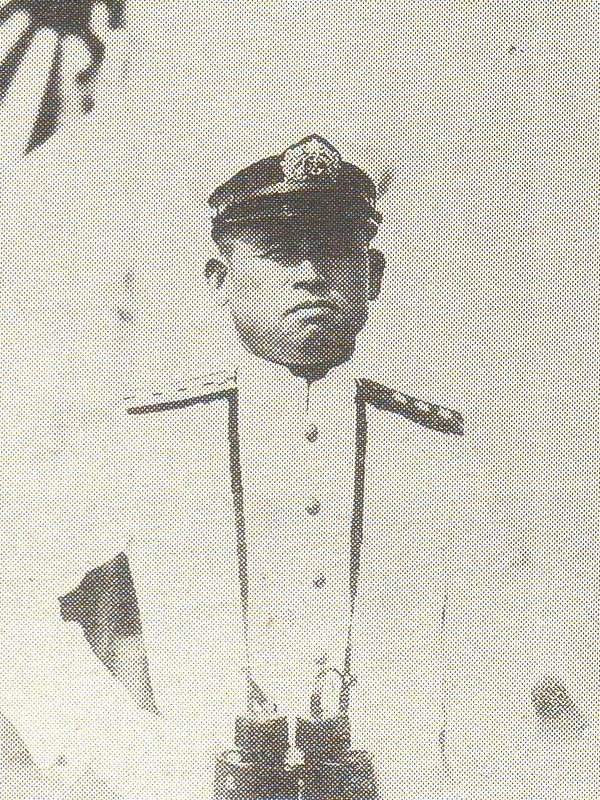
- IJN Hiei Captain from 10 September 1941 · In command when she was lost, 13 November 1942
Masao Nishida was born on 26 October 1895 in Kamioka village, in the Ibo district of Hyogo Prefecture, the place now within the city of Tatsuno. He led his classes in primary school and at the old Tatsuno middle school, where the future philosopher Miki Kiyoshi ranked behind him. In November 1916 he graduated from the Naval Academy at Etajima in the 44th class, third of ninety-five, and received the imperial gift given to the leading graduates. During the First World War he served with the Second Special Squadron, escorting Allied ships in the Mediterranean.
He completed the higher course at the Torpedo School in November 1924 and, in December 1928, the Naval Staff College, second in a class of twenty-two, again with the imperial prize. He attended the first London naval conference in the party of Admiral Takarabe Takeshi, with Yamamoto Isoroku, and then spent about two years in London as assistant naval attaché. After his return he served in the Navy Ministry, commanded the destroyer Shimakaze, and taught at the Staff College. In 1935 he went to the second London conference with Admiral Nagano Osami. Staff duty with the Third Fleet, another turn as a Staff College instructor, senior staff work with the China Area Fleet, and the headship of the Eighth Section of the Naval General Staff followed. In that last post he pressed hard for the pact with Germany and Italy.
Nishida next commanded the seaplane carrier Chitose, served on the staff of the Fourth Fleet, and commanded the heavy cruiser Tone. On 10 September 1941 he became captain of the fast battleship Hiei, relieving Captain Arima Kaoru. The ship lay with the First Fleet at Hashirajima, in Battleship Division 3 with Kirishima, Kongo, and Haruna. That November she moved to Hitokappu Bay in the Kuriles. When the carrier force sailed for Hawaii, Hiei and Kirishima took station astern of the carriers. Hiei was used as the force communications center, and her own radio transmitters were taken down so that a stray signal would not betray the approach. On 7 December 1941 she was at sea with the carriers whose aircraft struck Pearl Harbor.
Through the first half of 1942 she stayed with the fast ships pushing the Japanese line south. She covered the seizures of Rabaul and Kavieng and the operations aimed at Port Moresby. On 1 March 1942, south of Java, she joined Kirishima, the heavy cruisers Tone and Chikuma, and carrier dive bombers in the chase that ended with the sinking of the American destroyer Edsall. Hiei fired a long series of 14-inch and 6-inch salvos in that action. In April she went with the carriers on the raid into the Indian Ocean. At the end of May she left Hashirajima in Vice Admiral Kondo Nobutake's Main Body for the Midway operation, in company with Kongo. In August and October she screened carriers at the battles of the Eastern Solomons and Santa Cruz.
Early in November, at Truk, a plan to send Hiei and Kirishima against Henderson Field on Guadalcanal came before a conference aboard Yamato. Nishida had objected that a fresh bombardment was unlikely to succeed in the way the earlier shoot by Kongo and Haruna had done. He accepted the mission once he understood that Yamamoto wanted it carried out. At that meeting Yamamoto spoke of bringing him to Yamato as captain when the operation was finished. On the night of 12–13 November 1942, Hiei led Vice Admiral Abe Hiroaki's bombardment group into the channel north of Guadalcanal and met an American force of cruisers and destroyers at very short range. Shells and machine-gun fire swept the bridge. Nishida was wounded in the leg, Abe was wounded, and Abe's chief of staff, Captain Suzuki Masakane, was killed. Flooding in the steering compartment left Hiei unable to hold a course out of the battle.
American aircraft from Guadalcanal and from the carrier Enterprise struck the crippled ship through the next day. The engines could still make speed, but the rudder could not be restored under the attacks. Abe ordered the crew off. Nishida held that Hiei could still be saved and kept men at the work of saving her. The order was given again. A report that the engine rooms were finished, afterward found to be mistaken, brought him to accept that the ship had to be abandoned. He meant to remain aboard. Officers got him into a boat, and a written order from Abe directed him to the destroyer Yukikaze to report the ship's condition. Destroyers took off the survivors. One hundred eighty-eight of her men were killed in the night action and the air attacks. Nishida was in command when Hiei was lost on 13 November 1942.
On their return to Japan, Navy Minister Shimada Shigetaro placed Nishida on the reserve list on 20 December 1942. Yamamoto, unwilling to lose an officer he prized, sent his chief of staff, Ugaki Matome, to protest. Shimada's ruling held. Nishida was recalled and served as resident naval officer at Amoy, then as commander of the 256th Naval Air Group and of the 951st Naval Air Group, and as personnel chief in the Fukuoka naval district. Classmates of the 44th class who had been made captain with him in December 1937 rose to rear admiral in May 1943. He remained a captain, and he never again commanded a warship. He was released from service in March 1946.
The family house and business had passed to a younger brother, so Nishida went to work in a somen mill in Tatsuno. He stayed about twenty years and became the factory manager. He said nothing of the war, and the men beside him knew only that he seemed to have been a sailor. His wife had died young. After his children were grown he lived alone, traveled to old battlefields, gave money to Yasukuni Shrine, and spent little on himself. Near the end, bent with a bad back, he agreed to speak about Hiei with the writer Sagara Shunsuke. He died at home in Tatsuno on 19 March 1974, at the age of seventy-eight.