Ships
- USS Helena (CL-50) Captain, 14 July 1941 – 29 March 1942
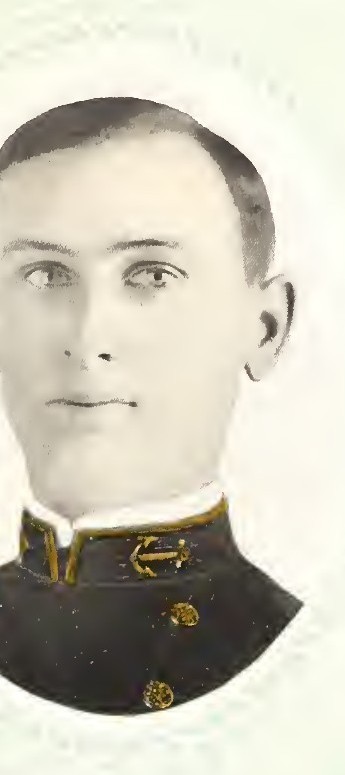
Robert Henry English, Jr., was a United States Navy officer who spent most of his career in submarines and, in the opening months of the Pacific war, commanded the light cruiser Helena. He was born in Warrenton, Georgia, on 16 January 1888, and graduated from the United States Naval Academy in 1911. He went into the submarine service as a young officer and stayed with that branch for the greater part of his life.
In the First World War he commanded the submarine O-4 on patrol, covering convoy routes in waters where mines and enemy ships were a standing danger. The Navy awarded him the Navy Cross for that command. In October 1918, at the New York Navy Yard, an internal explosion ripped through the after battery compartment of the submarine O-5. English went into the compartment and helped bring out her commanding officer, who was trapped there and in danger of being burned to death. The Secretary of the Navy commended him for the rescue.
On 14 July 1941 he became captain of Helena, relieving Max Burke DeMott. DeMott had been the cruiser's first commanding officer, from her commissioning at the New York Navy Yard on 18 September 1939. By the autumn of 1941 Helena was serving with the Pacific Fleet and was based at Pearl Harbor.
She was in port on the morning of 7 December 1941, moored at 1010 Dock on the east side of the harbor, with the minelayer Oglala lying outboard. The berth was the one normally kept for the battleship Pennsylvania, so the cruiser occupied a place an attacker would expect a capital ship to fill. Minutes after the first bombs fell on Ford Island, a torpedo passed under Oglala and struck Helena on the starboard side, almost amidships, while her crew was still racing to battle stations. English had her guns in action at once. Her antiaircraft battery was among the earliest in the harbor to shoot back, and she kept firing after the hit. Oglala capsized alongside.
The torpedo opened a large hole and flooded machinery spaces, but the ship was saved. English remained her captain through the first months of the war and left her on 29 March 1942. Helena later fought in the Solomons. Gilbert Corwin Hoover commanded her during the Guadalcanal campaign, and Charles Purcell Cecil was her captain when she was sunk in the Battle of Kula Gulf on 6 July 1943.
English went back to submarines. In the spring of 1942 he commanded a submarine squadron and the submarine base at Pearl Harbor. On 14 May 1942 he became Commander, Submarines, Pacific Fleet, and served in that post as a rear admiral. For the rest of his life he directed the boats that were taking the undersea war to Japanese shipping, while the force was still building its wartime power.
He was killed on 21 January 1943, five days after his fifty-fifth birthday. He had left Pearl Harbor in the Pan American flying boat Philippine Clipper, which the Naval Air Transport Service was using on a flight to San Francisco, traveling with three of his senior staff officers to a conference at the Mare Island Navy Yard. The aircraft struck a mountain in Mendocino County, California, about seven miles southwest of Ukiah, and everyone aboard was killed. He was buried at Arlington National Cemetery. For his direction of the Pacific submarine force the Navy awarded him the Distinguished Service Medal after his death. The destroyer English (DD-696), launched in 1944, was named for him.