Ships
- USS Aylwin (DD-355) Captain, 10 February 1941 – 15 June 1942
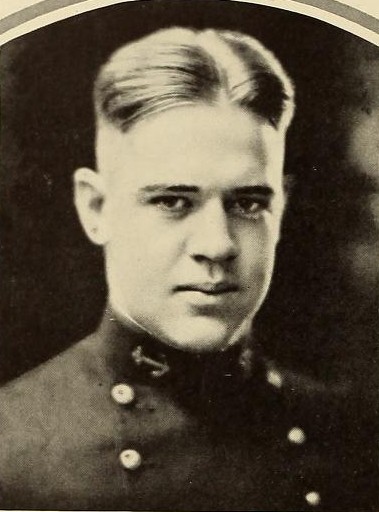
Robert Henry Rodgers was born in Knoxville, Tennessee, on 26 November 1901. His home was Arrochar, on Staten Island, New York. He graduated from the United States Naval Academy with the class of 1923 and was promoted to lieutenant commander on 23 June 1938.
On 10 February 1941 he became commanding officer of the Farragut-class destroyer Aylwin (DD-355). Clarence Gulbranson had commissioned the ship in 1935, and Dennis Leo Ryan and Clarence Vaille Lee had commanded her before Rodgers reported. On the night of 19 March 1941, during exercises off Hawaii, Farragut struck Aylwin squarely and nearly sheared off the bow. Fire burned through the wardroom country into the early hours of 20 March. Men from ships nearby, including Philadelphia and Sterett, helped put it out, and Aylwin was towed to Pearl Harbor for a long repair.
Rodgers was ashore when Japanese aircraft struck Pearl Harbor on 7 December 1941. About half the crew was on board, and the only officers present were four reserve ensigns. Ensign Stanley Caplan, the communications officer and the senior of the four, took the destroyer out. Aylwin cleared the channel while her guns kept firing, and the gunners reported three Japanese aircraft downed. With so many ships firing into the same sky, those reports stayed unconfirmed. A bomb that burst close to the starboard quarter drove the stern against a buoy and damaged a propeller. The ship then patrolled offshore, investigated a reported submarine that was not found, and through the night ran with the Enterprise force while Caplan directed her.
Rodgers reached Pearl Harbor about nine that morning, took a motor launch with other officers of the ship, and met Aylwin near the entrance buoys. Destroyer Squadron One kept the destroyer at speed, and the launch went instead to the old destroyer Chew, where the officers worked offshore until the next day. Rodgers remained Aylwin’s commanding officer throughout. Late on 8 December the ship followed the Enterprise force back toward the harbor, slowed in the channel to embark the division commander, Commander Ralph S. Riggs, and shortly after six in the evening took Rodgers back aboard. In his report of 12 December he described a short-handed crew that had fought with spirit, each man taking on more than his own job. He credited Caplan, who had about eight months at sea, with handling the ship for a day and a half of wartime operations, and he credited Ensign Hugo C. Anderson with much of the shiphandling that got Aylwin to sea. He asked that both ensigns receive special commendation, and he sent the same account to the Pacific Fleet commander on 4 January 1942.
After the attack, Aylwin repaired the bent propeller. She sortied with a force ordered toward Wake, turned back before the island fell, and reentered Pearl Harbor on 28 December 1941. On the last day of the year she left in company with a convoy carrying evacuees from Hawaii to the West Coast. She was at the Mare Island Navy Yard in January 1942 and again at the end of March, still under Rodgers. He became a temporary commander on 1 January 1942. On 15 June 1942 he turned Aylwin over to George Richardson Phelan. Later wartime commanding officers of the destroyer were Ray Edward Malpass, Robert Orris Strange, William Kittridge Rogers, and Karl Frederic Neupert.
Rodgers was promoted to commander on 30 June 1942. In 1943 he commanded the transport McCawley (AP-10) through the Solomon Islands campaign, carrying supplies, ammunition, and equipment to forces ashore on repeated trips through waters under Japanese air attack. On 30 June 1943, during the landing at Rendova, Japanese aircraft torpedoed McCawley. Rodgers directed the attempt to save the ship and the care of the people aboard her, and few lives were lost. The transport went down that day. For that service he received the Silver Star. The citation, issued through Commander, South Pacific, and dated 28 September 1943, named him a captain and identified him as a commander at the time of the action. He retired from the Navy as a rear admiral. Robert Henry Rodgers died on 30 August 1989.