Ships
- IJN Soryu Captain from 6 October 1941 · In command when she was lost, 4 June 1942
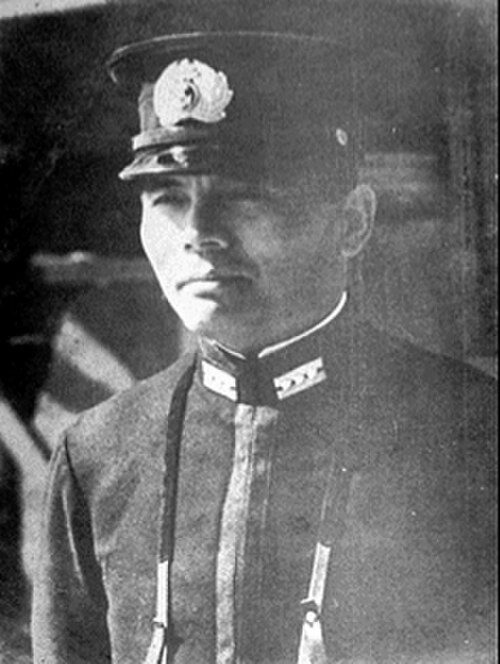
Ryusaku Yanagimoto was born in Hirado, Nagasaki Prefecture, on 9 January 1894, into a family descended from Shinto priests who had been posted there from the Ise Grand Shrine in the Edo period. After middle school he spent a year as a substitute teacher in a local elementary school so he could save the fees, and then entered the Imperial Japanese Naval Academy with the 44th class. He graduated 21st of 95 cadets and was commissioned in 1916.
His early training ran through the gunnery and torpedo schools. He finished the Naval Staff College with the 25th class in November 1927, and the next year, as a lieutenant commander, served as assistant gunnery officer in the battleship Hiei. Duty in the Navy Ministry personnel bureau followed. In 1933 he went to London as assistant naval attaché and was promoted to commander while abroad, serving at the same time as an ordnance inspector for the Navy Technical Department. He was ordered home in May 1935.
Staff billets in the Navy Ministry and the Naval General Staff filled the next stretch. His first command afloat was the auxiliary seaplane tender Notoro, which he took on 1 December 1937. He left her in November 1938, taught at the Naval Staff College, and in November 1939 became a section chief in the Naval General Staff on the desk that drafted armament plans. Shigeyoshi Inoue later condemned that plan as far too old-fashioned.
On 6 October 1941 Yanagimoto was appointed captain of the aircraft carrier Soryu. She lay in Carrier Division 2 with Hiryu, under Rear Admiral Tamon Yamaguchi. In December Soryu sailed with the Pearl Harbor strike force, and her aircraft attacked ships and airfields on Oahu. Later that month she supported the second landing on Wake. In February 1942 her air group joined the raid on Darwin. In April she went into the Indian Ocean with Vice Admiral Chuichi Nagumo's carriers, and her planes took part in the strikes on Colombo and Trincomalee and in the attack that sank the British heavy cruisers Cornwall and Dorsetshire.
At Midway, on the morning of 4 June 1942, dive bombers from the American carrier Yorktown hit Soryu with three bombs. Aircraft in the hangars, fueled and armed for a strike, exploded. Steam pipes in the boiler rooms burst, the engines died, and the carrier stopped, on fire and listing. Around 10:45 Yanagimoto ordered the men who could be spared, the aviators in particular, to abandon ship. Sailors who got clear remembered him on the bridge, waving off the officers who urged him to leave.
The wreck stayed afloat into the evening. The destroyer Isokaze then put torpedoes into her, and Soryu sank by the stern with Yanagimoto still aboard. He had been in command from the day he joined her until she was lost on 4 June 1942, and he was among the more than 700 officers and men who died with the ship. The Navy afterward promoted him to rear admiral and conferred the Order of the Rising Sun, Second Class. The promotion and the decoration were announced on 27 May 1943, when his death was made public.