Ships
- USS South Dakota (BB-57) Captain from 20 March 1942 · Relieved on 1 February 1943
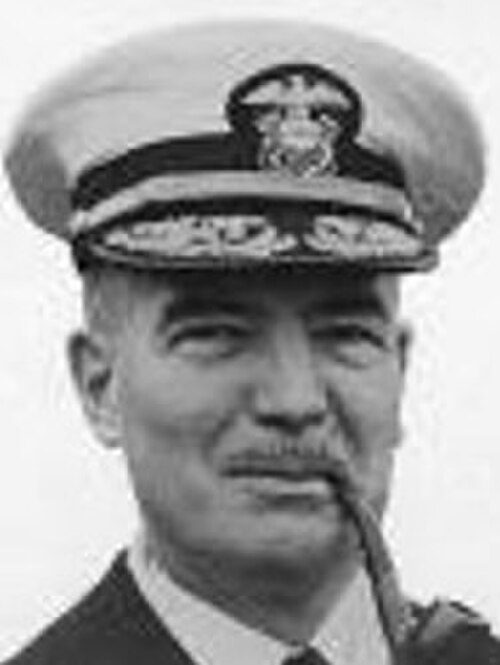
Thomas L. Gatch was born in Salem, Oregon, on 9 August 1891. His grandfather was the educator Thomas Milton Gatch. He graduated from the United States Naval Academy in the class of 1912 and spent the next three decades on sea duty and in the Navy's legal offices. He was promoted to captain on 1 July 1939. From 1940 until February 1942 he served as Assistant Judge Advocate General.
He took command of the new battleship South Dakota when she was commissioned on 20 March 1942. The ship had been built at Camden, New Jersey, and entered service at the Philadelphia Navy Yard. After fitting out, she ran shakedown training in June and July, left Philadelphia in mid-August, crossed the Panama Canal, and reached Nukualofa, Tongatabu, on 4 September. Two days later she struck an uncharted coral pinnacle in Lahai Passage. The hull damage sent her to Pearl Harbor, and she was ready for sea again on 12 October.
On the passage back toward the fighting, Gatch drilled the gun crews until the men called him Gunpowder Gatch. South Dakota joined the task force centered on the carrier Enterprise and sailed from Pearl Harbor on 16 October 1942. On 26 October, north of the Santa Cruz Islands, Japanese carrier aircraft attacked the force. Gatch closed South Dakota in to thicken the screen around Enterprise. Her antiaircraft guns were heavily engaged, a bomb struck the top of number one turret, and fragments wounded him so badly that he had to turn the ship over for a time. The Navy Cross followed for that action. He later said that the captain of a United States battleship considered it beneath his dignity to flop for a Japanese bomb.
He was still in pain from that wound when South Dakota met a Japanese force off Savo Island on the night of 14–15 November 1942, in the Naval Battle of Guadalcanal. He opened on the battleship Kirishima with the secondary battery. In the fight that followed, South Dakota took dozens of hits, lost power for a time, and suffered heavily: about forty men killed and many more wounded. Shell splinters struck the bridge and wounded Gatch again. A gold star in lieu of a second Navy Cross, together with the Purple Heart, marked the night. The citation credited the ship's fire with sinking and damaging Japanese warships. Later study gave the loss of Kirishima to other guns in the American force and judged some of South Dakota's claims from that night to be high. After temporary repairs at Nouméa she sailed for home and reached New York on 18 December 1942.
Several troubles stayed attached to those months in command. The grounding at Tonga, a collision with the destroyer Mahan (DD-364) late in 1942, and battle reports that readers found inflated all drew blame toward Gatch. So did the discovery that Calvin Graham, a twelve-year-old who had talked his way into the Navy, was in the crew and had been wounded in the November action. The same cruise had also taken a brand-new battleship through two of the hardest fights of the Guadalcanal campaign.
His injuries kept him ashore from 1943. He was Judge Advocate General of the Navy from 1943 to 1945, then Commander, Service Force, Atlantic Fleet. He retired in 1947 as a vice admiral. Thomas L. Gatch died on 16 December 1954.