Ships
- USS Quincy (CA-39) Captain from 9 June 1936 · Relieved on 4 December 1937
- USS Selfridge (DD-357) Squadron flag, not her captain, from 1 November 1940
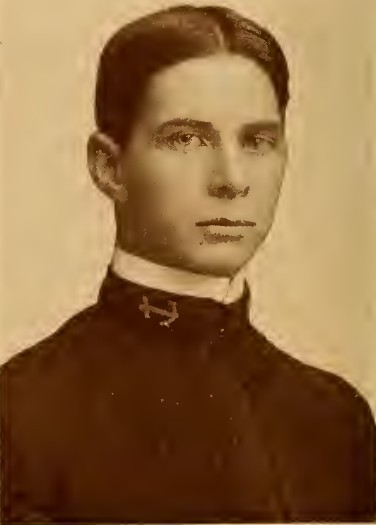
Captain William Faulkner Amsden took command of Quincy (CA-39) on 9 June 1936. He was a United States Navy officer, Naval Academy class of 1907, a captain from 30 June 1935. He commissioned Quincy and took her to Spain. He had been off her for years before she was sunk at Savo Island. The Pacific fighting that put his name beside those ships is not a battle he commanded. What the record will support is an older kind of sea time, a Navy Cross for a coal-burning passage in 1917, a yard captain’s chair when Squalus went down, a destroyer squadron in the last months of peace, a stretch of convoy duty that has almost no ships’ names attached to it, and then, from the end of 1942, a training school for women in the Bronx. He stayed a captain. He retired in 1946. He lived until 1979.
He is not the William Amsden who died in Sunnyside, Washington, in 2019, an Army veteran and a veterinarian. He is not John J. Amsden, the chief warrant officer in the Court of Claims retired-pay cases of the 1950s. Graham (DD-192) was named for Secretary of the Navy William A. Graham, who died in 1875. That is a different man.
Origins
The Navy Register gives his birthday as 8 September 1884. The volume of 1 July 1943 prints “8 Sept. 84” in the date-of-birth column beside William Faulkner Amsden, and the volume of 1 July 1944 does the same. The Hall of Valor compilation prints 7 September 1884. Both cannot be the day. The Register is the better witness.
Where he was born, and from what state he was appointed, did not survive the optical reading of the 1908 Register page that carries him. A careful secondary reading of that volume, pages 52–53, says Washington, D.C., and an appointment from Kansas. The Lucky Bag of 1907, which is his own class book, heads his sketch “Kansas City, Mo.” and calls him “a dark-haired dreamer from afar-off Kansas, and is actually proud of it.” Kansas City and Kansas are not the same place. A boy can be born in Washington, live in Kansas City, and be appointed from Kansas. That is a possible life. It is not a life this essay has proved from a birth record. His parents’ names were not found in any source read here. A 1943 suburban paper, only partly retrieved, has a broken clause about 1875 and a lieutenant who died. That clause is not used. It may be a muddle with Secretary Graham. It is not a father.
The same paper, and a Washington Evening Star notice as indexed rather than re-read, are the family this essay can actually name. The Star, in December 1934, is reported to have announced the marriage, on Saturday 15 December, at the Bethlehem Chapel of the Cathedral of St. Peter and St. Paul, of Elizabeth Faulkner Amsden, daughter of Mr. and Mrs. William Amsden, to Samuel Wood Bryant Jr. The page itself was not opened. The middle name is the identification. On 27 August 1943 the Scarsdale Inquirer, in a profile that could not be retrieved in full, pictured him with his grandson, Samuel Wood Bryant 3rd, son of Mr. and Mrs. Samuel Wood Bryant Jr. His wife’s given name is not in the sources read through. No other children are named.
The Academy, and the first sea time that can be stood up
He entered the service on 8 May 1902. That date sits in the “date of entry” column of the Register of 1 July 1944, next to the birthday and next to his captain’s date of rank. The class book is 1907. Five years from May 1902 to a 1907 graduation is a long course for that Academy, or a year that did not run clean, or a column that a later clerk filled from an appointment rather than from the day he reported. The Lucky Bag does not explain it. What the book does say, in the cruel shorthand of a class sketch, is that he was “Bill” and “Billy,” Brown N, gymnasium team in fourth-class year, rifle team all four years, Santee and Buzzard, fond of bridge, “never known to wear ‘reg’ clothes or have a ‘reg’ brace,” and that he “grafted four months leave, First Class year.” Classmates’ jokes are not a service record. The rifle team is the part that lasted. A compiled career, citing the Army and Navy Register of 2 July 1910, says that on 30 June 1910 he and Ensign Francis A. L. Vossler were detached from Hartford for duty with the Navy rifle team at the Boston Navy Yard. That gazette was not re-opened here. Vossler’s name is real; he stands near Amsden in the later captain lists. The early ships a dealer’s catalogue assigns him — Minnesota, Severn, Milwaukee, Vicksburg, Castine — are not repeated as billets. The catalogue also says he retired in 1941 and that he graduated from “the Naval Academy in Kansas.” It is a sales list.
The 1908 Register still calls him midshipman, signal number E C J A. Graduates of 1907 were not commissioned ensign until they had served their two years at sea. The compiled rank date for ensign is 7 June 1909. That day was not re-read in a register for this essay. By the 1916 Register he is a lieutenant (junior grade), and the ship list puts him on the gunboat Elcano: Lieutenant Commander Lewis Coxe commanding, Lieutenant (Junior Grade) William F. Amsden, Assistant Surgeon Louis H. Roddis. Elcano was a small ship, 620 tons, four guns, on the Asiatic station. That is the first ship this essay will attach to him from a page that was actually read.
Barry, the monsoon, and a cross that was not for a fight
A compiled commanding-officer list for Barry (Destroyer No. 2) gives him the ship only from 5 March 1915 to 15 October 1915, and then gives her to Selah Montrose LaBounty until 4 February 1918. That list is wrong for 1917, or at least it is not what the Navy printed. The 1917 Register’s ship list reads, under Barry, “Lt. (j. g.) W. F. Amsden, Comdg.,” with two ensigns under him. The Navy Cross citation later says the same thing in the language of an award: he was in command of Barry for the voyage.
Barry was one of the first American destroyers, 420 tons, coal-fired, two 3-inch guns, two torpedo tubes, a crew of about seventy-five, built at Neafie & Levy in Philadelphia and already old when the United States entered the war. She had spent most of her life on the Asiatic station. The Dictionary of American Naval Fighting Ships says she left the Philippines on 1 August 1917, went by Suez, and reached Gibraltar on 20 October. A fuller account of the division’s passage, written up in the Bainbridge history and repeated for Barry, puts the sailing from Cavite on that first of August, with a damaged propeller that held the division at Colombo while Barry was repaired, the southern end of the Suez Canal on 23 September, the canal on the 25th, Valletta on 6 October, a week at Naples after escorting merchantmen in from Malta, and Gibraltar on the 20th. The citation does not mention the propeller. It mentions the weather.
The citation, as carried by the Hall of Valor from the official text, reads:
> The President of the United States of America takes pleasure in presenting the Navy Cross to Lieutenant Commander William Faulkner Amsden, United States Navy, for exceptionally distinguished service in the line of his profession in Command of the U.S.S. BARRY in making the trip of 11,000 miles from Manila, Philippine Islands to Gibraltar, under very unfavorable weather conditions, during the Summer of 1917, the southwest monsoon being then at its height, and arriving in the Mediterranean with his vessel in readiness for immediate participation in the operations against enemy submarines in the Mediterranean and later in the Atlantic. Also as Commanding Officer of the U.S.S. BALCH.
Two things in that paragraph need to be kept straight. The rank is the rank at the award, or the rank the citation chose to use. The 1917 Register still has him as lieutenant (junior grade) in command. A compiled career dates a temporary lieutenant commander’s rank to 15 October 1917, five days before Barry reached Gibraltar. That day was not re-checked against a register. If it is right, he made most of the 11,000 miles as a lieutenant (junior grade) and was promoted, temporarily, at the end of it. The second thing is the last sentence. The cross is also for command of Balch. The citation does not say what he did in her. A compiled career says he had her for several months in 1918 and was given the temporary rank of commander on 21 September 1918. Neither the months nor that day were re-read here. Barry herself, under somebody else, went on escorting in the Mediterranean until August 1918 and reached Charleston on 5 September. She was out of commission at Philadelphia on 28 June 1919 and sold for scrap. The NavSource list puts Roy Philip Emrich in command from 4 February 1918. Amsden’s time in her, on the evidence of the citation and the 1917 Register, includes the voyage and ends around the winter of 1917–18. The exact day he left her was not found in a page read for this essay.
In August 1943, talking to a Westchester paper, he remembered the ship as the second American destroyer, 420 tons, and remembered four other coal-burners, “led by Admiral Harold R. Stark,” working out of Manila Bay under the impression they would stay there until the war was over. Stark was not an admiral in 1917. The paper gave him the rank he held later. The shape of the memory is the shape of the citation: a long passage nobody had planned, in ships that were not built for it. He did not, in that interview, claim a submarine. The citation does not claim one either. The cross is for arriving ready.
There is no page here that says what the Mediterranean escort duty felt like, or whether Barry or Balch was ever shot at while he had them. That silence should not be filled.
Between the wars, as far as the registers go
On 1 January 1921 the Register’s index styles him commander. In the body of the same volume the optical reading drops him into a run of officers whose rank line reads “lieutenant commander,” with “21 Sept. 18” printed above that block, which is the compiled date of the temporary commander’s rank. Permanent lieutenant commander on 1 July 1919, and permanent commander on 5 June 1924, are the compiled dates. The 5 June was not seen in a column read for this essay. What was seen is that by the 1925 Register, and again in 1926, he is a commander, ordered to the Naval Training Station at Newport, the shore-duty date printed as 20 June 1924, the previous sea cruise expired in June 1923.
The registers from 1935 onward also carry a string of course numbers after his name: 16, 17, 19, and 32. In the 1943 Register’s own key those numbers are the Naval War College senior course, the Naval War College junior course, the Army War College course, and a course in chemical warfare. A dealer’s list of his papers mentions War College certificates dated 1924 and 1929. The certificates were not seen. The numbers in the Register were.
A compiled career puts other commands into the years the registers, as read here, do not narrate. It says he was the first commanding officer of Laub, that he had Graham in 1921 until she was in collision off the New Jersey coast on 16 December 1921, that he had Billingsley from May 1922 into 1923, and that he had Smith Thompson from 1926 to 1928. The 1922 Register pages cited for Graham and Laub were not opened. DANFS records the collision: Graham, a Clemson-class destroyer commissioned at Norfolk on 13 March 1920, was on her way from Charleston to New York in reduced commission when, on 16 December 1921, she hit the steamer Panama off New Jersey, returned to New York, decommissioned on 31 March 1922, and was sold for scrap that September. DANFS does not name her captain. The collision is not told here as his, because the page that would put him on her bridge was not read. If the compilation is right, a new destroyer was lost under him and the loss did not stop the promotion to commander or the Newport orders. That would be the costly early choice, or the costly early accident, and it is exactly the episode this essay cannot yet prove.
Newport is the solid thing. He had already been a destroyer captain in a war. He was sent to train other people’s sailors, and the Navy sent him to school: junior course, senior course, the Army War College, chemical warfare. The rifle team at twenty-five and the War College numbers at forty are the same habit. He learned the craft in classrooms as well as on bridges. Nothing in the registers says whether he wanted the classrooms.
Quincy, and Spain
He was promoted to captain on 30 June 1935. The Registers of 1939, 1941, 1943, 1944, and 1945 all print that day. In the 1 July 1935 Register he is already number 301 on the captains’ list. The duty line beside the name did not survive the optical reading. He is not to be given Marblehead, or the Office of Naval Operations, from the lines that sit above him. Those belong to the men ahead of him, or they belong to nobody this essay can honestly name.
Quincy (CA-39) was commissioned at Boston on 9 June 1936, “Capt. William Faulkner Amsden in command.” DANFS is plain about the next weeks. Assigned to Cruiser Division 8 of the Atlantic Fleet, she was ordered to the Mediterranean on 20 July 1936, passed the Strait of Gibraltar on 26 July, and reached Málaga on 27 July, at the height of the Spanish Civil War. She worked with an international rescue fleet that included the German pocket battleships Deutschland, Admiral Graf Spee, and Admiral Scheer. She evacuated 490 refugees to Marseille and Villefranche and was relieved by Raleigh on 27 September. She was back at the Boston Navy Yard on 5 October.
A newspaper caption of 30 July 1936, reprinted with a photograph on a ship-history site, says he was the commander of Quincy in Spanish waters, and that the ship had been told not to land sailors but to take aboard Americans who wanted to leave. The 1943 interview remembers the same cruise as a shakedown broken off “during the evacuation from Spain,” and remembers the run from Norfolk to Gibraltar as five days. DANFS does not name Norfolk, and it does not count the days. It does give an order on 20 July and the Strait on 26 July. Five or six days from the American coast to Gibraltar in a new 10,000-ton cruiser is what he was remembering. The five-day sentence is his, reported. The 490 refugees are the Navy’s.
A compiled list of her captains, the sort kept by ship photographers and researchers rather than by a log opened here, ends his command on 4 December 1937 and gives her next to Paul Henry Bastedo. DANFS does not print that relief. It does carry Quincy on into a Pacific cruise in the spring of 1937, Fleet Problem XIX off Hawaii in March and April 1938, and a return to the Atlantic in January 1939. If he left her in December 1937, the 1938 exercises were not his, and nothing after that was his. 9 June 1936 is the day he took her. It is not the day she died.
She died on 9 August 1942, in the channel between Florida Island and Savo, under Captain Samuel Nobre Moore, with all her guns out of action. Amsden was not there. He had commissioned her, taken her to a civil war, and given her up in peacetime. The Pacific list’s only ship for him is a ship whose battle he did not fight. That is not a small gap. It is the shape of his war.
The yard, and a submarine on the bottom
The 1939 Register — the volume digitized under that year; the title-page month did not come through the optical reading — lists his station as “Captain of yard, Navy Yard, Portsmouth, N. H.” A compiled career dates the billet from 10 January 1938 and still has him there after 1 July 1939. The 10 January was not re-read. The station in the 1939 volume was.
Squalus (SS-192) sank on a trial dive off the Isles of Shoals on 23 May 1939. Thirty-three men came up in the chamber. Twenty-six did not. A press photograph dated 28 May, now in the Portsmouth Athenaeum, shows Commander A. J. McKee, Commander Allan R. McCann, and Captain W. F. Amsden, “head of the Portsmouth Navy Yard,” looking at the approved salvage plans after McKee and McCann had come up from Washington. The caption calls him head of the yard. He was captain of the yard, which is not the same office as the commandant, and it is not the office of the rescue. McCann’s name is on the chamber. Charles Momsen’s name is on the method. Amsden’s name is on the photograph of three officers checking a plan. In 1943 he told the Scarsdale Inquirer that he had been captain of the yard when Squalus sank, and that the boat, raised and renamed Sailfish, had since sunk enough shipping to repay the cost of the lift. The boast is his, three years later, about a ship he did not command. The fact underneath it is that he was the yard captain on the week the Navy decided how to bring her up.
How long he stayed at Portsmouth after the summer of 1939 was not fixed in a register read here. The dealer’s catalogue runs the yard tour to 1941 and then retires him. That retirement is wrong. He was still on the active list in 1945.
A squadron, and then a year with almost no ships
Fleet Notice 47N-40, issued by the Commander-in-Chief, United States Fleet, at Long Beach on 15 October 1940, set the fleet organization for the second quarter of fiscal 1941, effective 1 November 1940. In the list of flotilla, squadron, and division commanders it reads: “199 Captain W. F. Amsden — Destroyer Squadron Four.” The 199 is a signal number, not a squadron. Squadron Thirty, in the same list, is Captain J. L. Kauffman. Amsden is Four.
In that organization Destroyer Squadron Four’s flagship is Selfridge (DD-357). The squadron sits in Destroyer Flotilla Two of the Battle Force, flag in Detroit. Division Eight is Mugford, Jarvis, Patterson, and Ralph Talbot. Division Seven is Henley, Bagley, Helm, and Blue. Those are the ships gathered under the squadron commander on paper as of 1 November 1940. They are not ships this essay will follow to Pearl Harbor or to the Java Sea. Several of them went there. He is not shown with them. A squadron commander is not the captain of every hull in the notice, and he is not automatically still the squadron commander a year later.
The 1941 Register, again with the title-page month unread, has dropped the duty column. What it prints beside his name, in the columns for “date of present shore duty, leave, or commencement of cruise” and “expiration of last cruise or tour of sea service,” is 5 March 1941 and February 1941. Read one way, a sea tour ended in February 1941 and another cruise, or a shore billet, began on 5 March. Read another way, the March date is an order not yet executed when the register closed. The notice of October 1940 and the register of 1941 do not tell one smooth story. They tell a short squadron command at the end of the peace, and then a date in March that has no ship attached to it in any page read here.
From that March date until 27 December 1942 the only narrative is second-hand, and the two versions do not agree.
The school’s own history, printed in 1945 by the public-relations office of the Naval Training School (WR) in the Bronx, says that on 27 December 1942 “Captain William F. Amsden, USN, came from convoy duty in the Pacific” to Hunter College, on roving orders, to learn the buildings. That is an institutional memoir, written while he was still the commanding officer, and it is interested in the school. It is still the closest thing to a contemporary statement of where he had been.
The Scarsdale Inquirer of 27 August 1943, working from an interview, says that before New York he had sailed some 60,000 miles on convoy duty, never on the same ship twice, and that he had landed the first troops at New Guinea the day after “the Gilbert Marshall bombardment.” Asked if he had been torpedoed, he said his job was to keep out of trouble, “to deliver, not to fight.” The quotation is worth keeping, because it is the only sentence in which he is reported to have said what he thought the work was. The geography is not worth keeping as fact. The Gilberts were assaulted in November 1943. The Marshalls followed in 1944. By August 1943 he had already been at Hunter for most of a year. He cannot have landed troops in New Guinea the day after a bombardment that had not yet happened, and he cannot have done it after he had already taken the school. The reporter compressed two wars, or he compressed a story badly told, into one sentence. Sixty thousand miles and “never on the same ship twice” are his claims to that reporter. No log, no convoy number, and no ship’s name for that duty was found. The gap stands. It is the part the Navy’s printed registers do not give.
The Bronx
The school history says he and Lieutenant Elizabeth Reynard picked Hunter College, and that Vice Admiral Randall Jacobs, then a rear admiral and Chief of the Bureau of Naval Personnel, confirmed the choice. About four thousand students were still in class. His orders, the history says, were written so that he would assume command in February. The school was to be commissioned on the 8th. Until then he had a yeoman borrowed from the Third Naval District, a supply officer borrowed from the district, and, from January, the first four Women’s Reserve officers, among them Lieutenant (junior grade) Frances McLeod, whom the history calls his aide. The first executive officer, Commander Herschel Smith, reported in February. The first lieutenant, Lieutenant Commander Bert C. McCulloch, was a man Amsden “himself persuaded to come back from civilian life.”
The history is proud of him, and it should be read as a proud history. It also keeps two sentences that are not praise. He said, later, that every time he wanted to walk the college he had to take a member of the college staff, “to avoid walking into embarrassing situations such as might be presented in the gym locker rooms.” And: “Illness forced Captain Amsden to leave the school from the middle of February until April.” The year is fixed by what surrounds the sentence. The school was commissioned on 8 February 1943. In March, while he was gone, fifty new officers arrived from the Naval Reserve Midshipmen’s School at Northampton. The history calls the day he was “piped aboard” again a happy day for all hands. It does not name the illness. It does not say whether the illness was the same incapacity that, on the compiled record, put him on the retired list three years later. Those are not to be welded together because they would make a neat story.
He told the school’s writers that setting the place up was “not so difficult.” The same pages list what the month contained: classrooms, cafeteria, dispensary, sick bay, the medical line they called the Daisy Chain, a regimental organization, beds and linen for a flow of recruits the history puts at about five thousand a month. The New York Times of 18 February 1943 describes the first six hundred Waves and Spars “docked” at Hunter, the start of six thousand expected in six weeks, under the supervision of Captain William F. Amsden, with 150 officers already on duty, 100 of them women. Lights out at 9:30 or 10. Shore leave only when given. That is the work. It is not a battle. It is the work the Navy gave a captain of fifty-eight who had said, to a reporter that summer, “All sailors want to be at sea,” and who stayed.
The 1 July 1943 Register still has him on the active list of captains, lineal number 220, date of rank 30 June 1935, and the letter (B) after his name. In that volume’s key, (B) means the Navy Cross. In the registers of 1935, 1939, and 1941 the letter after his name is (C). The key changed. When (C) came to mean the Distinguished Service Medal, Navy, he is not carrying (C). He is carrying (B) only. One cross, not a cross and a medal. The 1 July 1944 Register repeats the cross, the birthday, the entry date, and the captain’s rank. The 1 July 1945 Register still lists him among captains. The school history of 1945 still calls him commanding officer, present tense, and prints a caption for “Captain Amsden’s Birthday Review.” He was sixty on 8 September 1944, if the Register’s day is the right one. The history does not say he had left.
The after
The compilations put him on the retired list on 1 April 1946. One of them adds the Register’s formula, “due to incapacity in the line of service.” The 1946 or 1947 Register that would show the formula was not opened. Uboat.net gives the day and not the cause. He was sixty-one. The February-to-April absence in 1943 is the only illness a document read here actually describes. What failed, and whether the sea duty of 1941–42 had anything to do with it, is not known.
Nothing was found, in the sources read, about a civilian job, a house, a church, or a second marriage. The grandson in the 1943 photograph is the last domestic fact. The compilations agree that he died on 21 October 1979, in his ninety-sixth year. Uboat.net puts the death in Rhode Island and marks the place with a question. No obituary was opened. No grave was found. The Hall of Valor’s 7 September birthday remains the one conflict on the day he was born. Twenty-one October 1979 is repeated often enough to use, and not often enough in a document this essay has read to call it proved.
What he was, on the evidence
He was a Kansas City boy, or a Washington boy appointed from Kansas, who went to Annapolis in 1902, shot on the rifle team, and spent his lieutenant’s years on the Asiatic station in a gunboat and then in a destroyer that was already a relic. The Navy Cross was for bringing that relic 11,000 miles through the monsoon and having her ready to hunt submarines, and for whatever he afterward did, unstated, in Balch. He learned the War College courses, commanded at least one heavy cruiser at her birth, and used her, in her first summer, to take 490 people out of a civil war while German pocket battleships lay in the same sea. He was the yard captain at Portsmouth when Squalus was on the bottom. He had a destroyer squadron in the Battle Force in the last year of the peace. Then the printed record goes thin, exactly where a Pacific narrative would want it thick: convoy duty, ships unnamed, a reporter’s sentence about New Guinea that the calendar will not allow, and his own line that the job was to deliver, not to fight.
The war the Navy actually gave him, once the fighting was general, was a women’s boot camp in the Bronx, stood up in a month, interrupted by an illness he did not discuss, and held into 1945. He was not at Savo. He was not, on any page read here, at Pearl Harbor, Midway, Guadalcanal, or Leyte. The ship that puts his name beside the Pacific fighting sank without him. That is not a judgment on the man. It is the shape of the file.