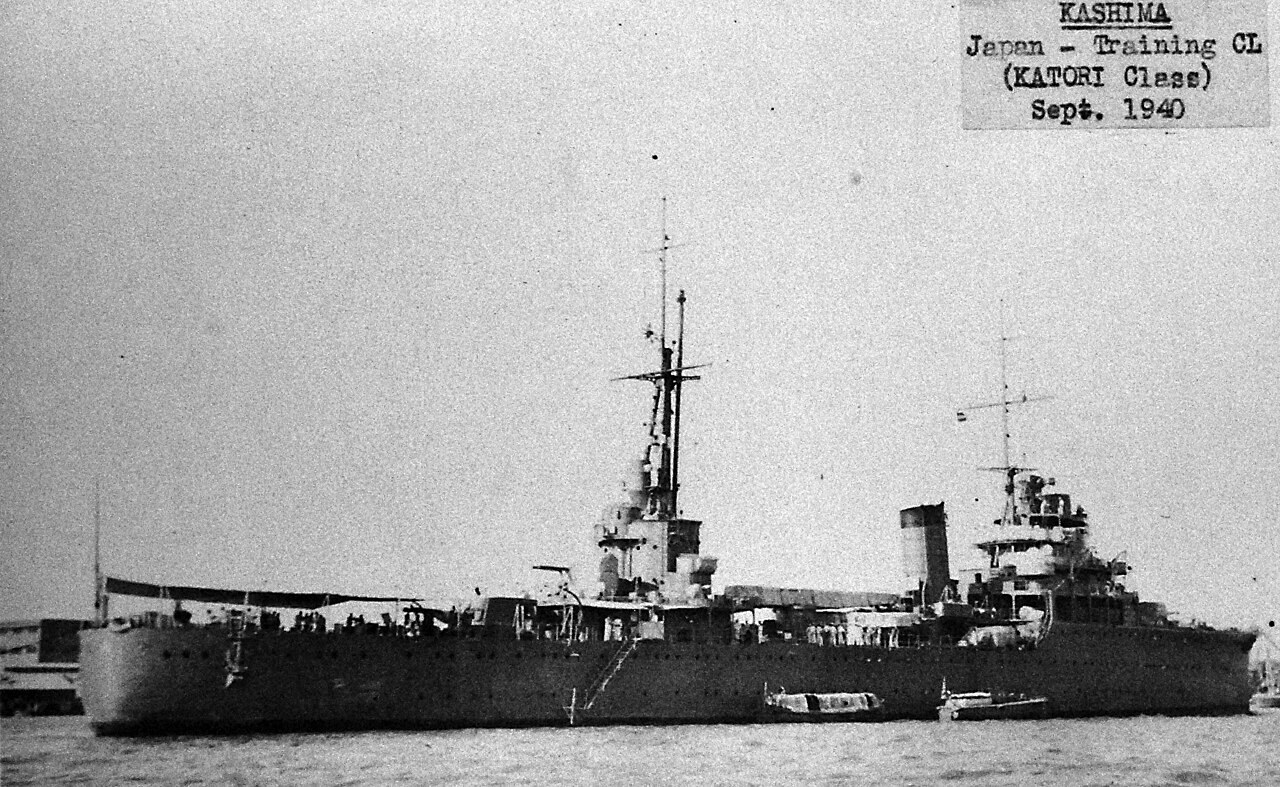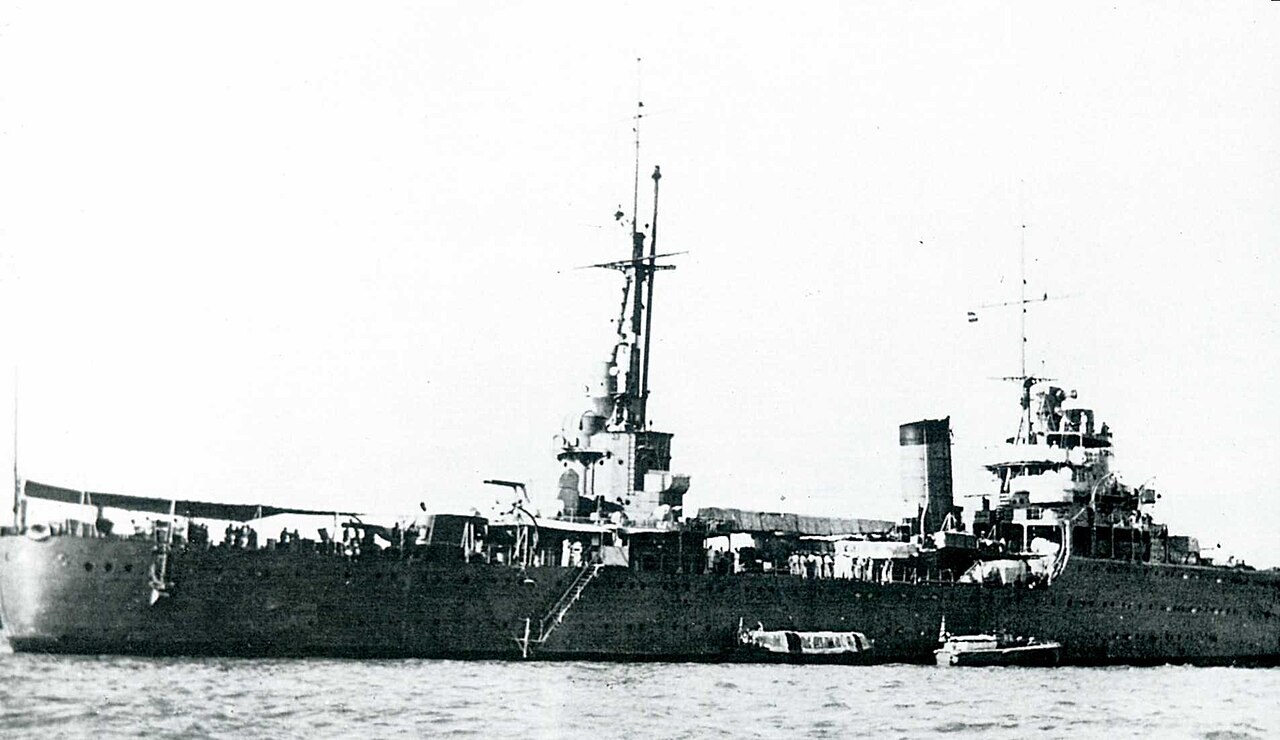
Kashima was the second of the three Katori-class training cruisers and was named for the Kashima Shrine in Ibaraki. Mitsubishi laid her down at Yokohama on 6 October 1938 as Cruiser No. 73, launched her on 25 September 1939, and completed her on 31 May 1940. In the summer of 1940 she and Katori made the last prewar midshipmen's cruise, to Etajima, Ominato, Dairen, Port Arthur and Shanghai. That November she went to the Fourth Fleet, the force that held Japan's mandated islands in the central Pacific.
Captain Kinji Senda took command on 1 September 1941, and on 1 December she became flagship of Vice Admiral Shigeyoshi Inoue's Fourth Fleet at Truk. She sortied from Truk in January 1942 to cover the landings at Rabaul and Kavieng. On 4 May 1942 she reached Rabaul to direct Operation MO, the planned seizure of Tulagi and Port Moresby. That day Yorktown's aircraft struck the Tulagi invasion force, and over the next four days the Japanese and American carriers fought in the Coral Sea. Shoho was sunk and Shokaku badly damaged, and on 13 May, with the Port Moresby landing called off, Kashima left Rabaul. She stayed with the Fourth Fleet at Truk through 1942 and 1943 and in November 1942 made an inspection cruise to the Marshalls. Captain Sakae Takada took command in September 1942. Four more captains followed in quick succession in the second half of 1943.
On 1 November 1943 Nagara relieved her as Fourth Fleet flagship. On 18 November she left Truk for Japan with the submarine tender Chogei, escorted by the destroyers Wakatsuki and Yamagumo. The next morning Yamagumo sighted the submarine Sculpin surfacing and drove her under with depth charges. Sculpin was lost that day. In March 1944 she was attached to the General Escort Command. Between May and July 1944 she made four runs from Shimonoseki to Okinawa with Army reinforcements and supplies, and in July she carried Second Air Fleet men to Formosa. In the Formosa Strait early on 20 October 1944, Richard O'Kane in USS Tang tracked her for two hours. Tang carried only slow electric torpedoes and could not get close enough for a stern shot, and a destroyer's searchlight forced her down.
At Kure from December 1944 she was rebuilt for convoy escort. Her torpedo tubes came off, and she got two more twin 127-millimeter mounts and many 25-millimeter guns. From 1 January 1945 she was flagship of the No. 102 Escort Squadron of the First Escort Fleet, and she escorted convoys from Moji and in the Tsushima Strait. Early on 19 May 1945, in the strait, she rammed and sank the cargo ship Daishin Maru, which started a fire in a gasoline tank in her bow. She put in to Chinhae in Korea with slight damage. In June her squadron hunted the American submarines that had entered the Sea of Japan in Operation Barney, and found nothing. The squadron was disbanded on 5 July. She was still afloat at the surrender.
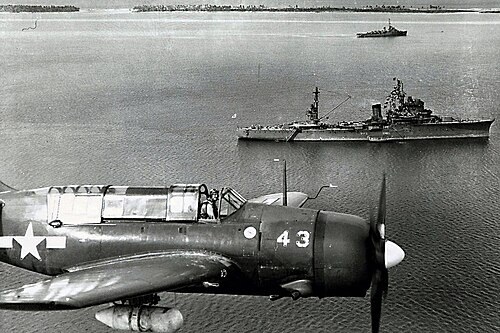
After the war her guns were cut down and a deckhouse was built around her mainmast, and she became a repatriation transport. On her first trip, in October 1945, she sailed with the carrier Hosho and took Japanese prisoners aboard at Jaluit in the Marshalls. She made twelve trips in all, between October 1945 and November 1946, and brought about 5,800 former soldiers home. She was struck from the Navy List on 5 October 1945. From November 1946 to June 1947 she was broken up at the Kawanami yard on Koyagishima, near Nagasaki.
A note on sources. This history follows the Tabular Record of Movement for Kashima by Bob Hackett and Sander Kingsepp at combinedfleet.com, and the list of captains in the Japanese Wikipedia article on Kashima. The account of Sculpin's loss is given only as far as Kashima's escort was concerned. The photograph of Jaluit in October 1945 is a U.S. Navy photograph from the National Naval Aviation Museum; its caption identifies the ship below as Kashima, and the place and month agree with her first repatriation voyage.