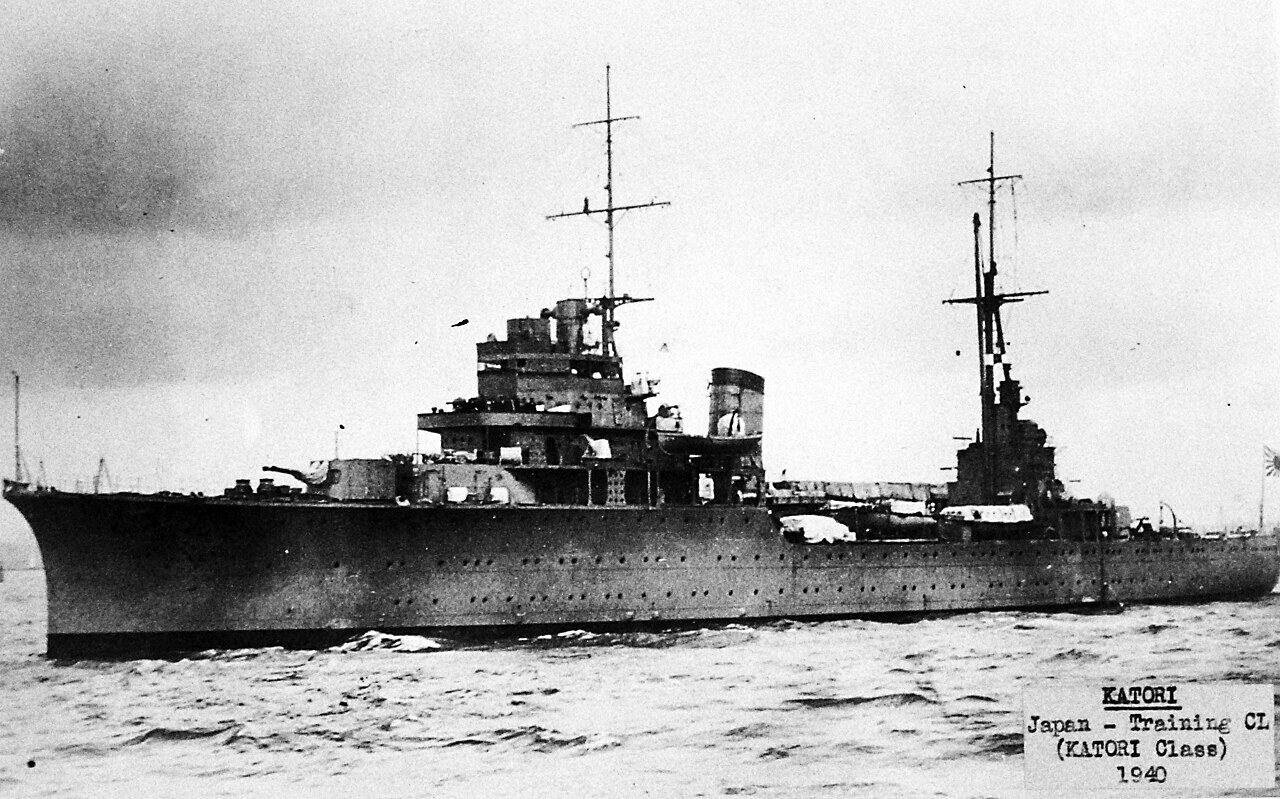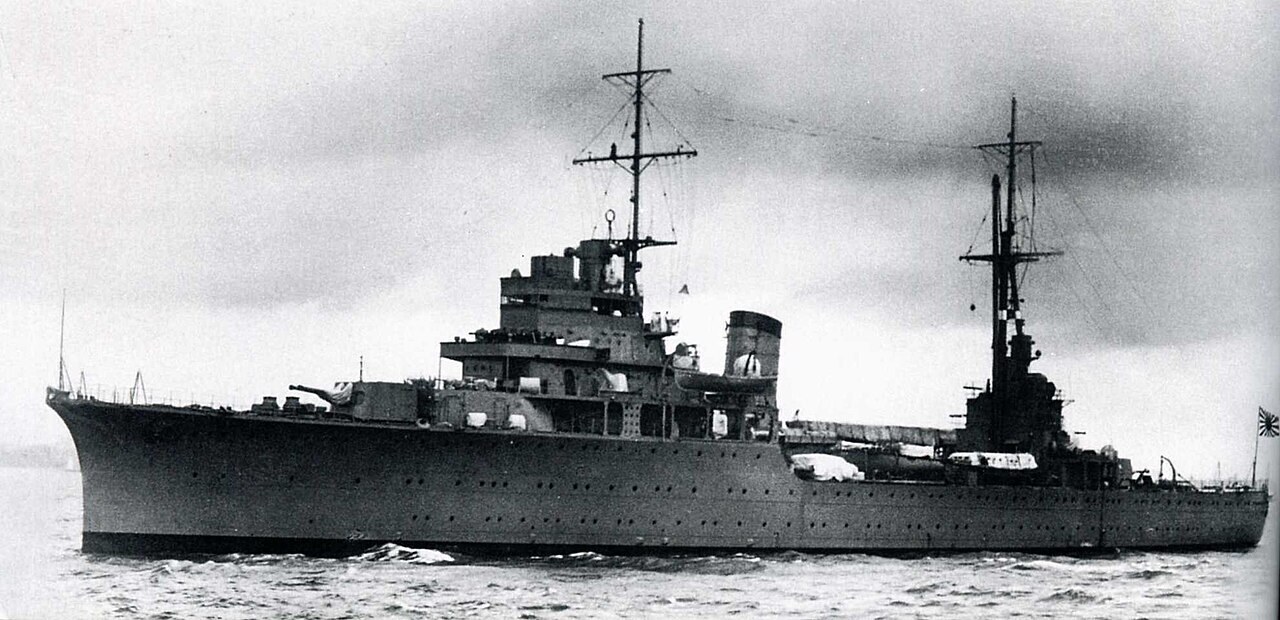
Katori was the first of three training cruisers built for the Naval Academy's long cruises abroad. She was named for the Katori Shrine in Chiba. Mitsubishi laid her down at Yokohama on 24 August 1938 as Cruiser No. 72, launched her on 17 June 1939, and completed her on 20 April 1940. She was slow and lightly armed, with four 140-millimeter guns in two twin turrets, a twin 127-millimeter antiaircraft mount and torpedo tubes, and she had cabins for cadets and room for a flag staff. In the summer of 1940 she and Kashima made the last prewar midshipmen's cruise, to Etajima, Ominato, Dairen, Port Arthur and Shanghai. In November 1940 she became flagship of the Sixth Fleet.
Captain Noboru Owada took command in January 1941. By late 1941 the Sixth Fleet, the submarine force, was under Vice Admiral Mitsumi Shimizu. On 11 November 1941 Shimizu briefed his commanders aboard her on the coming attack on Pearl Harbor. She reached Truk on 1 December and moved to Kwajalein, where Shimizu directed the submarines off Hawaii. On 1 February 1942 aircraft from Enterprise raided Kwajalein and damaged her, and Shimizu was wounded. In 1942 she worked between Kwajalein, Truk and Kure, and from late August 1942 she lay at Truk for seven months. Captain Nobuki Nakaoka took command in July 1942, Captain Takeji Miyazaki in November, Captain Hyoe Minakuchi in July 1943, and Captain Tamekiyo Oda, a former captain of the submarine tender Chogei, on 15 October 1943.
After the Americans took Kwajalein in February 1944, she was transferred on 15 February to the General Escort Command. At 0430 on 17 February she left Truk with the destroyers Maikaze and Nowaki and a trawler to escort the auxiliary cruiser Akagi Maru to Yokosuka. Within hours the first strikes of Operation Hailstone reached them. Aircraft from Yorktown, Intrepid, Bunker Hill and Cowpens sank Akagi Maru and torpedoed and strafed Katori.
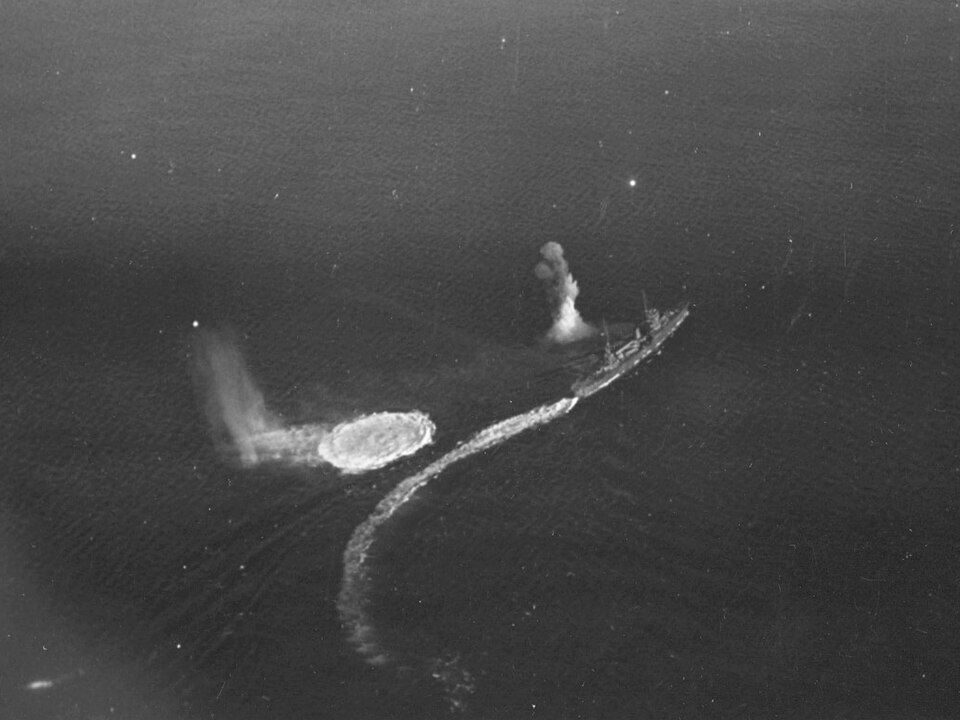
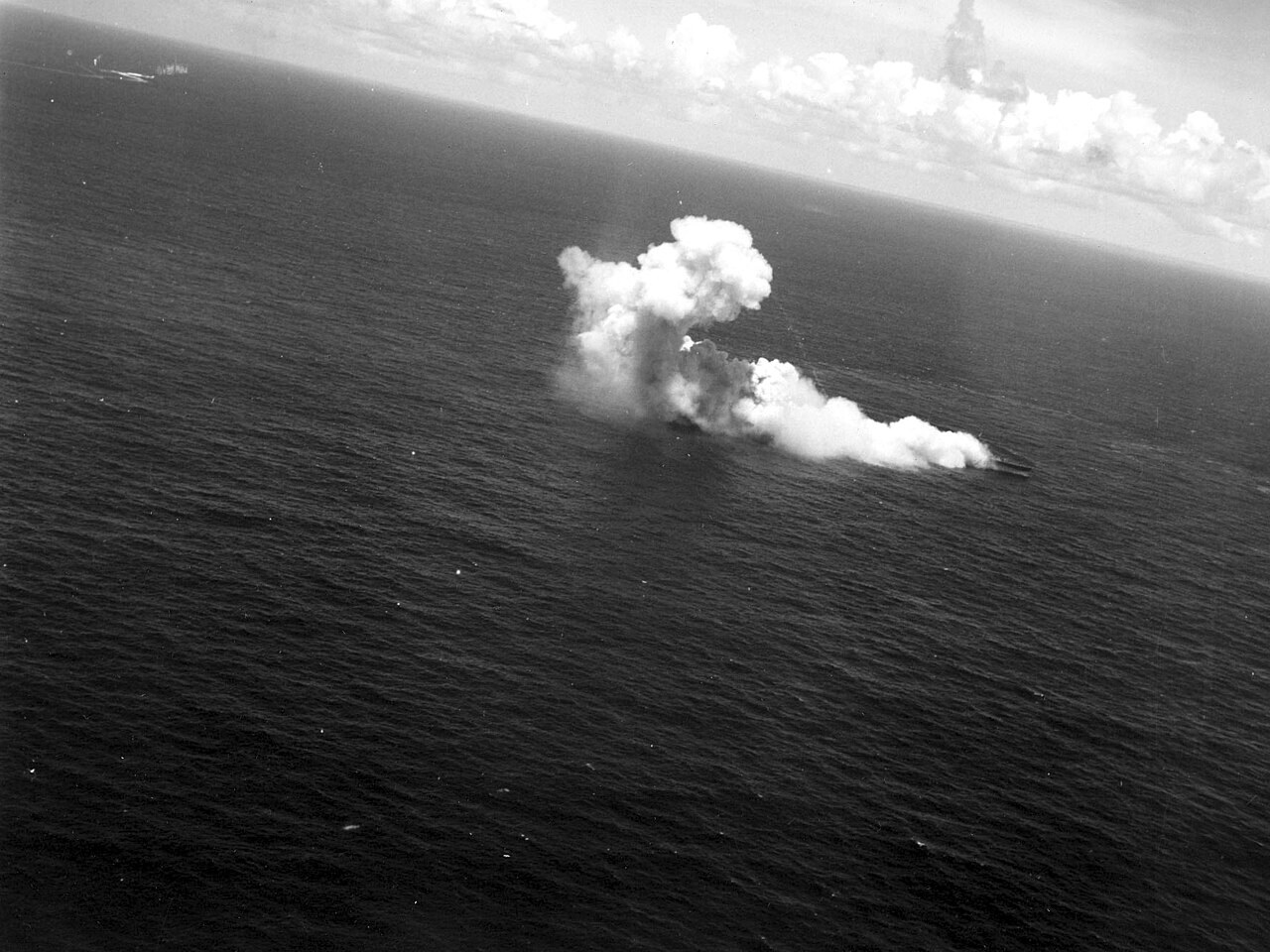
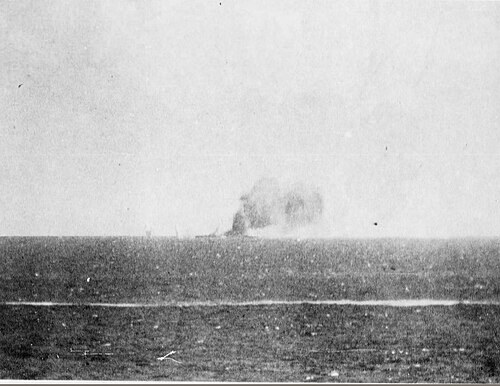
About 1300, forty miles northwest of Truk, Rear Admiral Robert C. Giffen's Task Group 50.9, with Iowa, New Jersey, Minneapolis, New Orleans and two destroyers, came on the damaged ships. Admiral Spruance flew his flag in New Jersey. Katori fired torpedoes at the Americans. Iowa engaged her with forty-six 16-inch rounds and 124 five-inch shells and straddled her with all eight salvos. After eleven minutes under fire she began to list to port and sank stern first. A large group of survivors was reportedly seen in the water where she went down. None were picked up. Captain Oda was promoted rear admiral after his death. Maikaze was sunk with all hands, and Nowaki escaped. Katori was struck from the Navy List on 31 March 1944.
A note on sources. This history follows the Tabular Record of Movement for Katori by Bob Hackett and Sander Kingsepp at combinedfleet.com, and the list of captains in the Japanese Wikipedia article on Katori. Accounts differ on which American ships finished her. The record gives the main credit to Iowa's gunfire. Some photograph captions give it to the cruisers and to destroyer torpedoes, and some name New Jersey. The ship is not credited here to any one of them. The record says that a group of survivors was seen and not picked up; that is reported, not counted.