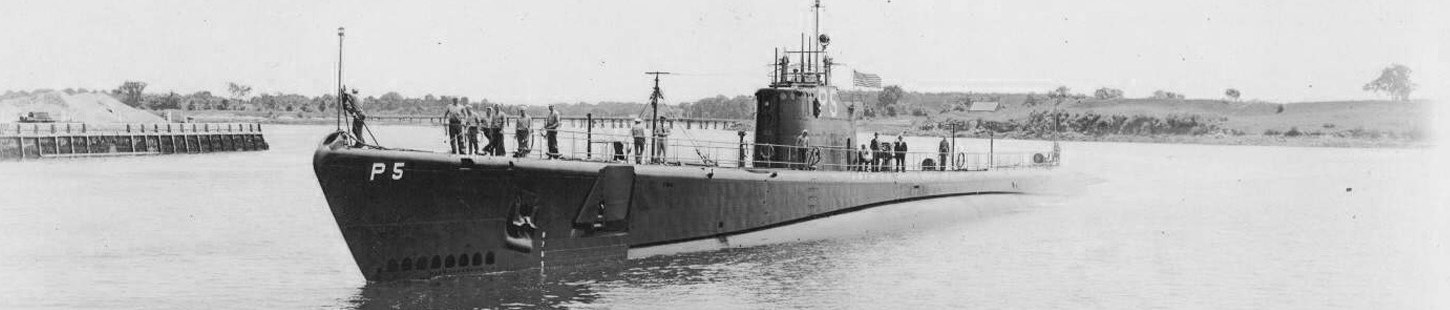
Perch was a Porpoise-class submarine, SS-176, built by Electric Boat at Groton. She was launched on 9 May 1936 and commissioned on 19 November 1936. This is not the later Perch. Lieutenant Commander David A. Hurt had her on the patrol that ended her. On the first patrol, west of the Philippines, the Navy credited her with a freighter. That is the wartime credit.
She left Darwin on 3 February 1942 for her second patrol, in the Java Sea, while the Japanese were putting troops onto Java. On 25 February a shell hit the conning tower and damaged the antenna trunk. She could take a message. She could not be sure anyone heard her. On 27 February she got off a contact report, two cruisers and three destroyers. After that the shore heard nothing, and she did not come in to Fremantle.
On the night of 1 March, about thirty miles northwest of Surabaya, she surfaced. Two destroyers found her. Those were Amatsukaze and Hatsukaze. Commander Tameichi Hara had Amatsukaze. Perch went under. Hurt was setting up a shot at 800 to 1,000 yards when one destroyer turned straight at him. He ordered her deep. The destroyer passed over and the charges started. She hit the bottom at 147 feet and lost power on the port screw. She got off the bottom and up again when the charging stopped. Before dawn two destroyers were on her a second time. She went down to 200 feet and could not move. They stayed over her until after daylight. Air and oil on the surface made them think she had broken up. Lieutenant Kenneth Schacht said later that both of those groups left believing they had killed her. They had not.
She lay there until dusk on 2 March and took an hour to get up. No ship was in sight. The reduction gears were bad. Battery jars were broken. The electrical grounds were serious, and the engine-room hatch leaked. They made the boat ready to scuttle if she had to be scuttled.
Before sunrise on 3 March she tried to dive and could not. Water came through the conning-tower hatch, the engine-room hatch, a circulating line, and the hull. While they were still trying to stop it, destroyers came in sight and opened fire. Ushio and Sazanami are named for that morning, and Ushio is the one said to have fired. The Navy's loss report, written from the crew, says three destroyers opened fire and does not name them. The deck gun was already dead. Depth charges had made three torpedoes run hot in the tubes, and the rest could not be fired. Hurt ordered the crew off and the boat scuttled. She went down with her colors flying. Schacht, the damage-control officer, went below and opened the main ballast vents. He was the last man out. He was given the Navy Cross. All 59 men got into the water. Ushio took them aboard.
That same night Hara wrote that he had seen a man light a cigarette on another surfaced submarine, about 4,000 meters off, and that gunfire sank her after her torpedoes missed. That boat was not Perch. Perch was already on the bottom. No Allied submarine is known to have been lost that night. The boat has not been identified.
The 59 went to Ofuna for questioning, and from there into the camps and the mines. They were not all kept in one place. Six died as prisoners. Frank McCreary died of pneumonia in January 1943. Houston Edwards died in July 1944. Albert Newsome died of pellagra in April 1945, Charles Brown of the same thing later that month, Robert Wilson on Java in June, and Philip Dewes, the pharmacist's mate, of pellagra in July. The other fifty-three lived to be brought home. Perch was struck from the Navy list on 24 June 1942. The loss is not credited to one destroyer.