Ships
- USS Edsall (DD-219) Captain, 15 June 1940 – 13 October 1941
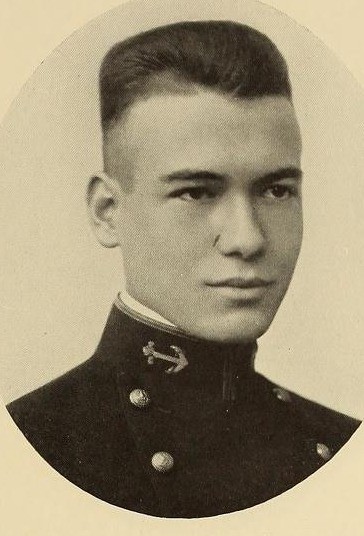
Edwin Mason Crouch was born on 2 February 1900 in Nebraska. After his father, Ernest, died in 1909, he grew up around Deadwood, South Dakota, went through the high school there, and played in the school band. In April 1917 he left town to sit the Naval Academy examinations. He entered the Navy on 13 August 1917, before his Deadwood class held its graduation, and he finished at Annapolis with the accelerated Class of 1921, in the group graduated on 2 June 1921.
His first sea duty was in the battleship California. By the summer of 1924 he was an ensign on the Battle Fleet staff, still embarked in California, handling communications. He made lieutenant (junior grade) in that work, and in 1926 he shifted to the destroyer Robert Smith. In the autumn of 1927 he went back to Annapolis under instruction. In 1929 the instruction moved to the Washington Navy Yard, where he completed postgraduate work in ordnance engineering. From the autumn of 1930 into the spring of 1933 he was a lieutenant in the carrier Lexington. On the night of 10 March 1933, after the Long Beach earthquake, he was among the sailors sent ashore on guard duty. That summer he returned to the Washington Navy Yard and stayed until early 1935.
From the spring of 1935 through the spring of 1937 he was executive officer of the destroyer Dale. He was promoted to lieutenant commander on 30 June 1937, served for a time in the battleship Arizona, and from the summer of 1938 worked at the Naval Gun Factory in Washington. In 1940 the Navy sent him to the Sixteenth Naval District in the Philippines.
On 15 June 1940 he took command of the Clemson-class destroyer Edsall (DD-219), a flush-deck ship of the Asiatic Fleet that had been in commission since 1920. Earlier commanding officers of the ship included A. H. Rice, Halsey Powell, Harry Robert Bogusch, William Callender Irving Stiles, Robert Todd Young, Lemuel Earl Lindsay, Jules James, Thomas Cross Slingluff, and Byron Scott Dague. Crouch had her for the last peacetime year on the Asiatic station. His wife, Jean Wallace English, whom he had married in San Bernardino in 1922, sailed from Manila for San Francisco in November 1940. He left Edsall on 13 October 1941.
At the start of the war he commanded Destroyer Division 57, with headquarters in the Philippines. His date of rank as commander was 8 December 1941. In late February 1942 Japanese aircraft disabled the seaplane tender Langley while she was carrying fighter aircraft toward Java. Edsall, by then under Lieutenant Joshua J. Nix, and the destroyer Whipple screened the tender and took off her survivors. The tender's commanding officer later credited Crouch, together with the captains of Whipple and Edsall, for the handling of the destroyers and for the care given the wounded.
Many of those survivors were transferred to the oiler Pecos. On 1 March 1942 Japanese carrier aircraft sank Pecos in the Indian Ocean. Whipple arrived that evening, began picking men up, and then left the same night after submarine alarms. Crouch was aboard Whipple as division commander, senior to her captain, Lieutenant Commander Eugene S. Karpe. The commanding officers of Whipple, Pecos, and Langley concurred in the decision to clear the area. The destroyer was already crowded, and more aircraft were expected at daylight. A large number of men were left in the water, and Crouch has since carried a share of the criticism for ending the rescue when he did.
He was made a temporary captain on 20 June 1942. From 21 January 1943 to 2 January 1944 he was operations officer on the staff of Commander Cruisers and Destroyers, Pacific, and he also commanded a task force. The Navy awarded him the Bronze Star for that year's work. He later directed the maintenance division of the Bureau of Ordnance in Washington.
In June 1945 he traveled from Washington to Deadwood to see his mother and old friends. The next month he took passage in the heavy cruiser Indianapolis on bureau business. Her captain was Charles B. McVay, a friend from the class ahead of Crouch at Annapolis, and Crouch was quartered in the captain's in-port cabin. On 30 July 1945, in the Philippine Sea, a Japanese submarine hit Indianapolis with torpedoes and she sank in about twelve minutes. Crouch was lost. His remains were not recovered, and his name is carried on the Walls of the Missing at the Manila American Cemetery.