Ships
- USS Spence (DD-512) Captain from 8 January 1943 · Relieved on 8 July 1944
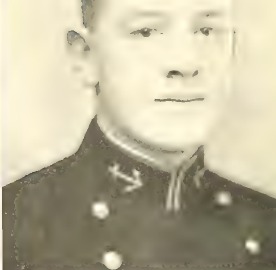
That ship is what identifies him. The initials are not a guess. The Navy Cross citations for the captain of Spence in November 1943 name Commander Henry Jacques Armstrong, Jr., Navy file number 0-61068, and the Dictionary of American Naval Fighting Ships history of Spence says she was commissioned on 8 January 1943 with Lieutenant Commander H. J. Armstrong in command. The same file number, written 061068, sits beside “ARMSTRONG HENRY J” in the index of the Register of Commissioned and Warrant Officers for 1 January 1956. He is United States Navy. He is not John Malet Armstrong, and he is not the John H. Armstrong, Jr., who appears in the same Navy Directories on other ships.
The day and the ship are right. The rank printed for that day, and the idea that the story ends there, are not. By the Register of 1 July 1944 he was already a commander, temporary from 10 September 1942, with lieutenant commander as his permanent grade from 1 January 1942. “Lieutenant Commander” is the permanent rank, and it is the rank the ship history uses at the commissioning. It is not the rank he was wearing when Spence fought. He also did not die in her. Command compilations take him off Spence on 8 July 1944. She foundered in a typhoon on 18 December 1944 under another captain. He lived to command again, to serve in Korea, and to be still a captain on the active list on 1 January 1957. A citation compilation gives his death as 5 April 1989. No obituary was found for this essay, and no wife or child.
What follows is the man the registers, the directories, the ship histories, and the award citations will support. Where those disagree, the disagreement is in the text.
Origins
He was born on 14 June 1903. That date is in the officer registers of 1 July 1944, 1 July 1945, 1 January 1956, and 1 January 1957, and it is the birth date the Hall of Valor attaches to the Spence citations. The place is not in any of those register lines. Uboat.net says Salt Lake City, Utah. That may be true. It is not confirmed here.
He entered the Navy on 11 July 1923. In the registers that date is “date of entry,” which for a Naval Academy man of his generation is the day he became a midshipman, not the day he was commissioned. The 1956 and 1957 registers give him year-group 27. The Hall of Valor says he graduated from the Naval Academy with the class of 1927. The class biography in the 1927 Lucky Bag was not read. Nothing in the sources used here describes his family, his appointment (which state sent him), his standing in the class, or what kind of midshipman he was. The file number later attached to him is 061068.
A compiled rank list gives 3 June 1927 as the date he became an ensign. That is the ordinary commissioning day for that class, and it was not re-checked against a register page that could be read cleanly. What can be checked is the Navy Directory of 1 January 1929, which lists “Armstrong, Henry J., jr.” as an ensign, and, in the signal-number section, “Ens. H. J. Armstrong, jr.” The initials are his, and the “jr.” is already there. The same directory puts him on USS Colorado. He was a junior officer on a battleship, not her captain. Colorado’s career is not his story.
Before the war
The next fixed point is the Navy Directory of 1 April 1934. He is a lieutenant (junior grade), still “Henry J., jr.,” on USS Saratoga. Again he is not in command. A carrier’s decade is not narrated here as if he directed it. The only fact the directory gives is that in the spring of 1934 a lieutenant (junior grade) named Henry J. Armstrong, Jr., was serving in her.
On 1 June 1940 the directory lists him as a lieutenant on USS Oklahoma. This is the point where a careless sentence would put him at Pearl Harbor. The directory is eighteen months earlier. Oklahoma capsized there on 7 December 1941. Nothing read for this essay puts Armstrong aboard her that morning. By the compiled commanding-officer lists he had already left her for a destroyer.
Two courses are recorded against his name in the registers, if the qualification numbers on the 1 July 1945 line are read as 18 and 21. The register’s own key says 18 is the Naval War College correspondence course in strategy and tactics, and 21 is the postgraduate course in general line duties. The 1 July 1944 line is dirtier in the optical scan and only partly confirms the digits. There is no date for either course. They are the schooling the Navy chose to print beside his name, not a transcript.
The registers that can be read do not give the day he was promoted to lieutenant (junior grade) or to lieutenant. Uboat.net supplies 2 June 1930 and 30 June 1936. Those dates are the sort of thing usually taken from a register, and they were not found again in a clean line for this essay. They are not used as facts below. The directories are enough: ensign at the start of 1929, lieutenant (junior grade) in April 1934, lieutenant in June 1940.
Waters
The compiled lists next give him a ship of his own. Both uboat.net and the NavSource photograph archive, the latter crediting the commanding-officer compilation of Wolfgang Hechler and Ron Reeves, put him in USS Waters (DD-115) from 17 July 1941 to 15 December 1942. They do not agree about the rank. Uboat.net calls him a lieutenant for that command. NavSource calls him a lieutenant commander for the whole of it. The 1 July 1944 register says his permanent rank of lieutenant commander dated from 1 January 1942, six months after the lists say he took Waters. So the rank on the day he assumed command is not settled. The dates are the part on which the two compilations agree, and they are still compilations. The Dictionary of American Naval Fighting Ships history of Waters never speaks his name. What follows is that history for the months the lists give him, not a deck log with his signature.
Waters was an old four-piper, recommissioned in 1930, and by 1941 she was a school ship. The ship history says that when the war began she was at San Diego with the Underwater Sound Training School, teaching the fleet the sonar work she had been developing since the middle 1930s. She got word of the attack at 1125 on 7 December, swept the approaches to San Diego that afternoon, and on 8 December sailed in the screen of Saratoga for Pearl Harbor. She was back on the California coast by the end of the month. On 31 January 1942 she went north. For about ten months she escorted supply ships between Seattle and the Alaskan and Aleutian bases — Kodiak, Dutch Harbor, Chernofski, Adak, Sitka — as a unit of the Alaskan defense force. The ship history does not put her in the Japanese attack on Dutch Harbor, and this essay will not put her there. It also does not say whether her captain found that duty a backwater or a serious job. The only thing the record shows is that the lists have Armstrong in her while she did it.
She entered the Puget Sound Navy Yard on 19 December 1942 to be cut down into a high-speed transport. The lists have Armstrong leaving four days earlier, on 15 December. If both dates are right, he turned her over on the edge of the conversion and did not take her to the Solomons in her new life. That later career — Guadalcanal, New Georgia, Bougainville — belongs to other captains. It is not written here as his.
Spence
On 8 January 1943 a new Fletcher-class destroyer was commissioned: USS Spence (DD-512), built at Bath Iron Works, laid down 18 May 1942, launched 27 October 1942. The ship history used here says Lieutenant Commander H. J. Armstrong was in command. An indexed text of the current Naval History and Heritage Command history expands the initials to Henry J. Armstrong and places the commissioning at the Boston Navy Yard. That page returned an error when it was opened for this essay, so the Boston detail is not leaned on. The name, the rank as printed, the date, and the ship are the part the ship history and the commissioning agree on.
He was, by the register, already a temporary commander. The ship history uses the permanent rank. Either the commissioning papers said lieutenant commander, or the ship history followed the permanent grade. The November citations, written later, call him commander. Both can be true of one man in the wartime Navy, and both are in the record.
Spence shook down out of Guantánamo from 8 to 28 February 1943, escorted in the Atlantic and the Caribbean, and had convoy duty in the Casablanca area in April. She was sent to the west coast and left San Francisco for Pearl Harbor on 25 July. On 25 August she sailed with Princeton and Belleau Wood to cover the occupation of Baker Island on 1 September, then went on to Éfaté. She joined Destroyer Division 46 of Destroyer Squadron 23, sailed for Tulagi on 22 September, and on 28 September set a surface craft on fire with her main battery near Kolombangara. On the night of 1–2 October she was with a force off Vella Lavella and helped destroy twenty barges. She escorted between Tulagi and Purvis Bay and finished October supporting the landings on the Treasury Islands.
On 23 October Captain Arleigh A. Burke took Destroyer Squadron 23. The squadron’s later name, the Little Beavers, is the ship history’s, not a nickname Armstrong is anywhere quoted as using. A 1996 article in Naval History says Spence was lame in her engineering plant and could make only about thirty knots, and that Burke reported that speed so the handicap would be on the record. That is the article’s account. It is not a log entry transcribed here. If it is right, Armstrong’s first Pacific command was a new ship that could not do what the squadron wanted of her, and he had to fight her anyway.
Two nights in November
On 1 November 1943 Spence bombarded Buka and Bonis, and positions in the Shortlands, in support of the landings at Cape Torokina on Bougainville. In the early hours of 2 November, Task Force 39 met a Japanese force the ship history describes as two heavy cruisers, two light cruisers, and six destroyers, bound for Empress Augusta Bay. At 0231 Spence had radar contact at sixteen miles. While she closed, she was hit below the waterline. She stayed in action. She fired a spread of torpedoes at a ship 3,000 yards off and the ship history says black smoke poured from the target. Retiring toward Destroyer Division 45, she found another Japanese force at 4,000 yards, opened fire, and watched one ship stop and burn. Low on ammunition, she called Division 45 onto the destroyer Hatsukaze, which sank stern first. The light cruiser Sendai was also sunk. At daylight seventy or eighty Japanese aircraft came out. The ship history says the Japanese lost more than twenty planes and scored two hits, both on Montpelier. Spence was back in Purvis Bay on 3 November. On the afternoon of the 5th, northwest of the Treasuries, a plane dropped three bombs; the nearest was seventy-five yards off the starboard beam.
That is the ship history, which does not pause to characterize the captain. The Navy Cross citation does, and it counts the enemy differently. The citation, identified by Hall of Valor as Commander Southern Pacific Forces serial 00162 of 14 January 1944, says that on the night of 1–2 November the task force of which Spence was a unit destroyed two Japanese cruisers and three Japanese destroyers and forced the rest to flee, so that the transports off the Bougainville beachhead were not reached. The ship history’s named losses in that fight are Sendai and Hatsukaze. The citation’s tally is larger than the ship history’s. Both cannot be a precise count. The citation is an award, not a battle study. What it says about the man, as distinct from the score, is that he was on the exposed bridge, and that the Navy chose the words “fearlessness, calmness and gallant determination” and “at great risk in the face of grave danger throughout the three-hour battle.” Those are the Navy’s words for a captain whose ship had already taken a hit below the waterline and had not left the action. They are not a diary. They are the nearest thing to a portrait the official record gives.
For three weeks after that, Spence patrolled and escorted between Port Purvis and Kula Gulf. On 24 November the squadron was refueling in Hathorn Sound when it was sent northwest of Buka to catch ships that intelligence said would try to take aviation personnel off the Buka-Bonis fields. Early on the 25th, in St. George Channel, Spence made the surface radar contact, at 0142, range 22,000 yards. At 0156 Destroyer Division 45 fired torpedoes and hit. A second group of three ships appeared. Spence and Converse were told to finish the first group. Onami blew up and sank at once. Makinami was left a cripple; Spence and Converse opened with their guns and she sank at 0253. Division 45 sank Yugiri. The ship history’s summary is three of five Japanese destroyers sunk, and no damage to the squadron. They were back in Purvis Bay on Thanksgiving Day.
The second Navy Cross, a gold star in lieu of a second award, is for that night, 24–25 November 1943, and it again names him commanding officer of Spence. The Hall of Valor heading muddles the place. It says “at Cape St. George during the Battle of Empress August Bay.” Empress Augusta Bay was the fight of 1–2 November. Cape St. George was 25 November. “Empress August” is also a misspelling. The body of the citation is the later action: five ships of Destroyer Squadron 23 sank four Japanese ships, seriously damaged another, and damaged a sixth, with no loss or damage to the American ships. That count — four sunk, two more hurt, out of a force the ship history calls five destroyers — does not match the ship history’s “three of five.” The same caution applies. The sentence about him is that he fought the ship “with gallant determination and remarkable courage” and with “remarkable calmness under fire.” The Navy said “calm” twice, once for each night. It is possible the second citation was drafted from the first. It is also possible that calm under fire was the thing his seniors thought they had seen.
A 1996 Naval History article on Cape St. George prints squadron radio talk and gives Armstrong one line, about trouble with the hose connections if they were to refuel in Rabaul. It reads like the squadron’s humor. It is a reconstruction in a magazine fifty years later, not a signal log quoted here, and it is not treated as his words.
Destroyer Squadron 23 received a Presidential Unit Citation for 1 November 1943 to 23 February 1944. The text transcribed by the Destroyer History Foundation, attributed to a Claxton veteran and signed for the President by James Forrestal, names Spence among Charles Ausburne, Claxton, Dyson, Converse, and Stanly. The citation is for the squadron: bombardments, air attacks beaten off, surface forces intercepted, transports covered. It is a unit award. It covers weeks in which Armstrong was, on every list, still Spence’s captain. It does not by itself say what he did on any given night. The two Navy Crosses are the personal awards for the two nights.
The year he still had her
The ship history keeps going, and if the command lists are right he kept the ship into the summer of 1944. Out of Purvis Bay until late January. Patrols near Green Island and Bougainville Strait. On 5 February a bombardment of Hahela Plantation on Buka. On the 6th an enemy barge sunk by gunfire near Green Island. On the night of 9–10 February, shells into Tiaraka and Teopasino. On the 18th, Kavieng and Cape St. George, then a sweep toward Truk that found no ships, then Kavieng again on the 22nd, when Spence and Division 45 sank a merchantman the ship history puts at about 5,000 tons. From 1 to 24 March she was with Task Force 39 for the Emirau landings. On 27 March she left Purvis Bay with Task Force 58 for strikes on Palau, Yap, Ulithi, and Woleai. From 13 to 25 April she screened the fast carriers off New Guinea for the landings at Aitape, Tanahmerah Bay, and Humboldt Bay. On 29 and 30 April the carriers hit Truk. She was at Majuro for upkeep from 4 May to 5 June.
On 6 June she sortied with Task Group 58.4 against the Marianas. She bombarded Guam and Saipan while the aircraft struck, went up to the strikes on Iwo Jima on the 16th, and was in the Philippine Sea on 19 and 20 June, the battle the ship history calls the Marianas Turkey Shoot. She was a screen destroyer, not a protagonist the history singles out. On 23 and 24 June the aircraft went back to Guam, Saipan, and Tinian. From 26 June through the end of the month she fired at Rota, Saipan, and Guam, set fuel tanks on fire, and on the 27th sank two sampans. She replenished at Eniwetok in July.
The command lists end his tour on 8 July 1944 and give the ship to Lieutenant Commander James Paul Andrea. The ship history does not record the relief. On 4 August, still under whoever had her, she sailed for California, reached San Francisco on 18 August, and spent September in dock. A relief on 8 July, while she was still in the Marshalls, fits a man who had to be in Boston in October to commission another ship. It is the best reading of the lists. It is not a log.
The ship after him
Spence went back to the western Pacific in the autumn of 1944 and screened the fast carriers off Luzon in November and early December. On 17 December she was preparing to fuel, and she pumped the salt-water ballast out of her tanks. The seas were too rough and the fueling was cancelled. On 18 December the storm became the typhoon later called Cobra. Seawater reached her electrical gear. After a roll of 72 degrees to port the lights went out and the pumps stopped. The rudder jammed. About 1100, after a deeper roll to port, she capsized and sank. The ship history says 24 men survived. Hull and Monaghan were lost in the same storm. Spence was struck from the Navy list on 19 January 1945. She also earned eight battle stars, and she shared the squadron citation already described. Those are the ship’s, across both captains.
Andrea is the captain the command lists give her from 8 July until the sinking, and they mark him lost with her. Armstrong was not aboard. Nothing in the sources used here says what he knew, or when he knew it, or whether he thought the men he had trained were still his. A 1997 oral history at the University of North Texas, David T. Meskill, who served in Spence as disbursing officer and whose battle station was the combat information center, is catalogued as including comments on “the skipper, Lieutenant Commander Henry J. Armstrong,” and on Burke, Empress Augusta Bay, and life in the ship. The catalogue dates the battle to November 1944, which is the wrong year. The interview itself, sixty-three pages, was not read. It is the obvious place a crewman’s portrait of him would be. Until it is read, that portrait is a gap, not a silence that can be filled.
Adams
On 10 October 1944, at Boston, USS Adams (DM-27) was commissioned, Commander Henry J. Armstrong in command. The ship history is explicit about the name and the rank, which matches the registers: he was not yet a captain. Adams had been laid down at Bath on 20 March 1944 as a destroyer, DD-739, redesignated a destroyer minelayer on 20 July, and launched on 23 July. He took her through a month of shakedown in Bermuda, then Norfolk, then with Shea to New York to meet the carrier Bennington. They transited the Panama Canal on 20 December and reached San Diego on the 29th. On New Year’s Day 1945 they sailed for Pearl Harbor.
He had almost two months in Hawaiian waters: plane guard for Bataan, gunnery, shore-bombardment practice, a yard period for radar and for stronger deck plating, then minelaying and tests of mine-detection gear. On 2 March Adams left Pearl Harbor, reached Ulithi on the 14th, and on the 19th sailed with the Okinawa force.
His date of rank as captain, in the registers of 1 January 1956 and 1 January 1957, is 20 March 1945. The Silver Star for Adams styles him captain for the period 23 March to 1 April. The promotion and the battle arrive together.
On the evening of 23 March, the day before Adams reached Okinawa, enemy aircraft attacked the task group. A projectile from her own after five-inch mount burst early. Two sailors were killed and thirteen injured. Those were, the ship history says, her first casualties. They were not inflicted by the enemy. They happened in Armstrong’s ship, on his first night in combat in her. The history does not say who ordered the fire, or whether the fault was the gun, the fuse, or the drill. It does not have to, for the fact to sit where it sits. He took a new ship into her first action and the first blood on her decks was from her own gun.
At dawn on the 24th she began the work she had been built for, off Okinawa: gunfire support and mine destruction for the wooden minesweepers that were doing the sweeping. Over the next days the history says she was attacked by at least twelve planes, knocked six down, and claimed two more as probable. On the 28th one crashed about twenty-five feet from the port bow and showered her with debris and gasoline. A collision with a salvage vessel sent her into Kerama Retto for emergency repairs. On 1 April, southeast of that anchorage, a damaged Japanese plane hit the water close aboard her stern. The history says what must have been two bombs exploded under her fantail, did severe damage, and jammed the rudders hard right. She steamed in circles. Two more suicide planes came at her. She destroyed one. Mullany destroyed the other. Adams was towed back into Kerama Retto and put alongside the repair ship Endymion.
The Silver Star citation for those days, 23 March to 1 April 1945, does not mention the premature burst, the near miss, the jammed rudder, or the tow. It says he was commanding officer of Adams in support of minesweepers at Okinawa, that his leadership kept the ship’s fighting efficiency high, that the unit destroyed enemy aircraft and drove off attacks, and that the mission was accomplished “without loss of, or damage to, the ships being supported.” Read narrowly, that last clause is about the ships he was covering, not about Adams herself. Adams was damaged, and she had dead. The citation is not a lie if it is read that way. It is an incomplete picture, and the ship history is the correction.
On 7 April Adams left Kerama Retto for permanent repairs in the United States, by way of Guam and Pearl Harbor, and arrived at Mare Island on 7 May. NavSource dates the next commanding officer, Commander Donald Noble Clay, from 7 May 1945. The coincidence of the arrival and the change of command is how the compilations read. The ship history does not name the relief. The Legion of Merit that begins on 7 May does not say he left Adams that day. It does say what he did next.
The mines
The Legion of Merit, with combat “V,” styles him captain and covers 7 May to 23 December 1945, as commander of a division of fleet minesweepers and later as commander of a task group. The citation says he swept and buoyed enemy minefields in the East China Sea and in Japanese waters, and that the “Guinea Pig” duty was volunteer: he was to steam the ships under his command through areas suspected of holding American pressure mines, so the lanes would be safe enough for the occupation forces to enter Japan. Pressure mines are set off by the ship herself. The citation calls the duty volunteer and says it required him to take the ships through. It does not name the ships, and it does not say whether he asked for it or was told to call it volunteer. It is the clearest choice the record attributes to him after the night actions: a job whose method was to be the ship that might explode.
Adams herself went back out and swept Japanese harbors in the autumn of 1945. The ship history, describing her at Ise Wan late in September, says her commanding officer was also the task-group commander. By the NavSource list that commanding officer was no longer Armstrong. The Legion of Merit says Armstrong was a task-group commander in those same months. The two statements can both be true — he in one group, another man in Adams — or the ship history’s “commanding officer, double-hatted” could be him if the NavSource date is wrong. They are not forced together here. His citation is the evidence for his minesweeping command. Adams’s later months are not automatically his.
After
The registers of 1 January 1956 and 1 January 1957 still carry him on the active list as a captain, unrestricted line, designator 1100, date of rank 20 March 1945, birth 14 June 1903, year-group 1927. Between the end of 1945 and the spring of 1951, no billet was found. That is six years of a career, missing.
A gold star in lieu of a second Legion of Merit, again with combat “V,” covers 9 May to 7 December 1951, as Commander, Destroyer Squadron 15, in the Korean War. The citation says he kept the squadron ready, took part in the operations against enemy forces, helped make the plans, and kept liaison with other units. It does not name a ship, a bombardment, or a fight. It is a staff-captain’s citation, not a bridge citation. Whatever he had been on the exposed bridge of Spence in 1943, the Navy in 1951 decorated him for command of a squadron and for the unglamorous work of keeping it in the plan. No more than that is known here.
He was still a captain on 1 January 1957. Hall of Valor’s summary line says he retired as a rear admiral. Uboat.net dates the retirement 1 July 1957 and styles him rear admiral, retired. Neither a retirement order nor a later register’s retired list was read. The two statements — captain on 1 January 1957, rear admiral in retirement — can both be true if the higher grade came with retirement after that date. The mechanism is not shown in the sources used here, and it is not invented. What is shown is that the wartime temporary ranks had long since been replaced by a permanent captaincy dating from March 1945, and that he was still serving in it twelve years later.
Hall of Valor gives 5 April 1989 as the date of death. Uboat.net gives the same day and adds Walnut Creek, California, and the age of eighty-five, which is the arithmetic of 14 June 1903. No death certificate, no local obituary, and no grave record were found in the search for this essay. Nothing was found about a marriage, children, or what, if anything, he left them. The oral history that might have said what his officers thought of him was not opened. The Navy’s own portrait remains the one in the citations: calm on a bridge that had already been hit, and later a man who took sweepers through mines his own side had laid.
He is easy to mis-file. A reader who stops on the day he took Spence, and on the lieutenant commander’s rank, can leave thinking that was the whole rank and that the ship’s famous end was his. The ship’s end was not his. The rank at the fighting was commander, and at Okinawa it was captain. The death in December 1944 on Spence was another man’s, and almost the whole crew’s. Armstrong’s war went on for another year of mines, and his service for another decade after that, and then the record, at least the record found here, goes quiet until a date of death.