Ships
- IJN Nachi Flag, not her captain, 25 October 1944
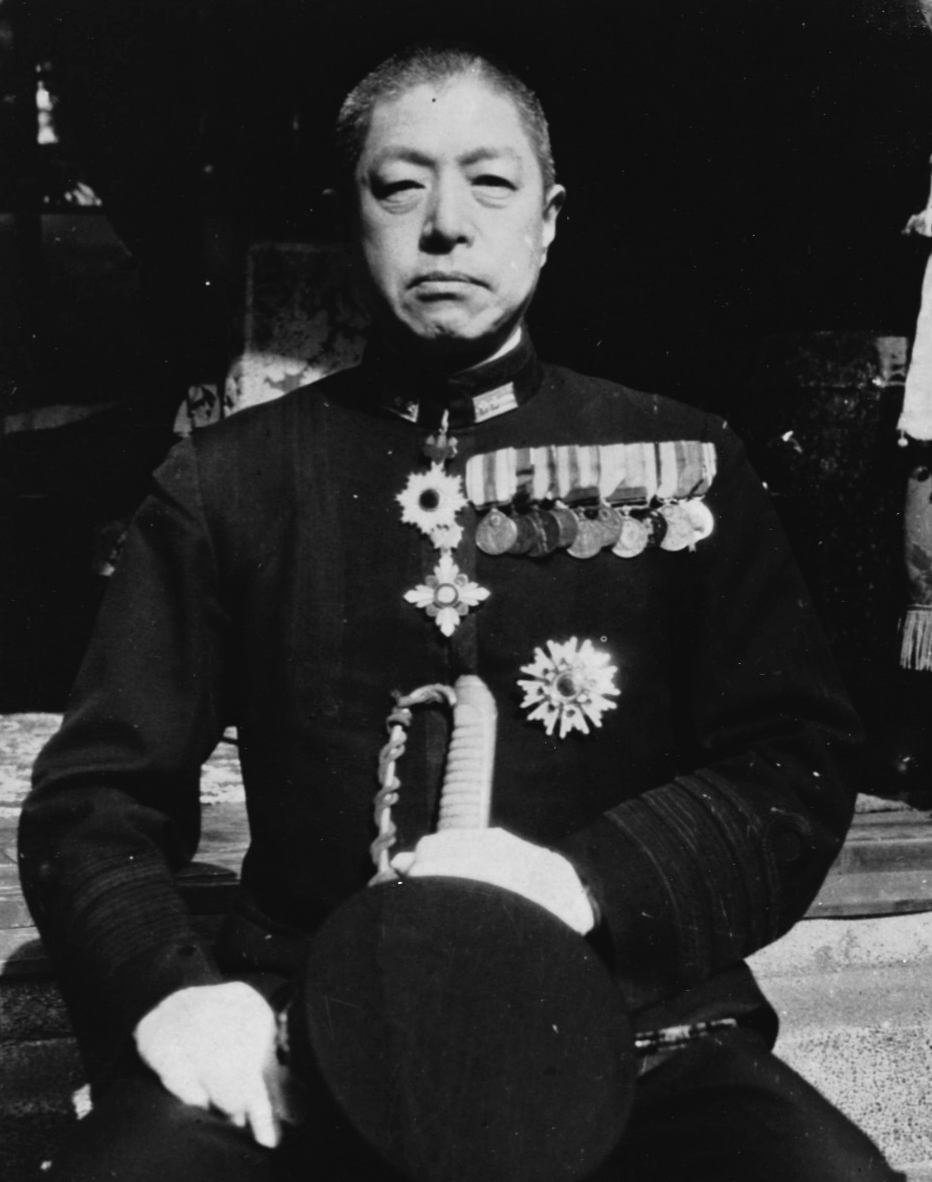
Kiyohide Shima was born in Tokyo Prefecture on 25 February 1890, the son of a naval lieutenant. He attended Tokyo Prefectural First Middle School and then the Imperial Japanese Naval Academy, graduating with the 39th class in 1911, sixty-ninth in a class of 148. Further study took him through the torpedo school and the Naval War College. Communications, rather than the gun, became his trade. He spent long periods teaching it and eventually directed a communications school.
His early work was mostly on staff. He served with the Second Fleet and, in 1925, as naval aide to Prince Takamatsu. Duty on the Naval General Staff and with the Combined Fleet followed. Promoted to captain in November 1933, he served with the naval mission in Manchukuo and afterward headed a section of the General Staff. In December 1936 he received his one seagoing command as a captain, the light cruiser Oi. A year later he returned to the communications school as chief instructor.
Shima became a rear admiral in November 1939 and chief of staff of the Maizuru Naval District. In November 1940 he took the 19th Squadron, a formation of minelayers and minesweepers. On 3 May 1942 that squadron landed troops at Tulagi, in the southern Solomons, at the opening of the operation that led to the Battle of the Coral Sea. American carrier aircraft struck the ships off the island the next day. Later in May the same force turned toward Nauru and Ocean Island. The minelayer Okinoshima was torpedoed by an American submarine, and the landing was called off. Shima left the squadron in the summer of 1942.
In October 1942 he was given Cruiser Division 16, a light-cruiser command. He was promoted to vice admiral on 1 May 1943. That September he was appointed head of the Yokosuka Naval Communications School, a billet that fitted his specialty. On 15 February 1944 he became commander in chief of the Fifth Fleet, the navy's northern command, with its base at Ominato.
When Japan committed the fleet to the Philippines in October 1944, Shima led the Second Striking Force and was sent after Vice Admiral Shoji Nishimura. The two groups were to pass Surigao Strait in succession and enter Leyte Gulf. Shima's ships were the heavy cruisers Nachi and Ashigara, the light cruiser Abukuma, and their destroyers. He followed Nishimura toward Surigao Strait. His flag was in Nachi. He was not her captain. Enpei Kanooka had command of the ship. Takahiko Kiyota, Akira Sone, and Shiro Shibuya served with him in that force.
Nishimura's battleships went up the strait on the night of 24–25 October and met the American battle line. Shima came on later, steering by the gun flashes. A torpedo from an American patrol boat hit Abukuma, and she fell out of formation. In the dark, Nachi loosed torpedoes at two shapes the plotters took for ships. The shapes were islands. Shima then made out burning hulks that he believed were the remains of Nishimura's battleships, and he concluded that a further dash north would only carry his squadron into a trap already laid. He ordered the turn. While the ships were retiring, Nachi collided with the heavy cruiser Mogami, which was coming south already badly hurt. The blow flooded Mogami's steering room. The squadron turned back. Nachi was not sunk that night.
Mogami could not keep station and was sunk by aircraft after daylight. Nachi reached Manila damaged. On 5 November 1944, while she lay under repair in the bay, American carrier planes sank her, and Shima watched from the shore. He went back to the Naval General Staff in February 1945. From May he commanded the Takao Guard District on Formosa and, for about a month together with that post, the First Air Fleet. He left active service on 30 April 1946 and died on 7 November 1973.