Ships
- IJN Suzuya Captain from 15 October 1940
Masatomi Kimura was born in Shizuoka on 6 December 1891, the second son of a lawyer, and was adopted in infancy into his mother's family, whose home was in Tottori. He grew up in Shizuoka, passed through the prefectural middle school, and entered the Naval Academy with the 41st class. He graduated on 9 December 1913, 107th in a class of 118. His cadet cruise in the armored cruiser Asama took him to Honolulu and the American west coast. He was commissioned an ensign on 1 December 1914, served in the old battleship Sagami and the cruiser Suma, finished the standard torpedo and gunnery courses, and in the last year of the First World War was attached to a temporary South Seas defense unit. In the summer of 1918 he joined the battleship Mikasa.
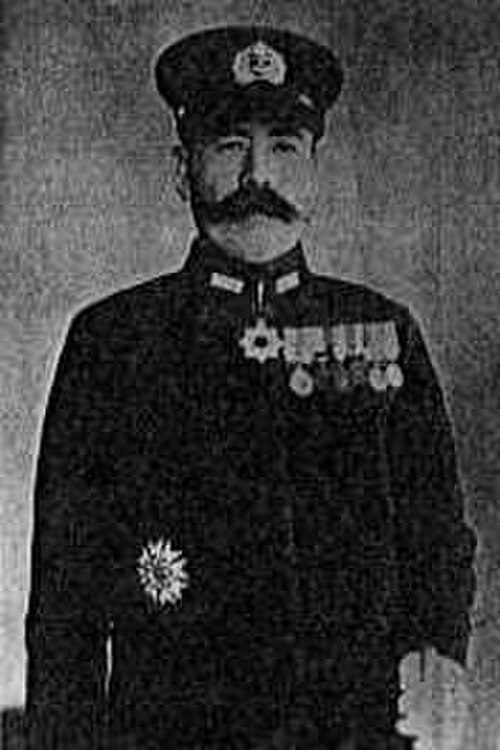
Promotion to lieutenant came in December 1920, and his work from then on was mostly in small ships. He commanded torpedo boats and minesweepers, and in December 1926, as a lieutenant commander, he was given the destroyer Maki. Commands of Asanagi, Oite, Hagi, and Hokaze followed, then the river gunboats Katata and Atami on the China coast, and the destroyer Asagiri. He led Destroyer Divisions 16, 21, and 8, and was made a captain on 1 December 1937 while still in command of the 8th Division. In 1939 he had the auxiliary seaplane tender Kagu Maru and the fleet oiler Shiretoko, and from 5 December that year the light cruiser Jintsu on the south China coast. He never attended the Naval Staff College and never took the advanced course at the Torpedo School. In a service that advanced men by class standing and staff school, he remained a sea officer. Juniors called him Shofuku, from the Chinese reading of his name, and he wore a Kaiser mustache that projected past his cheeks. He stood about six feet one and was remembered as hard to shake.
On 15 October 1940 he became captain of the heavy cruiser Suzuya. In the summer of 1941 the ship took part in the move into southern French Indochina. At the opening of the Pacific War she belonged to Cruiser Division 7 under Takeo Kurita, and Kimura took her through the landings in Malaya and the Dutch East Indies. On the night of 28 February 1942, off Bantam Bay, Suzuya and Kumano lay farther north with the carrier Ryujo, outside the gun action in which Mogami and Mikuma met the cruisers Perth and Houston. In April, during the raid into the Indian Ocean, the division hunted merchant shipping in the Bay of Bengal. When Suzuya stopped Allied freighters, Kimura had the crews take to their boats before the ships were sunk, and he halted his own gunners when they were about to fire on the boats.
At Midway in June 1942 Suzuya was again in Kurita's close support group. The division was ordered toward the island after the Japanese carriers were lost, then recalled. On the withdrawal, the cruisers turned to avoid the submarine Tambor, and Mogami collided with Mikuma. Kumano and Suzuya went on. American carrier aircraft sank Mikuma the next day. Destroyers of the 8th Division took off her survivors, and those men were later embarked in Suzuya. Kimura kept the cruiser through the Guadalcanal campaign. She served with the covering forces at the Eastern Solomons and at Santa Cruz, and on the night of 13–14 November 1942 she and Maya shelled Henderson Field for about half an hour. The field was hit and remained in use. He was promoted rear admiral on 1 November, still in command of Suzuya, and he left her on 24 November. Her last captain was Masao Teraoka, who had the ship when American aircraft sank her off Samar on 25 October 1944.
In February 1943 Kimura took command of the 3rd Destroyer Squadron. His first large task was to escort eight transports carrying the 51st Division from Rabaul toward Lae, on the north coast of New Guinea. On 2–4 March, in the Bismarck Sea, Allied bombers destroyed the convoy. All eight transports and four of the eight destroyers were sunk, including his flagship Shirayuki. Machine-gun fire wounded him in the thigh, the shoulder, and the abdomen. He remained in command while the remnants cleared the area, then was sent back to Japan. The squadron appointment ended on 6 March.
He returned to sea on 8 June 1943 as commander of the 1st Destroyer Squadron, with his flag in the light cruiser Abukuma, and was given the evacuation of Kiska in the Aleutians. Allied ships and aircraft controlled the approaches, and the plan depended on fog. A first sortie in early July closed the island, the fog thinned, and he took the force back to Paramushiro. On 29 July the fog held. The ships entered the harbor, embarked more than 5,000 soldiers and sailors in less than an hour, and reached Paramushiro with the garrison and without the loss of a ship.
He was still commander of the 1st Destroyer Squadron at Leyte Gulf. On 25 October 1944 the squadron formed part of Kiyohide Shima's Second Striking Force in Surigao Strait. A torpedo from the American motor torpedo boat PT-137 struck Abukuma and forced her out of the formation. Kimura moved his flag to the destroyer Kasumi during the withdrawal, and Shima's cruisers did not press the strait. In the first ten days of November he took two reinforcement convoys into Ormoc Bay and put troops ashore on Leyte. One transport was lost on the earlier of those runs. On 20 November he became commander of the 2nd Destroyer Squadron. Late that December he led the heavy cruiser Ashigara, the light cruiser Oyodo, and six destroyers out of Cam Ranh Bay against the American beachhead on Mindoro, again with his flag in Kasumi. On the night of 26 December the force shelled the landing area. Air attack and a torpedo boat crippled the destroyer Kiyoshimo. Kimura kept Kasumi on the scene until survivors from Kiyoshimo had been picked up, then took the rest of the force out.
In 1945 he came ashore. He headed the Anti-Submarine School from 1 June, and from 15 July he was deputy head of the Naval Academy, head of its Hofu branch, and head of the Hofu Naval Communications School, under Kurita, his old division commander. On 1 November 1945 he became the last officer the Imperial Navy promoted to vice admiral, and he entered the reserve on 10 November. After the war he set up a salt-making cooperative with former sailors on part of the old school grounds at Hofu and traveled to sell the salt himself. A government consolidation closed the fields in 1959. Stomach cancer had returned that summer, and he died at Chiba University Hospital on 14 February 1960, at the age of 68.