Ships
- USS Saratoga (CV-3) Captain from 6 March 1946 · Relieved on 2 June 1946
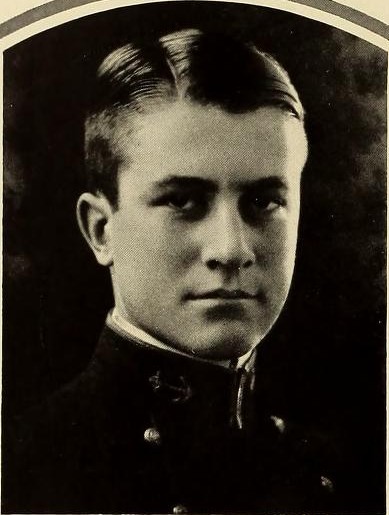
Stanhope Cotton Ring was born on 13 October 1902 in Norfolk, Virginia, the son of James Andrew Ring, a Supply Corps officer who rose to commodore. He entered the Naval Academy at sixteen and graduated in 1923. His first sea duty was in the new battleship Colorado, which he joined during her fitting out and left in January 1925.
He learned to fly at Pensacola and was designated a naval aviator late in 1926. Fighting Squadron Five was his first squadron, operating from the aircraft tender Wright and then from the carrier Lexington. In Washington he served as aide to Rear Admiral William A. Moffett, Chief of the Bureau of Aeronautics, and then as naval aide to President Herbert Hoover. In September 1932 he married Eleanor Reynolds of Coronado, California. Their three children were all born there.
Returning to cockpits, he flew from Langley and worked on dive bombing while the tactic was still being worked out. A fire in his airplane over San Diego burned him badly and left scars on his face. He went back to flying after he recovered. In 1933 he shifted from a fighting squadron to the staff of Commander, Aircraft, Battle Force, embarked in Saratoga. Those fleet problems were among the first in which American carriers worked with the battle line. He also had a short tour in Alaska and another assignment in the Bureau of Aeronautics.
Before the United States entered the war, the Navy sent him to watch British carrier operations. He served in the Royal Navy carrier Ark Royal, studied the combat use of radar, and was slightly wounded when the ship was bombed during an operation toward Malta. Britain later made him an honorary Commander of the Order of the British Empire. In the summer of 1941 he joined the new carrier Hornet as commander of Air Group Eight, with fighters, dive bombers, and torpedo planes, and he led that group through her first months of war.
At Midway his morning launch on 4 June 1942 became a lasting controversy. Ring took the fighters and dive bombers on a westerly course that missed the Japanese carriers. The torpedo squadron left the formation, found the enemy alone, and was almost entirely destroyed. On 6 June, Hornet aircraft joined the attacks that sank the heavy cruiser Mikuma. The Navy awarded Ring the Navy Cross for his leadership of the air group in the battle. He later wrote that the losses shook him. Admiral Chester W. Nimitz came to regard his part in the morning search as unsatisfactory, and Ring continued in demanding aviation assignments afterward.
He remained in the South Pacific on aviation staffs, including duty with Captain Marc A. Mitscher in the fighting around Guadalcanal and the Solomons. As a deputy chief of staff in the Solomons air command, he took part in planning the long-range fighter interception that killed Admiral Isoroku Yamamoto over Bougainville in April 1943, and he received a Navy commendation for that work. From 10 January to 19 December 1944 he was Director of Aviation Training for the Deputy Chief of Naval Operations (Air). The Legion of Merit recognized his work enlarging and tightening the training of naval aviators.
In the spring of 1945 he fitted out the escort carrier Siboney and became her first commanding officer when she commissioned in May. She sailed west in August and reached Japanese waters after the fighting had ended. Ring assumed command of Saratoga on 6 March 1946. He was her last captain and was relieved on 2 June 1946, as the Navy prepared the old carrier for the atomic tests at Bikini Atoll. Moored there as a target, Saratoga sank in the lagoon after the underwater Baker burst on 25 July 1946.
He attended the first class of the National War College and, still a captain, commanded the carrier Boxer. Selected for flag rank in 1949, he commanded the naval operating base and the naval air station at Kwajalein and served as acting military governor of the Marshall Islands. Later flag duty included command of Carrier Division 1 and a tour in Naples as deputy chief of staff to the Allied commander in southern Europe. He retired as a vice admiral and died in San Diego on 25 May 1963.