Ships
- IJN Zuikaku Captain from 5 June 1942
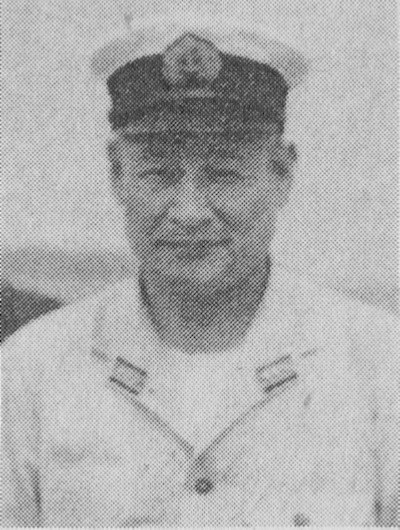
Tameki Nomoto was born on 29 August 1894 and was educated at the Naval Academy. He became a midshipman on 22 November 1916, graduating fifty-sixth in a class of ninety-five, and joined the cruiser Yakumo. The next summer he moved to the battlecruiser Ikoma. By November 1932 he was serving in the heavy cruiser Chokai. On 15 November 1934 he was promoted to commander and assigned to the administration side of the Naval Shipbuilding Command.
His later career turned toward aviation. In September 1937 he joined the Kisarazu Air Group, and as its executive officer he flew in attack aircraft during the bombing of Nanjing. Staff duty with Battleship Division 3 followed in December 1937, and in November 1938 he joined the staff of the Fourth Fleet. Promoted to captain on 15 November 1939, he took command of the 14th Air Group. In 1940 he commanded the seaplane carrier Chitose and then the submarine tender Takasaki. From 15 December 1940 he commanded the light carrier Zuiho, completed from that tender. On 20 September 1941 he became commanding officer of the Tsukuba Air Group, and he was there when the Pacific War began.
On 5 June 1942 Nomoto relieved Ichibei Yokokawa as captain of the fleet carrier Zuikaku. Yokokawa went to the Tsukuba Air Group. The change of command came at Kure while the Battle of Midway was being fought. Zuikaku and her sister Shokaku had been at the Coral Sea in May. Zuikaku had come through that battle without a bomb or torpedo hit, yet her air group had been so reduced that both ships stayed out of the Midway operation. Within days the navy had lost four fleet carriers, and Zuikaku and Shokaku were the large carriers still on hand. Nomoto took the ship from the Inland Sea north to Ominato, where late in June she joined Junyo, Ryujo, and Zuiho in a carrier force gathered for northern operations.
In July Zuikaku returned to Kure for upkeep. On 14 July Carrier Division 5 was broken up, and Zuikaku, Shokaku, and the light carrier Zuiho formed a new Carrier Division 1 in the Third Fleet. In August Nomoto took her south against the American landing on Guadalcanal. At the Battle of the Eastern Solomons her aircraft went out with the strikes on the United States carriers. When an attack formation was still at sea and short of fuel, he closed toward the enemy so Zuikaku could recover the crews, telling those around him that bringing the fliers back was what the name of captain required. The ship remained afloat.
At the Battle of the Santa Cruz Islands on 26 October 1942 he launched three attack waves. Shokaku, fitted with radar, pressed for a quicker fly-off. Zuikaku had no radar, and Nomoto kept a more deliberate pace. The turn into the wind for launching opened a gap on the order of twenty kilometers between the sisters, and the American strike that reached the Japanese carriers fell on Shokaku. With that ship too badly damaged to operate aircraft or act as flagship, direction of the air battle passed for a time to Nomoto in Zuikaku. Masatake Okumiya, a staff officer of the Second Carrier Division who was present, later praised the way he carried that duty as a ship's captain working without a flag staff of his own. Zuikaku again escaped heavy damage. The loss fell on her aircraft and on aircrews that were growing hard to replace.
She stayed among the few Japanese carriers able to keep the sea. In February 1943 her aircraft helped cover the evacuation of Guadalcanal. A plan in May to strike back after the American recovery of Attu was dropped once that island fell. On 20 June 1943 Nomoto left Zuikaku for the staff of the 11th Air Flotilla. Tomozo Kikuchi later held command of the carrier.
On 1 September 1944 Nomoto himself took command of the 11th Air Flotilla, and on 15 October he was promoted to rear admiral. From 15 December 1944 he commanded the 903 Air Group. He retired on 15 September 1945. On 25 October 1944, more than a year after he had left her, Zuikaku sank off Cape Engaño in the Battle of Leyte Gulf while serving as flagship for Jisaburo Ozawa. The captain lost with the ship was Takeo Kaizuka. Nomoto died on 19 December 1987.