Ships
- IJN Zuikaku Captain from 25 September 1941
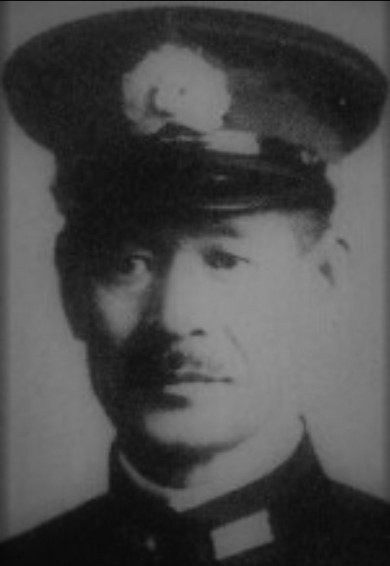
Ichibei Yokokawa was born in Okayama Prefecture on 24 April 1893. He entered the Imperial Japanese Naval Academy on 9 September 1912 with the 43rd class and graduated on 16 December 1915, twentieth of 95. Commissioned a midshipman that day, he made naval gunnery his specialty. As a junior officer he served in the battleship Hyuga, passed through the advanced course at the Gunnery School, and later returned there as an instructor. He was gunnery officer of the light cruiser Yura, the heavy cruiser Furutaka, and the battleship Fuso. He became a lieutenant commander on 1 December 1927 and a commander on 15 November 1933.
The war in China moved him onto fleet staffs. On 25 October 1937 he joined the staff of the Third Fleet, and on 1 December 1937 he was promoted to captain and assigned to the staff of the Combined Fleet. Seagoing command followed. On 1 September 1938 he took the seaplane tender Kamikawa Maru, and on 15 November 1939 he became captain of the fleet carrier Hiryu. A year later, on 15 November 1940, he was ordered to Kobe as chief equipping officer of the new carrier Zuikaku, then completing at the Kawasaki yard. In August 1941, while the unfinished ship was shifting from Kobe toward Kure, a typhoon off Cape Muroto drove water below through a hatch that had been left unsecured.
Zuikaku commissioned on 25 September 1941, and Yokokawa remained aboard as her first commanding officer. She left Kobe the same day and reached Kure the next. Through October she worked up with her sister ship Shokaku around Oita and Saeki. The two carriers formed Carrier Division 5. On 26 November 1941 Zuikaku sailed from Hitokappu Bay in the Kurils with the carrier striking force. On the morning of 7 December, Hawaii time, her fighters, dive bombers, and torpedo bombers attacked American airfields on Oahu, including Wheeler, Kaneohe, and Hickam, and some of her dive bombers went on against ships in Pearl Harbor.
She stayed with the striking force for the opening moves farther south. In January 1942 her aircraft joined the attacks on Rabaul. In April, Carrier Division 5 went into the Indian Ocean. Planes from the Japanese carrier force struck Colombo and Trincomalee and took part in the attacks that sank the British carrier Hermes and the heavy cruisers Cornwall and Dorsetshire. Zuikaku came through those weeks with her hull intact.
In May 1942 she covered the attempt to take Port Moresby and fought in the Battle of the Coral Sea. On 8 May aircraft from Zuikaku and Shokaku struck the American carriers Lexington and Yorktown. Lexington was lost after that attack, and Yorktown was damaged. A rain squall hid Zuikaku from the American strike, and she left the battle with her hull intact. Her air group had been badly reduced. With too few aircraft left for the Midway operation, she returned to Japan. On 5 June 1942, at Kure, Yokokawa turned Zuikaku over to Tameki Nomoto and went ashore to command the Tsukuba Naval Air Group.
On 19 December 1942 he became chief of the third department in the Aeronautics Bureau of the Ministry of Commerce and Industry, a shore appointment that tied the navy to aircraft production. He was promoted to rear admiral on 1 May 1943. On 1 November 1943 he took command of the 26th Special Base Force, and on 25 May 1944 he left that command for duty with the Navy General Staff. He retired on 6 September 1945. Yokokawa died on 7 January 1979.
Zuikaku remained a front-line carrier for more than two years after he left her. Tomozo Kikuchi commanded her in the second half of 1943. She later flew the flag of Jisaburo Ozawa and, on 25 October 1944, was sunk off Cape Engaño in the Battle of Leyte Gulf. Her last captain, Takeo Kaizuka, was lost with the ship. Of the six carriers that had attacked Pearl Harbor, Zuikaku was the last to go.