Ships
- USS North Carolina (BB-55) Captain, 1 June 1942 – 5 December 1942
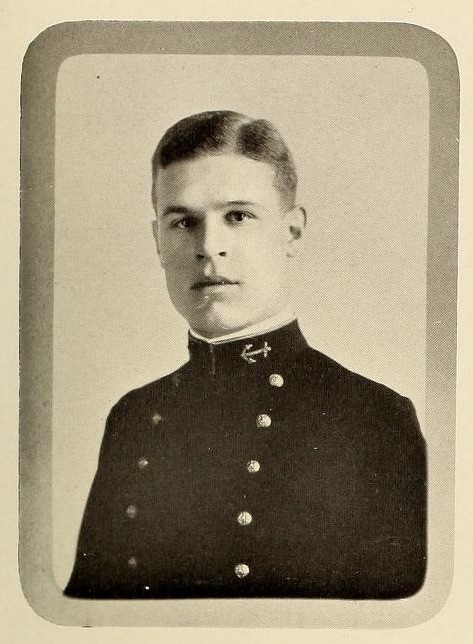
George H. Fort, born George Hudson Fort, came into the world on 23 August 1891 in Lumpkin, Georgia, and graduated from the United States Naval Academy with the Class of 1912. In the First World War he was executive officer of the destroyer Fanning. On 17 November 1917 Fanning, working with the destroyer Nicholson, forced the German submarine U-58 to the surface in the eastern Atlantic. The submarine was sunk and her survivors were taken prisoner. Between the wars he went back to Annapolis and in the 1930s headed the mathematics department at the Naval Academy, and he also commanded the destroyer Borie. He was a captain when the United States entered the Second World War.
On 1 June 1942 Fort relieved Oscar C. Badger as commanding officer of the battleship North Carolina. She was the first of the Navy’s new fast battleships, commissioned at the New York Navy Yard on 9 April 1941 under Olaf M. Hustvedt, and the public attention around her trials had already given her the nickname Showboat. She had shaken down in the Caribbean. In the spring of 1942 she had gone to Argentia with a force posted to meet the German battleship Tirpitz if that ship broke into the North Atlantic convoy routes. Tirpitz remained in Norwegian waters, another battleship took the watch, and North Carolina was ordered to the Pacific under her new captain. Fort took her through the Panama Canal on 10 June 1942 with the carriers Wasp and Long Island and nine destroyers. He told the crew that the hard work of getting to sea on time had been well done, that the antiaircraft battery had already shown its quality against target drones, and that officers and men still new to the ship would need intensive drill before they met a capable enemy.
North Carolina arrived in the South Pacific for the opening offensive of the island campaign. Marines landed on Guadalcanal and Tulagi on 7 August 1942, and Fort’s ship screened Enterprise in the air support force, then stayed with the carrier while the formation guarded the supply line southeast of the Solomons. On 24 August Japanese carrier aircraft struck that force in the Battle of the Eastern Solomons. The attack on the battleship was short and severe. Near misses shook the ship, a strafing pass killed one man, and the gun crews kept their stations and shot down several of the attackers. When the planes left, North Carolina’s hull and main battery were intact. Enterprise was fast enough to open the range, so the battleship’s fire covered the portion of the fight that her station let her reach, and the action was an early demonstration of what a fast battleship could do in defense of a carrier. Fort received the Navy Cross for his leadership of North Carolina that day.
The submarine threat came in the same waters three weeks later. On 15 September 1942 the Japanese submarine I-19 launched a spread of torpedoes into the carrier task force southeast of the Solomons. One torpedo struck North Carolina on the port side forward, tore a large hole in the hull, flooded compartments, and killed five of her men. The ship stayed under command. Damage control checked the flooding, and she drew clear of the area under her own power and went on to Pearl Harbor for repair. Fort remained her commanding officer through that yard period. On 5 December 1942 he turned the battleship over to Wilder D. Baker.
Flag duty filled the rest of his war. As a rear admiral in 1943 he commanded a task group during the capture of eastern New Georgia, and for that service he received the Legion of Merit. From July to October 1944 he commanded a task force before and during the capture of Peleliu and Angaur in the Palau islands. The Navy Distinguished Service Medal recognized his leadership and combat judgment across those months of amphibious operations. He retired from the Navy as a vice admiral.
Fort died on 21 July 1975. His half year in North Carolina carried a new battleship from the Atlantic into the Guadalcanal campaign, through her first great carrier battle, and through a torpedo hit that sent her to the yard with the crew still aboard and the ship still afloat. The commands that followed placed him over landings farther up the Solomon chain and, in 1944, over the naval force that covered the assault on Peleliu and Angaur.