Ships
- USS Fullam (DD-474) Captain, 2 March 1943 – 1 July 1943
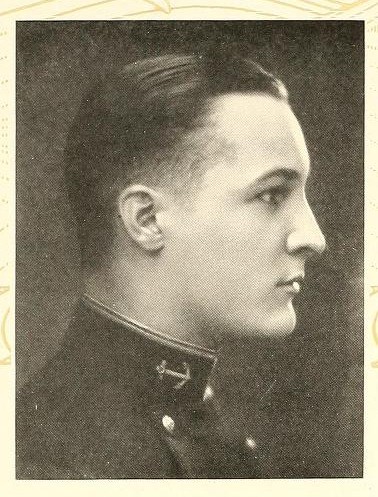
Henry Chesley Daniel (19 October 1903 – 1987) was a United States Navy officer from Philadelphia who graduated from the Naval Academy in 1924 and spent most of the Second World War in destroyers. He signed the destroyer Conyngham's report on the Japanese attack on Pearl Harbor as her commanding officer. He kept that command through the first year of the Pacific war: the Battle of Midway, the Battle of the Santa Cruz Islands, and the bombardments and collision off Guadalcanal in November 1942. In March 1943 he commissioned the new destroyer Fullam at Boston. He then served on the staff of the Commander in Chief, United States Fleet, in Washington, and returned to the Pacific as a captain commanding Destroyer Squadron 52 and Destroyer Division 103 in the Okinawa campaign. He received the Bronze Star for his wartime service in the Pacific. After the war he commanded the heavy cruiser Des Moines, became a rear admiral, held senior posts in naval intelligence, and served as Hydrographer of the Navy. He retired in 1959, was advanced to vice admiral on the retired list, and spent his last years in Birmingham, Alabama. His Academy classmate John Cheshire Daniel, also from Philadelphia, followed a parallel path to the same retired rank, and the two men are easily confused. They are different officers with different careers.
The Navy's registers record that Henry Chesley Daniel was born on 19 October 1903 and that he entered the naval service on 14 June 1920, credited to Pennsylvania. The Naval History and Heritage Command, which holds a small collection of his papers, gives Philadelphia as his birthplace, and his Academy yearbook lists Philadelphia as his home. The sources examined here are silent on almost everything else about his early life: who his parents were, what his father did for a living, whether he had brothers or sisters, and where he went to school before Annapolis. The family that later gave his papers to the Navy kept his personal letters from 1919 to 1941, so a record of those years exists. It has not been published.
Two midshipmen named Daniel came to the Academy from Philadelphia in his class. The other was John Cheshire Daniel, born in November 1899 and so almost four years older. The Lucky Bag printed their biographies on the same page, one after the other, without saying whether they were related, and no source examined here says that they were. The similarity of the middle names, Chesley and Cheshire, makes it easy to mistake one man for the other in later lists.
The 1924 Lucky Bag offers the only character sketch of Henry Daniel written while he was young. His classmates teased him in the yearbook's usual way. They wondered whether his photograph might be "Vaselino," the comedians' parody of Rudolph Valentino, and called him "a heart breaker de luxe." They wrote of his "happy smile some time after he has received one of his little missives of slush," meaning letters from a girl at home. "'Ches,' as he is fondly called by his playmates, takes life very seriously at times," the entry went on, "but when he is encouraged by a feminine giggle he rises to great heights and raves on at endless length on any subject." He ran on the cinder track. The writers joked that he had progressed through his studies by the popular self-improvement formula of the day, "Every day in every way he gets better and better," until he was "now almost savvy." In Academy slang, savvy meant academically able. The entry lists Class Track in his second-class year and the Hop Committee in his last year. The yearbook's own roster of the Hop Committee confirms his place on it. The committee ran the Academy's dances, a social job given to midshipmen whom their classmates liked and trusted with something visible.
He was commissioned ensign on 5 June 1924, the date the registers give for his class. The Navy's archival biography gives 15 June. The 1925 Register shows him assigned to the battleship Arkansas from August 1924. The 1925 Navy Directory then lists him under instruction at the Naval Torpedo Station at Newport, Rhode Island. For the rest of his career the registers credited him with having completed the course in torpedo instruction. That was a practical qualification for a young officer who would spend his best years on destroyers, whose main striking weapon was the torpedo. The Navy's biography also mentions early training in the battleship Maryland.
From 1928 through 1930 the directories list him as a lieutenant (junior grade) in the destroyer King. In 1931 and 1932 he served in the destroyer tender Whitney, a ship whose work was keeping a squadron of destroyers repaired and supplied. From 1932 to 1934 he was at the Naval Academy, and the directories record his promotion to lieutenant during that tour. From 1934 to 1937 he was back in the Maryland, now as a lieutenant in a battleship of the Battle Force. From 1937 to 1939 he worked in the Bureau of Navigation in Washington, the office that handled officers' assignments and records. He became a lieutenant commander on 13 February 1939. In May 1939 he reported to the new light cruiser St. Louis as her gunnery officer. He stayed there until December 1941, by which time she was based at Pearl Harbor.
Seen from outside, his first seventeen years of service were ordinary for a line officer of his generation: battleships, destroyers, a tender, a shore tour as an instructor, a desk in Washington, and then a gunnery department. Each assignment trained him for the kind of command that the coming war would put in his hands, a destroyer working close to bigger ships under air attack. Nothing in the record shows any special distinction before 1941. Nothing shows any trouble either.
Lists of commanding officers date his command of the Conyngham to the first days of December 1941. The ship's veterans' association gives 2 December, and one photographic archive gives 15 December. The Navy's archival biography says simply that he took command "prior to the Japanese attack on Pearl Harbor." The clearest evidence is a document he signed. On 17 December 1941 the Conyngham's report on the raid went to the Commander in Chief, Pacific Fleet, "From: The Commanding Officer," over the signature "HENRY C. DANIEL."
His report describes a ship that could not move. On the morning of 7 December the Conyngham lay moored starboard side to the destroyer tender Whitney at berth X-8, with the destroyers Reid, Tucker, Case, and Selfridge nested outboard of her. She was in routine tender overhaul "with all main engines, boilers and generators disabled," taking her power from the tender. At 0755 a large fire was seen on Ford Island, and the ship went to general quarters. At 0808 her after five-inch guns opened fire in local control, and her machine guns fired at planes flying low past the anti-torpedo net. For more than an hour the nest kept firing at dive bombers, horizontal bombers, and strafing planes, and the report credits several aircraft destroyed by the combined fire of the nest. One crashed near the seaplane tender Curtiss, one in a clump of trees on Aiea Heights, and one in Pearl City. The Conyngham fired 114 rounds of five-inch ammunition and 2,500 rounds of .50-caliber. Her only damage was a bullet that glanced off the fire control platform into a battery box and a small hole in the covering of the rangefinder. No one was hurt. "The conduct of personnel was outstanding," he wrote. The report's last lines are the part most clearly about the captain's work: "Immediately upon commencement of the raid work was begun to recommission the engineering plant with all possible speed. The plant was in commission and the ship got underway at 1714 that date." A destroyer taken apart for overhaul had been put back together under fire and was at sea before dark. The report does not say whether Daniel himself was aboard when the first bombs fell.
The Conyngham patrolled off Pearl Harbor through December. After a short overhaul at Mare Island she spent the first months of 1942 escorting convoys between the West Coast and the New Hebrides. When the Japanese moved against Midway in June, she was taken off convoy work to join the screen of Rear Admiral Raymond Spruance's Task Force 16. The Office of Naval Intelligence's wartime narrative of the battle lists her among the nine destroyers of that force: "Conyngham, Lt. Comdr. Henry C. Daniel." Her job at Midway was the screening destroyer's ordinary one: keeping station around the carriers, watching for submarines, and adding her guns to the anti-aircraft barrage. The surviving accounts single out nothing she did there. She went back to escort duty after the battle.
On 16 October 1942 she sailed from Pearl Harbor with the Enterprise for the South Pacific, where the fight for Guadalcanal was at its height. Ten days later, at the Battle of the Santa Cruz Islands, she was one of eight destroyers screening the Enterprise, the battleship South Dakota, and the cruisers Portland and San Juan. The official narrative of the battle gives one specific glimpse of her during the Japanese air attacks of 26 October, and it is not a flattering one, for her or for the ships around her. At 1120, between the dive-bomber attack and the torpedo-plane attack, the South Dakota, the Conyngham, and the Smith opened fire on what they took to be a submarine surfacing 4,000 yards away. "The target turned out to be a friendly plane which had pancaked on the water and which was actually sunk by these three ships' fire." The destroyer Preston, trying to reach the plane's crew, had to turn hard away to avoid the battleship's shells. A quarter of an hour later the torpedo planes came in. The Enterprise evaded every torpedo, and a burning Japanese plane crashed onto the Smith's forecastle. That was the battle as a destroyer captain lived it: lookouts primed to see periscopes everywhere, minutes to decide, and a target that might be an enemy or a downed American crew. The narrative does not say what happened to the men of the downed plane.
A week later the Conyngham was off Guadalcanal itself. The Dictionary of American Naval Fighting Ships records that on 2 November 1942 she bombarded Kokumbona, the Japanese-held village west of the Marine perimeter, "and while maneuvering in close quarters, collided with another destroyer." The Navy's official chronology of the war, compiled later, describes the accident differently. It says that the Conyngham and the transport Fuller were damaged in a collision in Sealark Channel. The two accounts do not agree on what she struck, and the sources examined here do not settle it. They do agree that the damage was serious enough to send her to Nouméa and then all the way back to Pearl Harbor for repairs. No record of any investigation of the collision, or of its effect on Daniel, has been found. The veterans' association dates the end of his command to 4 December 1942, and a photographic archive gives 31 December. Either way, he left the ship while she was under repair, after almost exactly a year in which she had been under attack at Pearl Harbor, served in two carrier battles, and fought off Guadalcanal. The Navy's biography credits his command with convoy and patrol duty across the Pacific and Southwest Pacific, with planes shot down, and with the Battles of Midway and Santa Cruz and the capture and defense of Guadalcanal.
By the spring of 1943 he was a commander. The 1943 Register lists him in that grade, and an online compilation gives 17 July 1942 as the date of his temporary rank. On 2 March 1943 the new destroyer Fullam was commissioned at the Boston Navy Yard, "Commander H. C. Daniel in command," according to her official history. She was one of the large new Fletcher-class destroyers. For a captain who had just spent a year in combat, the work of a commissioning command was to turn a new ship and a new crew into a fighting unit. The Fullam served briefly as an escort on the East Coast and reached San Diego on 28 June 1943. Compilations date his relief to 1 July, three days later. Her combat record in the Solomons and later belongs to the officers who followed him.
According to the Navy's archival biography, he was ordered from the Fullam to Washington to serve on the staff of the Commander in Chief, United States Fleet, Admiral Ernest J. King's headquarters. The biography gives no details of his work there. The registers record his advancement. The 1944 Register lists him as a captain, with a temporary date of rank of 1 June 1943, while his permanent rank was still lieutenant commander. The Navy's biography puts it differently: "almost two years later he received the rank of Captain." Back-dated ranks were common in wartime, and the two statements can be reconciled if the promotion caught up with him while he was on the staff.
His last wartime command took him back to destroyers, now leading a squadron rather than a single ship. The Navy's biography says that he served "as Commander Destroyer Squadron 52 and also in command of Destroyer Division 103, which participated in the Okinawa campaign." The finding aid for his papers gives the squadron as 42 in one place. The squadron that contained Division 103 was Squadron 52, so that reading is followed here. The squadron was made up of nine large destroyers, Owen, Miller, The Sullivans, Stephen Potter, Tingey, Hickox, Hunt, Lewis Hancock, and Marshall, and it screened the fast carriers. Off Okinawa in the spring of 1945, screening work meant weeks of air alerts and kamikaze attacks, with the destroyers placed between the carriers and the incoming planes. The sources examined here do not give the dates of his squadron command or any particular action under it. He received the Bronze Star for his service in the Pacific. The wording of the citation has not been found.
After the war Captain Daniel served as Director of the Naval Reserve for the Sixth Naval District, with headquarters at Charleston, South Carolina. In July 1948 he became chief of staff and aide to the Commander, Battleships-Cruisers, Pacific Fleet. In September 1949 he took command of the heavy cruiser Des Moines, one of the largest and newest cruisers in the Navy and flagship of the Sixth Fleet in the Mediterranean. He commanded her until October 1950, and the officer who relieved him was Captain Henry Crommelin. Photographs from the period show the Des Moines at anchor in Grand Harbour, Malta, on 18 October 1949. That was the day the British frigate Amethyst arrived there after her escape down the Yangtze. On 3 January 1950 Princess Elizabeth and the Duke of Edinburgh came aboard at Malta to call on the fleet commander, Vice Admiral John J. Ballentine. For the captain of a flagship, such visits were part of the work, alongside gunnery exercises and fleet maneuvers.
From October 1950 he was in Washington as head of collection and dissemination in the Naval Intelligence Division of the Office of the Chief of Naval Operations. That office handled the gathering of intelligence and its distribution to those who needed it, and he took up the job four months after war had broken out in Korea. When he was selected for rear admiral he went back to sea as Commander Destroyer Flotilla Two. Postwar registers give his date of rank as rear admiral as 1 January 1952. In March 1953 he returned to naval intelligence as Deputy Director. On 25 April 1955 he took command of Cruiser Division Four in the Atlantic Fleet. After a year there and a short tour in the Bureau of Naval Personnel, he became Hydrographer of the Navy, on the staff of the Chief of Naval Operations, with command of the Hydrographic Office.
The Hydrographic Office made the charts and sailing directions used by the fleet and by merchant ships around the world. In the late 1950s its work also became part of strategic planning, because the new ballistic-missile submarines needed far more detailed knowledge of the deep ocean than any earlier ships had required. In 1958, the office's 128th year, its branch at Yokosuka described it in a Japanese navigation journal as working "under the direction of Rear Admiral H. C. Daniel, USN, Hydrographer." A history of the Navy's survey ships records that after the Chief of Naval Research released a ten-year program in oceanography on New Year's Day 1958, Rear Admiral Daniel announced that the Hydrographic Office had begun its own Oceanographic Survey Program. Three converted Victory ships, working under the Hydrographer's technical control, carried it out. He had gone to sea in 1924 with a battleship's charts. He ended his career in charge of the office that was mapping the ocean floor for the missile-submarine era.
He retired in April 1959. Lists of officers advanced on retirement give 1 April. He was advanced to vice admiral on the retired list. The law of the time allowed that step for officers who had been specially commended for performance of duty in actual combat, and it was informally called a "tombstone" promotion. His classmate John C. Daniel, who had served at the Korean armistice talks and later commanded the Sixth Naval District, also retired as a vice admiral, which has helped keep the two men confused.
After retirement he lived in Birmingham, Alabama, and he died there in 1987. The sources examined here do not say why he settled in Alabama. They also do not identify a wife or children, give an exact date of death, or name a place of burial. One online compilation gives April 1987 for his death, without citing a source. What survives of him is the record of his commands and the box of papers his family gave to the Navy: newspaper clippings from 1949 to 1984, personal letters from 1919 to 1941, photographs from 1942 to 1959, and estate papers from 1986 to 1988. The box is held in Washington as Collection 470 of the Naval History and Heritage Command. The letters run from the year before he entered the Academy to the year of the attack on Pearl Harbor. Whatever they show of the man behind the official prose, they have not been published.