Ships
- USS Healy (DD-672) Captain from 3 September 1943 · Relieved on 28 January 1945
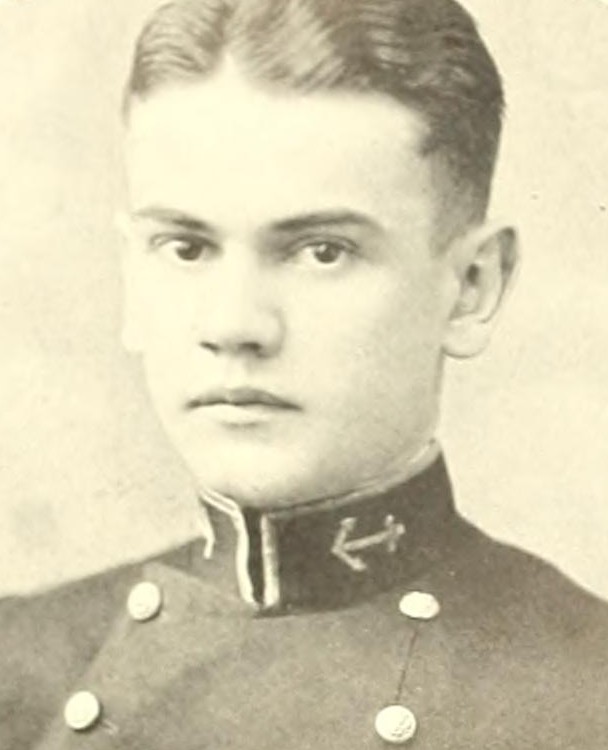
The ship is what identifies him, and the ship history spells his name Atkeson. A 2006 capture of the Dictionary of American Naval Fighting Ships entry for Healy says she was “commissioned at New York Navy Yard 3 September 1943, Comdr. J. C. Atkeson in command.” The NavSource commanding-officer list, credited to Wolfgang Hechler and Ron Reeves, gives the same day to Commander John Conner Atkeson and takes him off her on 28 January 1945. The Navy Cross citation for the captain of Bailey at the Komandorski Islands names Lieutenant Commander John Conner Atkeson, Navy file number 0-61325. The 1927 Lucky Bag indexes him as Atkeson, J. C., of Columbia, Alabama. He is United States Navy.
“Atheson” is a bad reading of Atkeson. One later copy of the Healy history, the HyperWar transcription, actually prints “Comdr. J. C. Atheson,” with a doubled period in front of the rank. The older DANFS text, the citation, the yearbook, and the ship’s own 1955 cruise-book biography of her captain all spell the name Atkeson. The middle name is Conner in the citation, in the East Carolina University finding aid for his oral history, in his son’s obituary, and on the Naval Academy memorial page. Uboat.net prints Connor. The sources that are not that list use Conner, and this essay follows them.
The day, the ship, and the rank he was wearing when he read his orders on her are the part that holds. “Captain” is the job, not the grade. DANFS calls him commander at the commissioning. What that line does not say is that Healy was his third wartime command, that the fight which made his name had already happened six months earlier in the Bering Sea, and that he left Healy at the end of January 1945, before the Iwo Jima bombardment the same ship history goes on to describe. He lived. He retired a rear admiral in 1957. He was buried at Annapolis in January 1989.
Origins
He was born on 11 September 1905. That date is in the ECU finding aid, on the Hall of Valor page attached to the Navy Cross, and on the Naval Academy cemetery memorial. It was not re-read from a Navy Register line; no clean register page for him was in hand for this essay. The place, where the sources agree, is Columbia, in Houston County, Alabama. The 1927 Lucky Bag prints “Columbia, Alabama” under his name. The 1955 cruise book of USS New Jersey, whose optical text is messy but readable on this point, says he graduated from Houston County High School in Columbia and from the Naval Academy with the class of 1927.
The yearbook gives him two nicknames, “Sheik” and “Brute.” The second one stuck at least as far as the cemetery memorial, which styles him Rear Admiral John Conner “Brute” Atkeson. The sketch says the desire to follow his brother’s footsteps, together with a love of the sea, took him to Annapolis, and that before that he had finished the ordinary high-school course in Columbia. It calls him an average boy who tried things for himself. The Academics, in the midshipman’s phrase, “had to tree him” before he would work, and an extra year convinced him that it was better to stay satisfactory. That extra year is the useful fact in a joking paragraph. A man who graduated in 1927 after being turned back a year can have entered in 1922, which is what the ECU finding aid says, or in 1923 with the rest of a four-year class. Both statements can be true of a turned-back midshipman. Neither date was checked against an appointment letter.
The brother is not named in the sketch. A compiled officer list gives an older Clarence Lee Connor Atkeson, born in Columbia in 1899, Naval Academy class of 1922, later a rear admiral. The Find a Grave memorial links the two as brothers and names their parents as Dr. Clarence Lee Crawford Atkeson and Annie May Conner Atkeson. The mother’s surname would explain the middle name. No birth certificate or Academy appointment paper was read for this essay, so the parentage stays at the level of that memorial and of the yearbook’s unnamed brother. What is solid is the hometown, the class, the turned-back year, and the nicknames his classmates chose.
The rest of the sketch is a boy, not a hero. For three years every leave took him straight toward Alabama, with a stop somewhere in Georgia on the way. The last Christmas leave went north, to Philadelphia. Classmates thought he might need a social secretary. He tried to sleep through unsatisfactory marks, carried a caulking mat on the cruises, spent his time keeping the academic departments quiet, and turned up in the swimming tank or on the small-bore range. The closing lines of the sketch are broken in the optical text. What survives of them is that he cared about the traditions of the Service, and that his company expected to be glad to ship with him again. There is no class standing, no athletic letter, and no quote that can be reconstructed cleanly past that.
Formation
The cruise book, published while he commanded New Jersey, is the only continuous account of the peacetime years, and it is a public-relations paragraph, not a register. Read through the broken type, it puts him early on USS Arkansas, on the coal-burning cruiser Denver, on Wyoming, and on Leary. It says he attended the Postgraduate School at the Naval Academy, then served as executive officer of Barry and of Gilmer, then at the Naval Training Station in Norfolk. The ECU finding aid, written from his own interviews of 29 November 1975 and 30 March 1976, says the tapes cover Arkansas and Denver in the late 1920s and Wyoming, Leary, and Barry in the 1930s. The two accounts match in the names of the ships. They do not match in dates fine enough to build a log.
Among the ribbons the cruise book says he wore is the Second Nicaraguan Campaign Medal. That medal is for service in a campaign that ran from 1926 into 1930. It fits a junior officer of the class of 1927 on the ships named above, and it fits the finding aid’s broad statement that he served in the South Atlantic, including Nicaragua, between 1927 and 1939. The finding aid’s date range is too wide to be one cruise. The medal is the part that can be tied to a real campaign. Which ship he was on when he earned it is not said.
The same finding aid says the interviews describe life at Guantánamo in the late 1920s, the effect of the Washington naval treaty on the fleet he joined, the difference between the new “goldplaters” and the old four-stack destroyers, a search connected with Amelia Earhart, and the 1931 Arctic voyage of Sir Hubert Wilkins in the ex-American submarine he renamed Nautilus. The finding aid says Wyoming, with Atkeson aboard, rescued that boat. That is his later account as the library summarized it. It was not checked against Wyoming’s deck log, and it is not repeated here as an established rescue. The finding aid also has him talking about a wreck of Reuben James on the north coast of Cuba, and it puts a question mark on the year 1940. Reuben James was sunk by a U-boat in October 1941. Whatever grounding he remembered, the library’s own question mark stays on it.
By the spring of 1934 he was a husband and a father, if the later obituary is read backward. Thomas Lamkin Atkeson, in the notice published after his death in 2011, is described as born on 19 April 1934 in Norfolk, a son of the late John Conner and Louise Lamkin Atkeson. The cruise book puts Atkeson at the Norfolk training station before the war. The birthplace and the duty station sit in the same city. No marriage date was found. Find a Grave calls her Louise Betty Lamkin Atkeson and gives her the years 1908–2004. Those years were not confirmed by an obituary of her own. What the son’s notice does confirm is her name, and that both parents were dead by August 2011.
No Navy Directory line was re-read for the promotions of the 1930s. Uboat.net prints a neat ladder — ensign 2 June 1927, lieutenant (junior grade) 2 June 1930, lieutenant 1 July 1936, lieutenant commander 1 January 1942, temporary commander 10 September 1942 — and that ladder was not found again on a register page. The ranks used below are the ones attached to him by a ship history or a citation on a stated day: lieutenant commander in the Navy Cross citation for 26 March 1943, commander in the Healy history on 3 September 1943, captain in the New Jersey cruise book for 1953–1955, rear admiral on the retired list in 1957.
The first wartime ship
The compiled lists next give him a command of his own, and they do not quite agree with themselves.
NavSource, again from the Hechler and Reeves compilation, makes Lieutenant Commander John Conner Atkeson commanding officer of the old four-stack destroyer Leary (DD-158) from 15 December 1941 to 11 August 1942, relieving Clifford Ashton Fines and relieved by James Elsworth Kyes. The same compilation makes him commanding officer of the new destroyer Bailey (DD-492) from 4 July 1942 to 3 June 1943. Those two intervals overlap by five weeks. Both dates cannot be the day he was the sole commanding officer of each ship. Uboat.net prints the same pair of dates and the same overlap, which suggests one list copied the other, not two independent logs. The cruise book says only that at the start of the war he reported as commanding officer of Leary, then of Bailey, then of Healy, without days.
Leary was sunk by U-275 north of the Azores on 24 December 1943, under Kyes, with heavy loss of life. Atkeson was not her captain that night if either end-date is even roughly right. No DANFS passage naming him on Leary was in hand, and no convoy number is repeated here. The four-stacker’s Atlantic winter of 1942 is the kind of duty a new lieutenant commander drew in the first year of the war. The record read for this essay will not say which convoys, which U-boats, or what he thought of the work.
Bailey is firmer, because the battle report names him. She was a Benson-class destroyer, commissioned on 11 May 1942 under Lieutenant Commander Franklin Duke Karns, Jr. NavSource’s note says Karns was relieved after running the new ship aground on Cow Island Ledge, Maine, during shakedown on 6 June 1942. The same list puts Atkeson in command on 4 July. If that relief is right, he took over a ship that had already hit a rock in her first month, and he had her for eleven months. The overlap with Leary means the July date or the August date, or both, may be off by the time it took one officer to cross the continent. What is not in doubt is that on 26 March 1943, south of the Komandorski Islands, the man on Bailey’s bridge was Lieutenant Commander John C. Atkeson, and the squadron commander’s flag was flying over his head.
Komandorski
The Navy’s combat narrative of the Aleutians campaign is the account that can be followed hour by hour. It is not a memoir. It was written from the action reports, and where those reports disagree it says so.
By 22 March 1943 Task Group Mike was complete under Rear Admiral Charles H. McMorris: the heavy cruiser Salt Lake City, the light cruiser Richmond, and four destroyers of Destroyer Squadron 14 under Captain Ralph S. Riggs. Bailey was the squadron flagship. Atkeson was her captain. The other destroyers were Coghlan, Dale, and Monaghan. They were west of the Aleutians to catch a Japanese reinforcement of Attu and Kiska. Half of Salt Lake City’s crew, including most of her fire-control men, were at sea for the first time since she had been damaged at Cape Esperance.
At 0730 on 26 March, an hour before sunrise, in a calm sea under a low overcast, Coghlan made radar contact to the north. The group was in scouting line, six miles apart, making fifteen knots. Bailey was still manning dawn stations. McMorris closed what he thought were auxiliaries. The narrative keeps his phrase: he still felt that a Roman holiday was in prospect. Then the auxiliaries turned out to have two heavy cruisers in front of them. The Japanese force, as the narrative sorts the confused counts, was the heavy cruisers Nachi and Maya, the light cruisers Kiso and Tama, four destroyers, and two transports. McMorris’s six ships were on the wrong side of that formation from their own bases. He tried for the transports anyway. At 0840 the Japanese heavies opened on Richmond at about 20,000 yards. The second salvo straddled her.
Bailey and Coghlan, in the van, opened on the enemy heavies as the American column swung away, Bailey at 15,000 yards, then shifted to a light cruiser. They were out of range within minutes. For the next two hours the battle was a long-range gunfight the Americans were trying not to lose. Salt Lake City did most of the shooting and took most of the reply. The destroyers made smoke, chased splashes, and fired when a light cruiser worked around the screen. Bailey’s gyro went out around 1050, probably from the shock of near misses, and came back about twenty minutes later. Atkeson’s part in that middle of the morning was the unglamorous one the citation later remembered first: smoke, guns, and not being hit while the heavy cruiser behind him was being walked on by eight-inch salvos.
Just after 1125 Salt Lake City’s after engine room flooded and her speed fell. A few minutes later her fires went out on water-contaminated oil. At 1155 she was dead in the water, about 19,000 yards from two Japanese heavy cruisers, flying a speed-zero signal through which, the narrative says, an eight-inch shell passed. McMorris ordered Riggs to make a torpedo attack. Riggs sent Bailey, Coghlan, and Monaghan. Dale stayed with the cruiser. Bailey led.
The narrative’s picture of the next ten minutes is the one that matters for the man. The three destroyers swung to a firing course of 300 degrees. The Japanese checked fire on the stopped cruiser and put it on them. Bailey took the leading heavy cruiser with her forward guns at three-second intervals. From Richmond, McMorris watched them “smothered with splashes.” “It was incredible that they should survive,” the narrative quotes him, “but they continued in.” At 1203 Bailey was hit. An eight-inch shell exploded in the galley passageway. The men it killed and wounded were a repair party that had gathered outside the galley to carry sandwiches up to the guns. One officer and three enlisted men died at once. Four enlisted men were badly wounded, and one of those died later. Another officer and two enlisted men were hurt less seriously. A second eight-inch shell did not explode. It gouged the after deck, glanced off number-four mount, and went on. Near misses holed the gig, cut an antenna, and buckled the shell plating at the waterline.
Riggs, on Atkeson’s bridge, told him to fire. The squadron commander’s stated reason was that the next shell might leave the leading destroyer unable to fire at all. At 1204 Bailey launched five torpedoes at the second heavy cruiser, range about 9,500 yards. The combat narrative says they appeared to run hot and straight. A few minutes later men on Bailey reported a black column, like oil and debris, abreast the target’s mainmast. Dale reported a huge explosion astern of the enemy with no ship near it. The narrative does not convert those sightings into a confirmed hit. A footnote records that one of Monaghan’s observers thought one torpedo detonated after running only about a thousand yards.
The Navy Cross citation, issued over Commander North Pacific Force serial 0284 of 1 May 1943, is less cautious. It says he closed to less than ten thousand yards before firing, and that one torpedo hit an enemy cruiser. The Navy Unit Commendation later signed for the ship by James Forrestal says she closed to within 9,000 yards, launched five torpedoes, and “succeeded in damaging one heavy cruiser.” The citation and the commendation are the Navy’s official credit. The combat narrative, written closer to the reports, leaves the explosion unproved. This essay does not promote the claim into a fact the narrative would not sign.
What Atkeson did next is in the same narrative and is not a matter of credit. He put the wheel hard left and started back. Within seconds two more fragments came aboard, one into the forward fireroom, one into the forward engine room in a place the repair parties could barely reach. Water came in faster than the pumps. High speed blew men off their feet. The main circulating pump was kept running until the bearings sparked and the ship shook. Steam lines whipped. At 1207 the forward engine room was abandoned. She was still making twenty-five knots at 1209, on one engine. Then the after engine room filled with steam. At 1230 she stopped dead while they shifted to emergency feed. Four minutes later she was moving again, at fifteen knots. The after main switchboard, soaked, shorted. All electric power went out. Steering went to hand. The guns went to local control. Coghlan came back to take her in tow and found she could steam. Coghlan stayed close and passed her messages, because Bailey had no power to pass them herself.
The Japanese had broken off to the west. Whether they had already begun to leave before the destroyers attacked is a point the narrative argues and does not settle. McMorris would not let Riggs trail them with two destroyers. The cripples — Salt Lake City listing and slow, Bailey on one engine, Monaghan with a noisy reduction gear — retired east. Bailey jettisoned her starboard depth charges, set on safe, to ease a list. One of them exploded anyway. Army bombers arrived too late and too short of fuel to hit the transports. Richmond, Bailey, and Dale entered Kuluk Bay at Adak about 0200 on 28 March.
The citation’s summary is fair to the handling even where it overclaims the torpedo. Three and a half hours. Smoke, guns, and a ship that was hit and not stopped. Further hits on the way out. Damage localized. The ship back with her force. The action, the citation says, was “an important factor in bringing about our success over an enemy twice as strong.” Forrestal’s letter says the same thing in the ship’s name: the only destroyer to release her torpedoes, she turned a stronger force at the moment the only American heavy cruiser was stopped. Every man aboard Bailey on 26 March 1943 was authorized to wear the Navy Unit Commendation. The cruise book later calls that award a “Navy Unit Citation.” The wording on the paper is Commendation.
Five of his men were dead, killed in a passageway because they were carrying food to the gun crews when the shell arrived. The narrative does not give their names. It does not give Atkeson’s words. It does record that he took the ship in at the head of the column, fired when his squadron commander told him the next hit might end the chance, and then kept a half-flooded destroyer alive for the two days back to Adak. He left Bailey on 3 June 1943, if the compiled list is right, about two months after the battle. Malcolm Townsend Munger relieved him. Nothing read here says whether the relief was routine rotation, exhaustion, or orders to a new ship. The next dated command is Healy, three months later.
Healy
Healy was a Fletcher, built at Kearny, launched on 4 July 1943, and commissioned at the New York Navy Yard on 3 September 1943. The sponsor was the widow of Commander Howard R. Healy, the Lexington damage-control officer killed at Coral Sea. Atkeson took her from the yard. DANFS, in the 2006 text, calls him commander. The surname on the list is the bad reading.
The ship history for the next sixteen months is the skeleton of his war, and it has one date that cannot be true. It has Healy arriving at Eniwetok on 9 July 1944 and then “getting underway again 17 June.” June does not come after July. The strikes that follow — Guam, the Palaus on 25 July, the Bonins on 4–5 August, Eniwetok again on 11 August — fit a departure in July, not June. The impossible day is left as a printer’s error. The rest of the sequence is what the ship did while the compiled lists still have him in command, which is through 28 January 1945. Iwo Jima, the voyage home in the spring, and the return for the surrender belong to the next captain. They are not his.
She shook down off Bermuda and was back in New York on 31 October 1943. A week of coastal patrol began on 10 November. She met a convoy at sea and entered Norfolk on 18 November. Two days later she left for the Pacific, passed the canal, reached San Francisco on 4 December and Pearl Harbor on 11 December, and spent the rest of the year in Hawaiian waters with Yorktown and the ships that became Marc Mitscher’s Task Force 58. A man who had fought a cruiser action in a destroyer with no air cover was now learning to live in the screen of a fast carrier.
From 16 January 1944 she screened Enterprise and Yorktown into the Marshalls, including the strikes on Kwajalein, until she was detached on 1 February to take the damaged battleships Washington and Indiana to Majuro. She was back with the carriers on 4 February. On 12 February the group left Majuro for Truk. The raids of 17–18 February wrecked that anchorage as a fleet base. The same ships went on to the Marianas, beat off air attacks on 22 February, and struck Saipan, Tinian, and Guam. After Espiritu Santo they hit the Palaus on 30 March, Yap and Ulithi the next day, Woleai on 1 April, and were at Majuro on 6 April. On 14 April he took her out again to screen Enterprise for the strikes that covered the landings at Tanahmerah Bay in New Guinea, then for another raid on Truk at the end of April. Majuro again on 4 May.
The Marianas invasion began with her departure from Majuro on 6 June. She screened the carriers through the preparatory strikes of 11–15 June and the landings on Saipan. On 17 June the carriers moved out to meet the Japanese fleet. On 19 June, in the battle later called the Great Marianas Turkey Shoot, four Japanese air raids came at the formation. Fighter cover and the screen’s gunfire broke them up. Healy’s own gunners are not given a score that day in the ship history. On 21 June she helped pick pilots out of the water. She was at Eniwetok on 9 July. The summer and early autumn, once the bad “17 June” is set aside, are more of the same work: Guam, the Palaus, the Bonins, then from 28 August a run through the Bonins, the Palaus, and the Philippines until 17 September, when she was detached to support the Peleliu landing. Manus on 21 September. Then Ulithi, and the big force — DANFS says seventeen carriers — that struck Okinawa on 10 October and Formosa beginning 12 October.
Formosa is the first place the ship history gives Healy a kill of her own. Japanese land-based planes struck back hard. Canberra and Houston were hit. Healy shot down one bomber and helped shoot down others, and she helped cover the damaged cruisers as they retired. The finding aid says that in 1975 and 1976 he talked about kamikaze attacks. October 1944 is early for the later, formal kamikaze campaign, but it is the season in which a screening destroyer off Formosa and Luzon lived under repeated land-based air attack. DANFS says that through the Philippine strikes from 5 November to 2 December she splashed several more of the planes that came at the carriers. No award citation for those guns was found. The cruise book’s Bronze Star with Combat “V” and its three commendation ribbons may belong to this cruise, or to Komandorski, or to both. The only citation text located is the Navy Cross. Hall of Valor’s page for him lists that cross and nothing else. The other medals are what his battleship’s cruise book said he was entitled to wear in 1955. They are not documented here beyond that sentence.
On 24 October 1944 Healy was with Rear Admiral Frederick C. Sherman’s Task Group 38.3 off Luzon when the Japanese fleet came out for Leyte Gulf. Land-based planes attacked the group that morning. The group’s aircraft went west into the Sibuyan Sea and, with other American strikes, sank Musashi and damaged Kurita’s other heavy ships. Healy did not fight in Surigao Strait, and she was not off Samar. The finding aid says he discussed the Philippines and “other skirmishes in the Surigao Straits,” with the library itself unsure whether he meant August or September 1944. The ship history puts his destroyer with the carriers that ran north. While Oldendorf crossed the T in the strait and the escort carriers off Samar fought Kurita, Halsey took the fast carriers, Healy in the screen, up against Ozawa. On 25 October the strikes sank four Japanese carriers. A damaged destroyer was sunk later by gunfire. That is the battle he was in. If he talked afterward about Surigao, he was talking about a fight his own ship did not fight.
She was back at Ulithi on 30 October, out again in two days, and at sea through the November strikes on Luzon and Manila Bay. After Ulithi she was off Luzon again on 14–16 December. Then came the typhoon. DANFS says Healy rode out the storm that sank Hull, Monaghan, and Spence, searched for their survivors, and returned to Ulithi with the carrier group on 24 December. The finding aid dates his comments on Halsey’s decision to take a task force through a typhoon to 1943. The typhoon that killed those three destroyers was December 1944, and the lists still have him in Healy. The library’s year is the part that does not fit. What he thought of Halsey is in the tapes at Greenville, which were not heard for this essay. What the ship history gives is that his ship stayed afloat and then searched.
On 30 December he took her out again. Formosa and Luzon until 8 January 1945, then into the South China Sea: Cam Ranh Bay, Saigon, Hong Kong, Hainan, and back out on 21 January, the ship history claiming more than 130,000 tons of shipping sunk by the force and many aircraft destroyed. Those are the task force’s figures, not Healy’s. She was a screen. The compiled list has David Barney Cohen relieving Atkeson on 28 January 1945, which would put the relief at Ulithi in the pause before Iwo Jima, not off the island. If that date is right, the February bombardment, the March patrol with the battleships, the spring overhaul, and the surrender voyage were Cohen’s. DANFS never says when Atkeson left. The 28 January date is a compilation, the same compilation that overlaps his first two commands, and it is the only end-date on offer. It is used here as a boundary, not as a log entry.
Sixteen months in Healy, on this reading, were the long second half of his war: a new ship, a carrier screen, one bomber claimed off Formosa, pilots in the water after the Turkey Shoot, the northward run at Leyte, a typhoon, a search for men from three destroyers that did not come through it, and a raid into the South China Sea. No deck log was read. No letter home was found. The oral history, an hour and a half on three cassettes and seventy-five transcribed pages, plus two autobiographical manuscripts he gave the library, is where he put the command decisions. Those pages were not read. The finding aid is the only window, and it is a librarian’s list of topics, not his voice.
After Healy
The cruise book says that after Healy he commanded Destroyer Division 20 in the Pacific, and that when the war ended he went to Norfolk as senior member of a sub-board of the Board of Inspection and Survey, then chief staff officer to Commander Destroyer Flotilla 2, then commander of Destroyer Squadron 16 in the Mediterranean and the Atlantic. The ECU finding aid adds Benner and English to the ships he discussed for the 1940s, and New Jersey for the 1950s. It does not say he commanded Benner or English. A division commander lives in one of his destroyers. Those two names may be that, and they may be something else. They are not written here as commands.
The same finding aid says that after the war he served in the Mediterranean and then as head of the Navy’s division of the Military Advisory Group, and that he retired as a rear admiral in 1957. It does not date the advisory-group job. The cruise book, which has to be right about the dates of his own command or the book is misprinted, says he commanded New Jersey from 24 October 1953 to 18 March 1955, and that just before that he had been in the Office of the Chief of Naval Operations. A battleship command in 1953–55 and a stated retirement in 1957 leave about two years at the end of his career that the cruise book, printed while he was still in New Jersey, does not cover. The advisory group may sit there. It may sit earlier. The finding aid’s order is “Mediterranean and then” the advisory group, which does not by itself make room for the battleship. The conflict is noted below. Neither source is a register.
What the cruise book does establish is the shape of the last seagoing job. He was a captain, a 1927 man, brought from a Washington desk to a battleship that had already fought her war and was back in commission for the Cold War. The book lists his decorations as the Navy Cross, the Bronze Star with Combat “V,” three commendation ribbons, and the campaign medals: American Defense, American, European-African-Middle Eastern, Second Nicaraguan, Asiatic-Pacific, Philippine Liberation, and World War II Victory. The optical text jams the words “with Combat” against the American Defense medal, so the “V” devices on the commendation ribbons are not perfectly readable. The Navy Cross is. The unit commendation for Bailey is not in that sentence under its proper name.
He retired in 1957. The finding aid says rear admiral. The cemetery inscription, as transcribed on the memorial, is “Rear Admiral US Navy.” Uboat.net dates the retirement 1 July 1957 and calls the rank rear admiral on the retired list. That day was not checked in a register. The year is the part two independent descriptions share.
What he left
The son’s obituary is the family record that does not depend on a memorial page. Thomas Lamkin Atkeson died on 22 August 2011 in Monterey, Virginia, aged seventy-seven. He had graduated from the Virginia Military Institute in 1957, the year his father retired, with a civil-engineering degree, and he served as an Army officer from 1957 to 1978: field artillery, the 82nd Airborne, Special Forces, and a liaison tour with the Air Force. He retired as a major, then worked as a civil engineer. He married Joan Marie Dorf on 3 April 1958. A daughter, Katherine Louise Atkeson, died before he did. A son, John A. “Pete” Atkeson, survived him.
Thomas’s notice also names his siblings, alive in 2011: a brother, John C. Atkeson Jr., and his wife Nanci, of Clayton, North Carolina, and a sister, Betty A. Salley, and her husband George C., of Hartfield. The “Sr.” on the oral-history title is therefore not a courtesy. There was a son with the same name. Three children are accounted for. No birth dates for John junior or for Betty were found, and nothing was found about what the Navy life cost them beyond the geography of a 1934 birth in Norfolk and a father who was at sea for most of 1942 through early 1945.
He died on 5 January 1989, if the Hall of Valor date and the cemetery memorial are right. Both say that day. The memorial says Norfolk. The ECU collection contains “Remarks at the Funeral of Rear Admiral John Conner Atkeson, Sr.,” dated 10 January 1989, and a funeral program of the same day. A funeral on the 10th fits a death on the 5th. It does not fit uboat.net’s date of 17 January 1989, which falls after the funeral papers and is rejected here. He was buried in the Naval Academy Cemetery, Section 1, Site 100. The remarks and the program were not read. Whatever was said over him in Annapolis is in those two pages at Greenville, not in this essay.
The tapes are the afterlife he chose. In 1975 and 1976, retired almost twenty years, he sat down with Donald R. Lennon and talked for an hour and a half, and he left twenty-nine pages of autobiographical writing with the first interview and forty-six with the second. He talked about the treaty navy he had joined, about Guantánamo, about four-stackers and goldplaters, about Komandorski, about the Philippines, about kamikazes, about fueling at sea, and about Halsey and a typhoon. He gave the library the recordings. That is as close as the public record comes to a statement of what he thought the war had been. The words themselves were not consulted.
There is no quotation of his, outside the yearbook’s paraphrase and the quotations other officers’ reports preserved in the combat narrative, that this essay is willing to print. There is no letter to Louise. There is the bridge at 1204 on 26 March 1943, the five torpedoes, the galley passageway, the engine room abandoned, the four minutes dead in the water on the way home, and then sixteen months of carrier screening in which the ship history almost never needs his name again because the work of a screen commander is to be in the right place when the planes come. He stayed in the Navy twelve years after the war, commanded a battleship, and retired a rear admiral. The men who died carrying sandwiches did not get that.