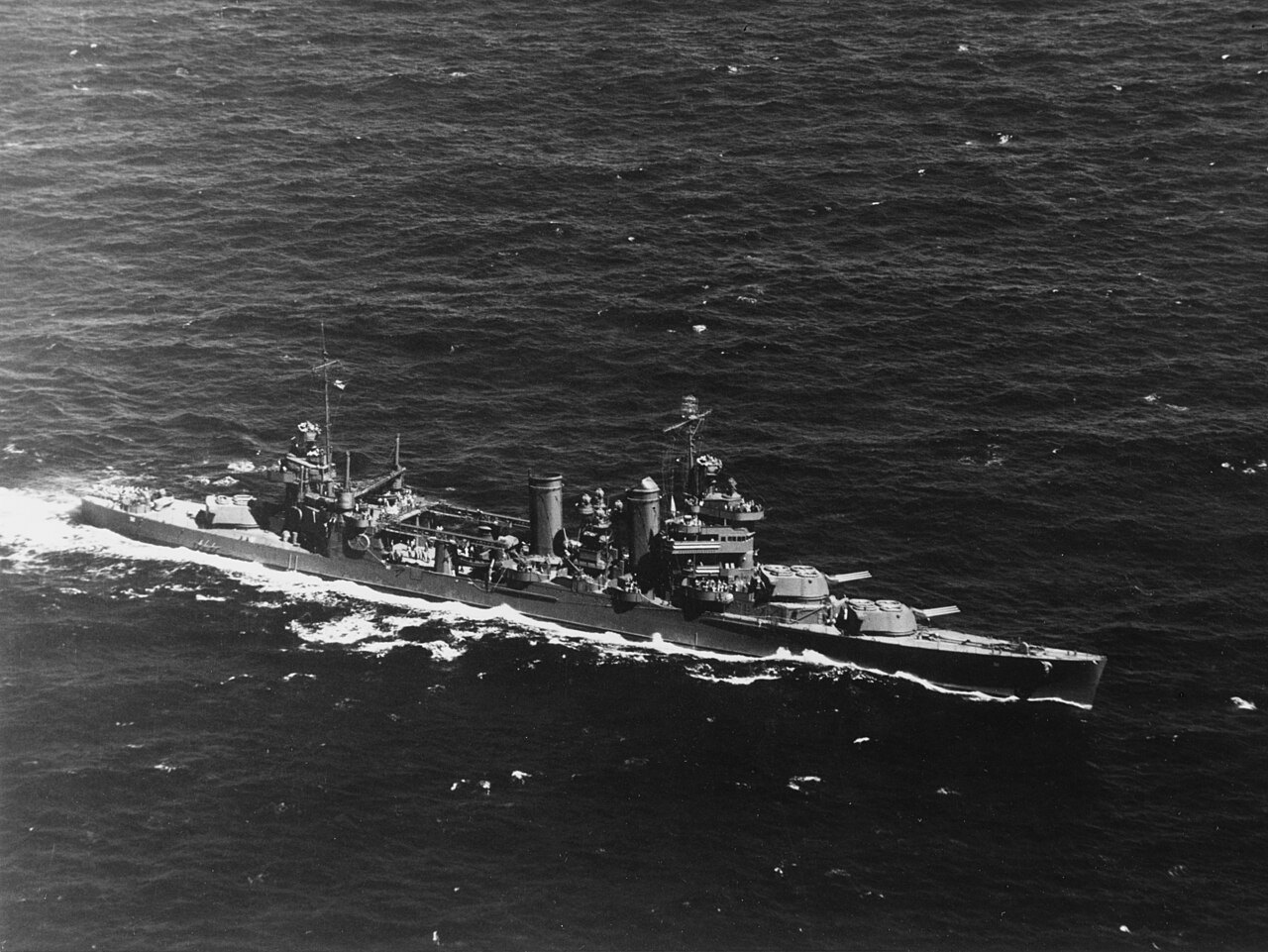
USS New Orleans (CA-32) gave her name to the class. The New York Navy Yard laid her down on 14 March 1931 as a light cruiser, CL-32. The treaty still cared what a hull was called. On 1 July 1931, with the ship still on the ways, the class was reclassified and she became CA-32. She was launched on 12 April 1933 and commissioned on 15 February 1934, Captain Allen B. Reed in command. Nine 8-inch guns, and a belt and a deck the earlier American treaty cruisers had not been given.
The magazines sat deep, where a shell would have a hard time reaching them. A torpedo would not. Seven ships were built. Minneapolis and San Francisco were among them.
At the Coral Sea she was in the cruiser screen with Minneapolis, Astoria, Portland, and Chester. She was not sunk. When Lexington was abandoned and burning, New Orleans stood by. Her men and her boats saved 580 of the carrier's crew and landed them at Noumea.
At Midway she screened Enterprise and Hornet, with Minneapolis. Portland was with Yorktown. New Orleans was not hit.
On the night of 30 November 1942 she was second in Rear Admiral Carleton H. Wright's line, astern of Minneapolis, off Tassafaronga. Tanaka's eight destroyers were on a supply run, Takanami out ahead of them and Tanaka's flag in Naganami. American gunfire sank Takanami. That sinking is not credited to New Orleans, or to any one cruiser.
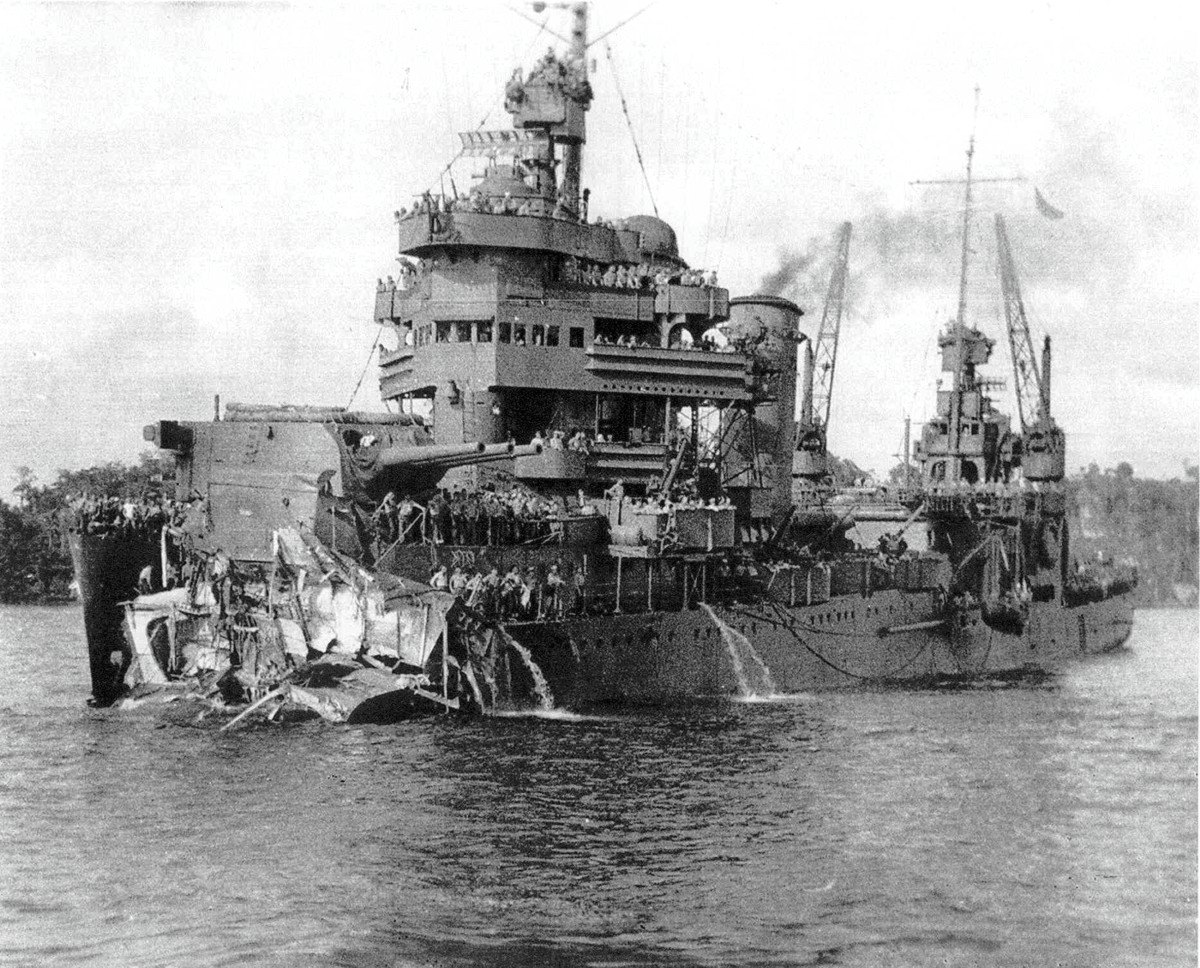
Then the torpedoes came in. They are not pinned to one destroyer. Minneapolis was hit. New Orleans sheered out so she would not run into the flagship, and a torpedo met her on the way across. It took the bow off ahead of the second turret. The forward magazines went with it. The severed bow swung back down the port side and punched more holes as it passed. The ship that fired is not known. The same attack blew Minneapolis's bow in, hit Pensacola, and sank Northampton. Honolulu was not hit.
More than 180 of her men were killed, most of them forward, where the blast and the flash fire took everyone in the first turret and the handling rooms. Lieutenant Commander Hubert M. Hayter, the damage-control officer, stayed below with Lieutenant Richard A. Haines and Ensign Andrew L. Forman while the compartments filled with fumes. They did not come out. The three were awarded the Navy Cross.
Near daybreak on 1 December she came into Tulagi under her own power, making about two knots, the bow gone and the forward end still burning. The crew hid her with foliage and built a temporary bow out of coconut logs. Eleven days later she left for Sydney, and from there she went to Puget Sound, where a new bow was built on. She went back to the war.
She was decommissioned on 10 February 1947 and sold for scrap on 22 September 1959.