Ships
- USS Saratoga (CV-3) Captain from 5 September 1930 · Relieved on 1 June 1932
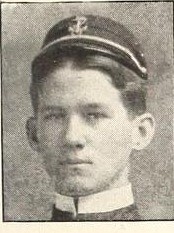
Frank Robert McCrary was born on 1 October 1879 in Lonoke, Arkansas. He entered the United States Naval Academy in September 1897. In the summer of 1898, while still a naval cadet, he went to the Philippines during the Spanish-American War, then returned to Annapolis and graduated in 1901. His early work was with torpedoes. He led a torpedo flotilla and, in 1913, was chief torpedo officer on the staff of the Atlantic Fleet.
In 1915 the Navy sent him to the Goodyear plant in Akron, Ohio, for lighter-than-air training. He became the first naval officer qualified to pilot a free balloon and an airship, and he helped write the requirements for the service's first dirigible. That craft, the DN-1, was built by the Connecticut Aircraft Company and reached Pensacola late in 1916. McCrary, then a lieutenant commander and executive officer of the air station, tested her in early 1917. The trials failed, and the airship was deflated and broken up. He also qualified in seaplanes and received the designation Naval Aviator No. 91.
During the First World War he commanded the United States naval aviation detachment in Ireland and oversaw the Navy's air stations there. He was awarded the Navy Cross for distinguished service in that command. In Dublin he married Mary Davison, a chief yeoman. They later had two sons and a daughter.
After the war he commanded Naval Air Station San Diego, on North Island. On 10 October 1923 he became the first commanding officer of the rigid airship Shenandoah at her commissioning at Lakehurst, New Jersey, and he had the Lakehurst station as well. Lieutenant Commander Zachary Lansdowne relieved him in February 1924. Lansdowne still had Shenandoah when she broke up in a thunderstorm over Ohio on 3 September 1925. McCrary next commanded Langley, the Navy's first aircraft carrier, from 10 June 1926 to 4 January 1927, when John Henry Towers relieved him. Kenneth Whiting had commissioned Langley in 1922. McCrary returned to North Island on 12 September 1927 and remained until the late summer of 1930.
He relieved Frederick Joseph Horne as captain of Saratoga on 5 September 1930. For twenty-one months the carrier worked from the California coast and went out for the annual fleet problems. In the spring of 1931, during Fleet Problem XII, Saratoga operated in the Caribbean with cruisers and a large air group, opposite Lexington. In February 1932 the fleet was in Hawaiian waters. On Sunday morning, 7 February, Rear Admiral Harry Ervin Yarnell, who had been Saratoga's first commanding officer in 1927, launched a dawn strike from Saratoga and Lexington against Pearl Harbor. The attackers used the weather for cover, caught the defenses by surprise, and were scored by the umpires as having hit the airfields and the ships in the harbor. The maneuvers then moved to the Pacific coast. In March the umpires ruled Saratoga eliminated after air attacks and a night attack by destroyers, a result that belonged to the war game. McCrary was relieved on 1 June 1932 by Commander Archibald Hugh Douglas, who had the ship in temporary command until Captain George Washington Steele, Jr. took her on 11 July 1932.
From Saratoga he went to the Naval War College. From June 1933 to May 1934 he commanded the naval air training detachment at Pensacola, and he then served in the Bureau of Aeronautics until he retired as a captain on 30 June 1936. In Coronado he was president of the school board and of the Rotary club. The Navy recalled him on 1 November 1940 as the first commanding officer of Naval Air Station Alameda, and he led that new station on San Francisco Bay as it grew into a major wartime air base. He received a commendation for his service in the Second World War. McCrary died on 1 June 1952 at Oak Knoll Naval Hospital in Oakland and was buried at Fort Rosecrans National Cemetery in San Diego.