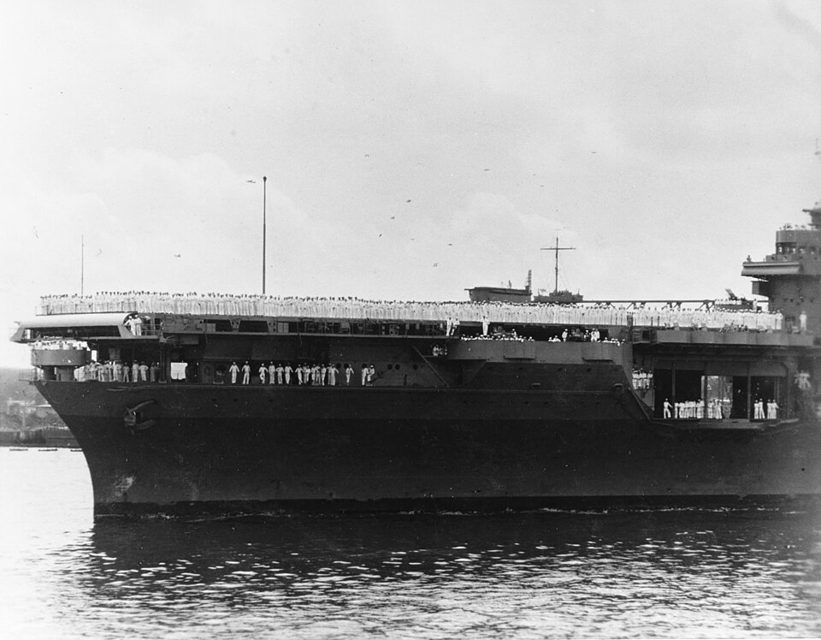
USS Yorktown (CV-5) was the name ship of her class, and the first of the three to go. Newport News laid her down on 21 May 1934, launched her on 4 April 1936, and commissioned her on 30 September 1937. She was a treaty carrier, fast and lightly built, with a wooden flight deck over a hull held near 20,000 tons. Rear Admiral Frank Jack Fletcher flew his flag in her at the Coral Sea and at Midway. Captain Elliott Buckmaster had the ship.
On 7 May 1942 planes from Yorktown and from Lexington sank the light carrier Shoho. No one ship is credited with that sinking. The next morning the fleet carriers found each other. One bomb hit Yorktown and went down through the flight deck. Sixty-six men were killed or badly hurt. She was not sunk. Lexington was the carrier wrecked that day. Fires and a gasoline explosion finished her. After the crew left, the destroyer Phelps scuttled the hulk. American aircraft wrecked Shokaku's flight deck. Zuikaku was not hit, but her air group was used up, so neither of those two carriers was at Midway.
The damage was the kind of work a yard measures in months. She reached Pearl Harbor on 27 May. On 29 May she was in dry dock. She sailed the next morning.
At Midway, on 4 June, she was the carrier the Japanese found. Hiryu's dive bombers and torpedo planes left her dead in the water. Those aircraft were Hiryu's. They were not from Enterprise and not from Hornet. Her own planes were in the morning attack. American carrier aircraft wrecked Akagi, Kaga, and Soryu. That credit is not hers alone, and it is not Enterprise's alone. Buckmaster ordered the crew off. She did not sink. Through the night she stayed afloat. On 6 June a salvage party went back aboard. The destroyer Hammann came alongside and gave her power and pumps.
That afternoon the submarine I-168 got through the screen. One torpedo broke Hammann in half. She sank at once, and her depth charges killed men in the water. Two more torpedoes from the same spread hit Yorktown. She was still afloat at sunset.
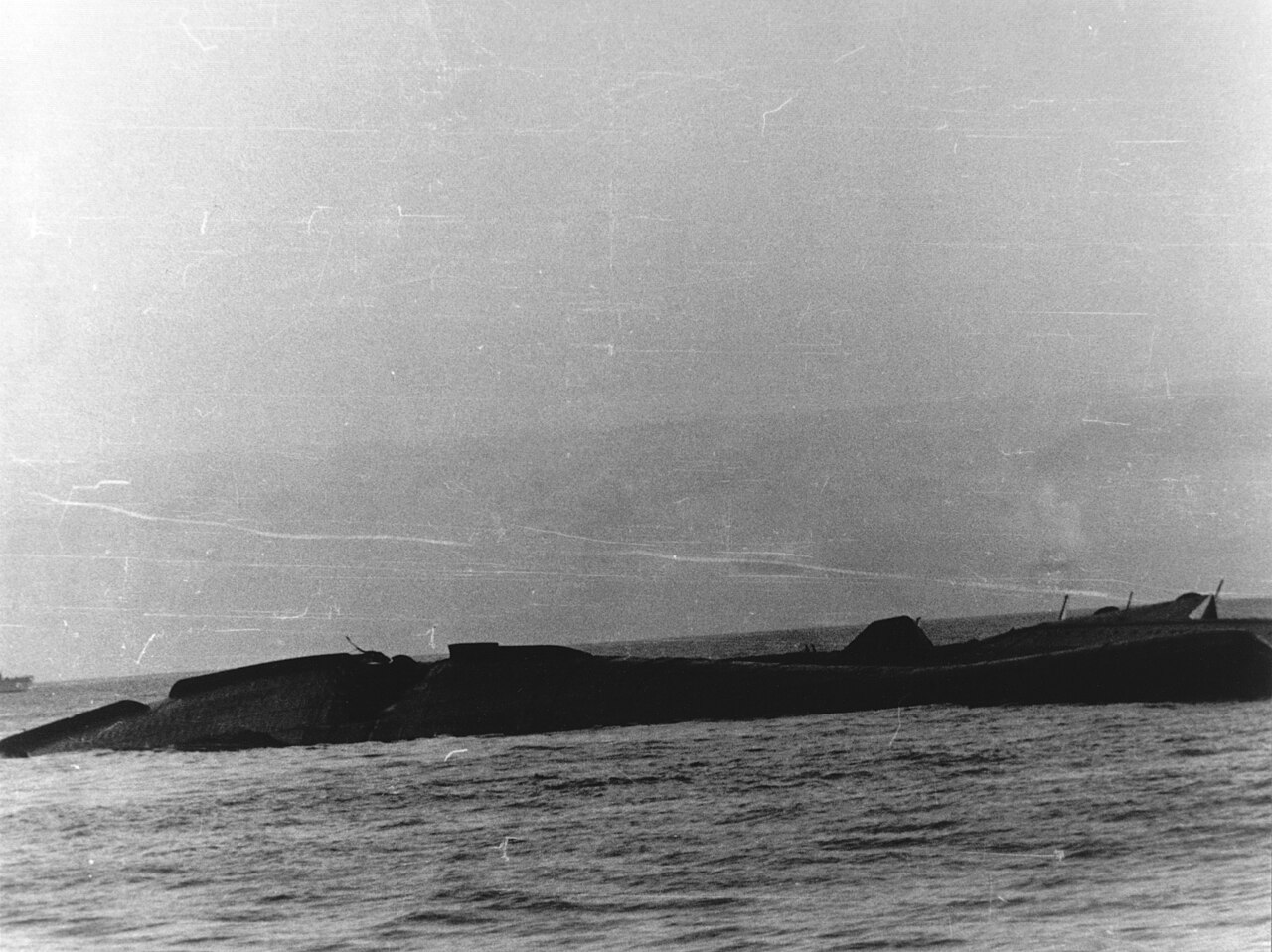
At dawn on 7 June she capsized to port and went down. The torpedoes that finished her were I-168's, fired the day before.
Three days in a dock had put her back to sea so the fleet would have three carriers on the morning of 4 June. On the morning of 7 June she turned over and sank.