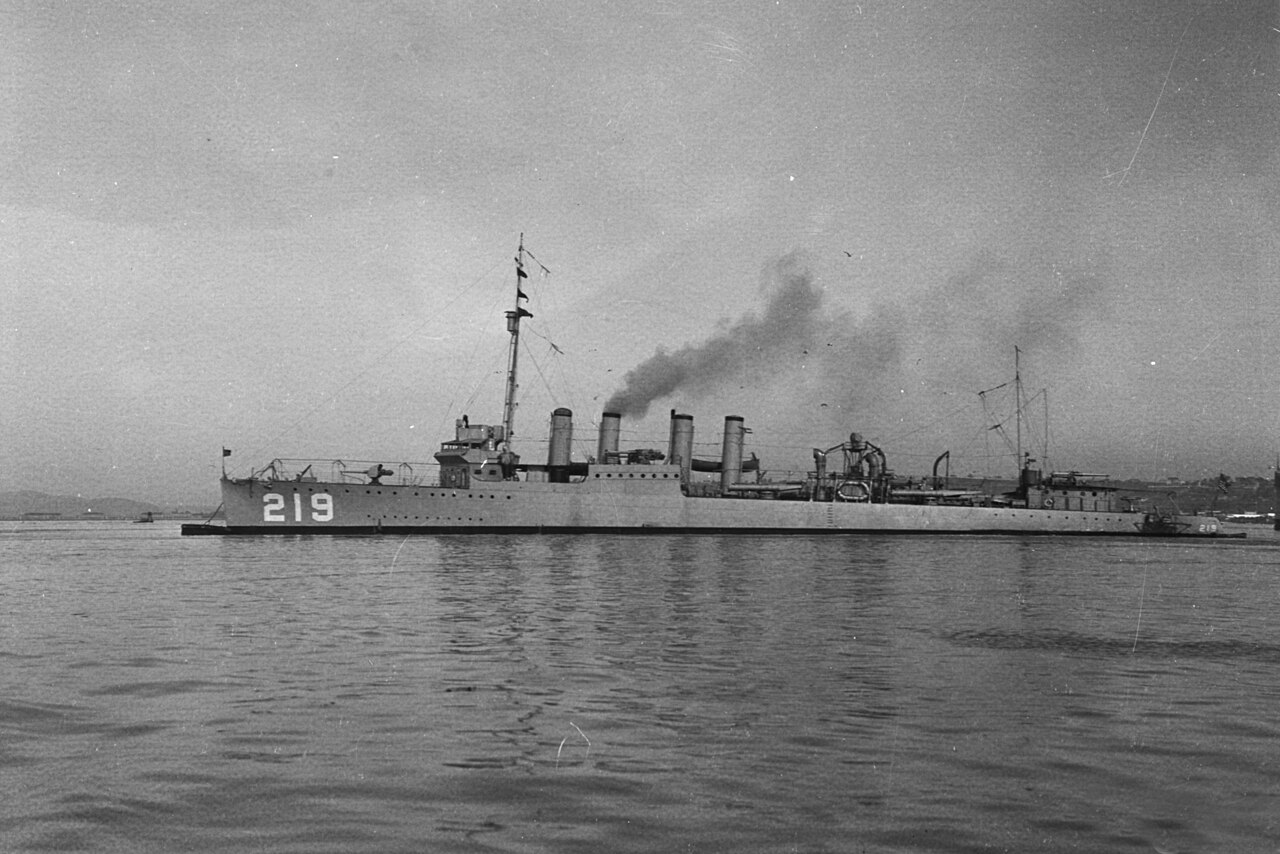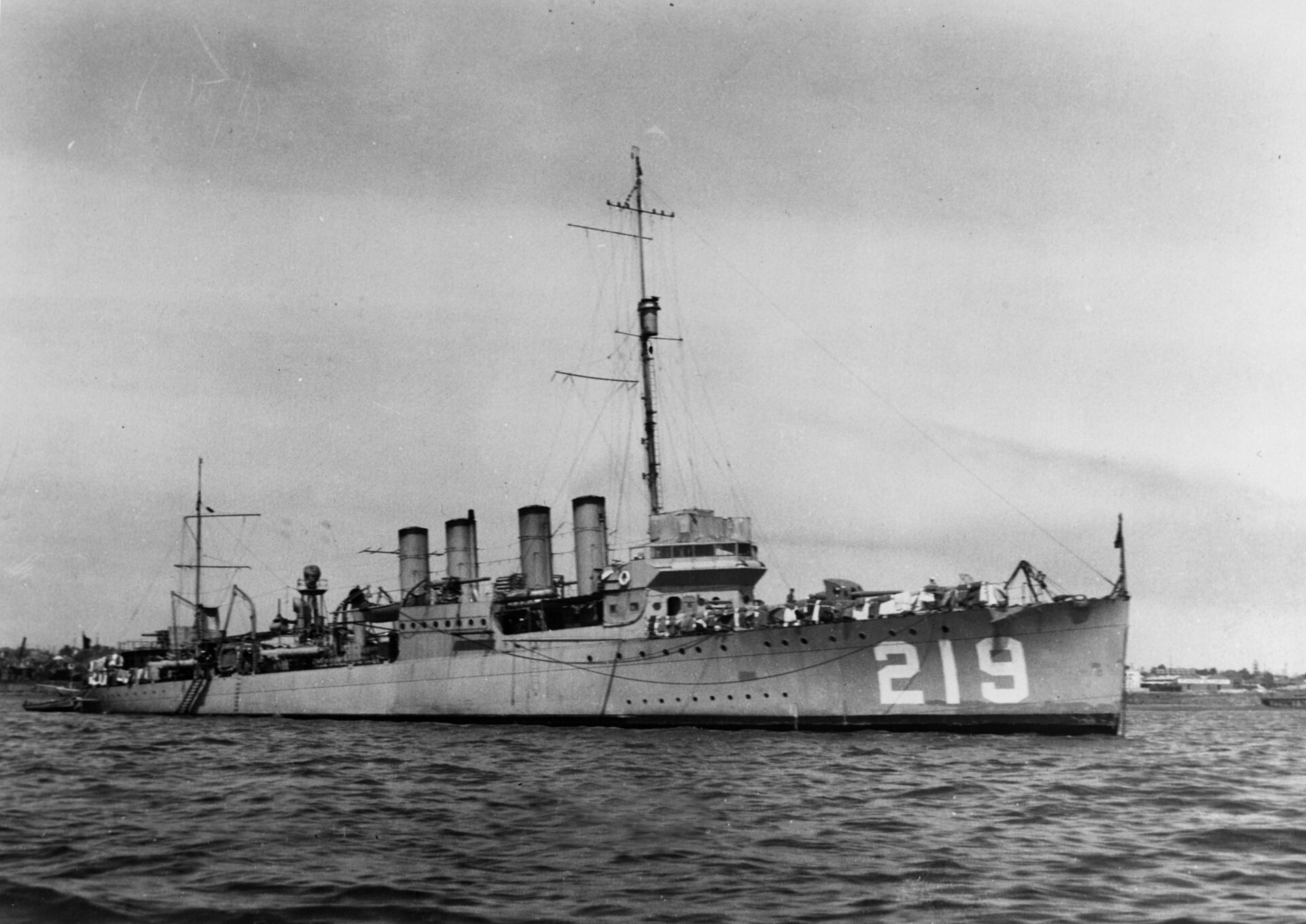
Edsall was a Clemson-class four-piper, DD-219, named for Seaman Norman Eckley Edsall, killed near Apia, Samoa, on 1 April 1899. William Cramp and Sons laid her down at Philadelphia on 15 September 1919, launched her on 29 July 1920, and commissioned her on 26 November 1920. Commander A. H. Rice was her first commanding officer. She was a flush-deck destroyer with four stacks. She would be twenty-one years old when this war found her.
She left Philadelphia on 6 December 1920 and spent the next year on the west coast. On 26 May 1922 she sailed for the Mediterranean and served with the American ships in Turkish waters. On 14 September, after Smyrna burned, she took 607 refugees off the destroyer Litchfield and carried them to Salonika. On 3 January 1925 she sailed for the Asiatic Station and reached Shanghai on 22 June. She stayed with that fleet after that, on the China coast, in the Philippines, and in Japan.
On 7 December 1941 she was at Balikpapan, in southeast Borneo, with Destroyer Division 57. She went to Singapore to look for survivors of Prince of Wales and Repulse, sunk off Malaya on 10 December. She is not credited with finding any. She then met the cruiser Houston at Surabaya and helped escort ships south to Darwin.
Off Darwin on 20 January 1942 she was in the hunt for the submarine I-124, with the corvettes Deloraine, Katoomba, and Lithgow. I-124 fired a torpedo at Deloraine and missed. Deloraine made the first depth-charge attack. Katoomba and Lithgow joined her, and Edsall was in the hunt. The four ships share the credit. It is not pinned to one of them. The submarine was lost with her crew. On 19 February one of Edsall's own depth charges went off too soon and damaged her. She kept operating.
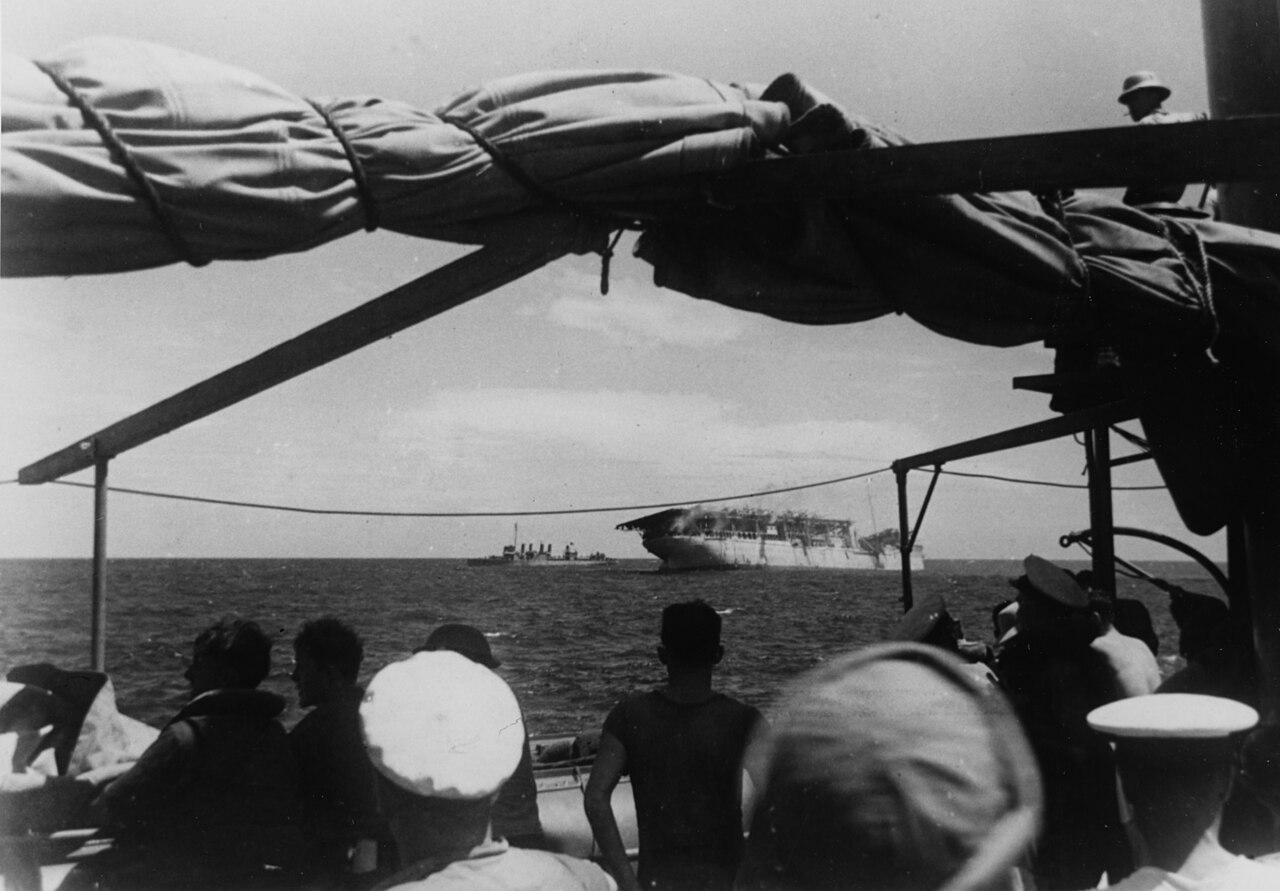
On 26 February she left Tjilatjap to meet the seaplane tender Langley. The next day, south of Java, Japanese bombers crippled Langley. The tender was abandoned. Edsall and the destroyer Whipple took survivors off the tender. On 1 March, off Christmas Island, she put the Langley men she carried aboard the oiler Pecos.
Then she was alone.
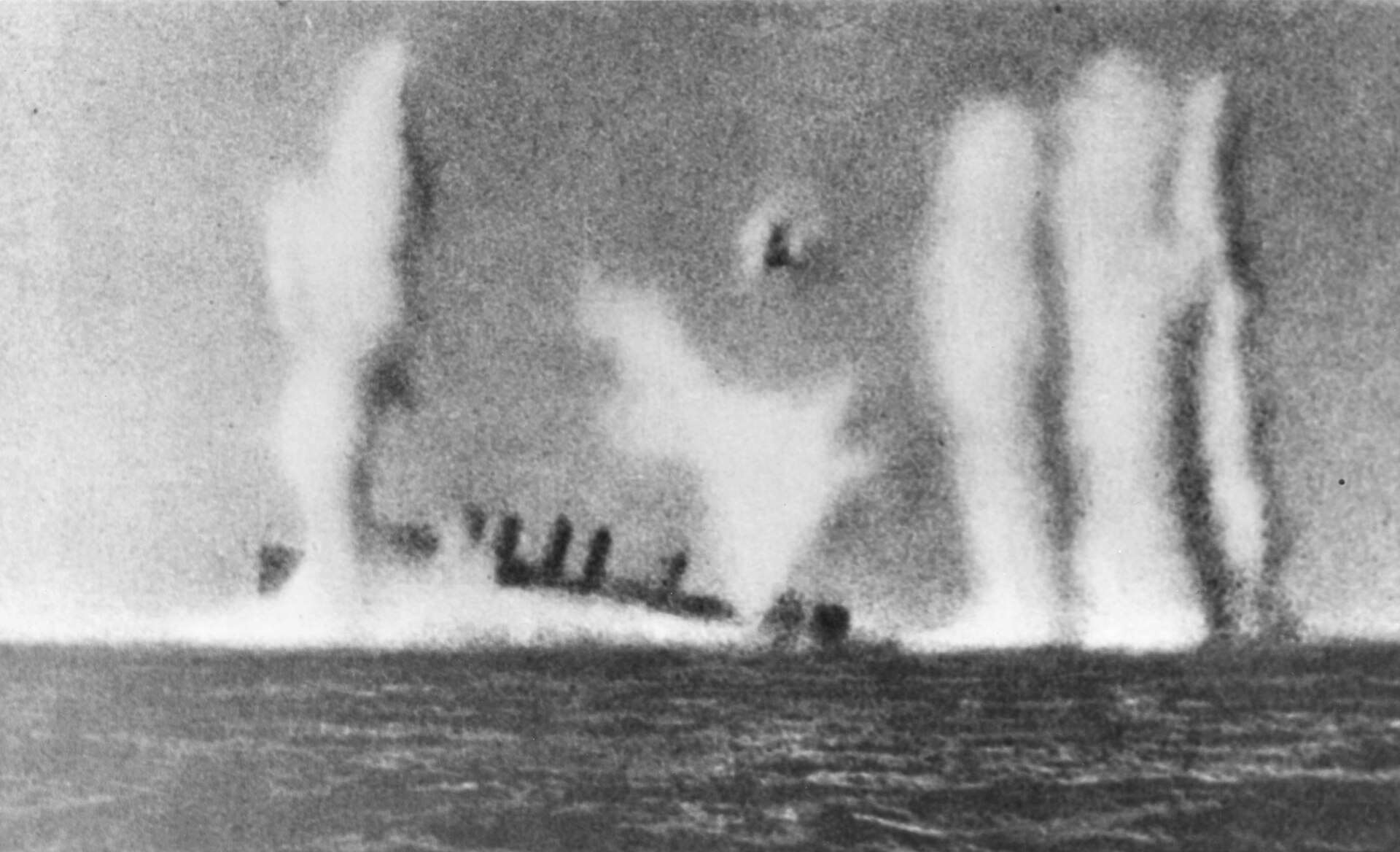
That afternoon, about 200 miles south-southeast of Christmas Island, the battleships Hiei and Kirishima and the heavy cruisers Tone and Chikuma caught her. Lieutenant Joshua J. Nix was in command. They fired more than a thousand shells. Only one or two hits are credited before the bombers came. One of her torpedoes narrowly missed Chikuma. Dive bombers stopped her. Kaga sent eight, Hiryu nine, and Soryu nine. She went down by the stern. The last of it was filmed from Tone. Chikuma picked up a handful of survivors.
She had carried refugees out of a burned city, shared a submarine hunt off Darwin, and stood by a dying tender. On the last afternoon a four-piper from 1920 was still underway after the big ships had fired more than a thousand shells at her. The bombers ended it. She received two battle stars.