Ships
- IJN Kongo Captain from 16 December 1942
- IJN Sazanami Flag, 18 August 1943
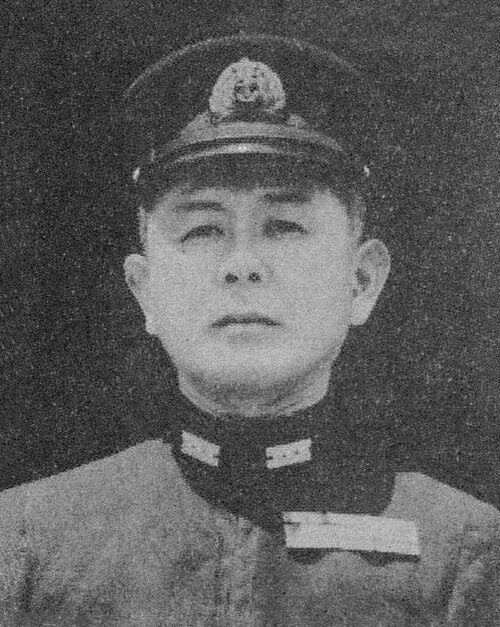
Matsuji Ijuin was born in the Kojimachi district of Tokyo on 21 April 1893, the son of Fleet Admiral Baron Goro Ijuin, and he inherited the barony. He graduated from the Imperial Japanese Naval Academy in December 1915 with the 43rd class and began in destroyers. In 1932 he was aide to Prince Fushimi Hiroyoshi. He made commander in November 1934, served the next year as executive officer of the light cruiser Abukuma, and then joined the staff of the Maizuru Guard District. Promoted to captain on 15 November 1938, he led the 23rd Destroyer Division and afterward the 8th. In October 1940 he took the light cruiser Naka.
On 11 August 1941 he became captain of the heavy cruiser Atago. From late November she flew the flag of Vice Admiral Nobutake Kondo and went south with the Second Fleet for the opening landings in Malaya and the Philippines. In June 1942 she went to Midway with Kondo's fleet, and through the autumn she remained with his ships in the Guadalcanal campaign. On the night of 14-15 November 1942, off Guadalcanal, Atago and Takao lit the American battleship South Dakota with searchlights and hit her with 8-inch gunfire. Torpedoes the two cruisers fired at Washington missed. Atago came out with slight damage. Ijuin left her in December.
He became captain of the battleship Kongo on 16 December 1942, relieving Tomiji Koyanagi, who had also preceded him in Atago. Raizo Tanaka had commanded Kongo from 1939 to 1941. In late January 1943 the battleship left Truk and steamed toward the northern Solomons, a distant demonstration while destroyers lifted the remaining Japanese troops off Guadalcanal. She was back at Truk early in February and then sailed for Japan. Ijuin gave up Kongo in July 1943, and Toshio Shimazaki followed him in the ship.
That July he took the 3rd Destroyer Squadron, working from Rabaul. On 18 August 1943, off Horaniu on Vella Lavella, Rear Admiral Matsuji Ijuin had his flag in Sazanami while she, Hamakaze, Isokaze, and Shigure screened barges sent to set up a staging base. Akiji Suga commanded Sazanami. Ijuin was not her captain. Hiroshi Uwai had Hamakaze. In the dark they met the American destroyers Nicholas, O'Bannon, Taylor, and Chevalier. Torpedoes from both sides missed. Gunfire lightly damaged Hamakaze and landed one shell in Isokaze. Sazanami came through intact. Most of the barges still put their troops ashore.
On the night of 6-7 October 1943 he returned to Vella Lavella to lift about 600 men trapped on the northern shore, the remnant of that barge base. Nine destroyers covered the work: Akigumo, Isokaze, Kazagumo, Yugumo, Shigure, and Samidare, with the destroyer-transports Fumizuki, Matsukaze, and Yunagi. Captain Frank R. Walker closed first with Selfridge, Chevalier, and O'Bannon, ahead of three more American destroyers. Yugumo was sunk. A torpedo crippled Chevalier, O'Bannon collided with her stern, and Selfridge was hit forward. Chevalier was lost. The boats still cleared the garrison.
On the night of 1-2 November 1943 his flag was in the light cruiser Sendai, off Empress Augusta Bay, where American troops had landed on Bougainville. Shigure, Samidare, and Shiratsuyu were with her in the van of the attack force from Rabaul. The American cruisers sank Sendai. The cruiser fire that sank her is not credited to one ship. Samidare and Shiratsuyu collided as they turned away. Ijuin was among those saved. The submarine Ro-104 brought him out.
In December 1943 he went to the Navy General Staff. In April 1944 he took command of the 1st Escort Group in the maritime escort force. On 24 May 1944, in the South China Sea, the American submarine Raton torpedoed and sank his flagship, the escort Iki, while she screened convoy Hi-63 on the passage from Manila toward Singapore. Ijuin was lost with the ship. The navy promoted him to vice admiral after his death. He was fifty-one.