The Battle of Blackett Strait was fought in the first hour of 6 March 1943, in Kula Gulf, between Kolombangara and New Georgia. The Japanese call it the night battle of Vila–Stanmore. It lasted about fifteen minutes. Two Japanese destroyers were sunk. The American ships were not touched. It was the first night action in which an American cruiser force opened fire on radar ranges alone, with no visual sighting.
Why both sides were there
Vila, on the south coast of Kolombangara, was a Japanese barge base and airfield under construction. Munda, across the water on New Georgia, was the other. The Tokyo Express was feeding both of them by destroyer.
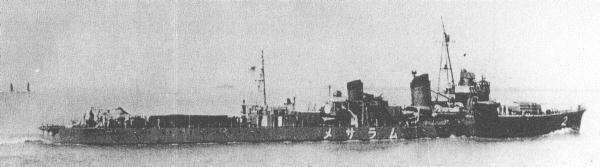
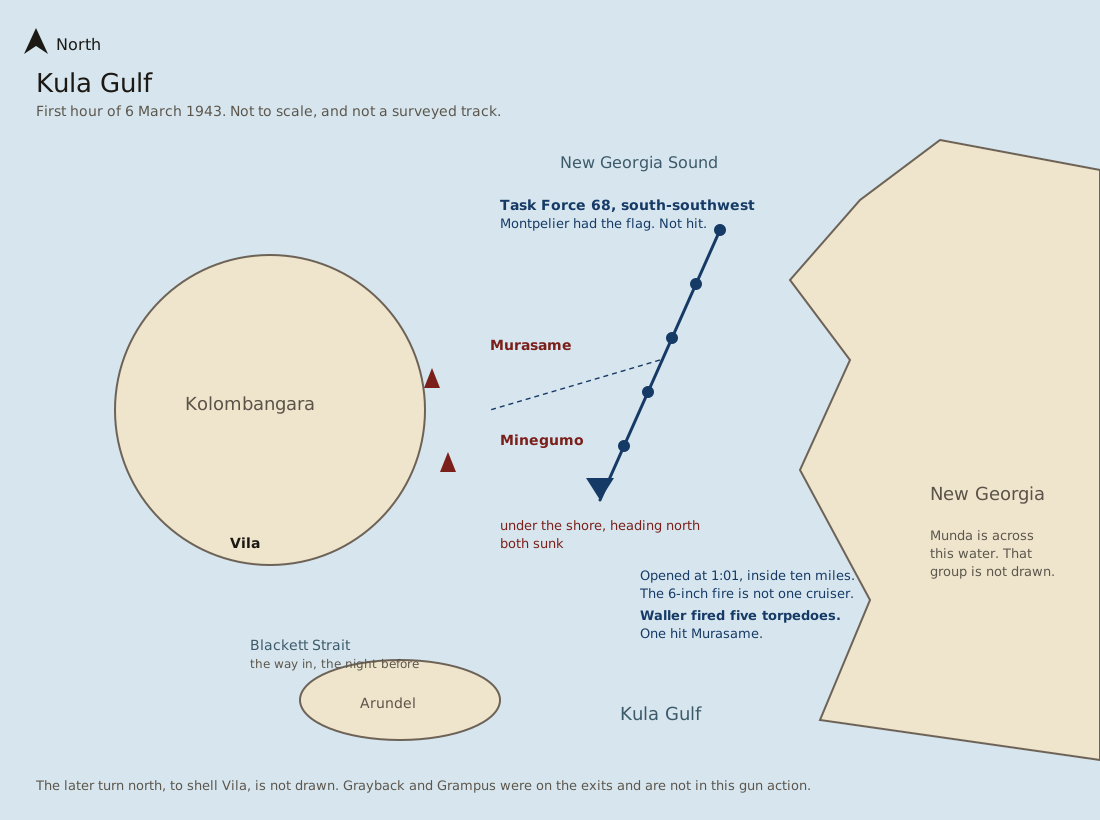
On the night of 5 March, two Asashio-class destroyers left Shortland Harbor. Murasame wore the flag of Captain Masao Tachibana. Lieutenant Commander Youji Tanegashima commanded her. Minegumo was commanded by Lieutenant Commander Yoshitake Uesugi. They came down through Vella Gulf and Blackett Strait, the slot of water between Kolombangara and Arundel, and unloaded troops and supplies at Vila. The run in was clean. For the trip out they took the short way, north through Kula Gulf, instead of going back the way they had come.
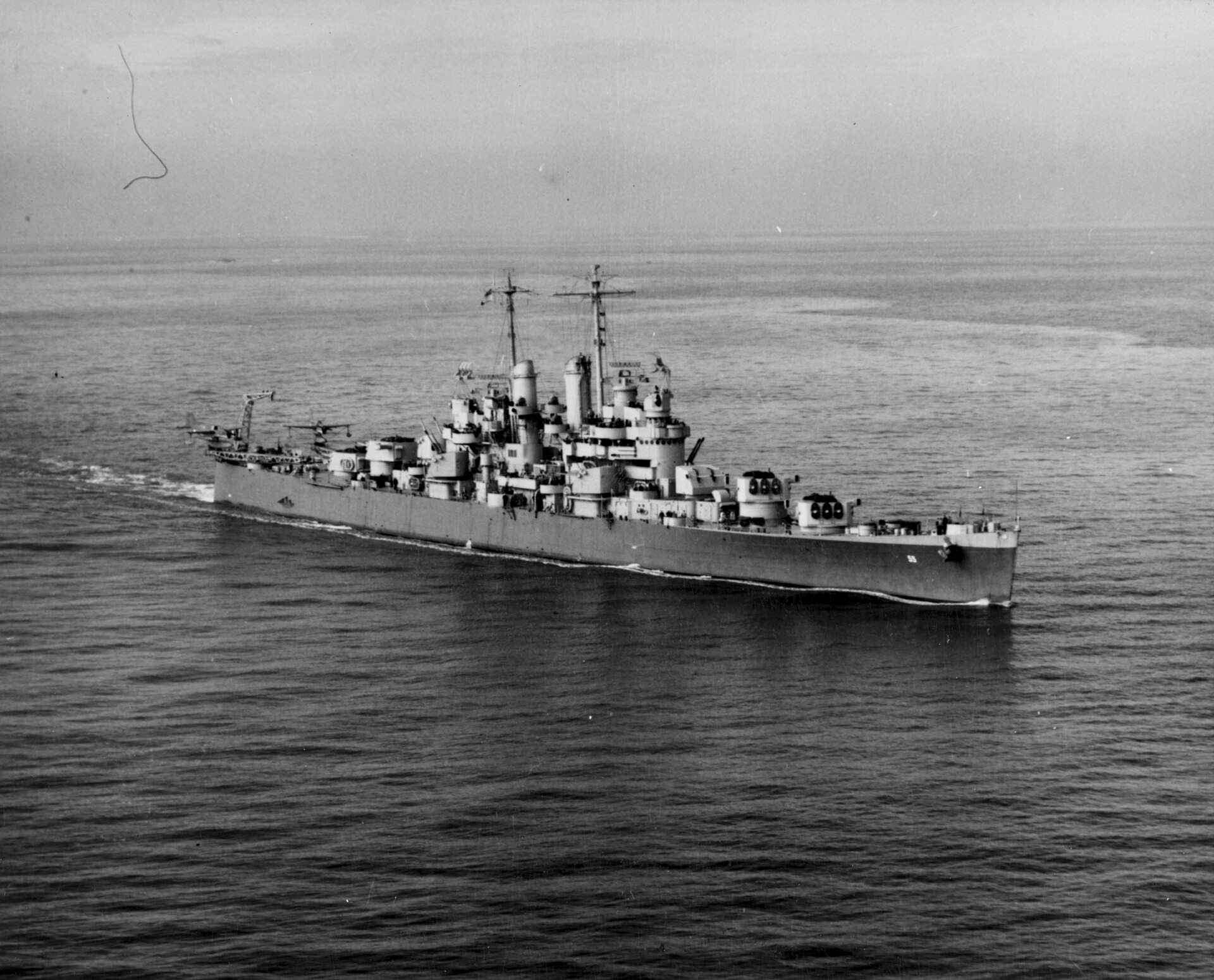
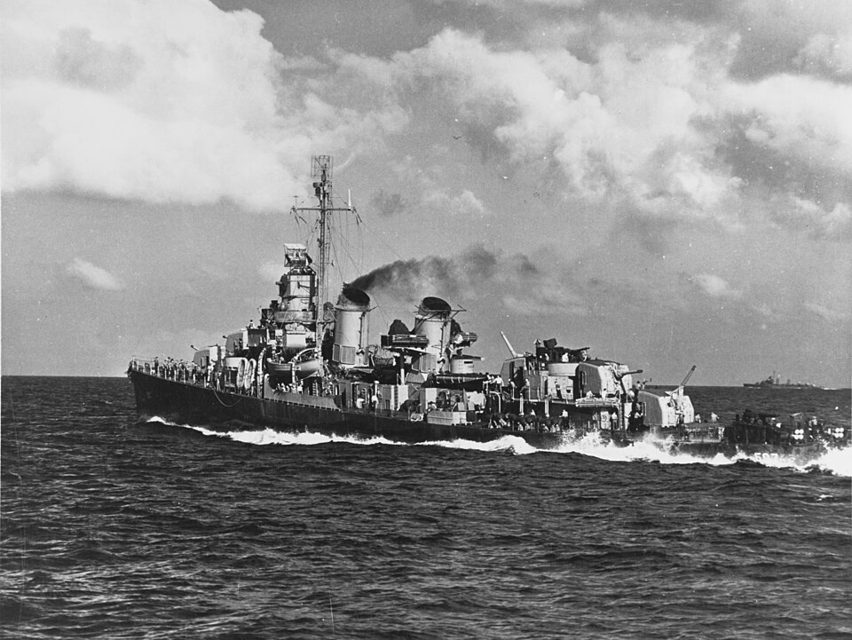
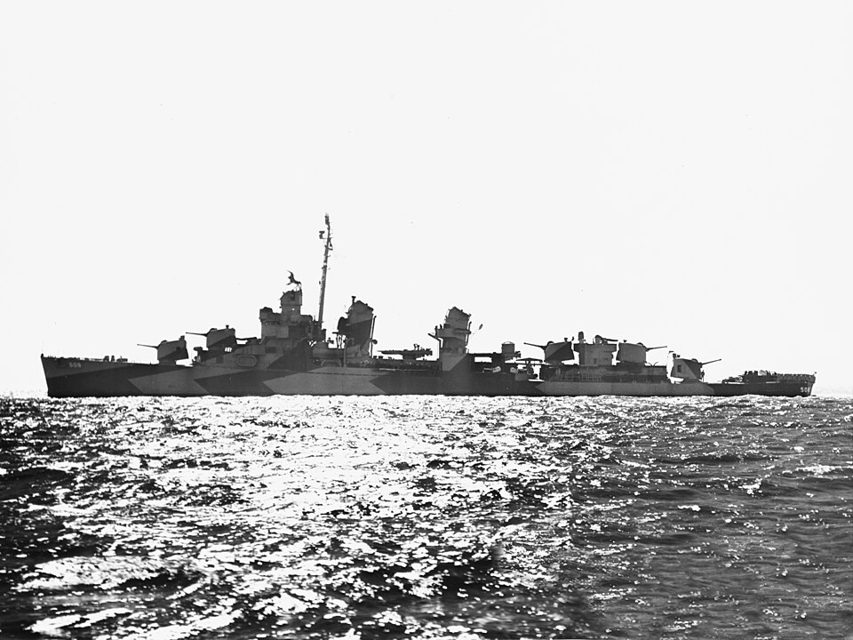
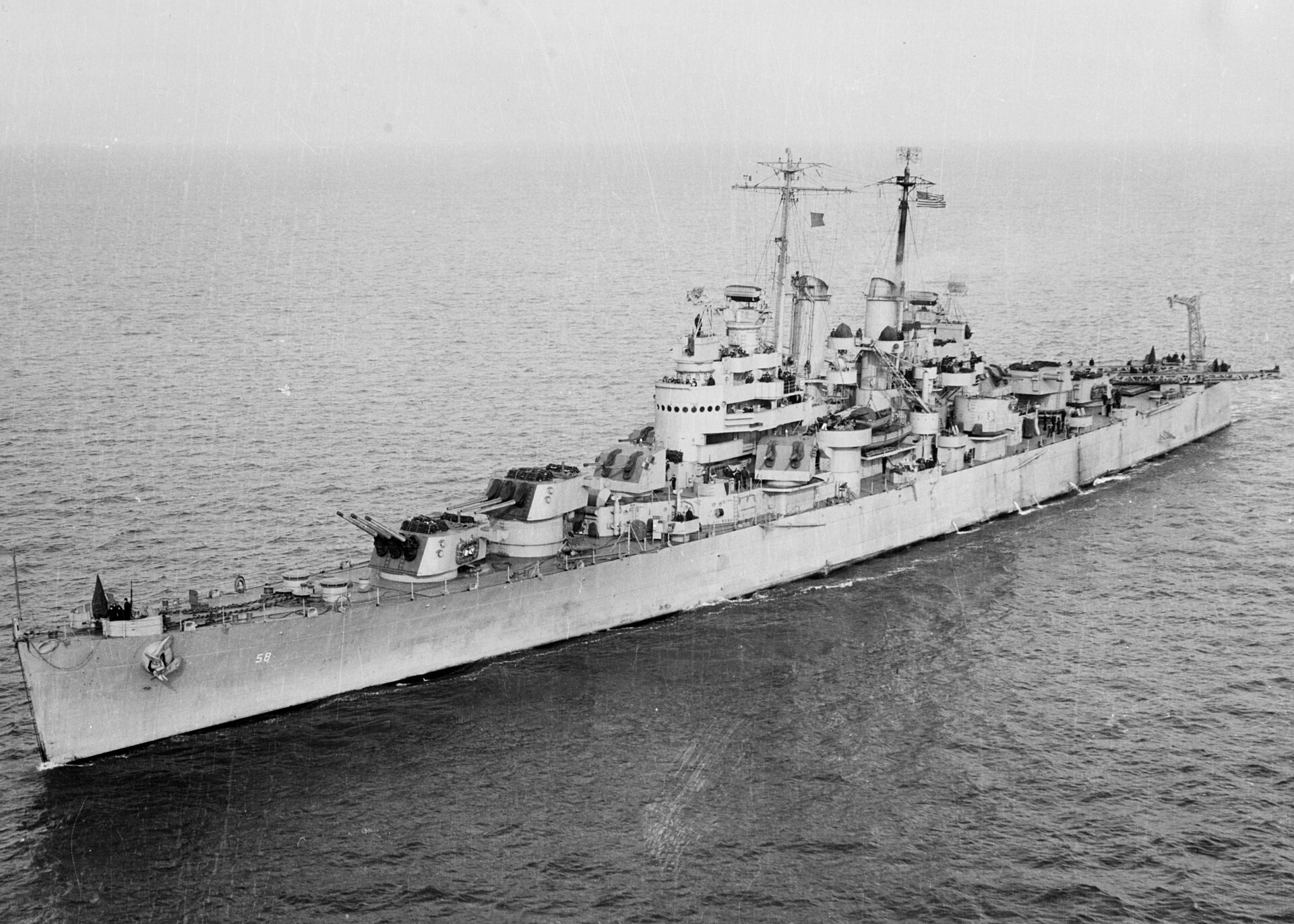
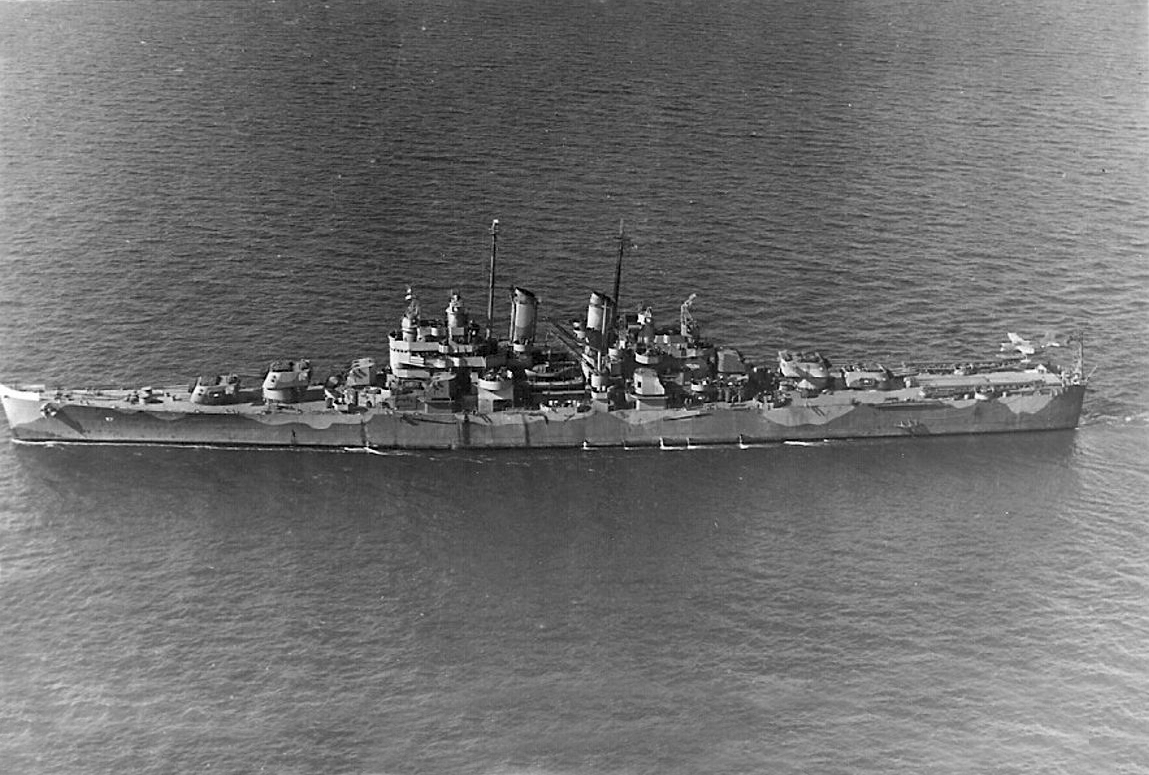
The same night Rear Admiral Aaron S. Merrill, called Tip, was bringing Task Force 68 up from the south to shell Vila. The force was nicknamed Task Force Mike. His flag was in the light cruiser Montpelier, with Cleveland and Denver, and the destroyers Conway, Cony, and Waller. A second group was to bombard Munda at the same time. The submarines Grayback and Grampus were posted on the exits from Kula Gulf. Merrill’s ships were Cleveland-class cruisers, twelve 6-inch guns each, with SG surface radar and radar fire control. The Japanese destroyers had neither.
The contact
Merrill entered Kula Gulf from the north, bound for the Vila batteries. At 12:57 a.m. on 6 March the radar picked up two ships close under the Kolombangara shore. Denver’s SG scope, photographed for the action report, shows them as one large return just off the island, with the American column steaming south-southwest and Kolombangara and New Georgia as solid masses on either side.
At 1:01 a.m. Merrill opened fire. The range was inside ten miles. The Japanese had not seen him. Searchlights and gun flashes were the first warning.
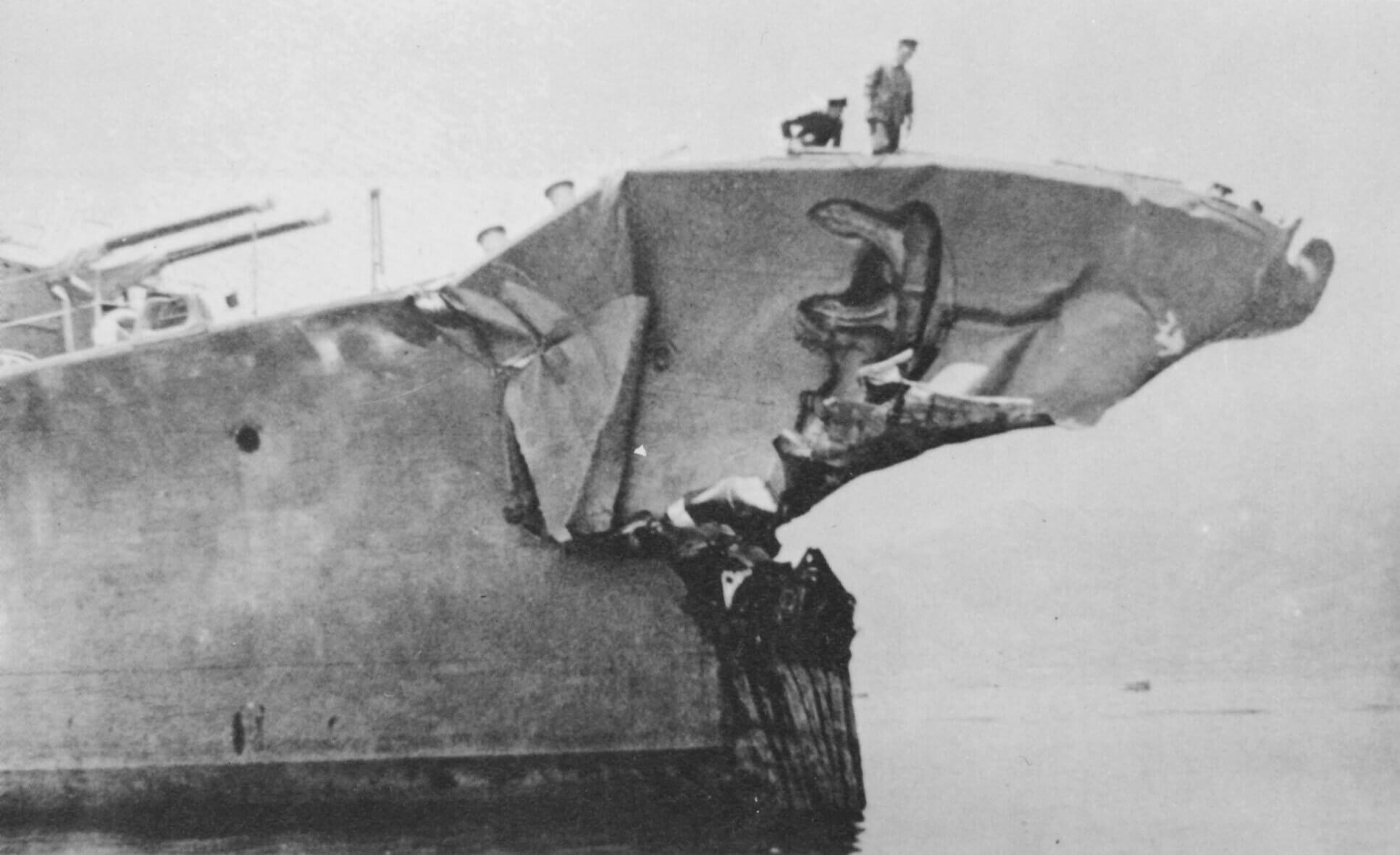
Murasame was straddled by the first American salvo and hit by the sixth. Waller had already fired a spread of five torpedoes. One of them hit Murasame at about 1:15. She exploded, caught fire, and sank. One hundred twenty-eight of her men died. Fifty-three reached Kolombangara.
Minegumo tried to answer. Her captain was still passing orders when the 6-inch salvos arrived. She was hit, set afire, and abandoned at about 1:14, as the Americans checked fire. Forty-six of her crew were killed. One hundred twenty-two swam ashore, and two were later taken prisoner. The dead from both ships came to 174.
The American column was not hit. No one was killed or wounded.
The bombardment, and the withdrawal
Merrill did not stay to look for survivors. He turned north, carried out the shore bombardment he had come for, and silenced the Japanese batteries that fired back. By 1:40 a.m. the force was done and withdrew down New Georgia Sound.
Grampus did not come home from the patrol. She was lost somewhere in these waters around the same time, with all 71 hands. Whether she was sunk by the Japanese destroyers on their way in, or earlier, has never been settled. She is not counted as a loss of the gun action.
What it meant
The fight was an accident. Merrill had come to shell an airfield and met a supply run on the way out. The result was not an accident. Radar put him on the target before the Japanese knew he was there, and the volume of 6-inch fire finished the action before Minegumo could get off a useful reply. Five months of Solomons night actions had gone the other way, at Savo, Tassafaronga, and the rest, with Japanese eyes and torpedoes doing the killing. Blackett Strait was the turn. The same method, radar first and torpedoes in support, was what Merrill and Arleigh Burke used at Empress Augusta Bay in November, and what Frederick Moosbrugger had already been given room to try, with destroyers alone, at Vella Gulf in August.