IJN · DD
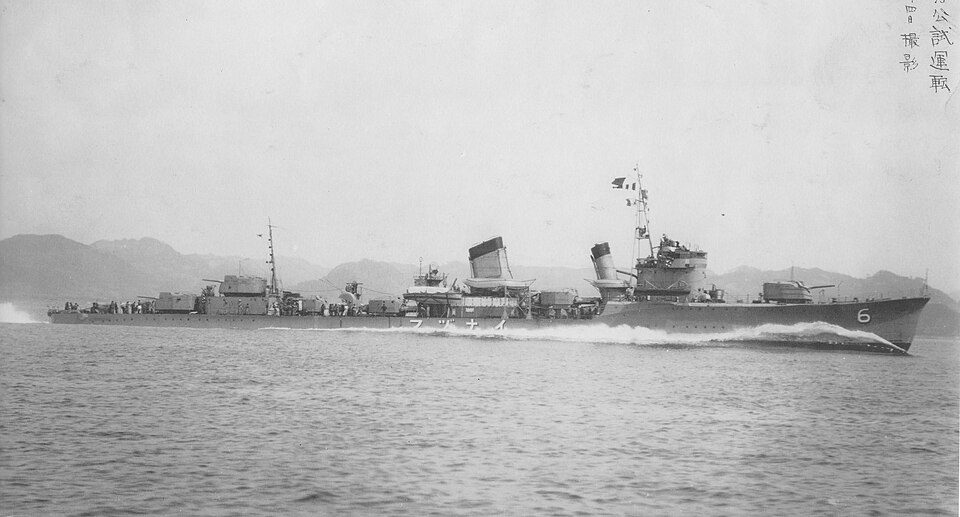
Nenohi
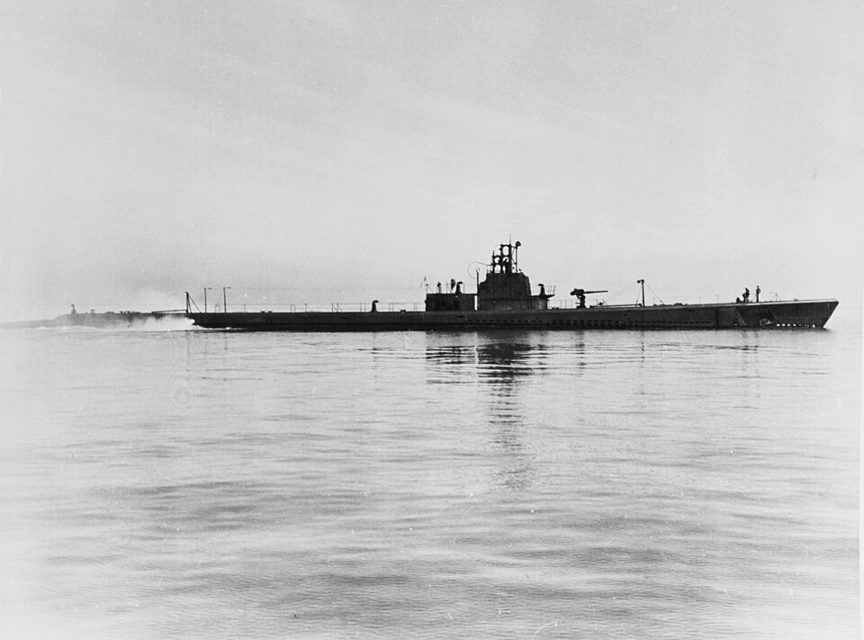
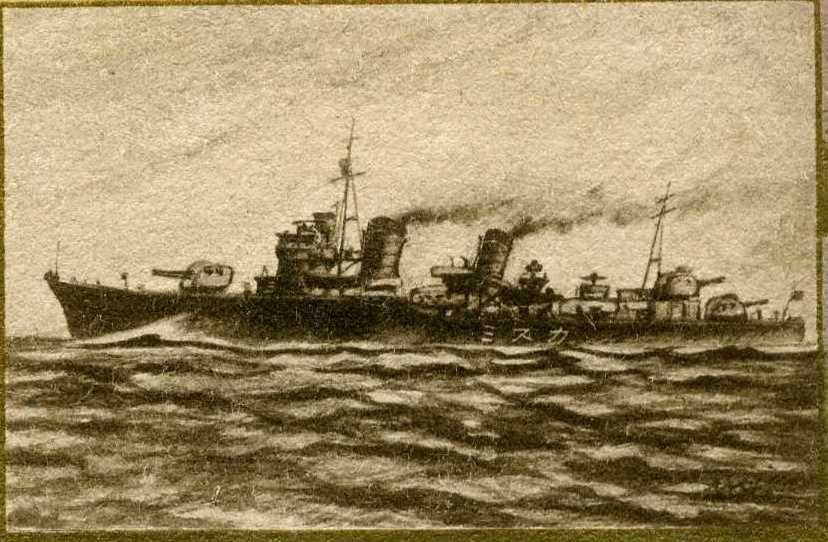
Photos and infoHatsuharu-class destroyer. The name is New Year's Day. Uraga Dock. Laid down 15 December 1931, launched 22 December 1932, commissioned 30 September 1933. Lieutenant Commander Tomiji Chihagi had her from 15 November 1940 to 20 April 1942, including Bali Strait. On 4 July 1942 one torpedo from the submarine Triton sank her southeast of Attu, near Agattu. Lieutenant Commander Saburo Terauchi was lost with her.
| Class | Hatsuharu class |
|---|---|
| Type | Destroyer (DD) |
| Builder | Uraga Dock |
| Launched | 1932-12-22 |
| Commissioned | 1933-09-30 |
| Fate | Sunk. In Bali Strait on the night of 28 February-1 March 1942. None of the four American destroyers was hit. On 4 July 1942 one torpedo from the submarine Triton sank her near Agattu. Her captain was lost. Struck 31 July 1942. |
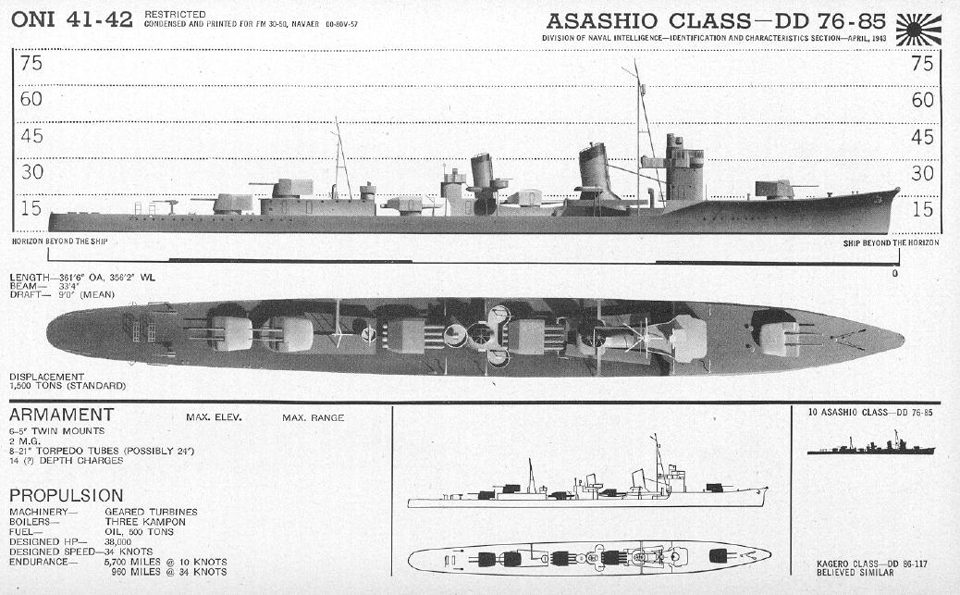
| Armament (class) | Treaty destroyer after the Special Type. Two twin mounts, one single, two funnels. |
| Command |
|
Laid down, displacement, length, beam, draft, speed, and complement are not stored for each hull, so this table leaves them out.
The armament line is the class drawing, not a measurement of this hull.
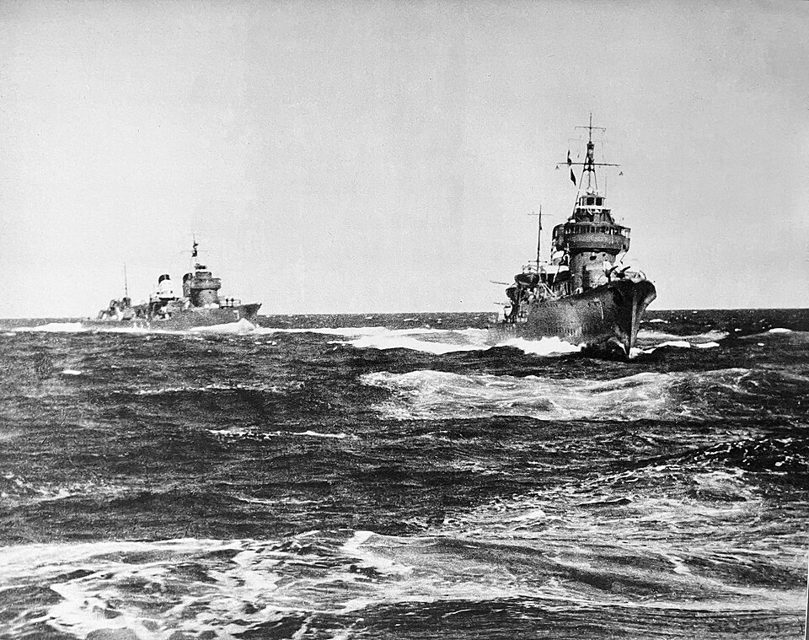
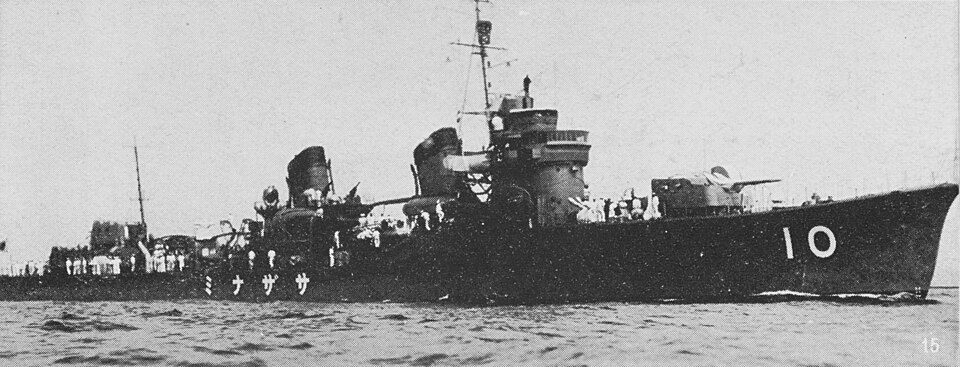
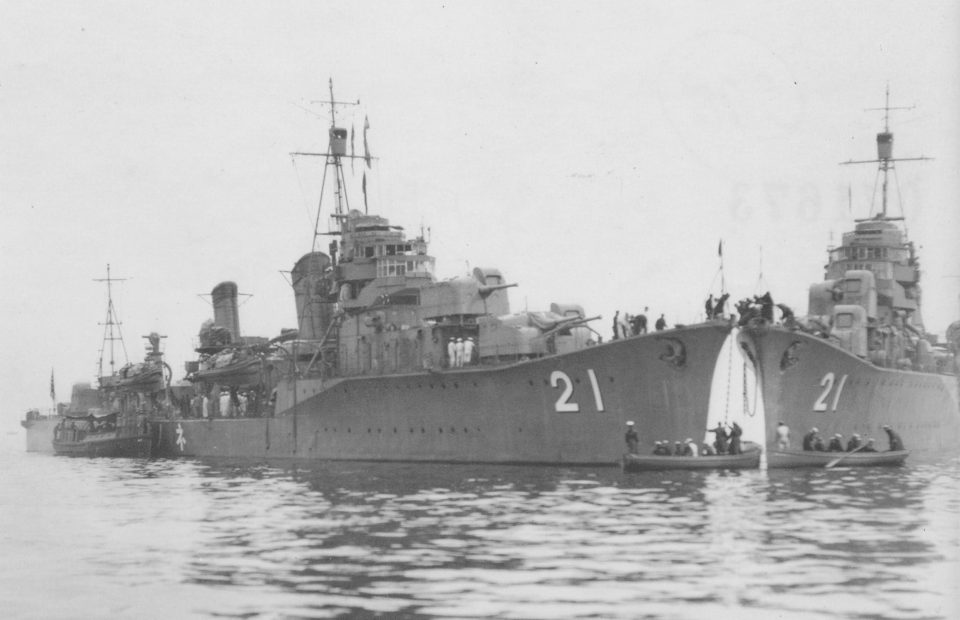
Nenohi is the destroyer on the left, in October 1933. The kana ネ, the start of her name, is on her stern, and the bow wears 21. The destroyer alongside also wears 21. Shizuo Fukui photograph, Kure Maritime Museum. Public domain.
There were not two hulls both officially named Destroyer No. 21 with Nenohi as one of them. The 21 on Nenohi was a division marking. The ship that actually was No. 21 was a different destroyer.
In the early 1920s the Imperial Japanese Navy expected the Eight-Eight Fleet program to produce so many destroyers that individual names would become impractical. New destroyers were therefore commissioned by number: first-class ships on odd numbers, second-class ships on even numbers. The scheme was unpopular with crews and confusing on the radio, so on 1 August 1928 the policy was reversed and the numbered ships were given names.
Under that system the number 21 was used twice, but only one ship was finished. A Kamikaze-class (1922) hull planned as No. 21, the intended name Tsumujikaze, was cancelled before being laid down after the Washington Naval Treaty cut the program. The number was then reused. The Mutsuki-class destroyer laid down at Maizuru on 3 June 1924 was commissioned on 21 December 1925 as Dai-21-gō kuchikukan (第二十一号駆逐艦, Destroyer No. 21). She was renamed Kisaragi on 1 August 1928 and was sunk off Wake Island on 11 December 1941.
Nenohi was never that ship. The 1933 Hatsuharu-class Nenohi (子日, New Year's Day) was named from launch. From November 1933 she was in Destroyer Division 21 with Hatsuharu, Wakaba, and Hatsushimo, and later flagship of that division. Japanese destroyers painted the division number on the bow, so photos and models show a large 21 on her, the same digits Kisaragi had worn as her hull number a few years earlier. That is the usual source of the mix-up.
There were also two ships named Nenohi, which is a separate reuse. The first was a 1905 Kamikaze-class destroyer, building number 20, not 21, later a minesweeper, stricken in 1928 and briefly called discarded destroyer No. 13 before she was scrapped. The name was free again by the time the Hatsuharu-class ship was named in 1932.
The pictures on this page are the originals.
No color version yet. Colored pictures and film will be added here.
Command
Aleutian Islands
1942-06-03 · sunk 4 July 1942 by one torpedo from Triton, near Agattu