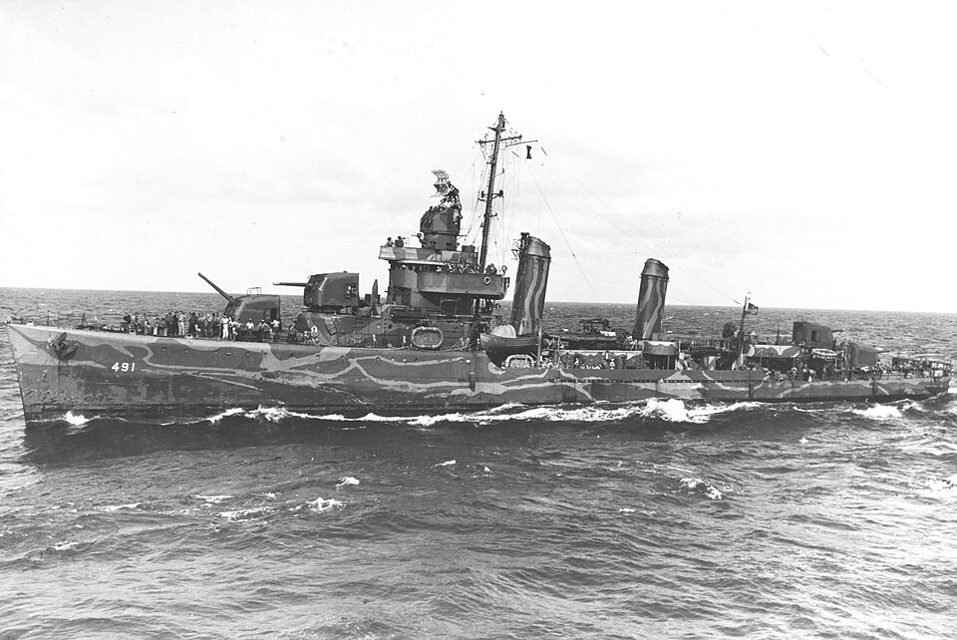
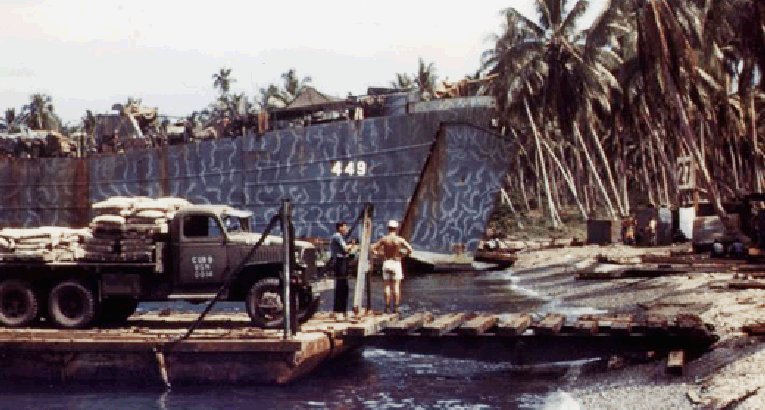
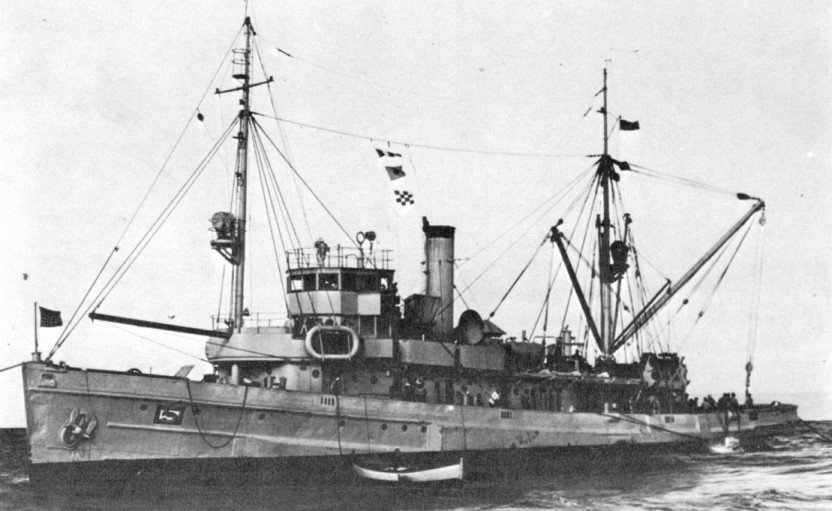
On 7 April 1943 Japanese aircraft raided Guadalcanal and Tulagi. The oiler Kanawha was hit as she cleared Tulagi Harbor and went down before daybreak on the 8th. The destroyer Aaron Ward (DD-483), covering LST-449 in Ironbottom Sound, went down that evening. The New Zealand corvette Moa went down in Tulagi Harbor. The cargo ship Adhara was punctured at Guadalcanal, and the oiler Tappahannock, underway with Woodworth and Farenholt, took near misses off Lunga and stayed afloat. The tender Niagara was moored in the Maliali River and was not hit. Six weeks later, on the morning of 23 May, aircraft attacked Niagara east of Cape Surville, on San Cristobal, and she was lost. That attack came the morning after she had sailed from Tulagi. It was a separate attack.
Operation I-Go
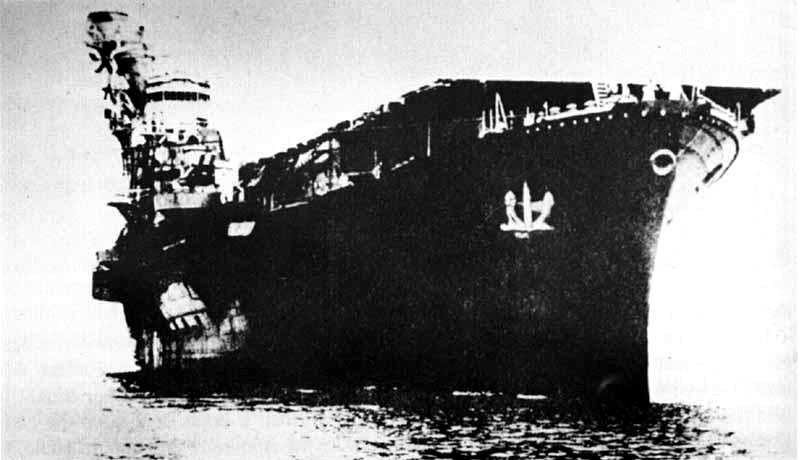
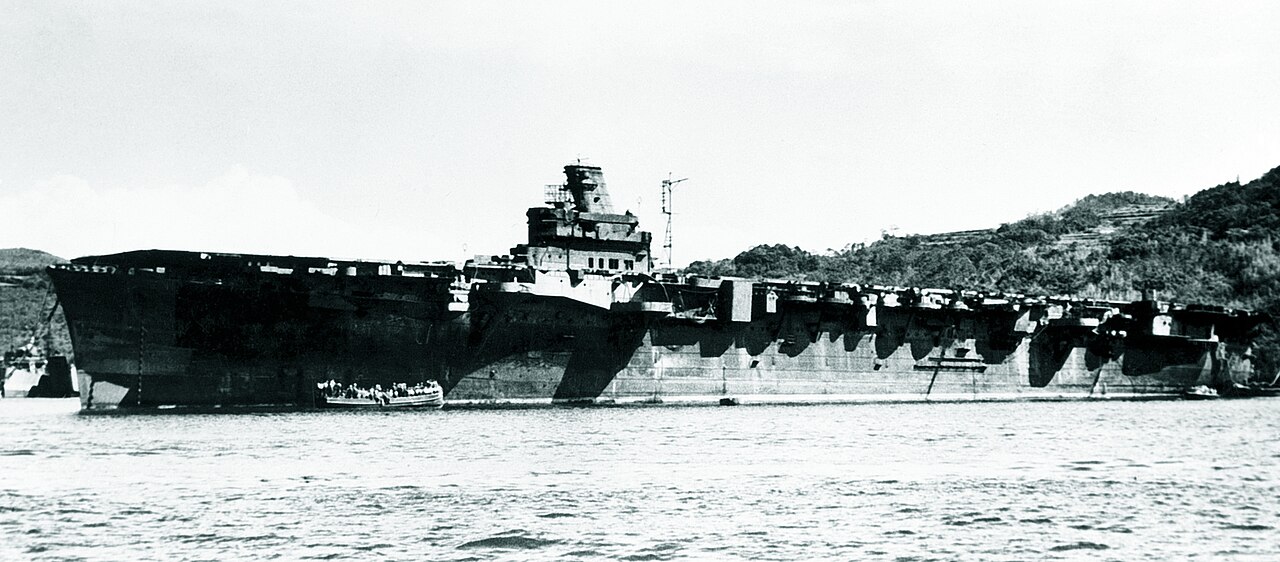
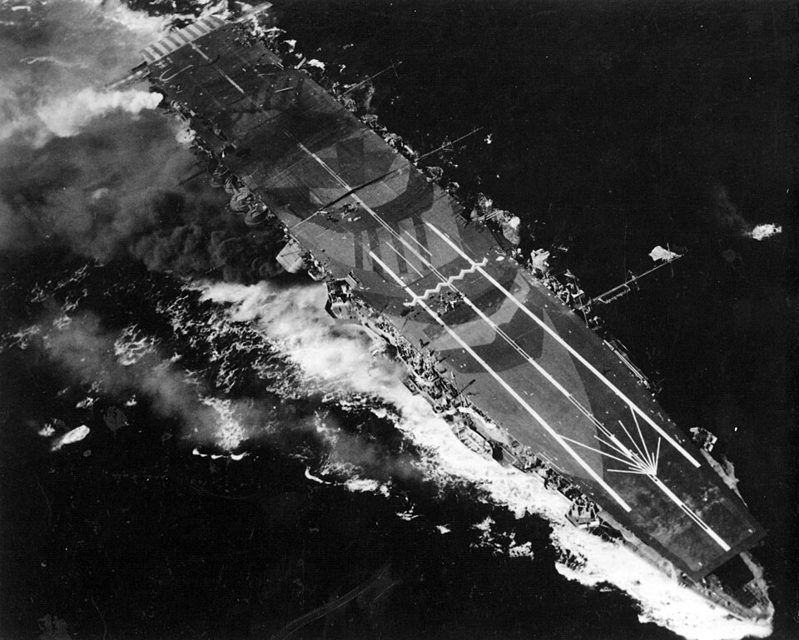
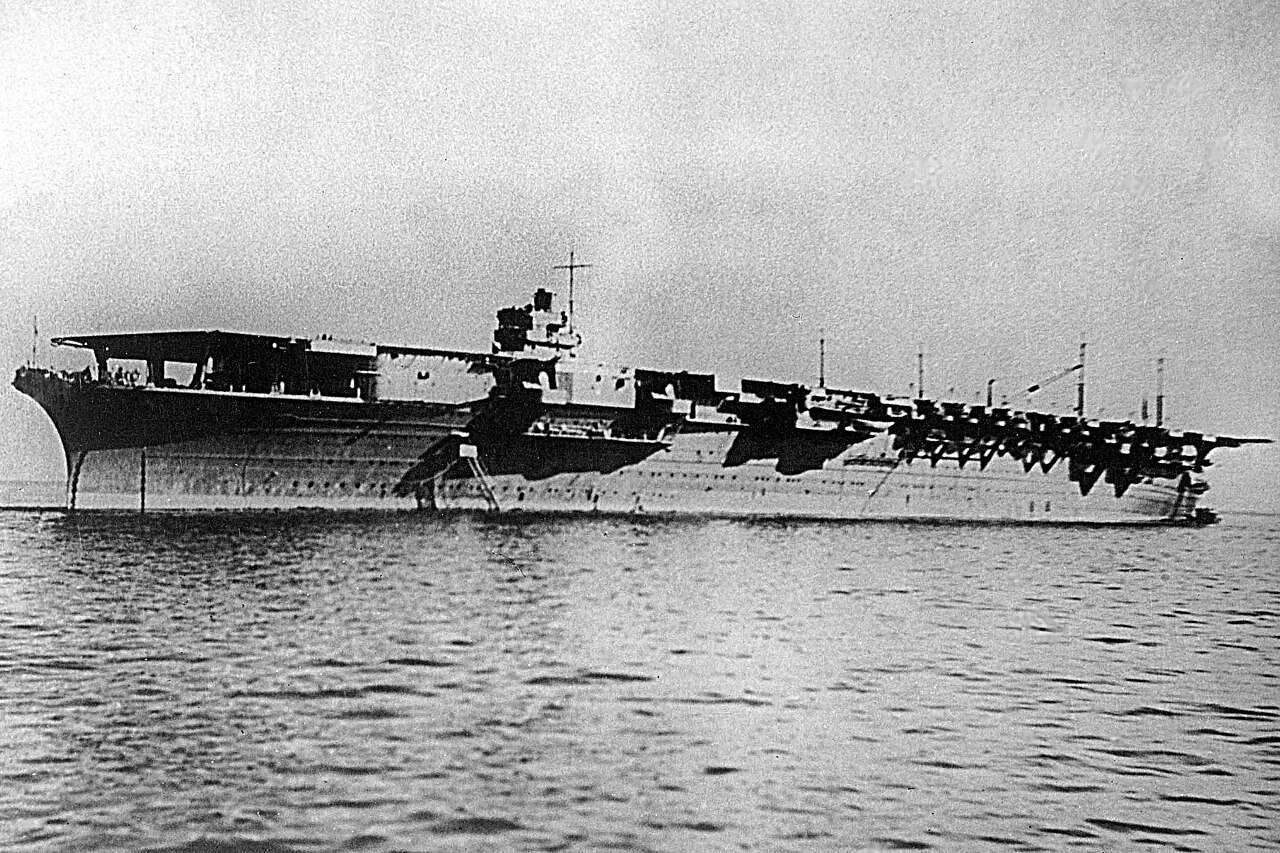
The raid was the opening strike of Operation I-Go, Admiral Isoroku Yamamoto's air offensive after the Japanese evacuation of Guadalcanal. Carrier air groups had been put ashore to reinforce the Eleventh Air Fleet. Aircraft from Zuikaku and Zuiho, of Carrier Division 1, went to Rabaul. Aircraft from Hiyo and Junyo, of Carrier Division 2, went to Ballale, near Buin. The four ships stayed at Truk. On 2 April Zuikaku detached her fighter and dive-bomber squadrons to Rabaul and Buin and her torpedo-bomber squadron to Kavieng and Rabaul. The 7 April strike was the largest of the series: dive bombers drawn from those four carriers, with a strong fighter escort, met by Allied fighters over the sound. Later strikes of the same operation hit the Oro Bay area on 11 April, Port Moresby on 12 April, and Milne Bay on 14 April. Yamamoto was killed on 18 April on a flight over Bougainville. That interception was not the raid of 7 April, and it was not the attack that put Niagara down on 23 May.
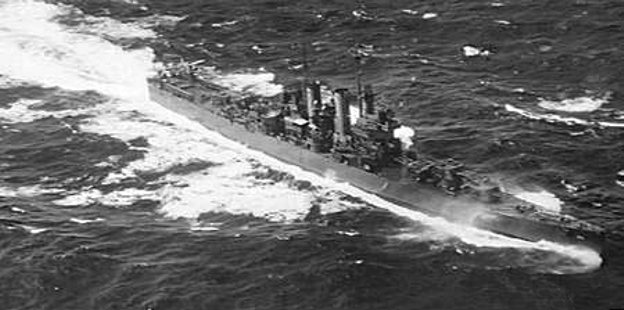
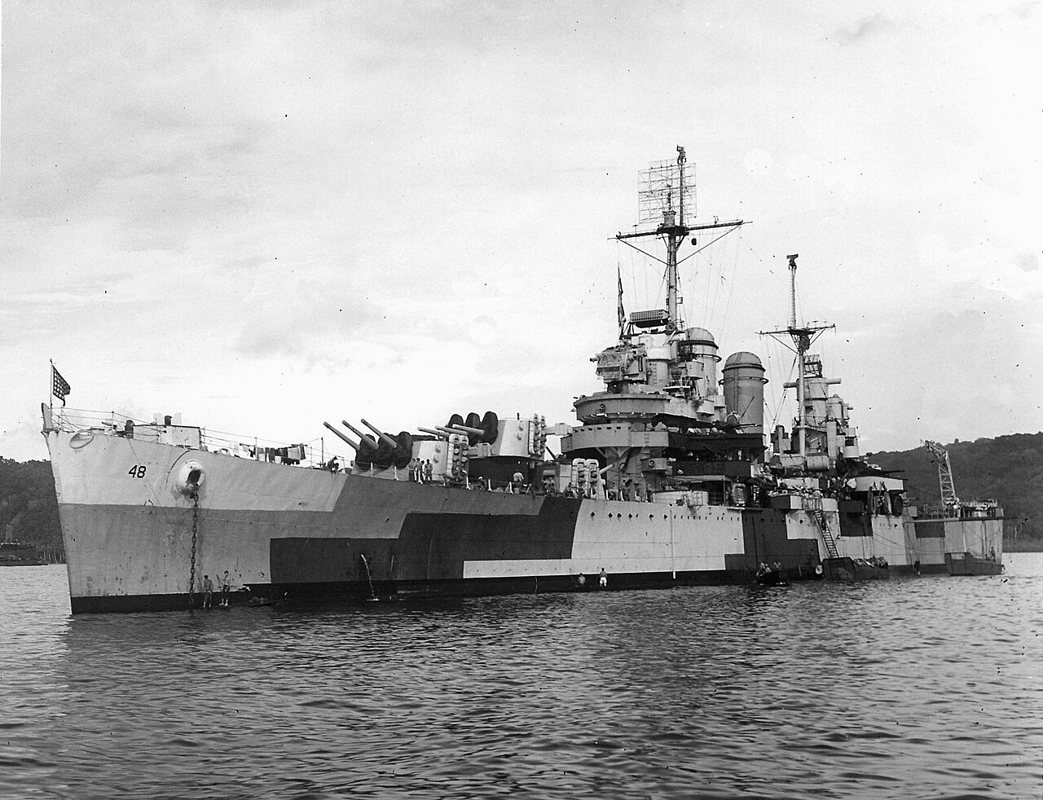
At high noon on 7 April Honolulu, Helena, and St. Louis, with six destroyers, were standing out of Tulagi Harbor when Guadalcanal broadcast an air attack. They had been ordered to bombard Munda that night. The bombardment did not come off. By the time the dive bombers were over the harbor, the cruisers were already clear. Japanese reconnaissance that morning had reported a heavier force of cruisers, destroyers, and transports than the strike found.
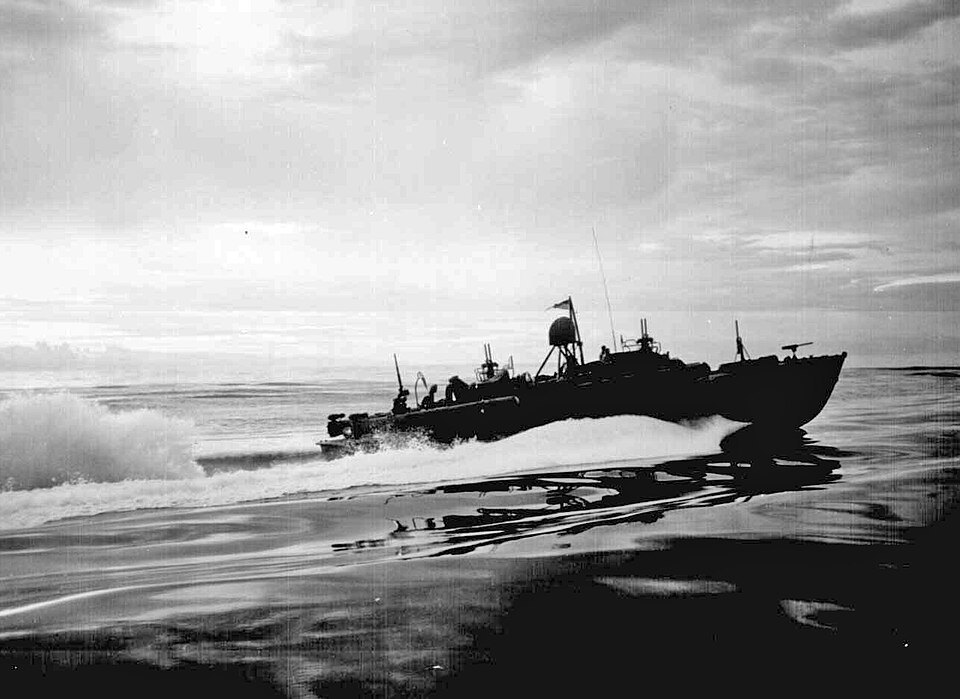
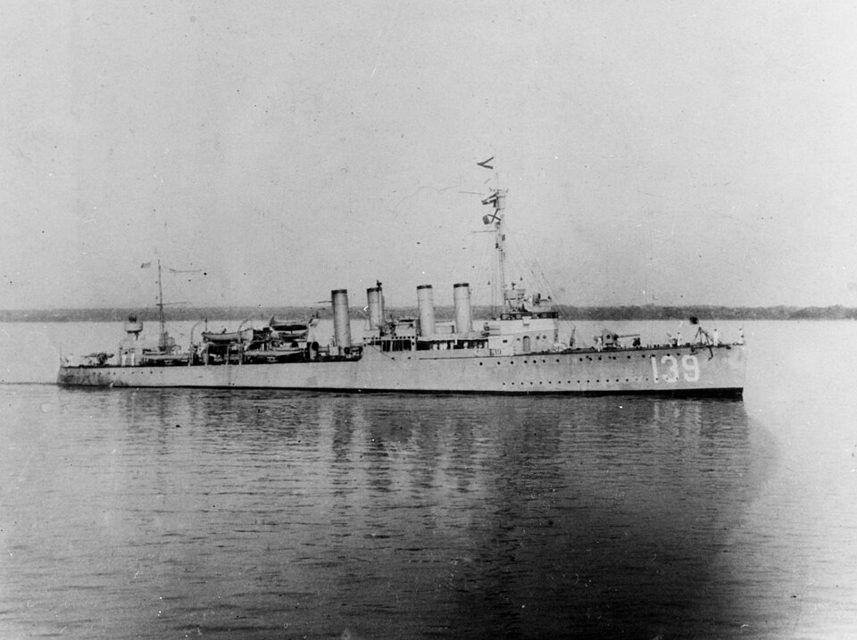
In or near Tulagi Harbor were about fifteen motor torpedo boats and their tender Niagara, the tanker Kanawha waiting for an escort, three tugs, the naval transport Stratford, six coastal transports, and eight newly arrived tank landing craft. Moa was fueling from the station tanker Erskine M. Phelps. The minesweeper Conflict, the net tenders Butternut and Aloe, and an old New Zealand coaster were also there. The account does not name that coaster. On the Guadalcanal side, the survey ship Pathfinder had five boats sounding in Lunga Roads, and Vireo and Ortolan were nearby. Two quadruple 40 mm mounts stood on the heights of Tulagi. The fast transport Ward neared the harbor that afternoon. At 1510 she went to general quarters, stood out, and helped to bring down two planes.
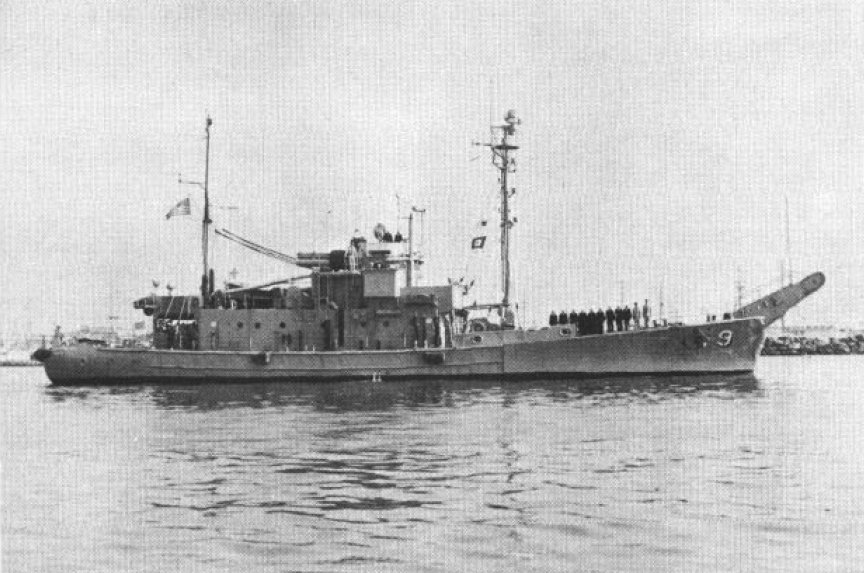
Tiler Kaune, of the Naval Reserve, had Butternut. The harbor account does not say she was hit. Her one battle star is the consolidation of the northern Solomons, later in the war, not this afternoon. Lieutenant Donald Baker Howard, of the Naval Reserve, had Aloe, moored to the Sturgis Dock. She was not hit. Her 3-inch gun and four .50-caliber guns claimed one dive bomber shot down, one possible, and one damaged. That day is her southern Solomons star. Captain Bascom H. Thomas, of the Naval Reserve, had Pathfinder. She left the boats, and about a quarter of the crew with them, and went to flank speed. Near misses damaged the rudder. The boats took wounded men off Aaron Ward (DD-483). She was not sunk.
Kanawha
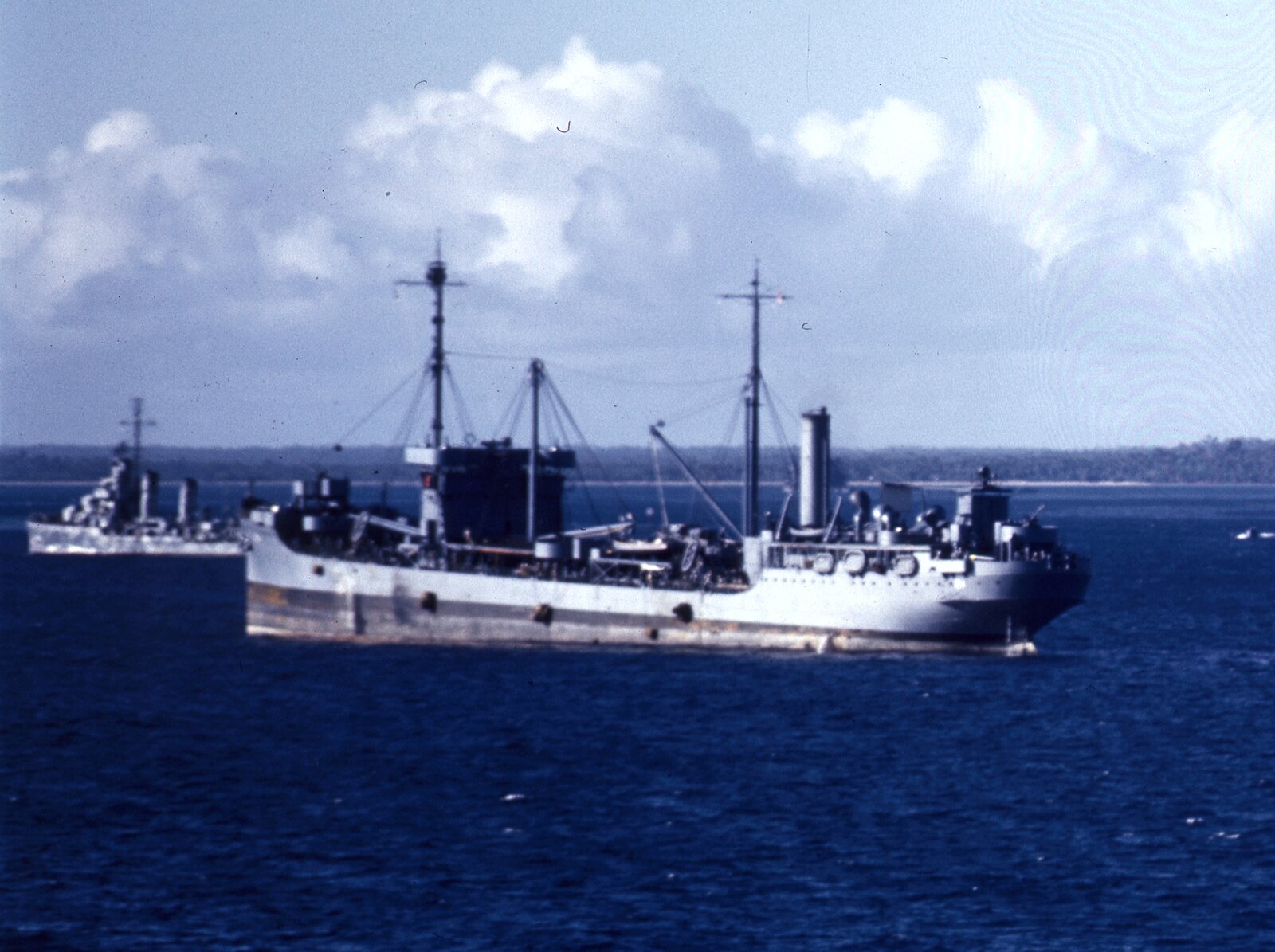
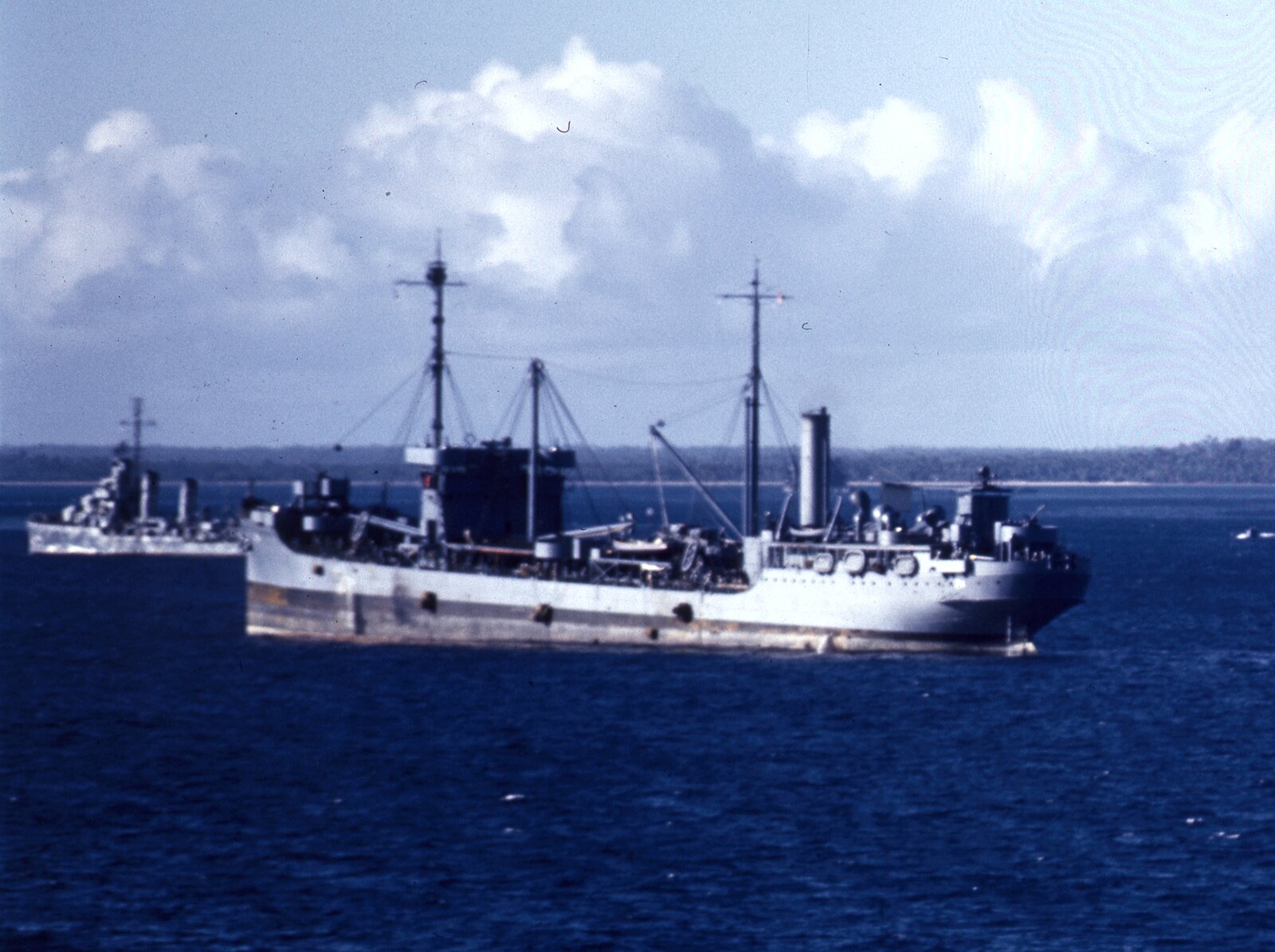
Lieutenant Commander Brainard Norton Bock had Kanawha. He had relieved Commander John Gilbreth Cross on 5 January 1943. She had warning and wanted to leave, but the senior officer present afloat at Guadalcanal, Rear Admiral Fort, directed her to wait for an escort and to fuel it before she sailed. A group of Val dive bombers came through the fighter defense. Forty-eight planes were sighted from the direction of Savo Island, eighteen of them going on toward Tulagi and fifteen making for the oiler. At 1502, shortly after she cleared the harbor, the first five planes hit an oil tank under the bridge. Fires spread along the deck. Bock ordered the ship abandoned, to get the crew away from burning oil on the water. After the rescue was underway, volunteers went back aboard and put out fires while ammunition exploded.
The minesweeper Rail towed her to the west side of Tulagi. She is the minesweeper AM-26, the same ship that was tied up outboard of Niagara in the river that afternoon. Kanawha was beached shortly before midnight. She slid off into deep water and went down at 0400 on 8 April, before daybreak, northeast of Soghonangola Island at the entrance to Tulagi Harbor. Nineteen of her crew were lost. She was struck on 19 May 1943 and received one battle star. Bock commissioned the oiler Kennebago on 4 December 1943, so he was not among the nineteen.
Aaron Ward
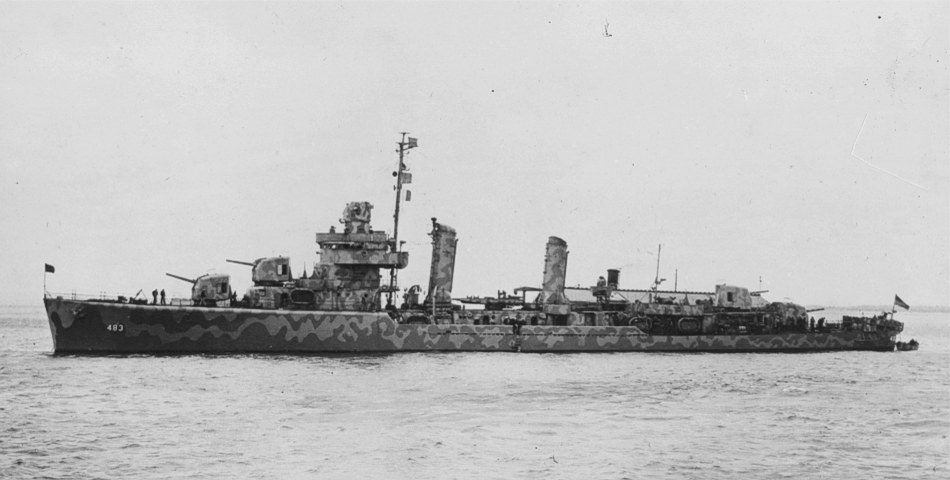
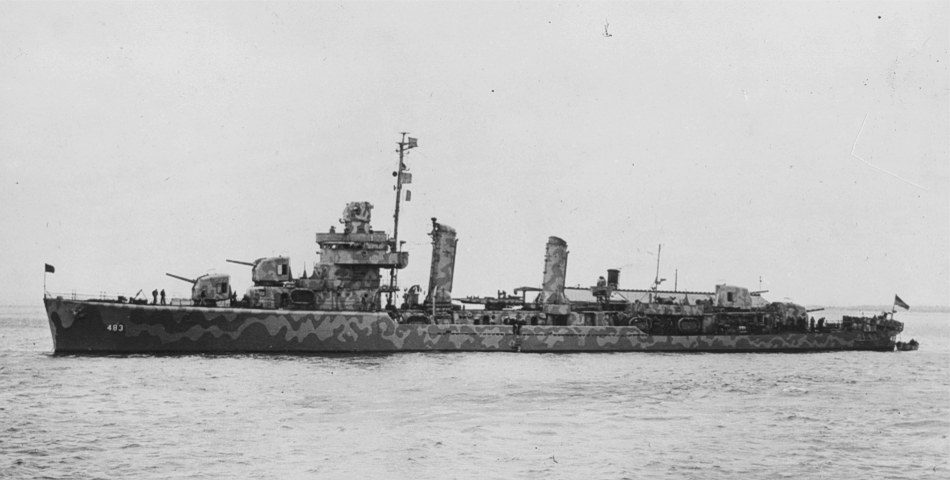
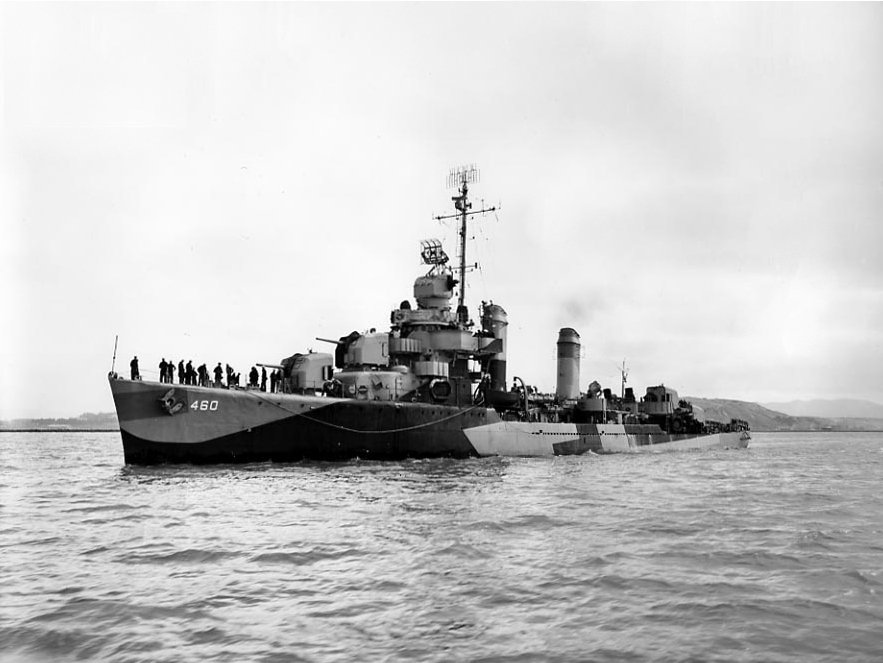
Commander Frederick Julian Becton had Aaron Ward (DD-483). He had relieved Commander Orville Francis Gregor on 18 February. She had gone ahead of Ward and three tank landing craft, bound from the Russell Islands toward Savo, to give them cover into Tulagi. About noon she was warned of a raid. About 1330 she was ordered off that convoy to cover LST-449 off Togoma Point. She joined the landing ship at 1419. Lieutenant (junior grade) John F. Kennedy was a passenger on LST-449. He was not in command of the destroyer or of the landing ship. Lieutenant Carlton Stanley Livingston, of the Naval Reserve, had the landing ship. Three aircraft came out of the sun and dive-bombed the destroyer. One bomb hit the engine room and cut power to the 5-inch and 40 mm mounts. Two near misses holed her below the waterline, one into the forward fireroom and one on the port side near the after engine room, and she lost steering. A second trio scored more near misses after power and steering were gone. The crew kept firing under local control.
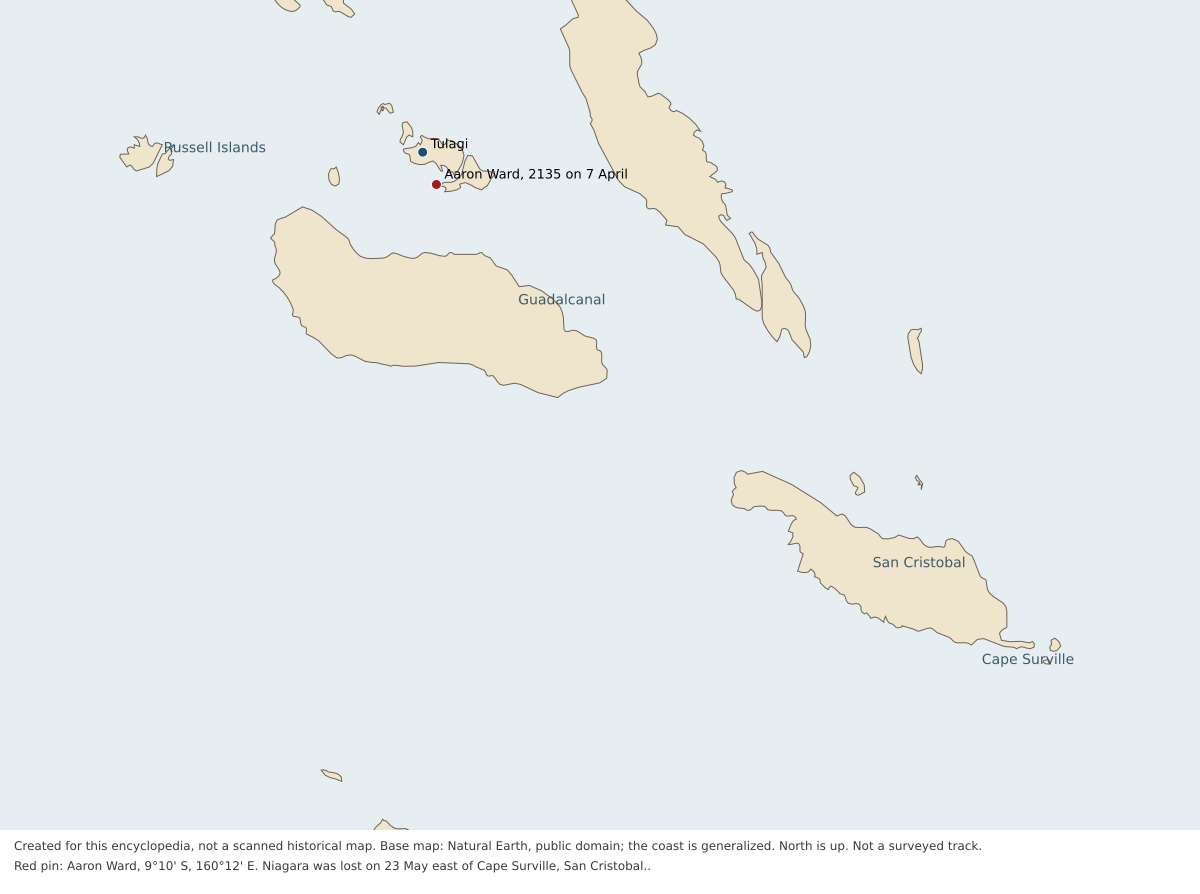
Twenty men were killed, seven were missing, and fifty-nine were wounded. Lieutenant Commander Ashley L. Holland had the submarine rescue ship Ortolan. She and the minesweeper Vireo tried to tow Aaron Ward onto a shoal near Tinete Point, on Nggela Sule, Florida Island. Vireo is the minesweeper AM-52. At 2135 Aaron Ward (DD-483) went down stern-first in about forty fathoms, about six hundred yards short of the beach, near 9°10′S, 160°12′E. The wreck was found on 4 September 1994.
Moa
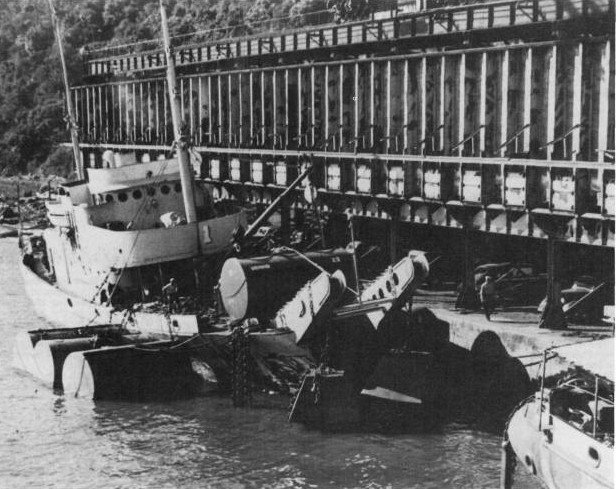
Lieutenant Commander Peter Phipps, Royal New Zealand Navy, had Moa. She was a Kiwi-class minesweeping corvette, built by Henry Robb at Leith, launched on 15 May 1941, and commissioned on 12 August 1941. In January 1943 she and Kiwi took part in the destruction of the submarine I-1 off Guadalcanal. On 7 April she was still alongside Erskine M. Phelps when the bombers arrived. Two bombs aimed at that tanker hit the corvette instead, and she went down in four minutes with five men lost. One bomb passed through the captain's cabin and out the bottom before it exploded, and a second burst in the boiler room. Phipps was wounded, by shrapnel in the arms and legs and by a broken ankle. Five ratings were killed. She lies in Tulagi Harbor.
The ships that stayed afloat
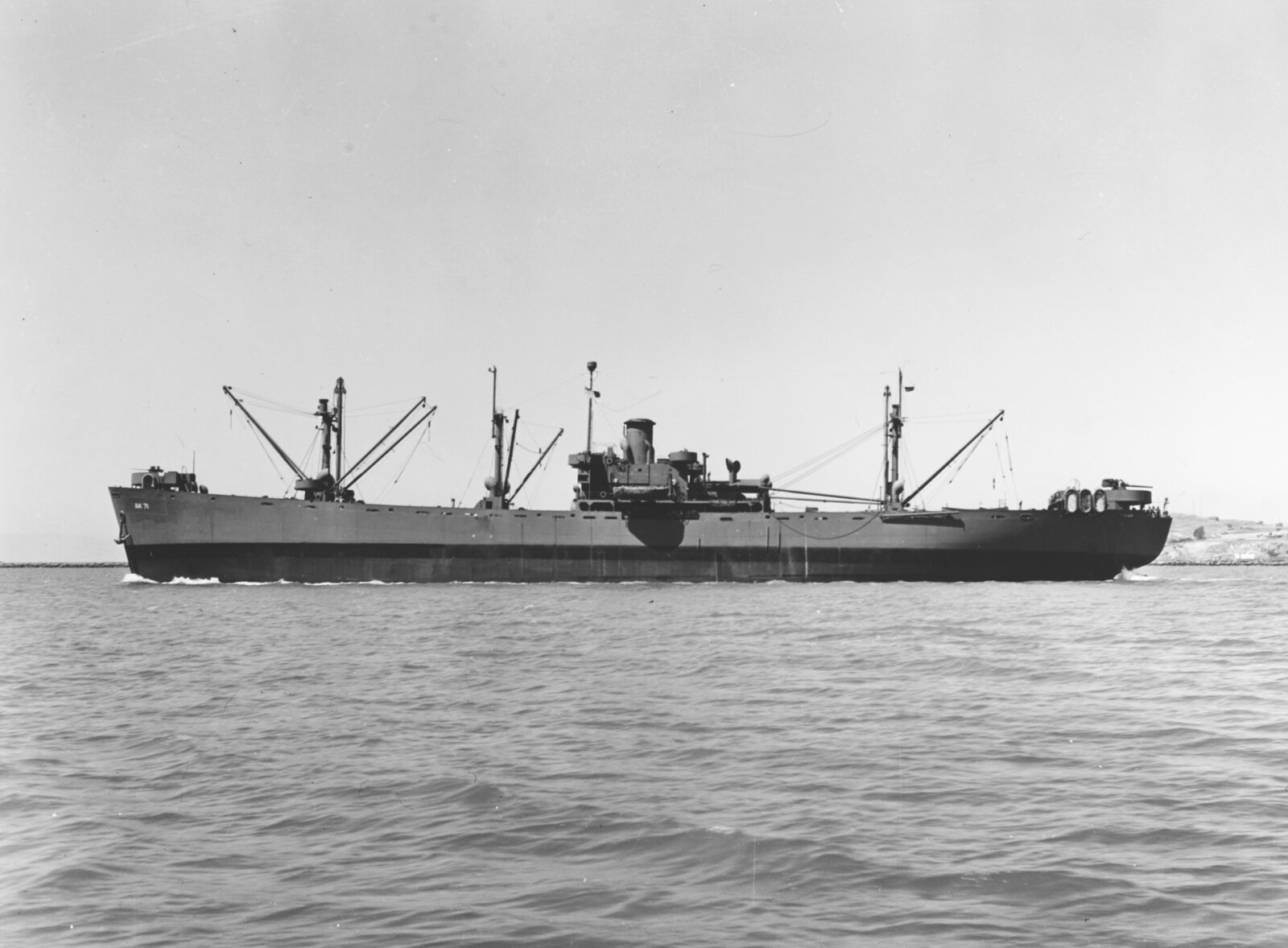
Lieutenant Commander William Warren Ball, of the Naval Reserve, had Adhara, the cargo ship AK-71. She had been the Liberty ship G. H. Corliss, commissioned on 16 November 1942, and she was working the South Pacific run for Service Squadron 8. While she was at Guadalcanal on 7 April, five bombs exploded close aboard and punctured the hull in three places. Jury patches were put on at Espiritu Santo. She then went to Australia, and later to a dry dock at Wellington, before a navy-yard overhaul at Mare Island. She was not lost.
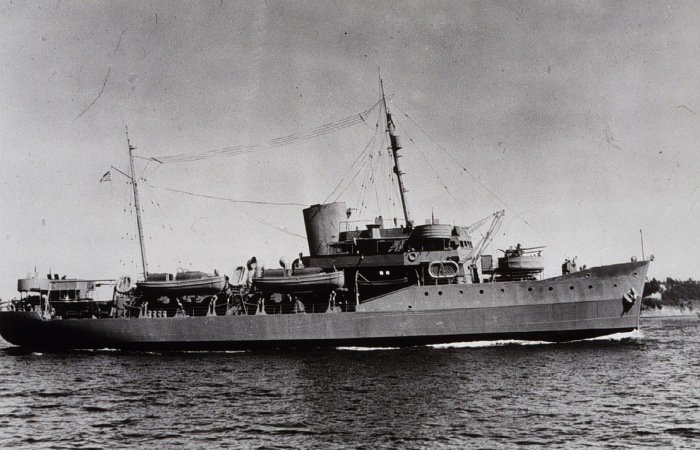
Commander Alf Ole Ruh Bergensen had Tappahannock, the oiler AO-43. On 1 April a Grumman J2F Duck attached to Enterprise had crashed into her mainmast at Espiritu Santo and damaged the radar. She shifted to Tulagi. On 6 April she went to Lunga Point and transferred fuel and diesel to Kanawha and to the yard oiler YO-147, and aviation gasoline to tanks ashore. That night a nuisance raid dropped bombs astern and did not hit her. On 7 April she was still off Lunga, pumping aviation gasoline, when the warning came. She disconnected the hose and got underway with Woodworth and Farenholt, smokeless, at about 17 knots, through Lunga Channel. For about five minutes the dive bombers made her the target. One bomb fell abaft the bridge and a near miss showered the bridge and took the way off her. Her gunners brought that plane down. Another bomb exploded off the starboard quarter, and a fifth exploded just alongside. The hull plates were dished. Her companions were not hurt, and Woodworth claimed one of the bombers. She reached Espiritu Santo, where repair crews from Vestal patched her topside and below the waterline. Vestal was not in the sound that afternoon.
Niagara in the Maliali River
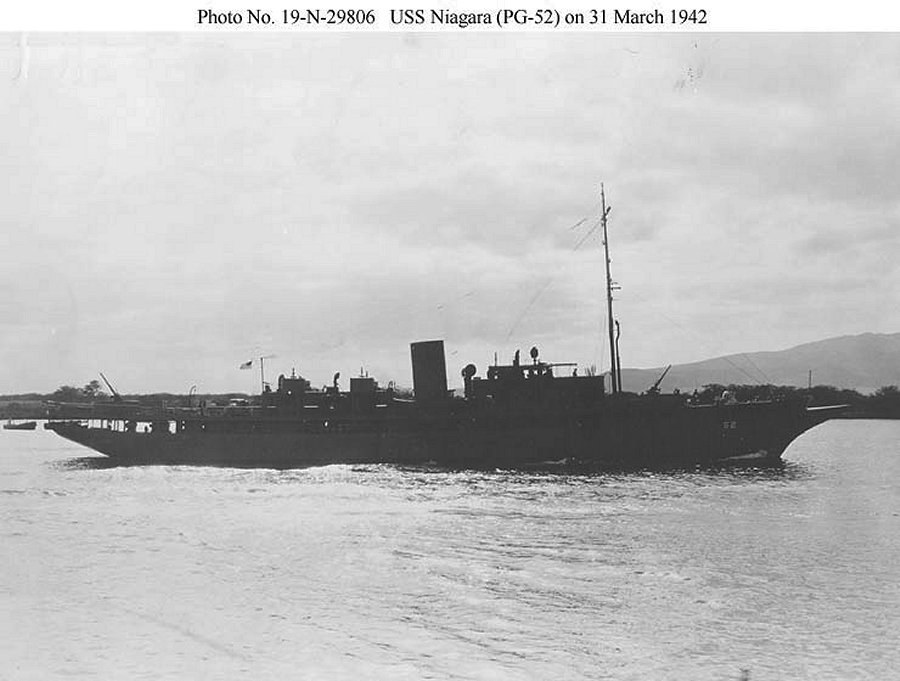
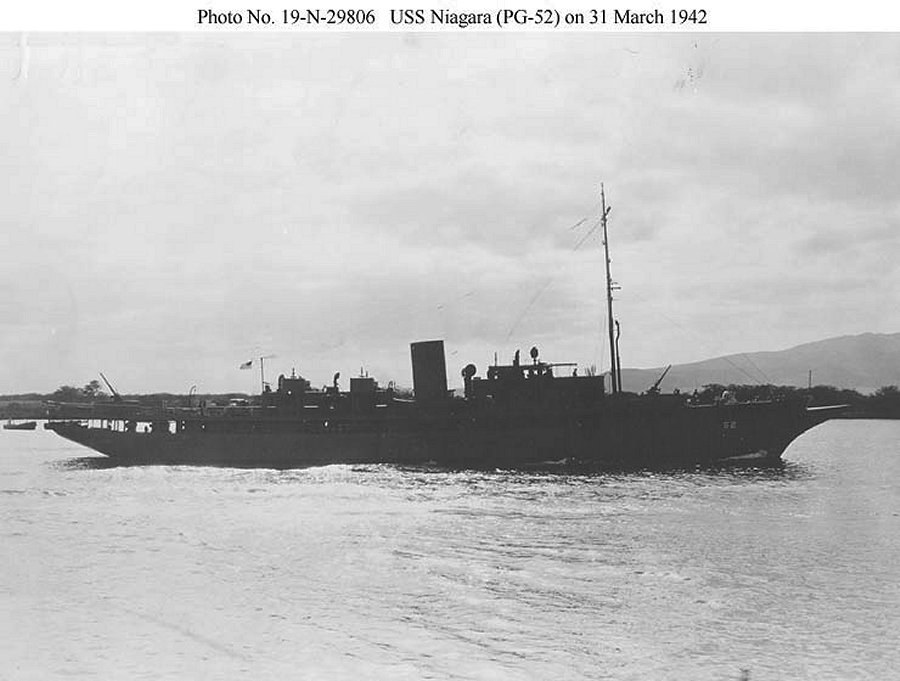
On 7 April Niagara was north of the harbor, moored to the west bank of the Maliali River, heading downstream. Rail was tied up outboard and well aft. Nine planes came up the river, none of them more than 150 feet above the water, and Niagara and Rail took them under fire. The first plane was already burning and crashed into trees about 1,000 yards astern. The next two got away. The fourth lost altitude in a stream of white smoke and exploded behind the hills to the north. The next two passed within 150 yards and tried to strafe. Their fire was erratic. They wobbled as they went through the ships' fire and crashed into the woods off Niagara's port quarter. The last two sheared up and to the right when the guns found them. One trailed light brown smoke and disappeared close over the hilltops abaft the port beam. The other passed to starboard and crashed in the hills on the starboard quarter. Niagara was not hit.
23 May, a separate attack
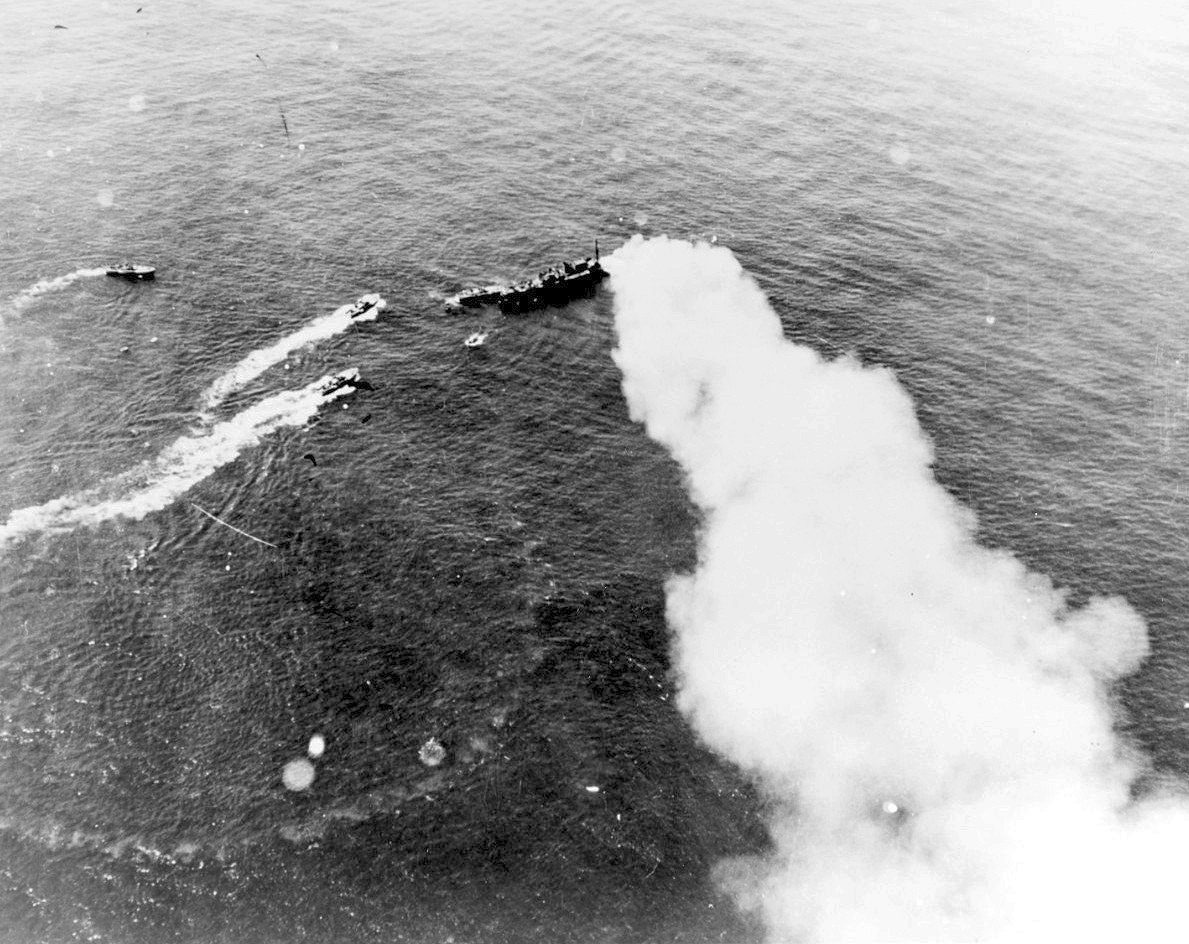
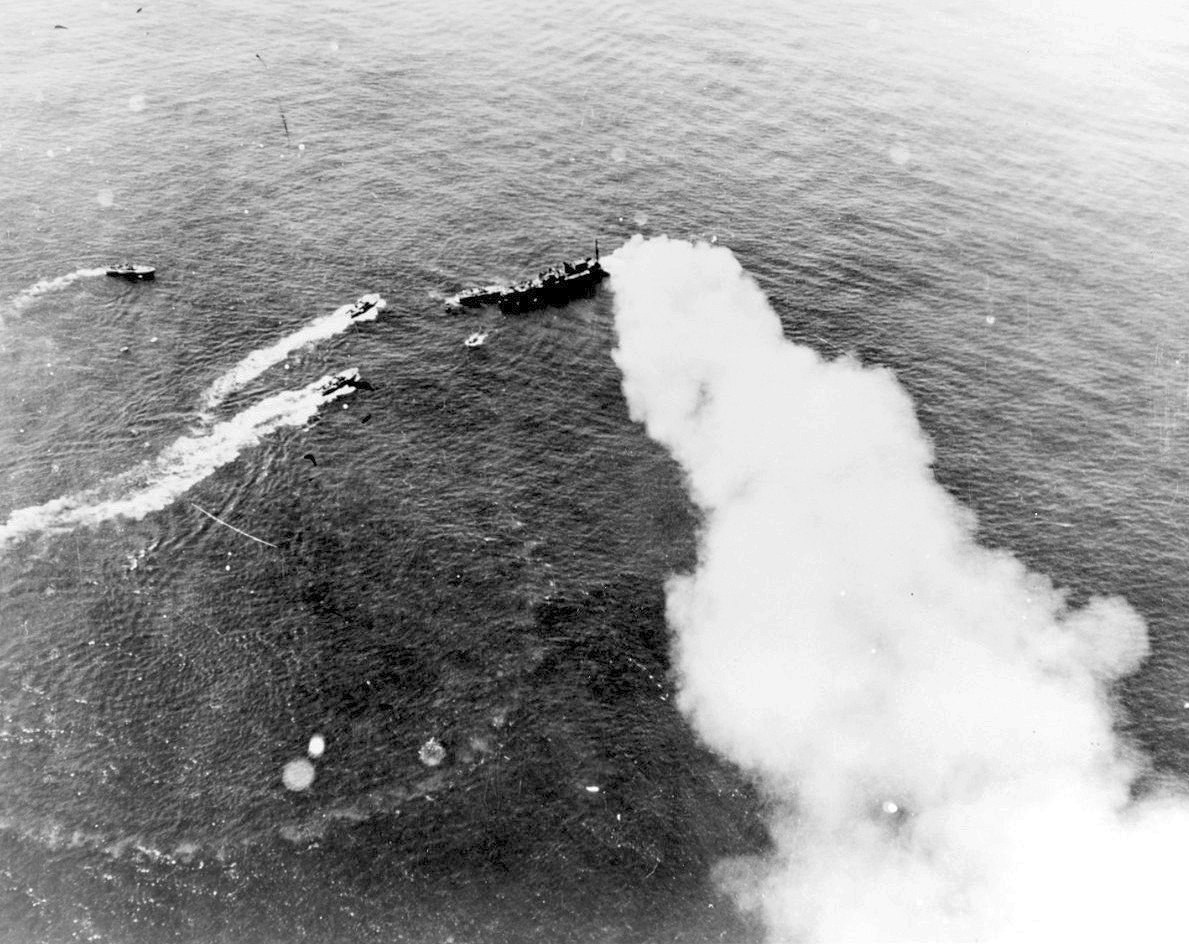
On 22 May Niagara and Motor Torpedo Boat Division 23 left Tulagi, headed toward New Guinea. The next morning, 23 May, east of Cape Surville on San Cristobal, one high-flying Japanese twin-engine plane dropped four bombs. She turned hard to starboard at full speed until the bombs were released, then swung hard to port. Three near misses to starboard and one to port damaged the sound gear and the training gear of one 3-inch gun, and steering was out for a time. Half an hour later, with steering back, six more twin-engine planes dropped a pattern of more than a dozen bombs. One hit the forecastle. Others were damaging near misses. Water came through a 14-inch hole six feet below the waterline and flooded two storerooms, a passageway, and the engine room. Power, lighting, and the main engines failed. Fire below decks forward got out of control, and she listed rapidly to port.
Engines and steering were restored seven minutes after the attack. The list, and the gasoline tanks, made abandonment the order. PT-146 and PT-147 came alongside the stern and took off some of the crew. Others went over the side into rafts and boats and were picked up by other motor torpedo boats. She was then burning from bow to bridge. Flame was moving aft, and ammunition was going off on deck. None of the 136 officers and men was killed or seriously wounded. PT-147 fired a torpedo into the gasoline tanks. Flame went up about 300 feet, and she went down in less than a minute. The boats landed her crew at Tulagi early the next morning.
Lieutenant David Buncombe Coleman had her. He had taken command on 27 November 1941 and was still in command when she was lost. She had been the patrol gunboat PG-52. On 13 January 1943, still on the way out from the United States, she was reclassified the motor torpedo boat tender AGP-1. She received one battle star. The 23 May attack was a separate raid, six weeks after the April strikes of Operation I-Go.
A note on sources
The American ship actions are the Dictionary of American Naval Fighting Ships entries for Aaron Ward (DD-483), Kanawha, Niagara, Adhara, Tappahannock, Ortolan, LST-449, and Ward (DD-139, the fast transport). Niagara's entry is volume V, page 80. A transcription of that entry spells the ship Niagra, the yacht Hi-Esmare, the corvette Moe, and the river Maliali. The yacht name is Hi-Esmaro. The corvette is HMNZS Moa. The Dictionary spells Kanawha as Kanawah and Ortolan as Ortalan. NavSource dates Niagara's loss 22 May 1943. The Dictionary, the caption of photograph 80-G-68537, and Coleman's relief date put the bombing and the loss on the morning of 23 May, after she had sailed on 22 May. The place, east of Cape Surville, is that caption's. No latitude and longitude for that loss appears in these accounts. The Dictionary gives her one battle star and does not name the campaign.
Kanawha's Dictionary entry and NavSource give the 1502 hit, the beaching, the 0400 loss on 8 April northeast of Soghonangola Island, nineteen men lost, the striking on 19 May 1943, and one battle star. Her account calls Rail a tug. Niagara's account calls Rail the minesweeper AM-26 and puts her outboard in the Maliali River during the same raid. The registers spell Bock's given name Brainerd. NavSource spells it Brainard. His command of Kennebago from 4 December 1943 shows he was not among the nineteen. Morison names Rear Admiral Fort as the senior officer present who held Kanawha for an escort. George H. Fort, who had commanded North Carolina until December 1942, is the officer of that name. The rank on 7 April is Morison's rear admiral, not the captain's rank of the battleship tour. Aaron Ward's account calls Vireo a tug. She is the minesweeper AM-52. Ward's entry credits her with helping to bring down two planes.
The Dictionary gives Aaron Ward one hit in the engine room and two flooding near misses, twenty killed, seven missing, and fifty-nine wounded, and the position 9°10′S, 160°12′E. Morison says the after engine room was torn apart and both firerooms were flooded, and that she had no time to shoot. The combinedfleet account of Junyo says her aircraft hit Aaron Ward with five bombs, and that Hiyo's planes struck Kanawha and Moa. The Dictionary's one hit and two near misses disagree with those five bombs. American accounts often tie the dive bombers to Junyo and sometimes say part of the formation may have been Army planes. Junyo's account places her planes in the strike and the ship at Truk. Hiyo's account notes the 1 April detachment and does not describe 7 April. The Hiyo attribution for Kanawha and Moa is in the Junyo account. Zuikaku's account detaches the squadrons on 2 April and does not say they flew on 7 April. Zuiho is named with Zuikaku in that detachment order. The Zuiho account has no April 1943 entry. The four-carrier composition of the dive-bomber waves is Morison, volume VI, pages 120–122.
Moa's loss in four minutes, with five men, alongside Erskine M. Phelps, is Morison. The New Zealand account of the two bombs, the captain's cabin, the boiler room, and Phipps's wounds is the Navy Museum and the communications association. Another account gives two direct hits and two near misses. A published coordinate for her wreck in Tulagi Harbor is not from a 1943 action report. Ward's Dictionary entry gives Adhara and Tappahannock as damaged and gives Kanawha the hull number AO-9. She is AO-1. That entry does not name Moa. It also puts Taylor, Farenholt, and Sterett in company with Ward on the way to Espiritu Santo the next day. Tappahannock's entry places Farenholt, with Woodworth, in the attack. Taylor and Sterett are named for the next day's passage, not for the attack. Vestal repaired Tappahannock at Espiritu Santo and was not in the sound.
The Morison passages are a partial scanned text of the volume. From that text come the ships in and near the harbor, the noon sortie of the three cruisers, Fort's order to Kanawha, the sighting of forty-eight planes with eighteen going on toward Tulagi and fifteen making for the oiler, Pathfinder, and the two bombs on Moa. A published summary that cites those pages gives sixty-seven dive bombers and one hundred ten fighters, and the later dates at Oro Bay, Port Moresby, and Milne Bay. Stratford, Conflict, Butternut, Aloe, Erskine M. Phelps, Pathfinder, the unnamed coastal transports, tank landing craft, and motor torpedo boats, and the six unnamed destroyers with the cruisers, are part of that harbor account. Kiwi and Tui were Moa's flotilla sisters. Kiwi was under repair after I-1. Neither is placed in Tulagi Harbor on 7 April. NavSource dates Lieutenant L. Lisle's tour of LST-449 from June 1643, a typographical error for June 1943. The Dictionary spells Bergensen at Tappahannock's commissioning. One account spells him Bergesen. NavSource spells him Alf Ole Ruh Bergensen, and spells his relief Charles Arthur Swafford. Another account spells that relief Chester. NavSource names Charles H. Jackson, Jr., for PT-147 in November 1943, and does not name the officer on 23 May. Photograph 80-G-68537 is the 23 May loss. The photographs of Kanawha at Tongatabu, of Aaron Ward (DD-483) at New York, and of Niagara at Pearl Harbor and at Suva are earlier. No public-domain chart of the 7 April strike is among the sources. The map is drawn from Natural Earth and marks 9°10′S, 160°12′E.
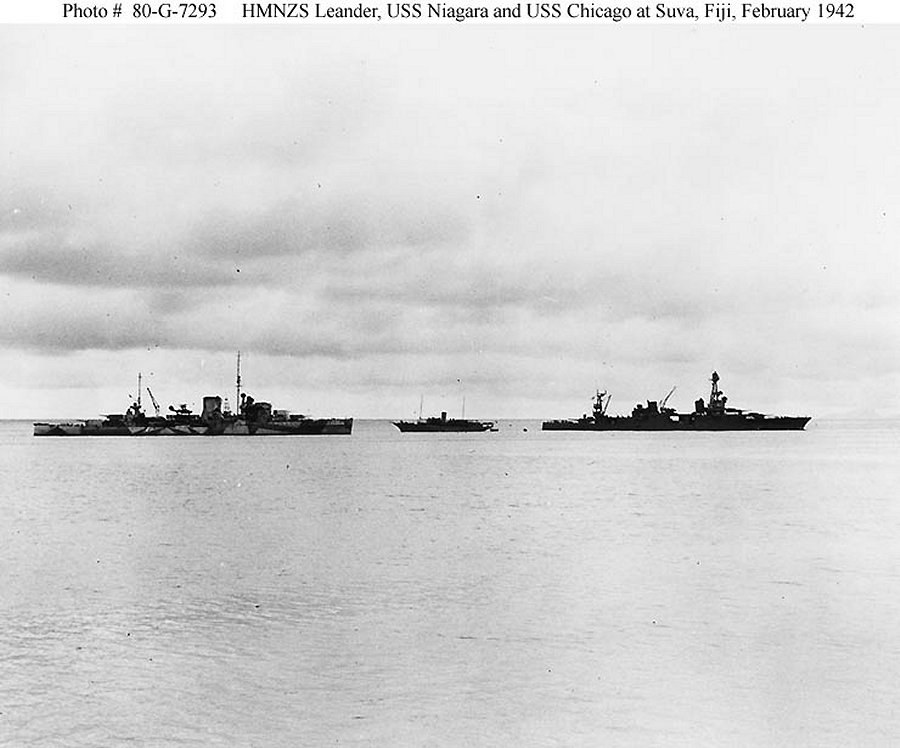
The old New Zealand coaster in the harbor paragraph is not named. Hi-Esmare is the Dictionary's spelling of the yacht Hi-Esmaro. That yacht is Niagara, already on this page. HMNZS Leander is the cruiser in the February 1942 Suva photograph with Niagara and Chicago. She was not in Tulagi Harbor on 7 April. Aloe's Dictionary history puts her at the Sturgis Dock and gives the gun claims. A NavSource account says the planes left Aloe and Butternut alone. Butternut's star is the northern Solomons consolidation, 13 July to 23 October 1944 and 4 to 22 January 1945, not this afternoon. Pathfinder's Dictionary history and the surveyors' recollections place her off Lunga Roads and Berande Point, with boats in the water, two dive bombers claimed, and near misses. Conflict and Stratford stay as names in the harbor sentence.