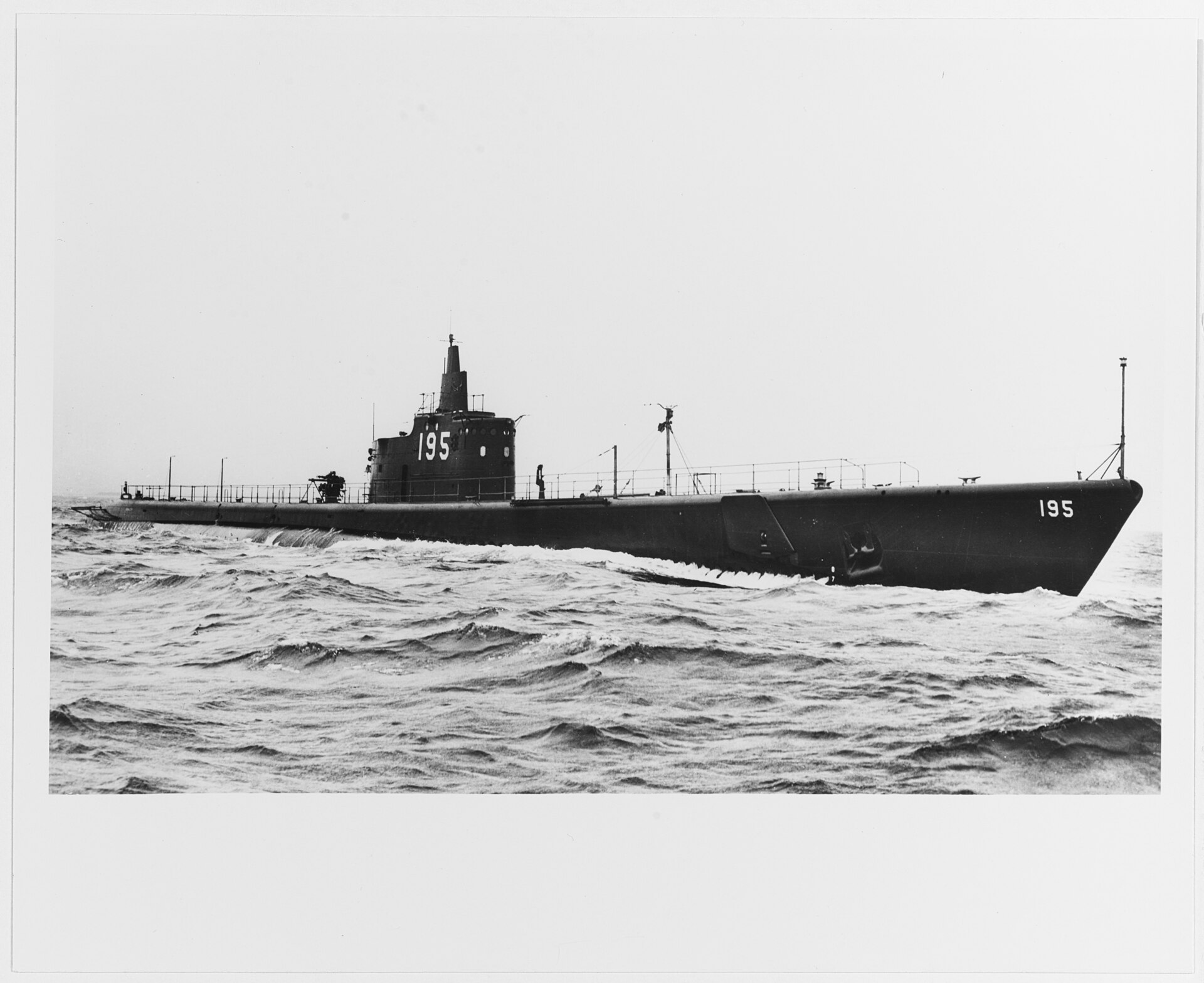
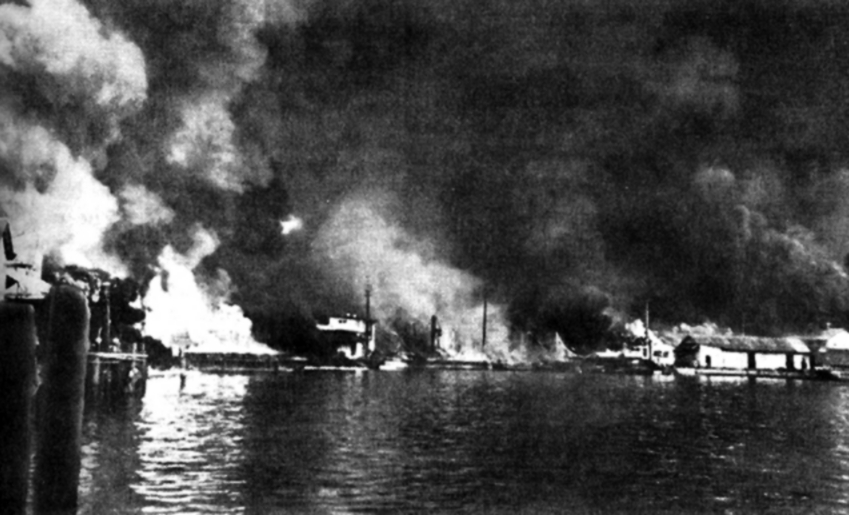
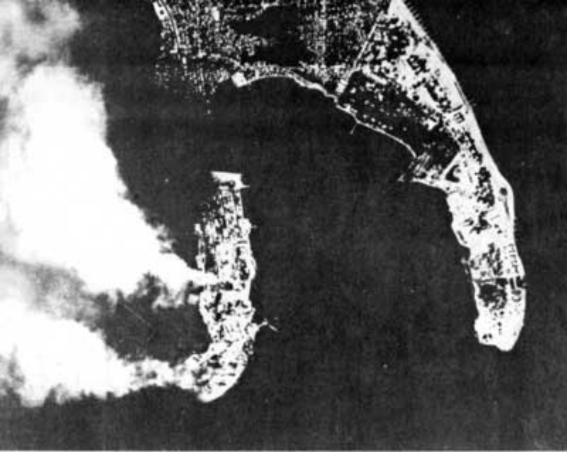
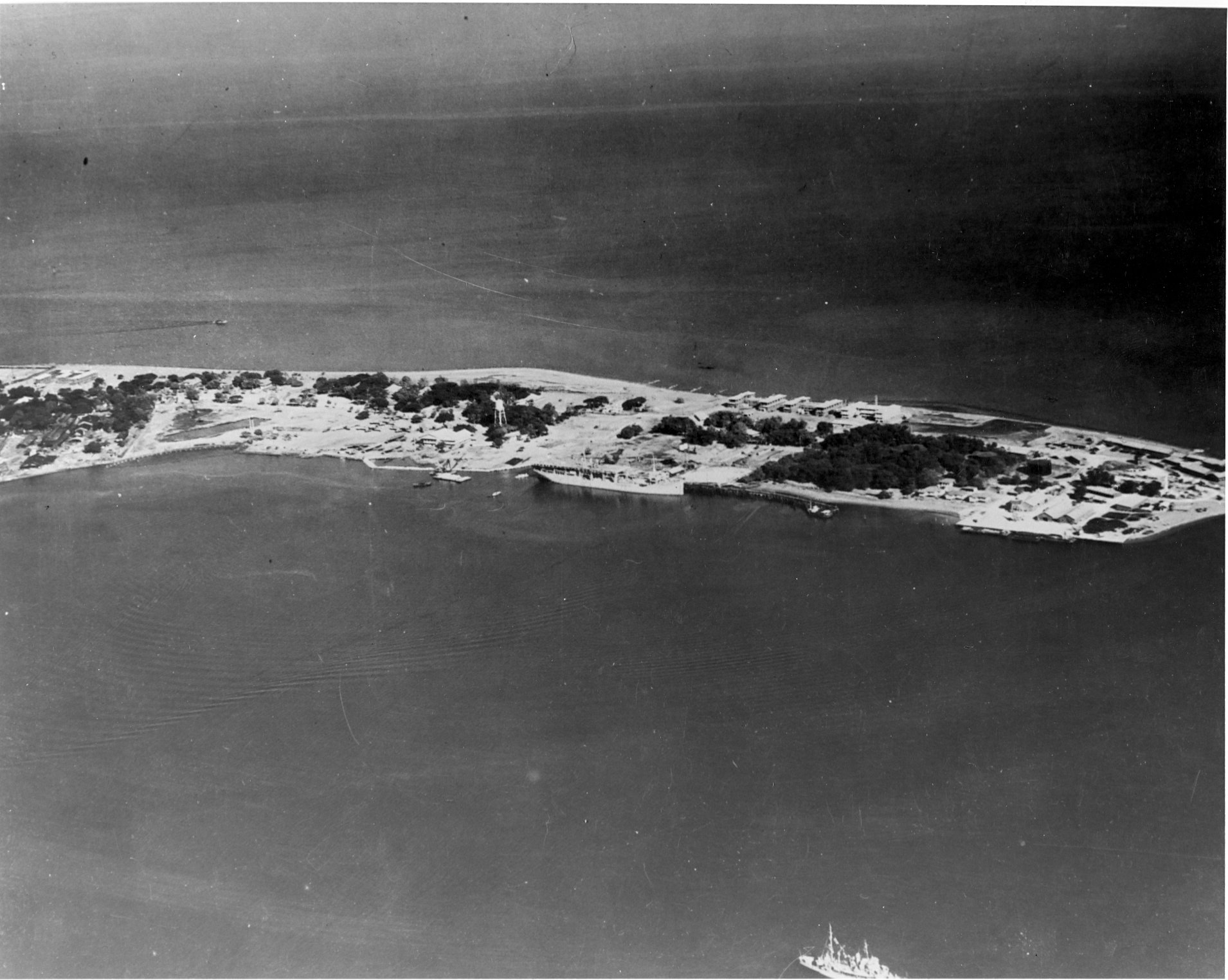
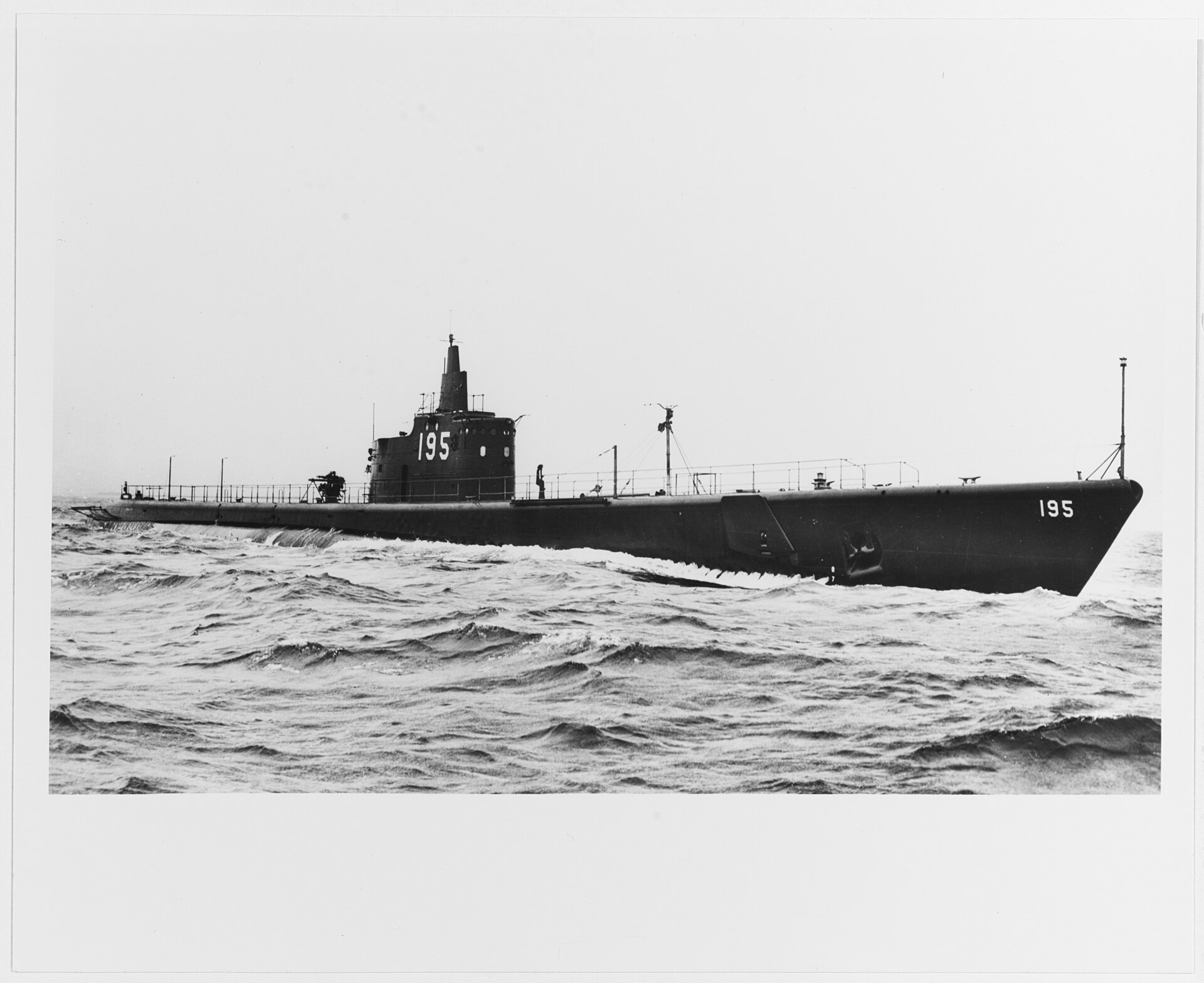
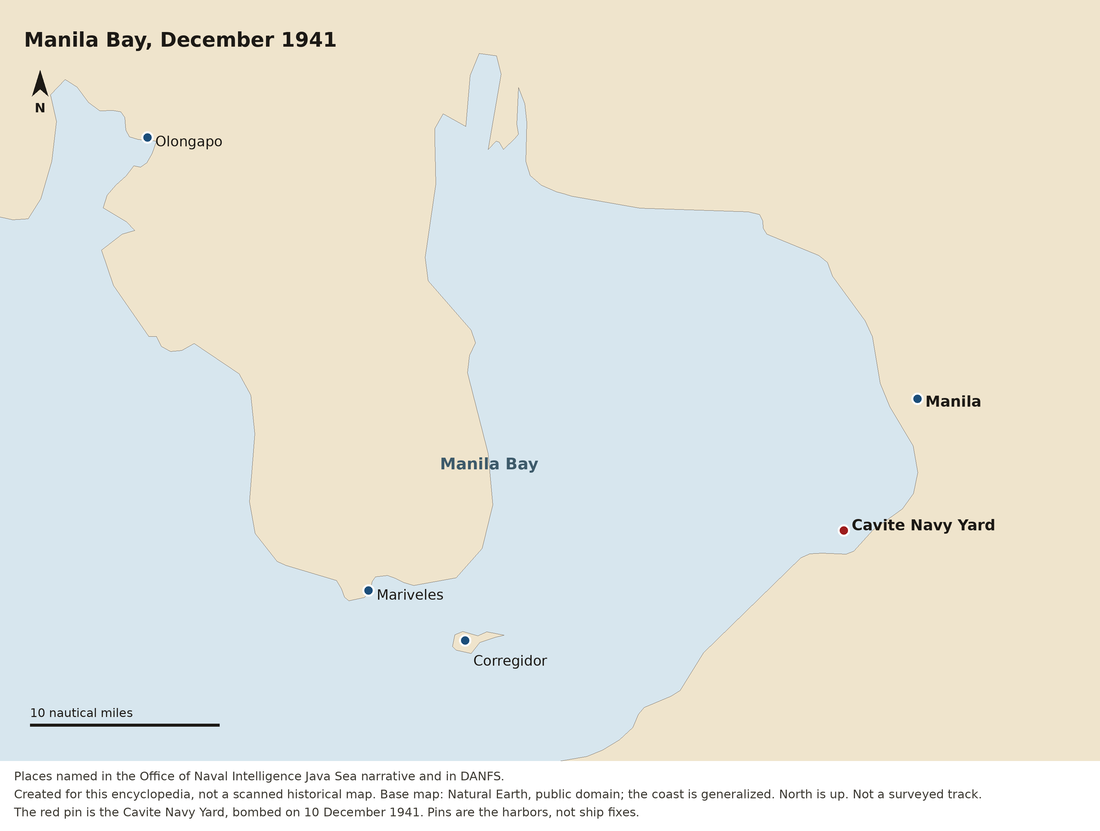
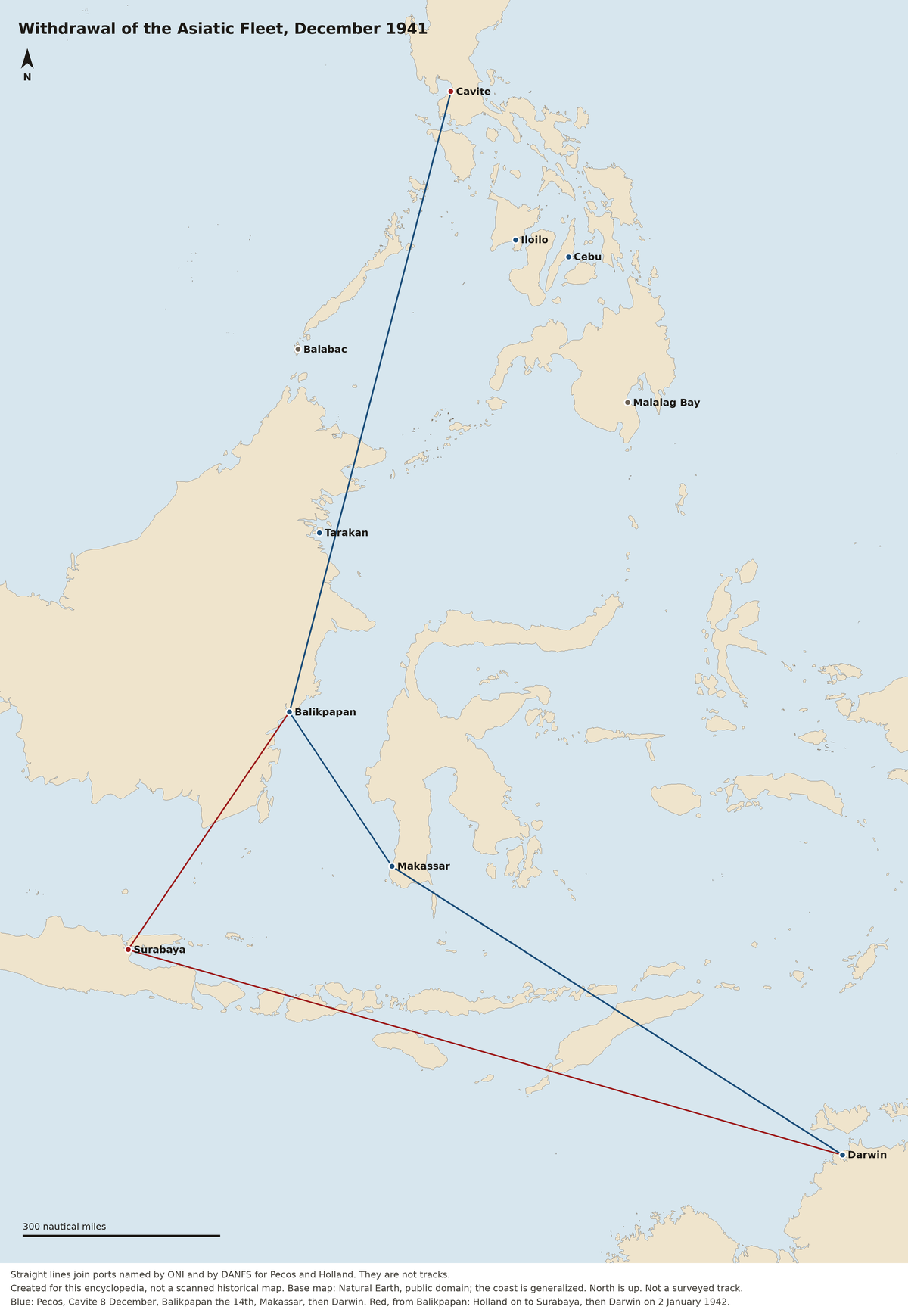
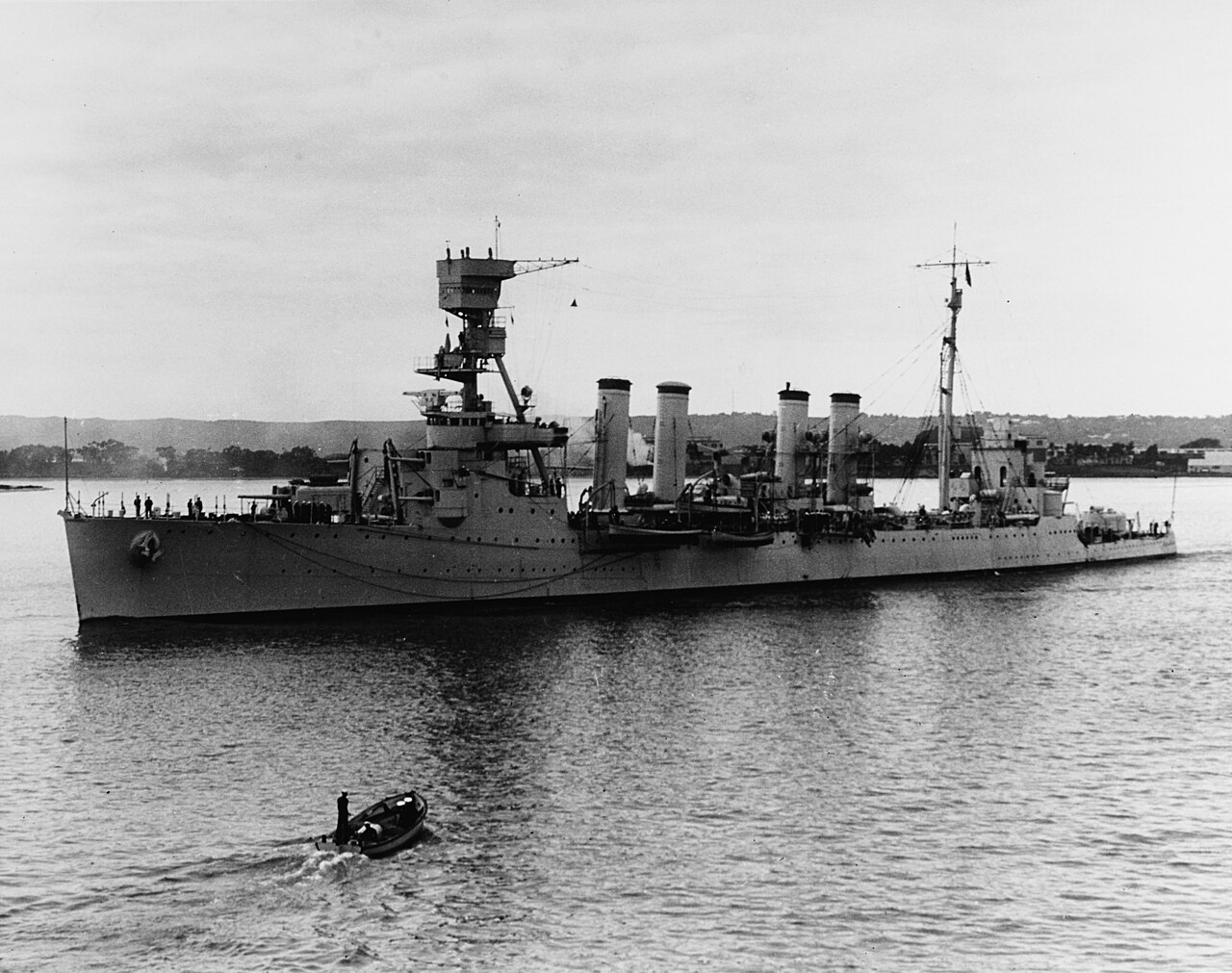
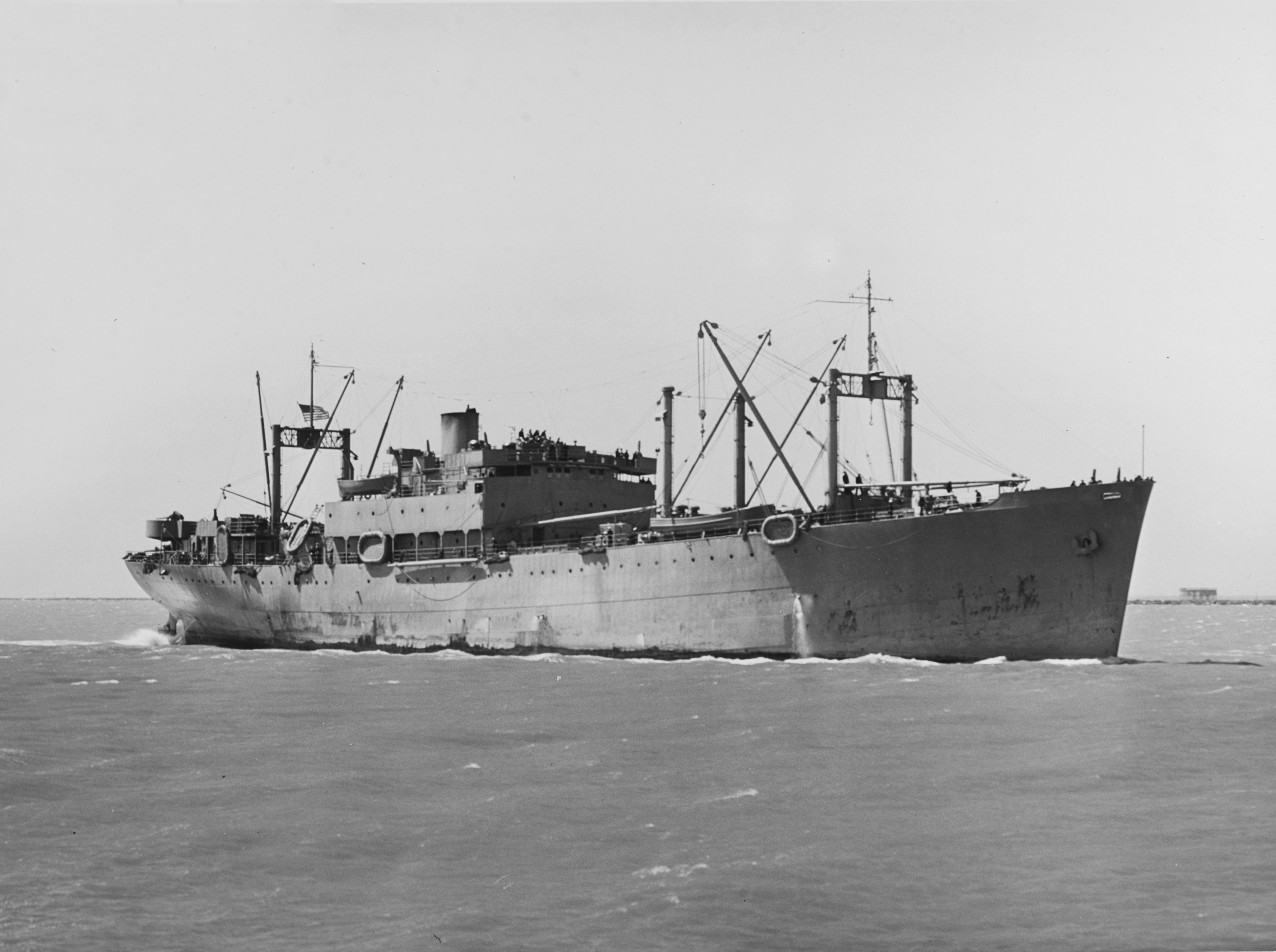
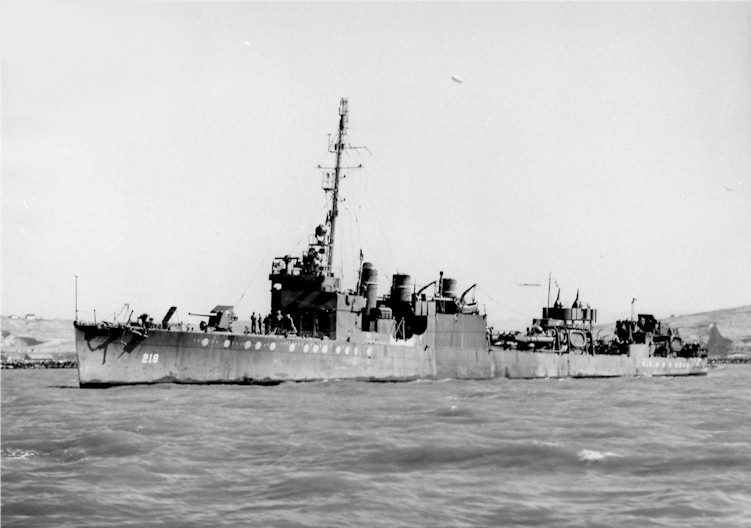
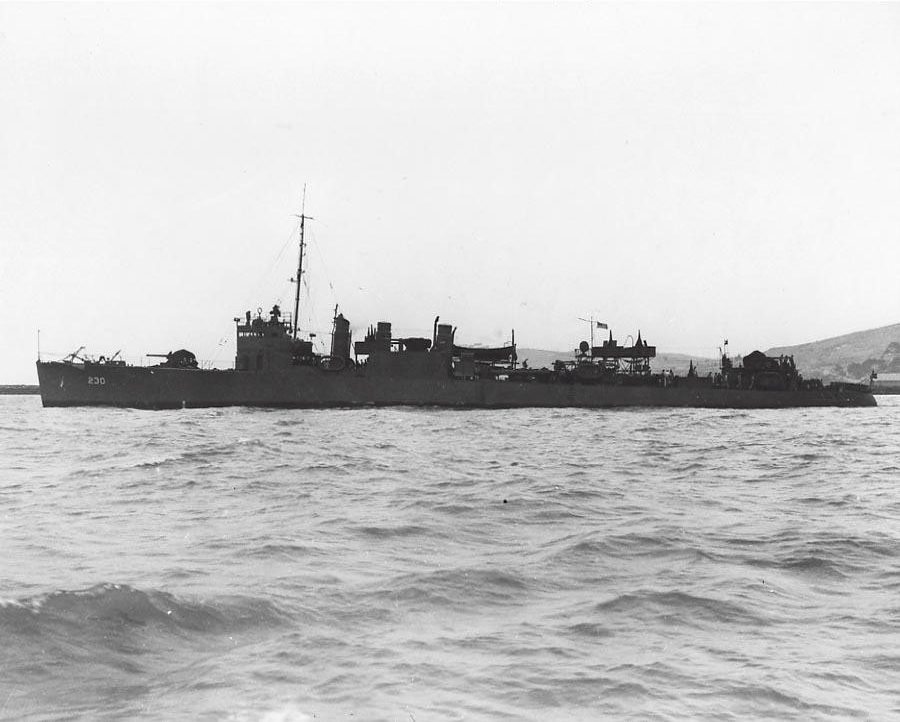
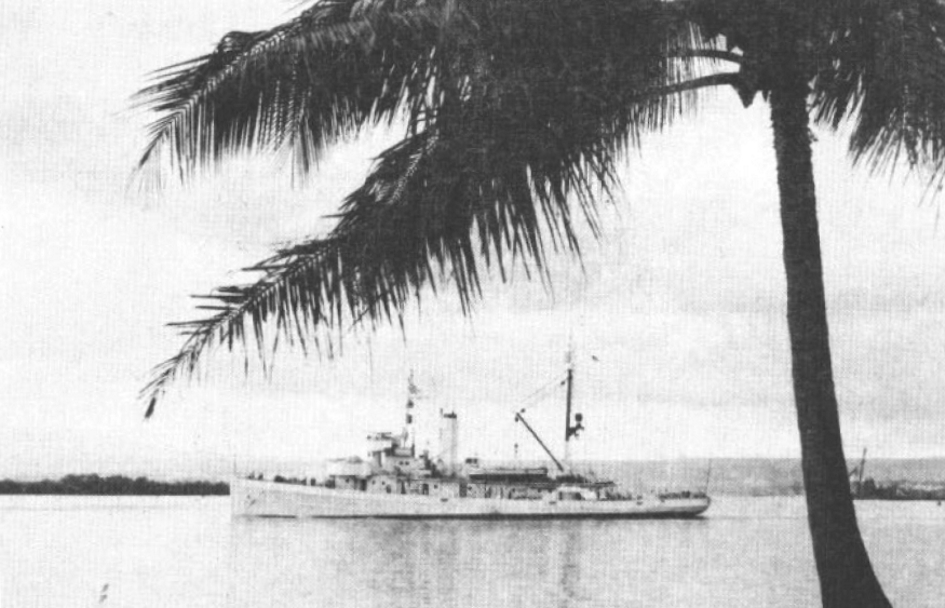
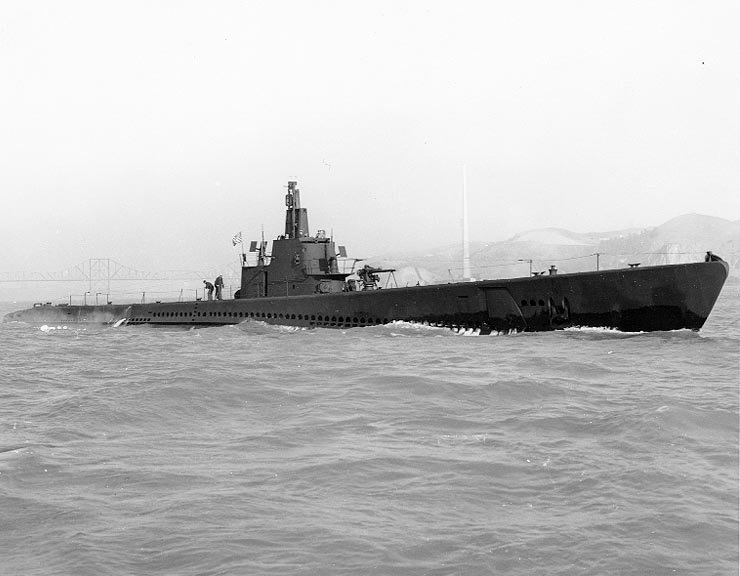
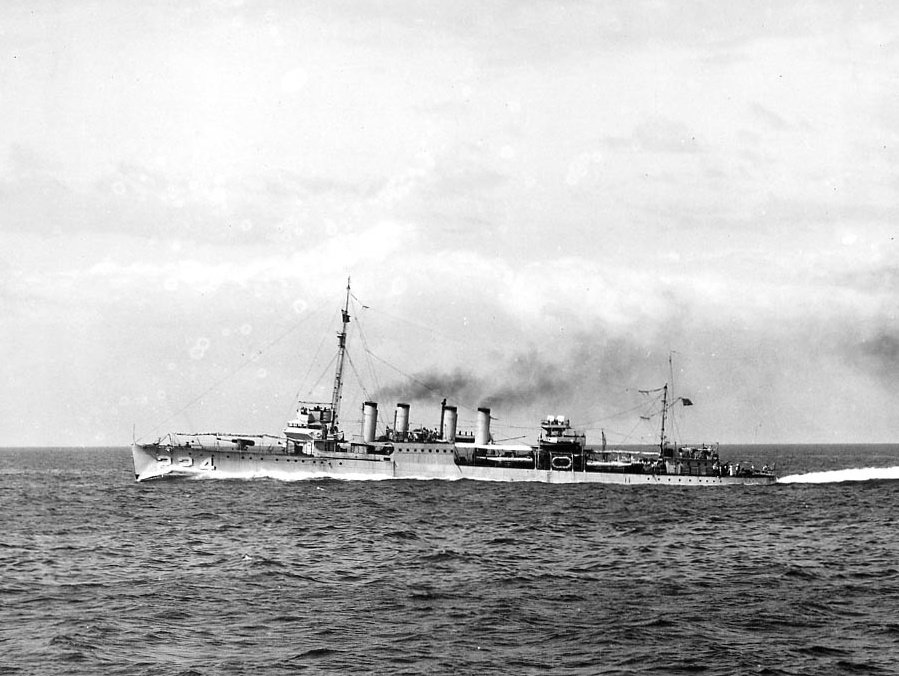
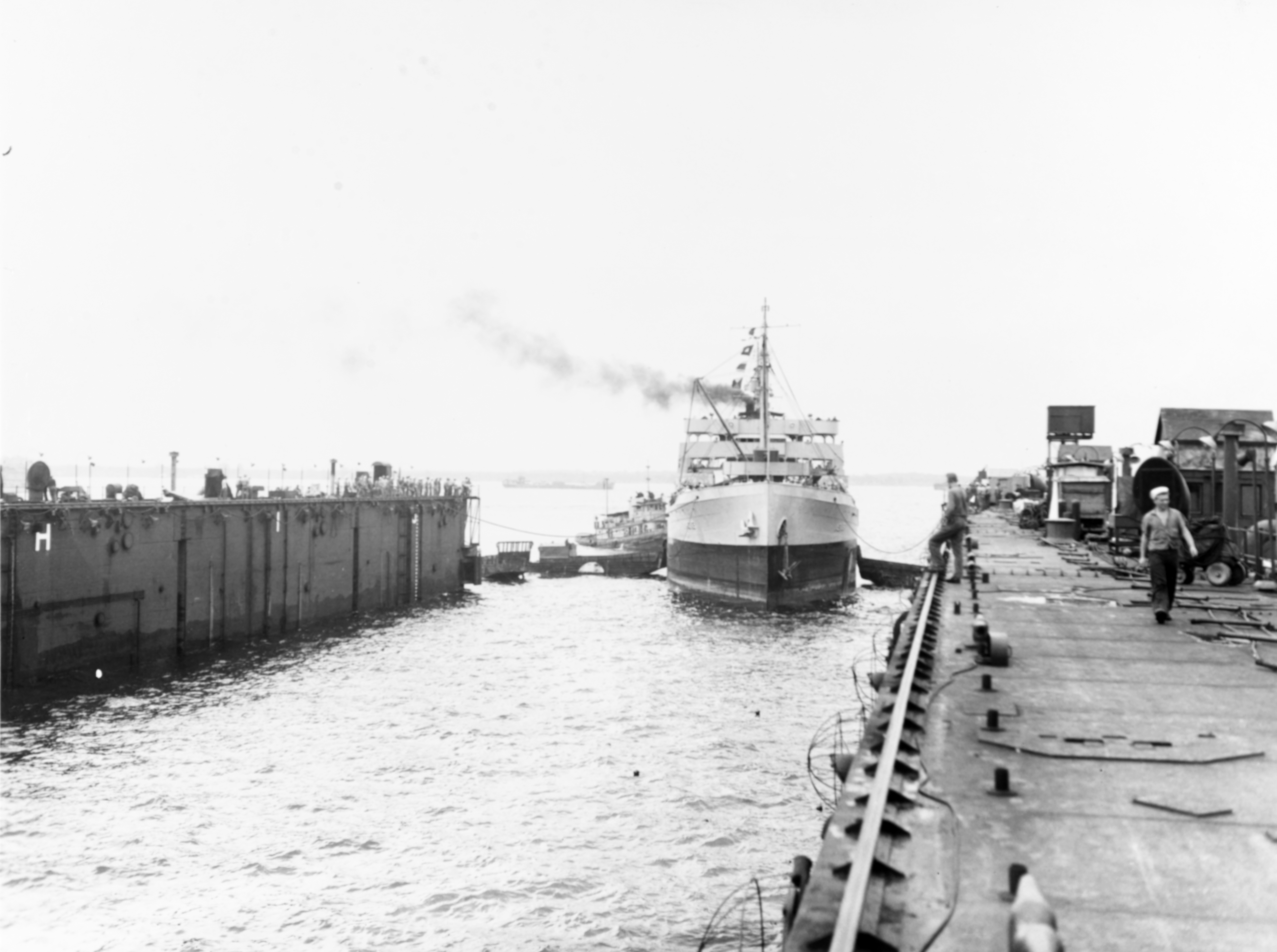
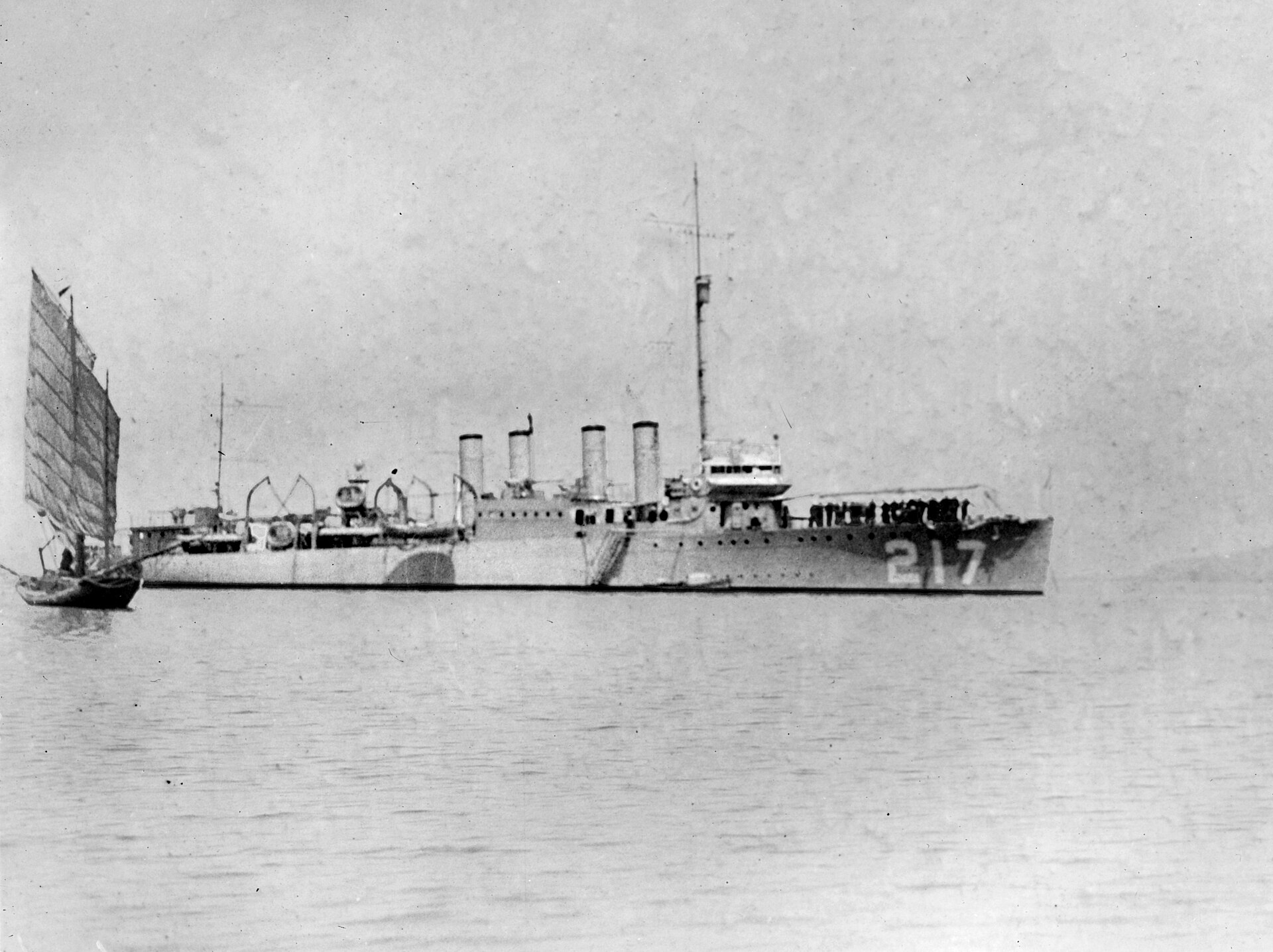
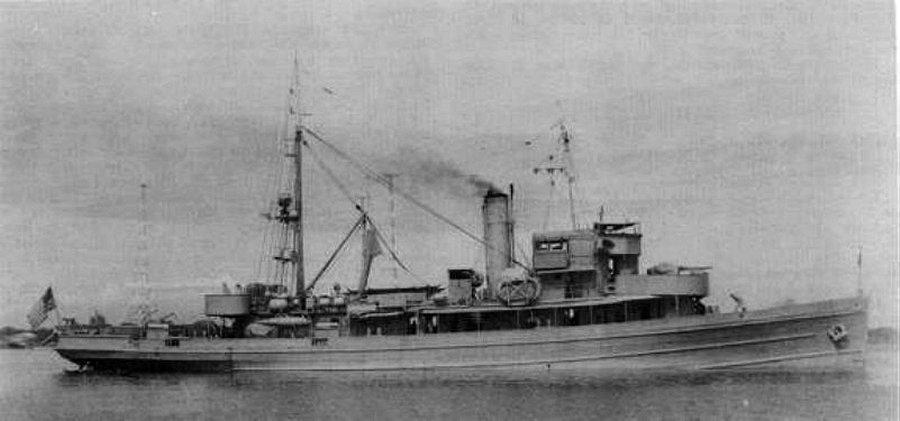
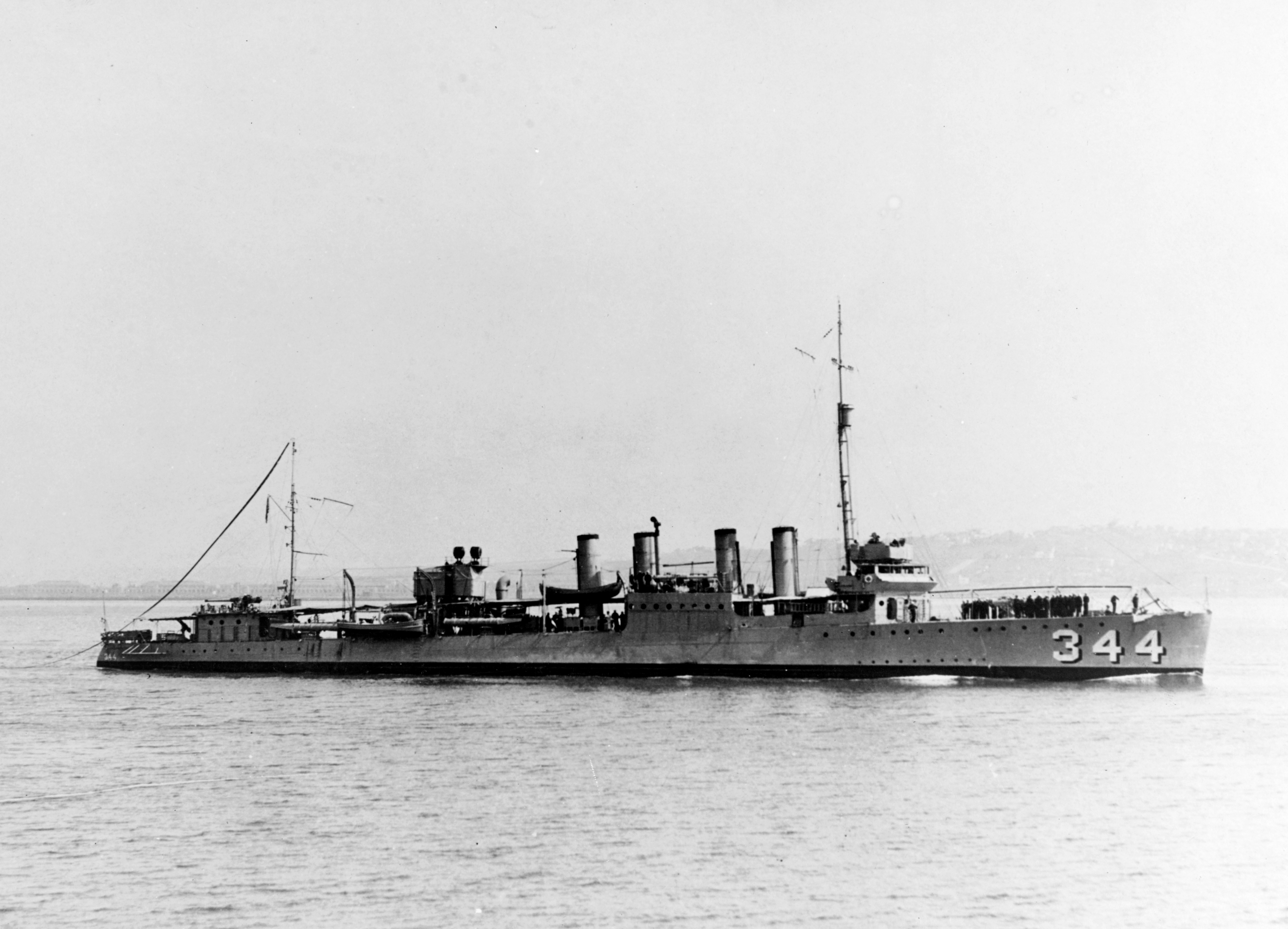
On 8 December 1941, by the Philippine calendar, the Asiatic Fleet heard that Pearl Harbor had been attacked. Two days later Japanese bombers burned the Cavite Navy Yard and destroyed the submarine Sealion (SS-195). The minesweeper Bittern was wrecked beside her and was scuttled in Manila Bay. Most of the fleet was already leaving. The heavy cruiser Houston was at Iloilo. The oiler Pecos had left Cavite on the night of the 8th. The submarine tender Holland sailed on the evening of the 10th. What remained, including the tender Canopus and the rescue vessel Pigeon, stayed through the move to Mariveles and Corregidor. Japanese troops entered Manila on 2 January 1942.
The fleet on 8 December
Admiral Thomas C. Hart commanded the Asiatic Fleet and, with it, the coastal frontier. Rear Admiral Francis W. Rockwell, commandant of the Sixteenth Naval District, had the immediate defense zone off Manila and Subic Bay. Hart kept personal command of the submarines, of Patrol Wing 10, and of the motor torpedo boats. His chief of staff was Rear Admiral William R. Purnell. Rear Admiral William A. Glassford, commander of the Yangtze Patrol, had reached Manila about 1 December. Hart gave him the surface task force.
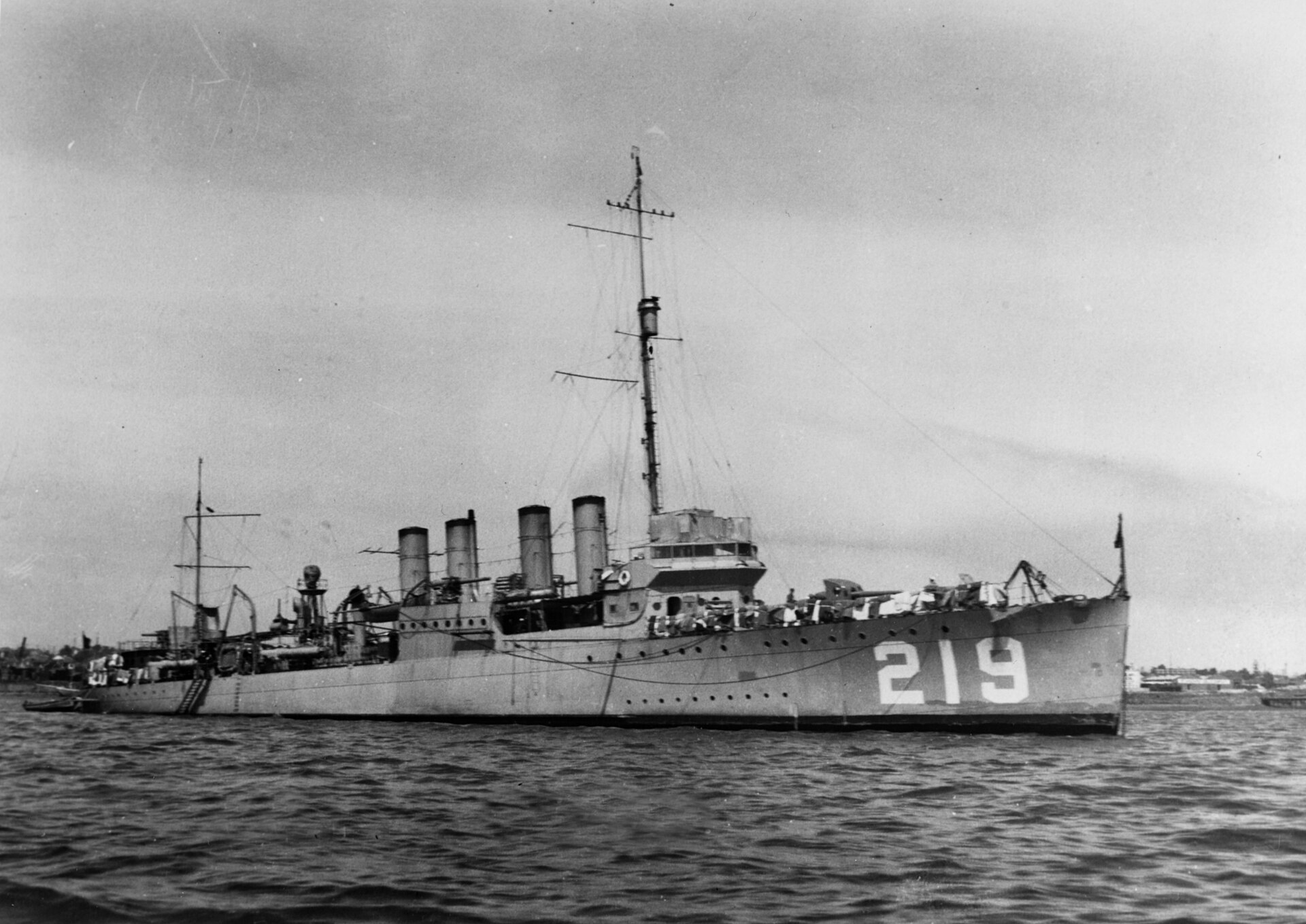
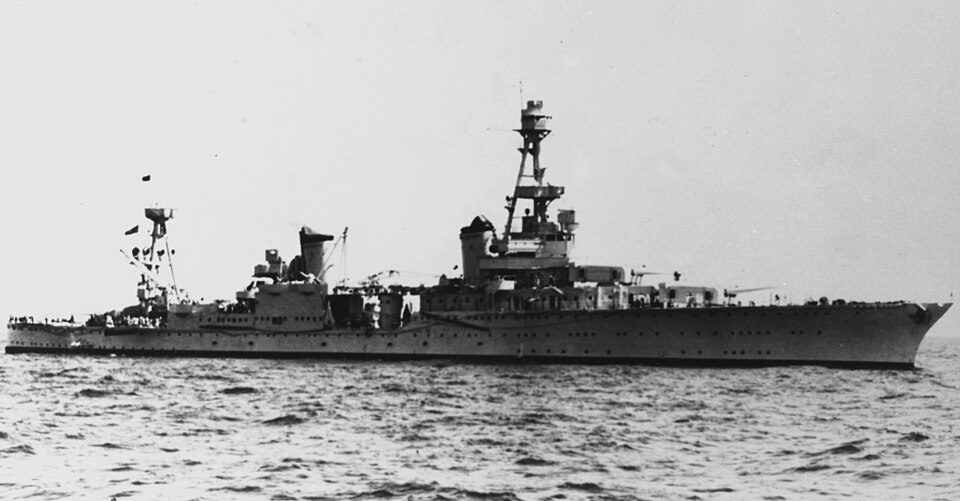
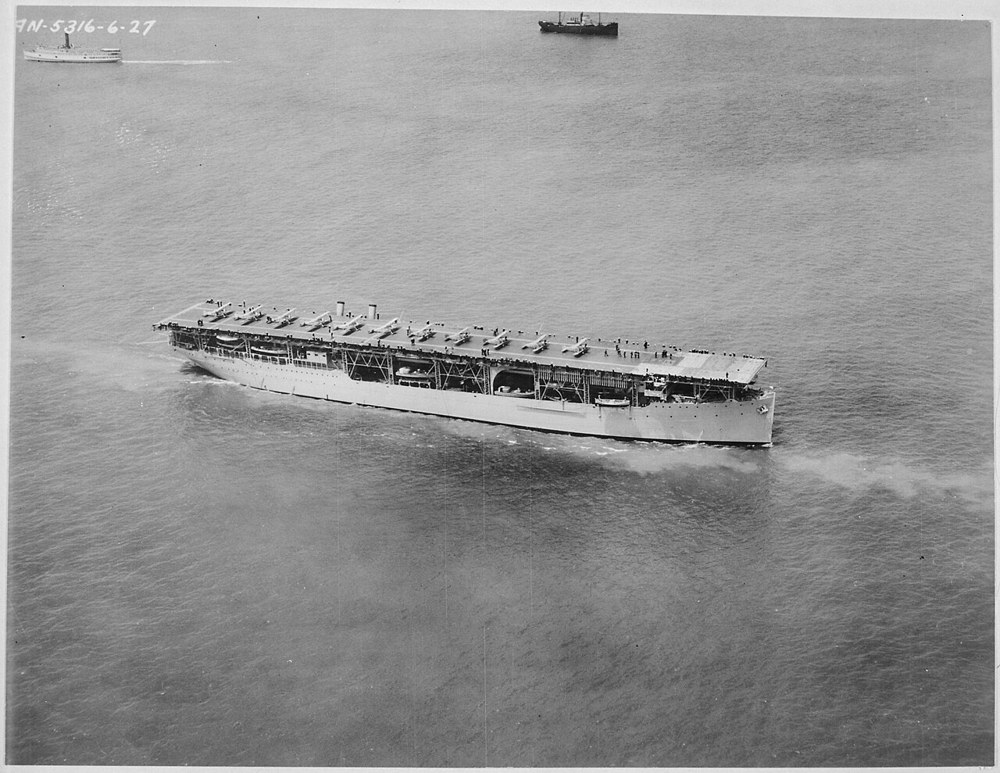
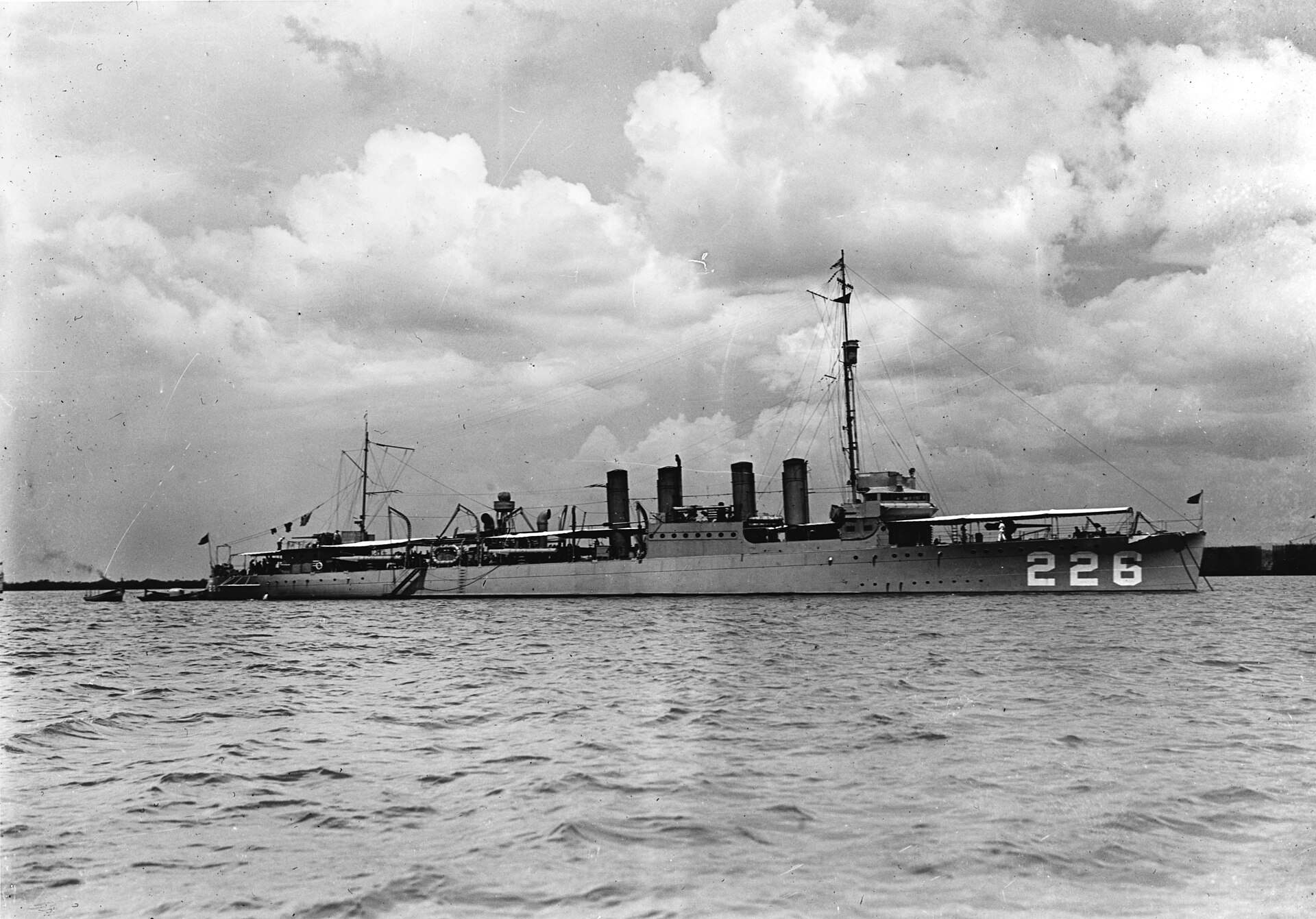
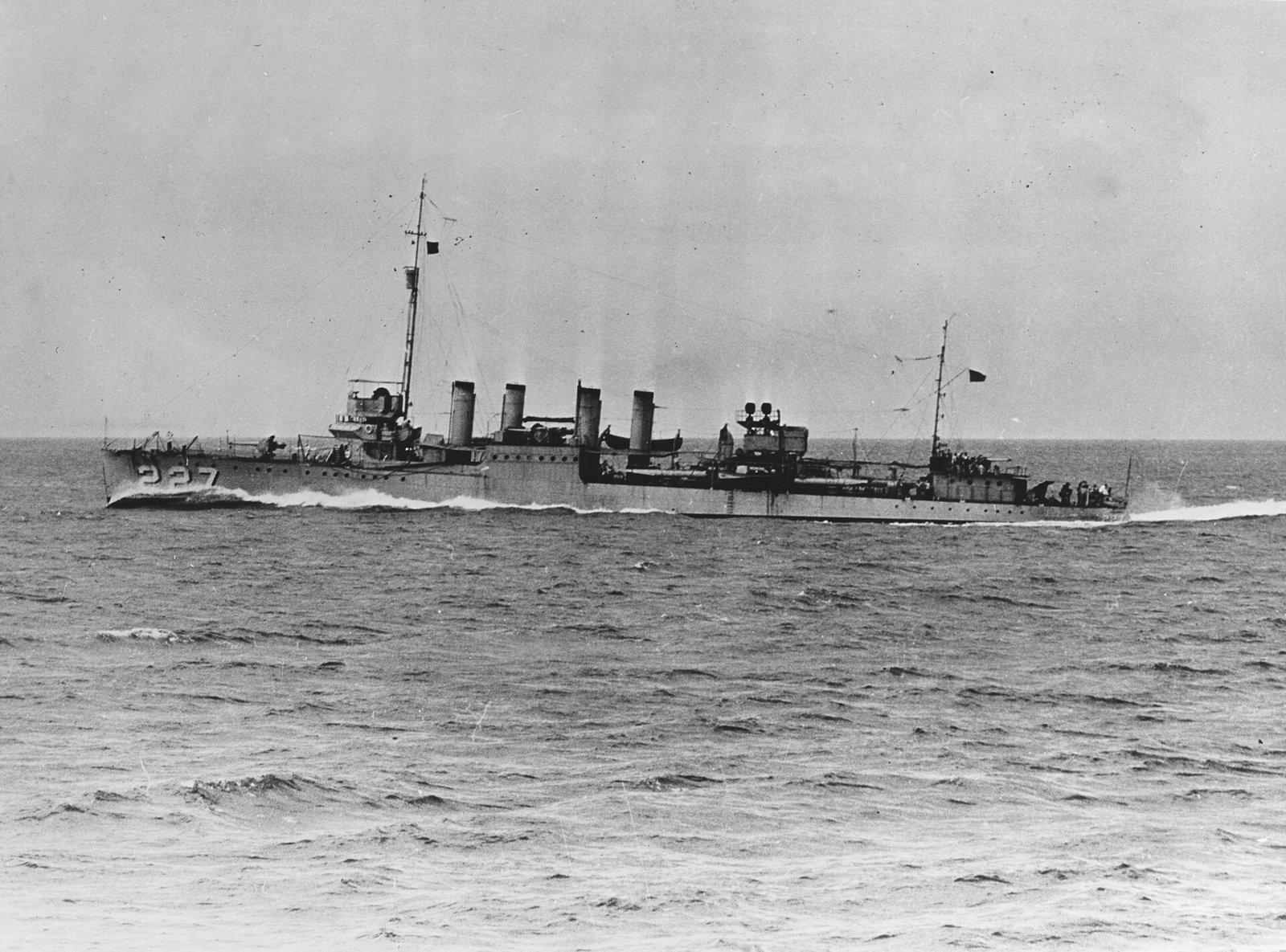
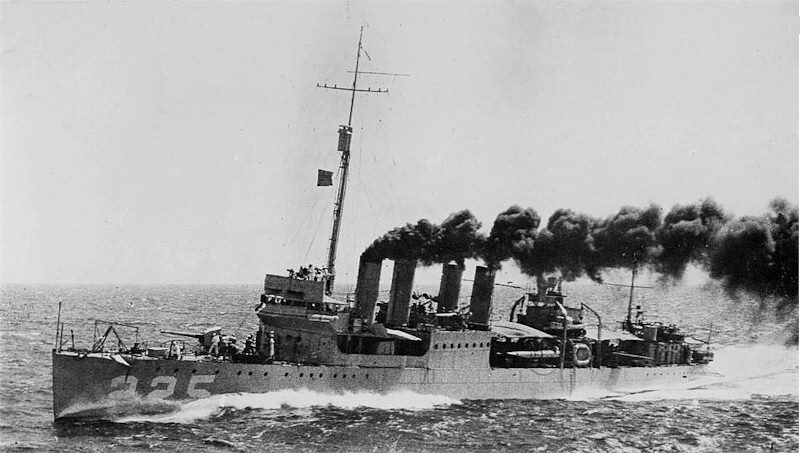
Houston, Captain Albert H. Rooks, was flagship of Task Force 5. The light cruisers were Boise and Marblehead. Thirteen flush-deck destroyers made Destroyer Squadron 29 under Captain Herbert V. Wiley, with Paul Jones as flagship. Twenty-nine submarines were at Manila. The tenders were Canopus, Holland, and Otus, and Otus had no shop facilities. Patrol Wing 10, under Captain Frank D. Wagner, had thirty PBY flying boats. The seaplane tender Langley (AV-3) was at Manila with the oilers Pecos and Trinity.
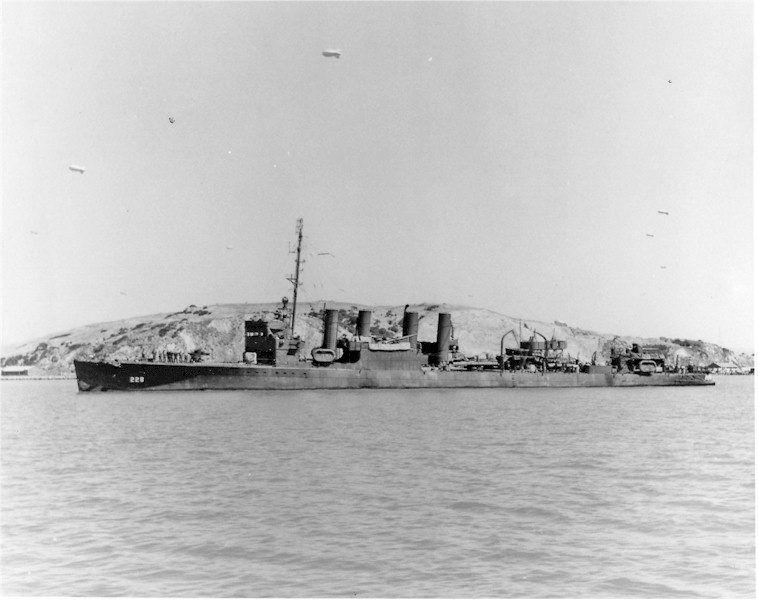
Marblehead and four destroyers had gone to Tarakan on 24 November. The destroyer tender Black Hawk was with Destroyer Squadron 29 at Balikpapan. She was not at Cavite. Houston was sent to Iloilo. Boise reached Manila on 4 December with an Army convoy, took fuel, and sailed for Cebu. Peary and Pillsbury were still in the Cavite yard, under repair after a collision in October. Three other destroyers, not named in the narrative, patrolled between Manila and Subic.
The first morning
Word of Pearl Harbor arrived at 0300 on 8 December. At dawn Japanese planes destroyed two PBYs on the water in Davao Gulf, where the small seaplane tender William B. Preston lay at Malalag. The ship was not hit. A little later four Japanese destroyers came into the gulf. William B. Preston let them pass and slipped out. Those destroyers are not named. At noon, Army fields in northern Luzon were bombed. The planes that struck the Philippines that week had come down from Formosa. Morton's account of 8 December names the 11th Air Fleet for the strikes on the airfields, after morning fog had held the bombers on the ground. The account of the Cavite yard on the 10th does not name the air group. No Japanese warship was in that attack. It was an air raid.
The night the oilers left
Glassford flew to Houston at Iloilo, and Boise came up from Cebu. Under cover of darkness the seaplane tender Langley (AV-3), the oiler Trinity, and Pecos, with two destroyers, left Manila Bay to join the cruisers. The ships headed for the Dutch oil ports by way of the Makassar Strait. In the Sulu Sea they sighted the tops of two vessels, bearing about 255 degrees true. The Americans thought the strangers were a light cruiser and a destroyer. The identification was not certain, the strangers did not see them, and the cruisers did not chase, because the tenders were along.
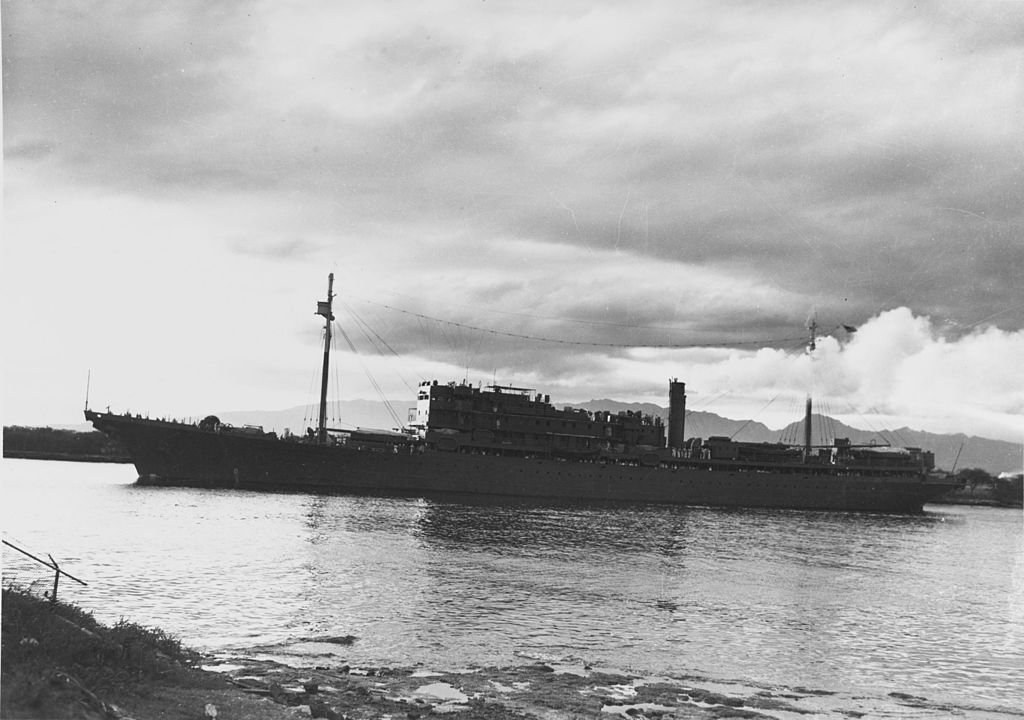
Pecos had already left the Cavite Navy Yard on 8 December, before the bombers came. She reached Balikpapan on the 14th, filled with oil and gasoline, went on to Makassar, refueled American warships there, and left Makassar for Darwin on 22 December. Commander Elmer P. Abernethy had her.
Cavite, 10 December
Early that afternoon more than fifty twin-engine bombers came over the yard in two waves. The submarine-loss account counts fifty-four planes, in two groups of twenty-seven, sighted about half an hour after noon. They bombed from above the reach of the nine 3-inch antiaircraft guns, and no fighters met them. Morton says the attack was made from about 20,000 feet and lasted about two hours, and that Rockwell estimated five hundred men killed or seriously wounded. The yard was practically destroyed. During the bombing one medium merchant ship in the harbor was hit and went down. The narrative does not give her name.
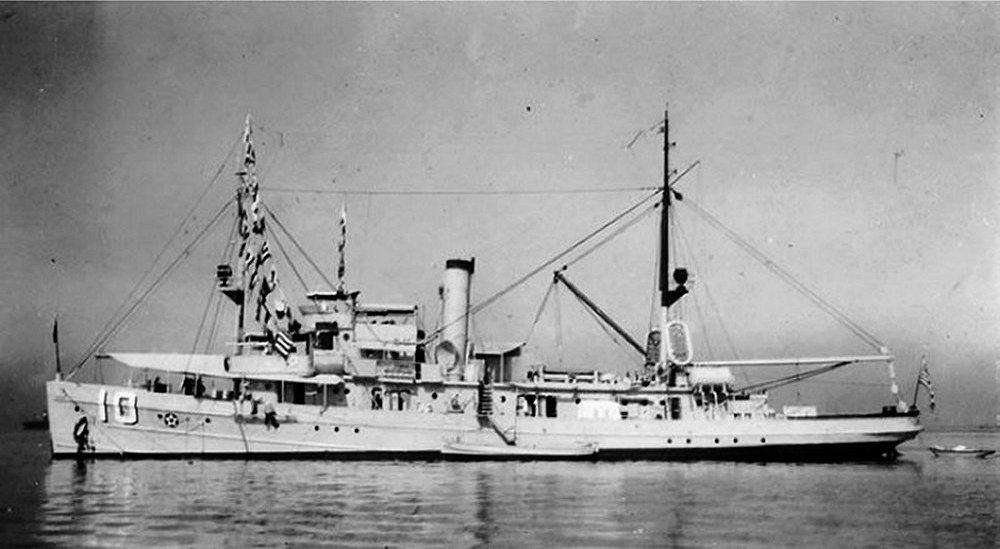
Sealion (SS-195) and Seadragon lay nested at Machina Wharf, in the last days of an overhaul that was to have finished on 12 December. Bittern was outboard of them, herself under repair. Pigeon was in a five-ship nest at the yard, with steam at the throttle. Canopus was there as tender to Submarine Squadron 20. Peary was in the yard for the collision repairs. The seaplane tender Childs was in the yard for repair, maneuvered in the confined harbor, and was not hit.
Sealion, Seadragon, Bittern, and Peary
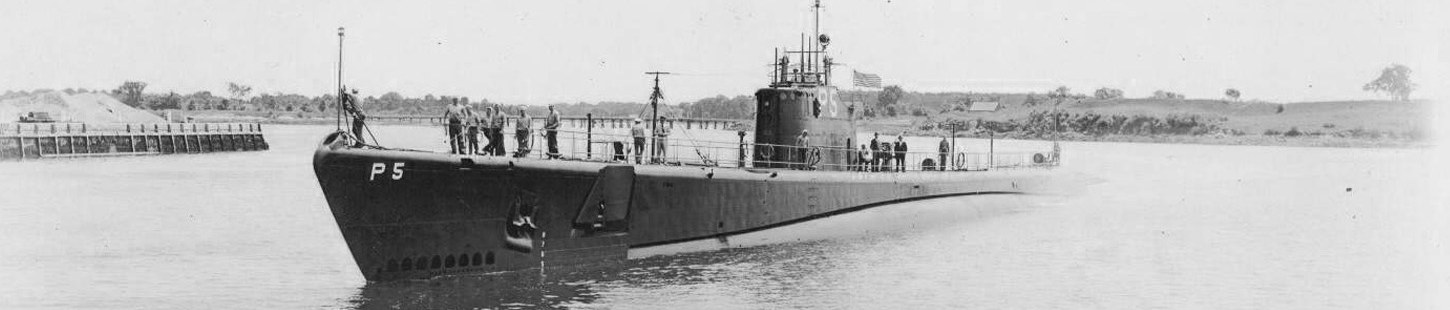
Lieutenant Commander Richard G. Voge had Sealion (SS-195). Except for him, the executive officer, Lieutenant Albert L. Raborn, and three men, the crew was below. The first bombs fell a hundred to two hundred yards astern. Voge saw that the planes were high, where the machine guns could not reach them, and he ordered all hands below. On the next run two bombs hit the boat almost together. One struck the after end of the conning-tower fairwater and exploded just outside the hull, above the control room. A fragment went through Seadragon's conning tower and killed Ensign Sam Hunter, the first submarine casualty of the war. Three men in Sealion's control room were wounded. The other bomb exploded in the maneuvering space of the after engine room and killed Electrician's Mates Foster, O'Connell, and Paul, and Machinist's Mate Ogilvie. The compartment flooded. She settled by the stern in the mud, with about forty percent of the main deck under water and a list of fifteen degrees to starboard.
Pearl Harbor, the nearest yard that could rebuild her, was about five thousand miles away. The gyro, the radio, and the sound gear were taken out. On Christmas Day three of her depth charges were exploded inside the hull.
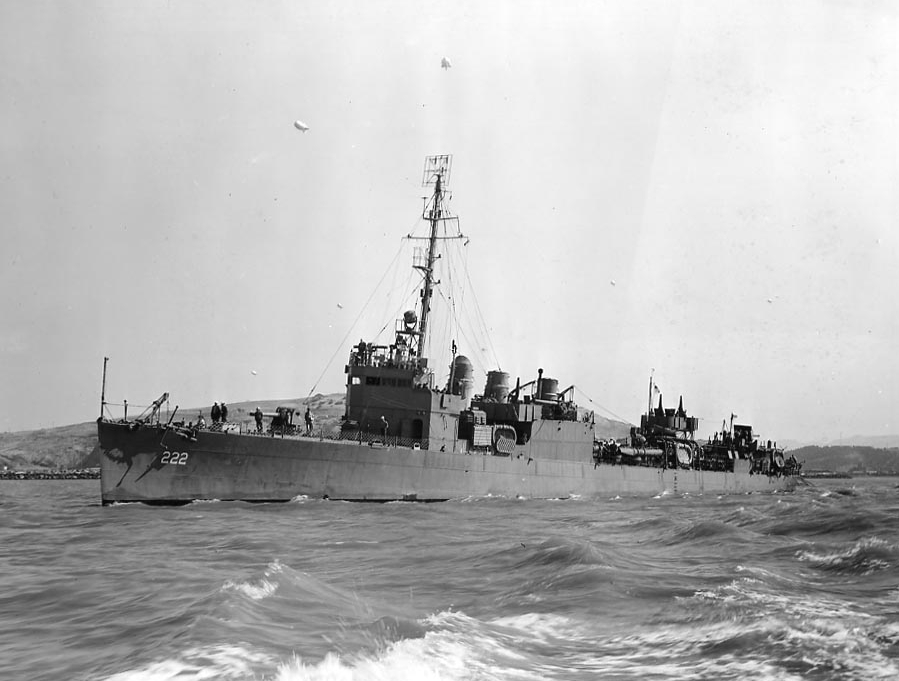
Pigeon put her stern against the end piling, ran a line about twenty feet to Seadragon, and hauled the submarine off the dock. A fuel tank then burst and blistered both hulls. Seadragon's men worked her out into the bay. Canopus and Pigeon patched her. The Dictionary says part of the bridge was ripped away, that one man was killed and five wounded, and that the hull was scorched. She embarked members of the Asiatic Fleet staff and went south with Bulmer, through Surigao Strait and Makassar Strait, to Surabaya. The Dictionary prints the destroyer's name as Buhner. It also gives two times that cannot both be the departure: the night of 15 December, and midnight on 10 December. Pigeon's history dates the sailing for Surabaya on 16 December. She left the Dutch base on 30 December for the South China Sea.
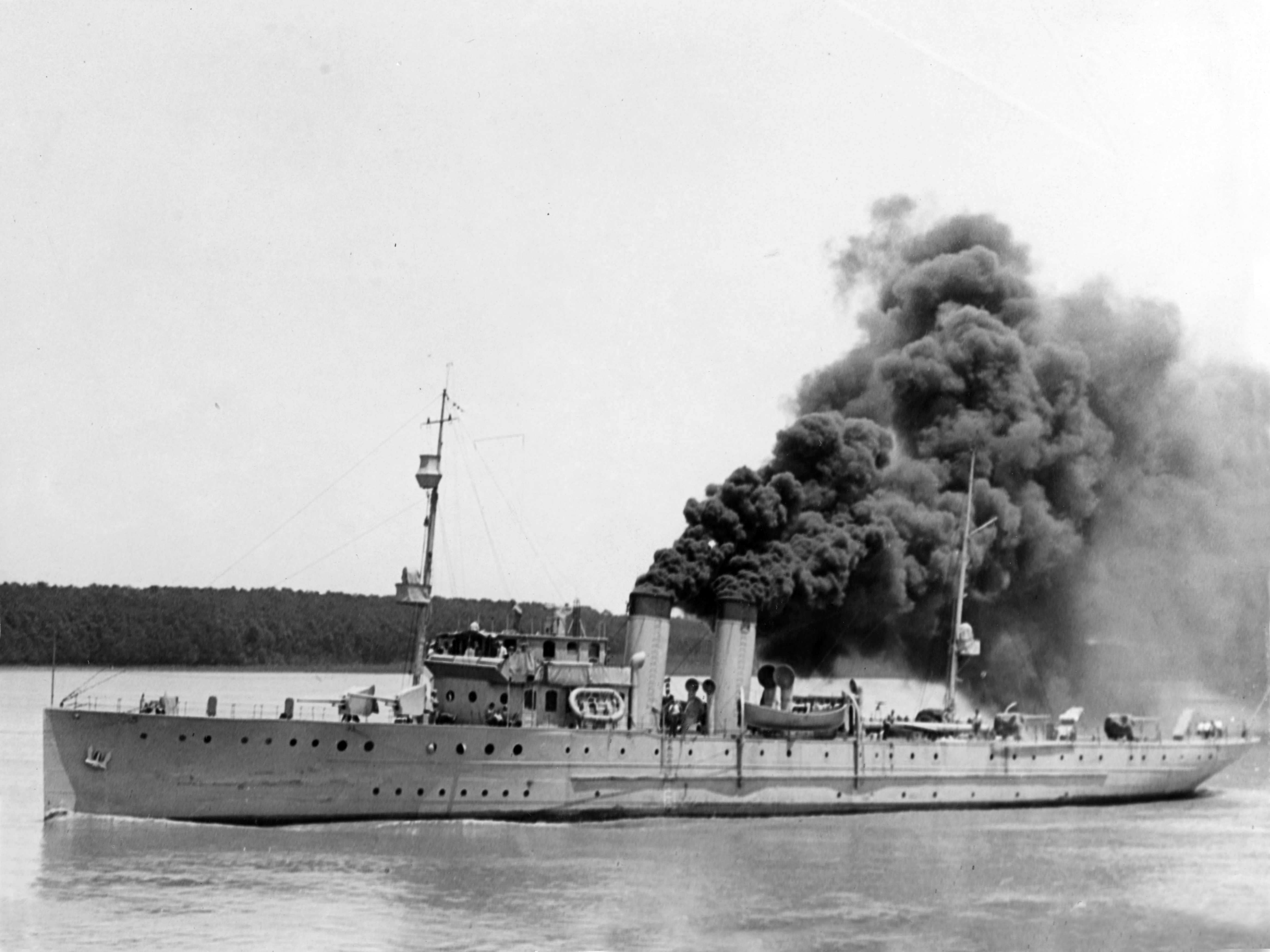
Bombs did not hit Bittern. Fire, near misses, and debris from Sealion (SS-195), moored alongside, wrecked her where she lay under repair. The crew transferred to the minesweeper Quail, and Bittern was scuttled in Manila Bay. The Dictionary does not give a separate date for that scuttling. Machinist Rollin M. Reed and Watertender Wayne E. Taylor, from Pigeon, had already helped haul her off the dock. After Manila was declared an open city, Pigeon towed her to Mariveles.
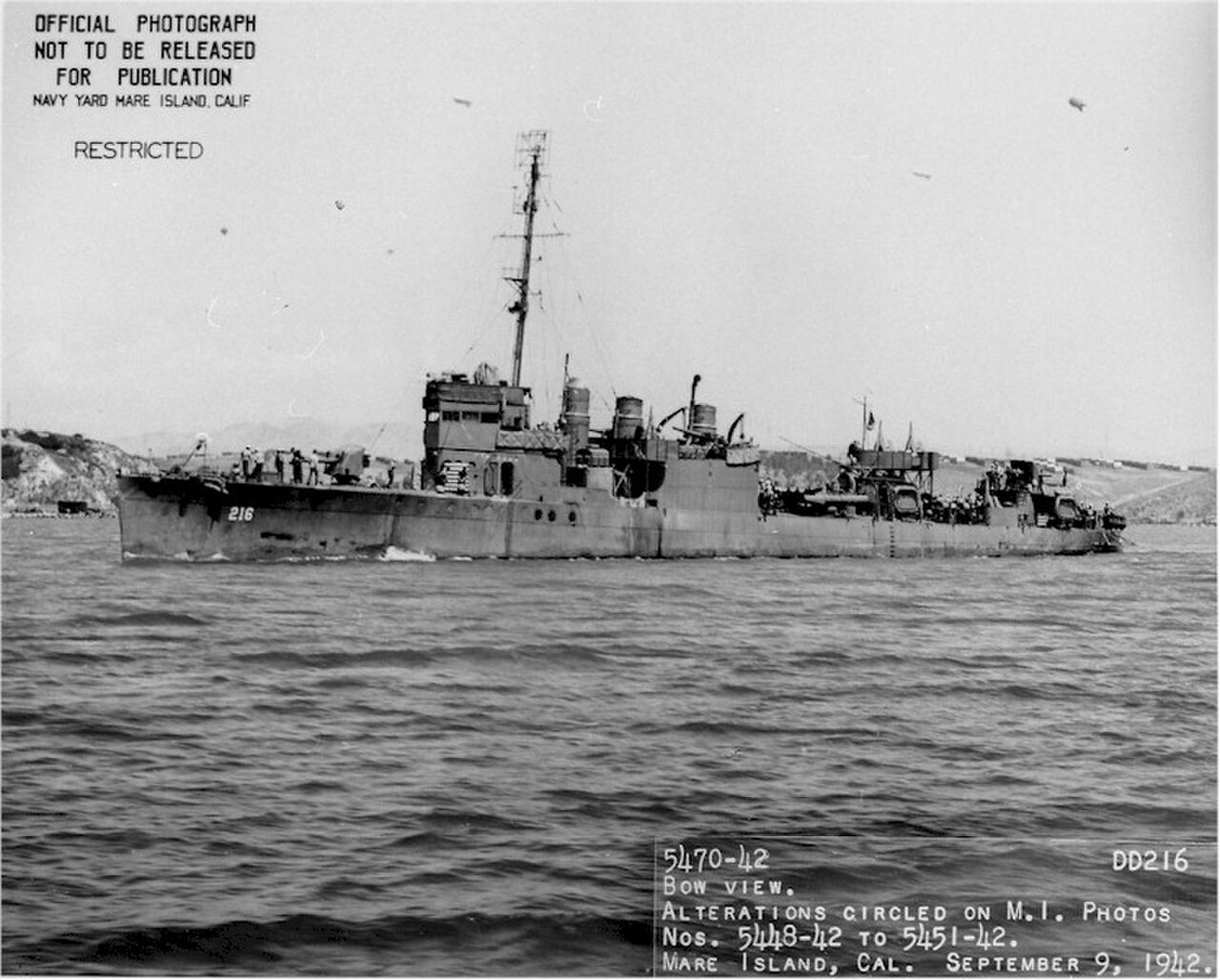
Peary took a bomb on the foremast. The damage was called minor, with a few casualties. Commander Harry H. Keith was wounded, and Lieutenant Commander John M. Bermingham relieved him the same day. Pillsbury was in the yard with her. Both were sent south on 27 December. The narrative calls Peary's passage eventful and does not say what happened on it.
Holland and the ships that went south
On the evening of 10 December, Captain Joseph W. Gregory took Holland out of Manila Bay with the tender Otus, the yacht Isabel, and two destroyers. Eight bombs that did not explode fell around Isabel's fantail that day. Captain Doyle, just relieved as commander of submarines, went with that group. A second group was the gunboats Tulsa and Asheville and the minesweepers Lark and Whippoorwill. The combat narrative says all of them reached Borneo without meeting an enemy ship. Holland was not hit during two air raids at Balikpapan. At Surabaya she repaired a submarine that had been damaged in action. Two destroyers then escorted her to Darwin, and she arrived on 2 January 1942. Her Dictionary history says the raids of the first days of December drove her out of the bay at night, and it does not name the night. The first of her two battle stars is the Philippine Islands operation, 8 December 1941 to 2 January 1942.
On 12 December, fighters burned seven PBYs on the water after the boats had landed. A raid on Subic the next day destroyed more of them. Fewer than one full squadron was left. On 14 December Hart sent the rest of Patrol Wing 10 south to the Netherlands East Indies, and three tenders sailed with them. Four damaged planes were eventually repaired in Manila. The detachment that had been at Balabac with the tender Heron was part of that wing. The narrative and the disposition list do not agree on her anchorage or on her captain's initials.
What stayed in Manila Bay
On 10 December Captain John Wilkes was appointed commander of submarines. The boats continued to leave the bay submerged by day. On 23 December Hart learned that General Douglas MacArthur expected an early withdrawal to Bataan and Corregidor. The next day Manila was to be an open city, and Canopus had to move. She sailed to Mariveles Bay on Christmas Day. Direct hits on 29 December and on 1 January wounded thirteen of her men. Smoke pots and a dead-ship appearance hid her by day. Work went on at night. The last submarines left her just before the New Year. The combat narrative says the last of them left Manila Bay on 31 December, and that it was then too late to get Canopus and Pigeon out.
Rockwell had moved to Corregidor on the 21st. Hart had planned to leave on the evening of the 25th. The aircraft for that trip were destroyed the same day, and he left in the submarine Shark on the 26th. Pillsbury and Peary were sent south the next day. Left at Corregidor and Mariveles were the river gunboats Mindanao, Luzon, and Oahu, the minesweepers Tanager, Finch, and Quail, a few tugs and former yachts, and the six boats of Motor Torpedo Boat Squadron 3 under Lieutenant John D. Bulkeley. The boats were PT-31, PT-32, PT-33, PT-34, PT-35, and PT-41. The four that have pages here were still in the bay at the end of December. None of the six was lost in the raid on the yard.
Pigeon stayed with Canopus. On 5 January 1942 Lieutenant Commander Richard E. Hawes turned her over to Lieutenant Commander Frank Alfred Davis and went to Holland as first lieutenant. Pigeon was lost on the afternoon of 4 May 1942, when a bomb from a dive bomber exploded on her starboard quarter. She went down in eight minutes. The crew was ashore. Canopus was ordered scuttled when Bataan surrendered on 9 April. On 10 April she backed into deep water under her own power, and her own men put her down. Pecos was lost on 1 March 1942, south of Java. She had taken the survivors of the seaplane tender Langley (AV-3) from Whipple and Edsall, and carrier aircraft then sank the oiler. Whipple rescued 232 men. None of those three losses belongs to the raid of 10 December.
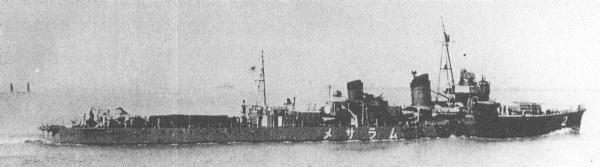
The landings
Japanese troops landed at Aparri and at Vigan about 10 December, and at Legaspi on the 12th. Off Vigan, Army bombers badly damaged the transports Oigawa Maru and Takao Maru, which were beached. They also put down an unnamed minesweeper, caused casualties aboard the destroyer Murasame, and slightly damaged the light cruiser Naka, in which Rear Admiral Shoji Nishimura flew his flag. That was the landing force. It was not the raid on the navy yard. The ship of this name already in the catalog, a transport lost in 1943, is not the Oigawa Maru at Vigan. At Lingayen Gulf on 21 December the submarines faced at least eighty transports and put down one of them. The narrative does not name that ship.
The end of the base
Japanese troops entered Manila unopposed on 2 January 1942. By then the surface ships that could leave were at Borneo, in the Netherlands East Indies, or on the way to Darwin. Holland's first battle star closes on that date. The ships that remained fought on from Mariveles and Corregidor. That later fight is another story. On 6 December, before the war opened on this side of the date line, destroyers at Balikpapan had been ordered south and then toward Singapore. They were fueling when Prince of Wales and Repulse were lost on the 10th, and they were sent north to look for survivors. British destroyers had already done the rescue, and the American ships were told to clear the area before dawn. The combat narrative does not name those four destroyers, and this page does not either.
A note on sources
The order of battle and the movements are the Office of Naval Intelligence combat narrative, The Java Sea Campaign, chapters 2 and 3, read from the HyperWar transcription. The ship damage is the Dictionary of American Naval Fighting Ships for Bittern I (AM-36), Seadragon I (SS-194), Pecos I (AO-6), Canopus (AS-9), Pigeon I (AM-47), and Holland II (AS-3), and the Navy's submarine-loss chapter on Sealion (SS 195). The Vigan landing and the estimate of five hundred casualties at the yard are Louis Morton, The Fall of the Philippines, in the Army's official history, chapters 5 and 6 of the HyperWar transcription. Morton says Seadragon was pulled clear by her tender. The loss book and Pigeon's Dictionary history say Pigeon did it. Morton puts the bombers at about 20,000 feet. The combat narrative says more than fifty twin-engine bombers and gives no height. The loss book says fifty-four planes, in two groups of twenty-seven.
The loss book says two bombs hit Sealion (SS-195) at Machina Wharf. The combat narrative says she was destroyed in dock by two direct hits. Seadragon's Dictionary history says one direct hit. The loss book names Ensign Sam Hunter and three wounded men in Sealion's control room, and the four men killed in the after engine room. Seadragon's history says one killed and five wounded, and does not give Hunter's name. Pigeon's history prints the submarine as Seation, and later as Scotian. It calls Hawes commander in the raid paragraph. The biography in the same entry says he took command on 12 February 1940 as a lieutenant commander. The same entry says Pigeon received the first Presidential Unit Citation awarded a ship of the United States Navy, for hauling Seadragon clear, and a second by the end of the month.
Seadragon's history embarks the staff on the night of 15 December and then says she stood out at midnight on 10 December, escorted by a destroyer it spells Buhner. Pigeon's history dates the departure for Surabaya on 16 December. The escort is Bulmer (DD-222). Canopus's history records direct hits on 29 December and 1 January and injuries to thirteen men. The combat narrative says a stray bomb on 29 December killed six men. Both are left as printed. The Dictionary does not name her December commanding officer. The combat narrative names Commander Earl L. Sackett. Holland's Dictionary history does not name the night she left the bay. The combat narrative says the evening of the 10th. The star period 8 December 1941 to 2 January 1942 is the period already carried for her first star. The Dictionary states the star and does not date it.
Bittern's history prints the German submarine she tended after commissioning as U-88, prints the damage as fire, near missiles, and debris, and does not date the scuttling. Sealion (SS-195) was laid down on 20 June 1938 at Electric Boat, Groton, launched on 25 May 1939, and commissioned on 27 November 1939. NavSource, citing the Dictionary, names the sponsor as Mrs. Claude C. Bloch. Another account gives her name as Augusta K. Bloch. NavSource does not date the striking. A later boat, SS-315, is a different ship. The class name in Seadragon's Dictionary header is cut off after the letters Sarac. Pecos's history names planes from the carrier Soryu for the sinking on 1 March 1942. The account of Langley's loss says the sinking of Pecos is not credited to one aircraft. Otus (AS-20) was slightly damaged when bombs fell near her at the Cavite Navy Yard on 10 December 1941, and she sailed that day for Darwin. Isabel had eight bombs that did not explode around her fantail that day and left that night with Holland. Childs was in the yard for repair, maneuvered in the harbor, and was not hit. William B. Preston was at Malalag Bay, not at Cavite, and the ship was not hit. The combat narrative places Heron at Balabac, and her ship history places her at Port Ciego. Trinity sailed from Manila Bay on 8 December with Langley and Pecos. Asheville, Tulsa, Lark, and Whippoorwill were the second group that left on the evening of the 10th. Quail, Tanager, and Finch were left in the bay, though Finch's ship history puts her on patrol in the Taiwan Straits that December. Black Hawk was at Balikpapan with Destroyer Squadron 29, not at Cavite. None of those ships was lost in the raid. The submarines other than Sealion (SS-195), Seadragon, Perch, and Sailfish are named in the combat narrative. A separate life of each of those boats is not part of this account. John Wilkes's biography says he left Corregidor in Swordfish on 29 December. The combat narrative says Hart left in Shark on the 26th and that the submarine staff left with the last boats on the 31st. The biography was not rewritten.